Home · The Sights
All eighteen01
The sights, from the harbor up
Below the grid
The old town, where the streets still have names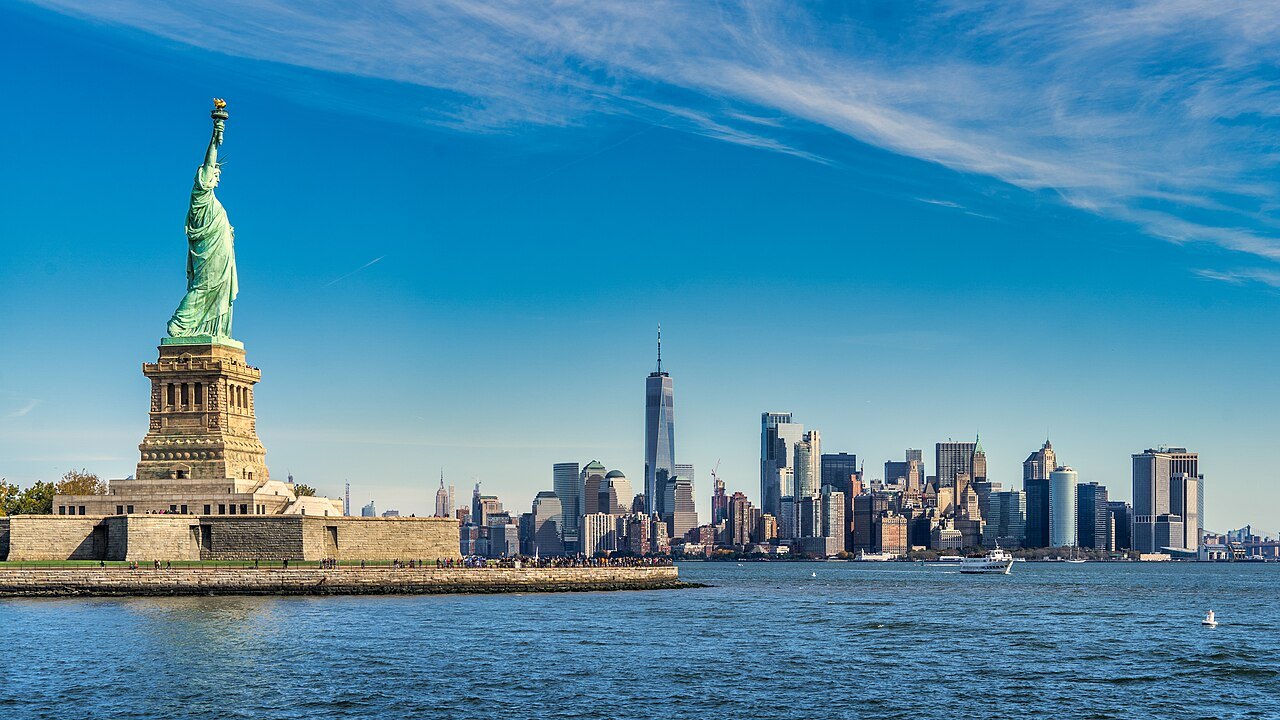 New York Harbor1The Statue of Liberty and Ellis IslandDedicated in 1886 on Liberty Island; Ellis Island processed about 12 million immigrants from 1892 to 1954.
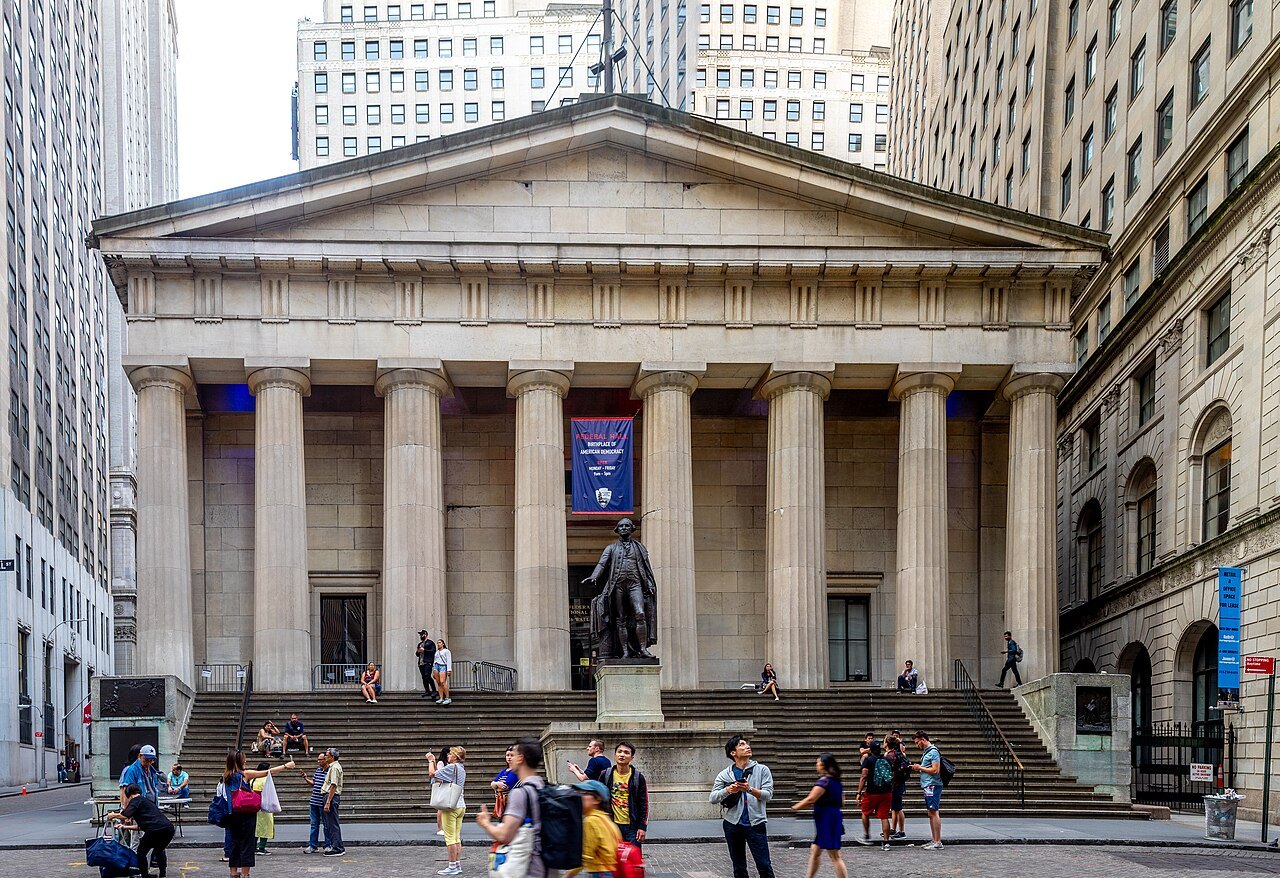 Broadway · Wall St2Wall Street and Trinity ChurchEight blocks from Broadway to the East River, named for a Dutch city wall that stood there from 1653 to 1699.
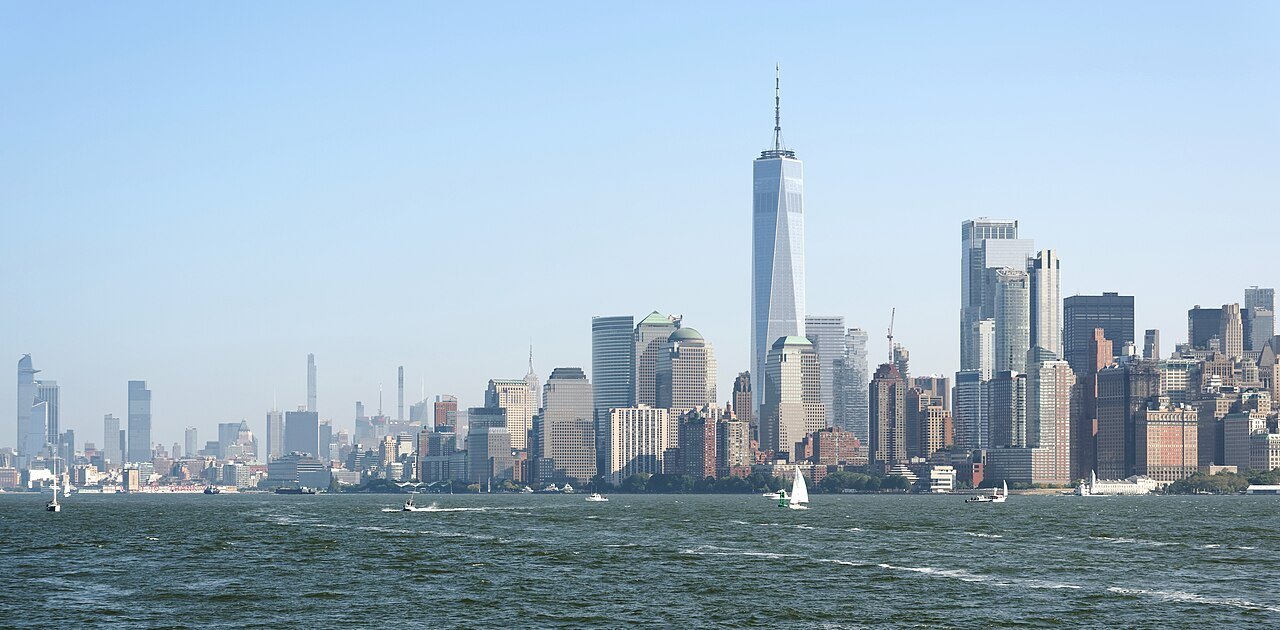
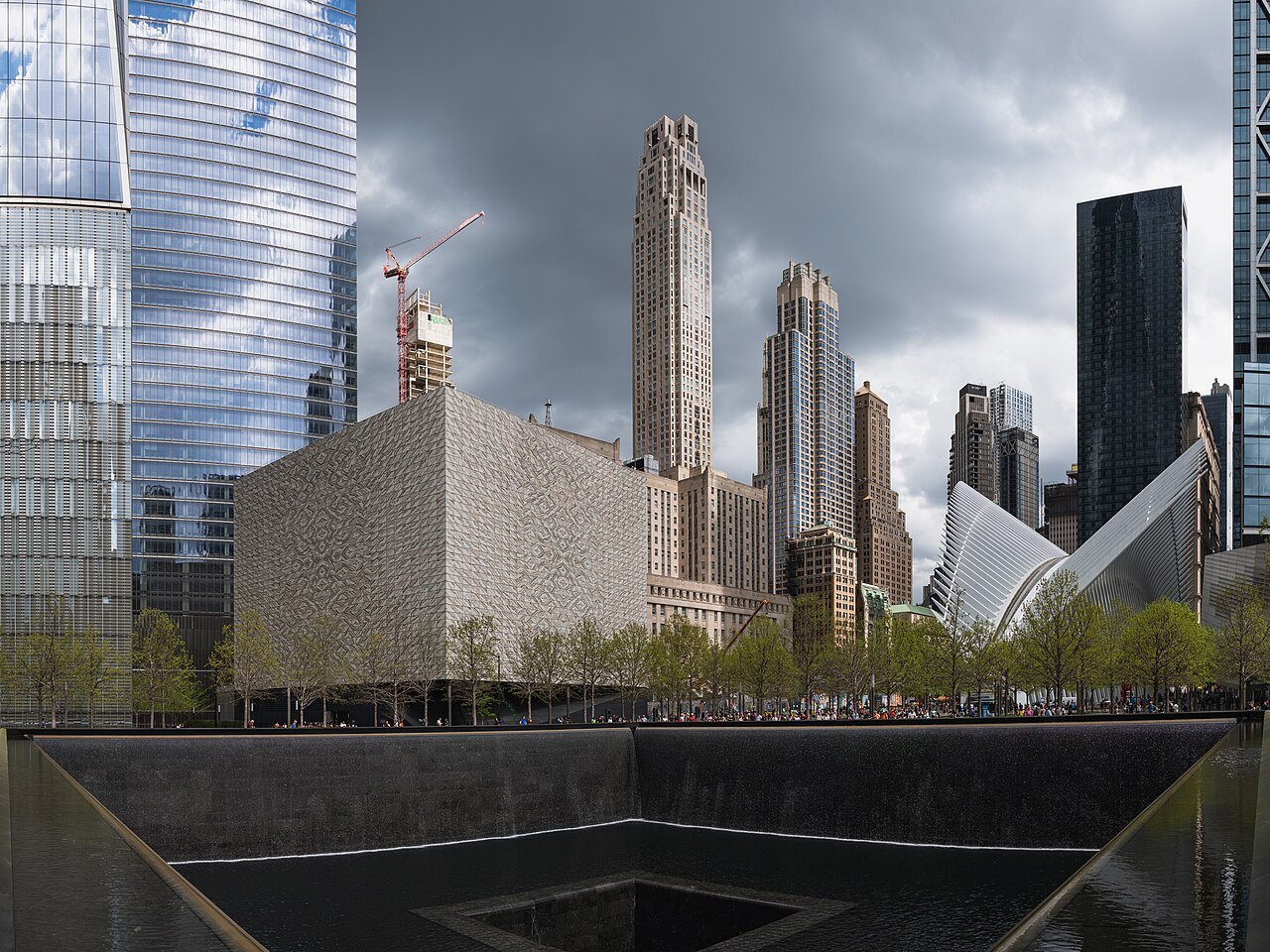 West St · Vesey St3The 9/11 Memorial and One World Trade CenterTwo pools in the footprints of the Twin Towers, beside the tallest building in the Western Hemisphere.
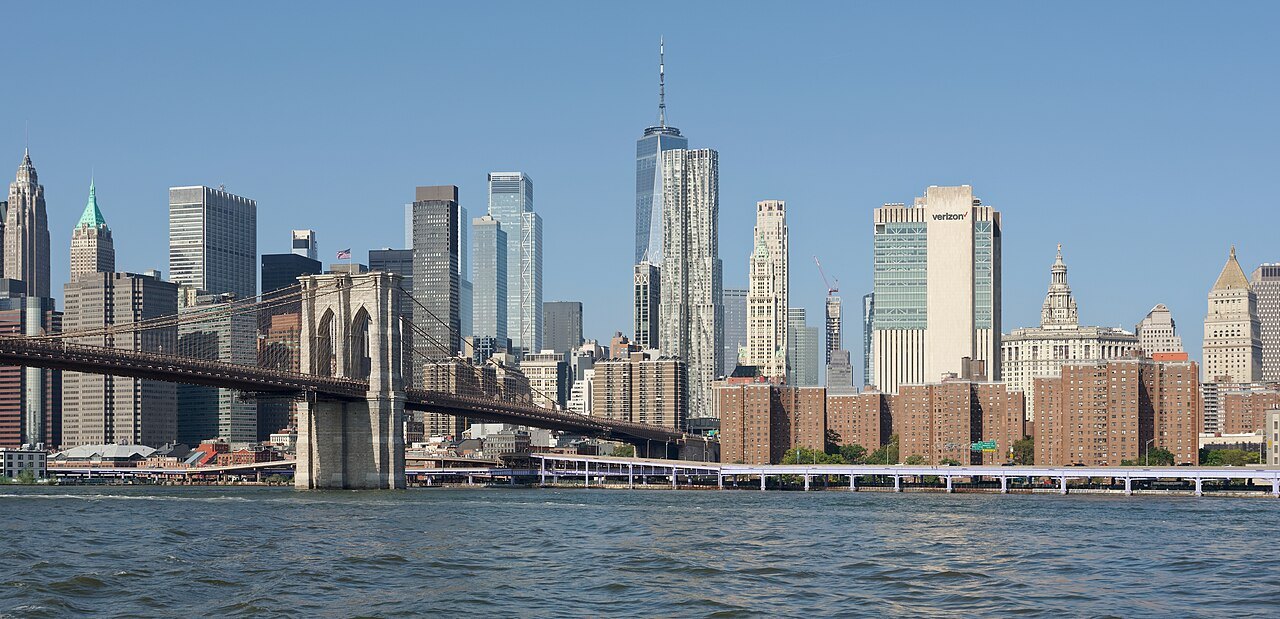
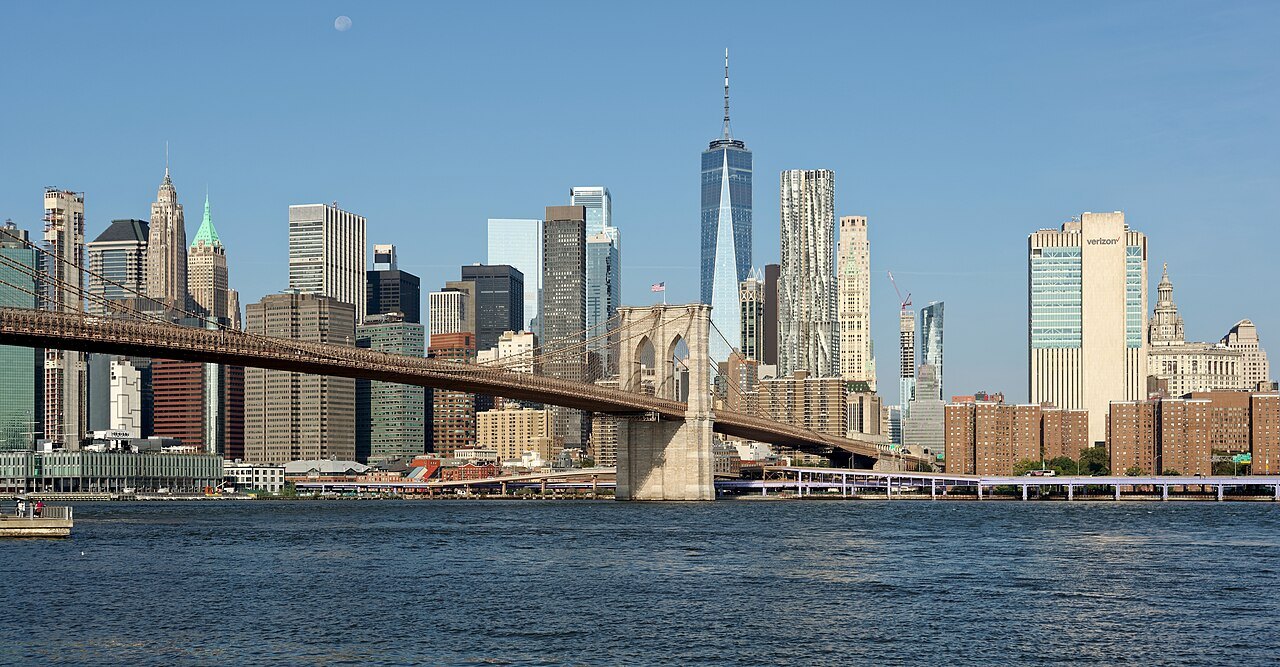 Park Row · City Hall4The Brooklyn BridgeOpened in 1883, the first fixed crossing of the East River, with a footpath raised between the roadways.
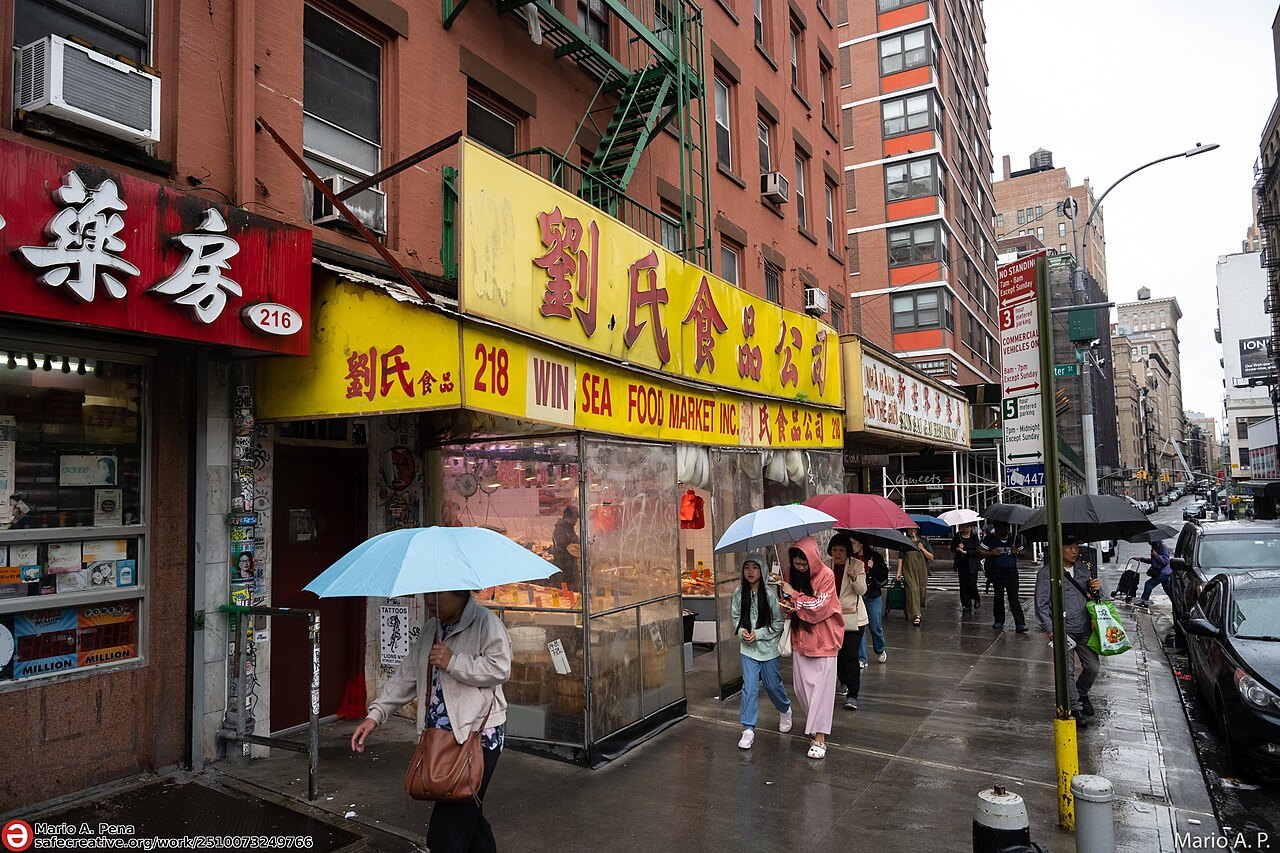 Mott St · Canal St5Chinatown and the Lower East SideThe highest concentration of Chinese people in the Western Hemisphere, beside the tenements of Orchard Street.
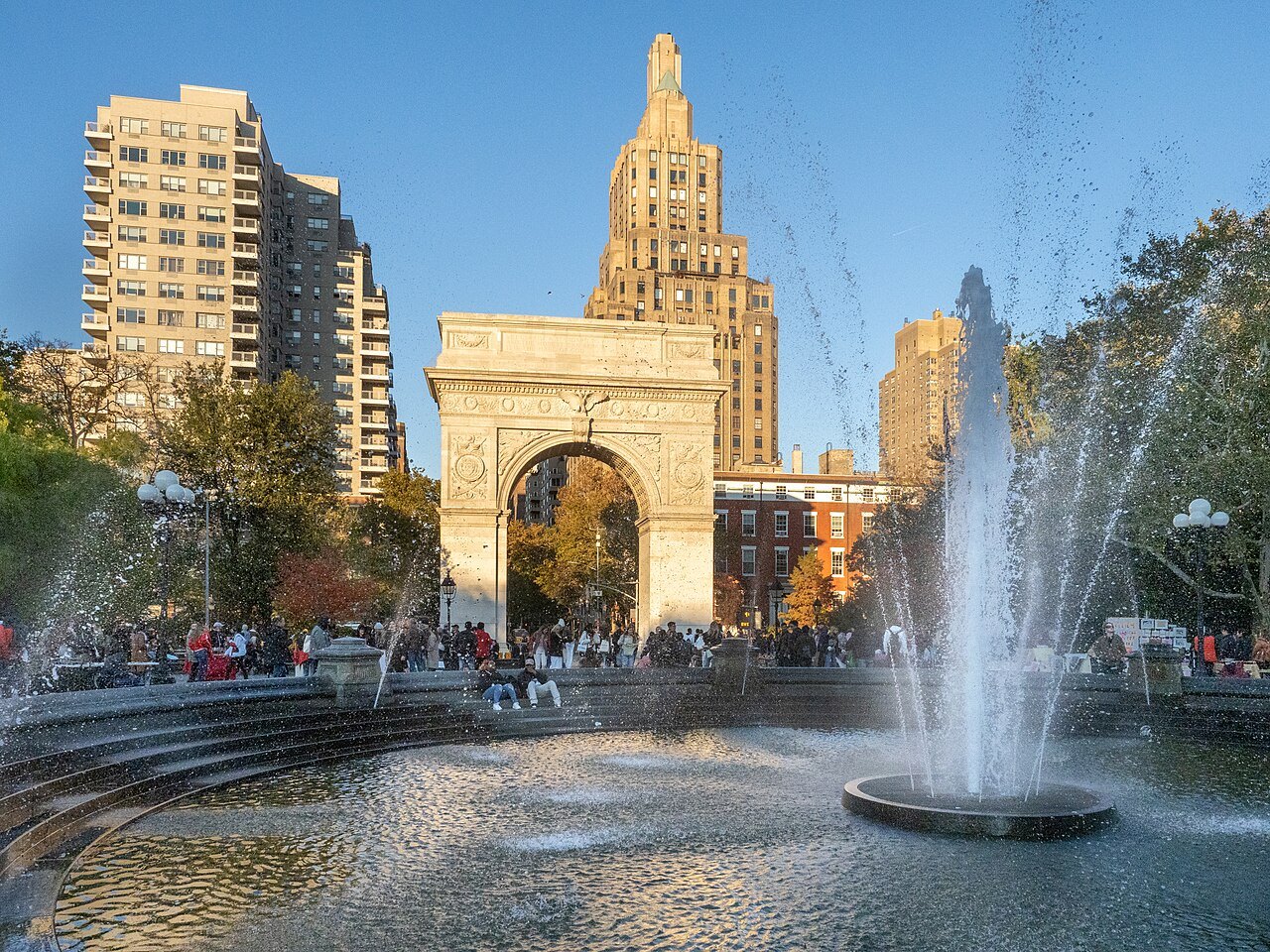 Fifth Ave · Washington Sq6Washington Square and Greenwich VillageA square of nine and three-quarter acres at the foot of Fifth Avenue, in a village older than the grid.
Where the numbers start
From 14th to 34th Street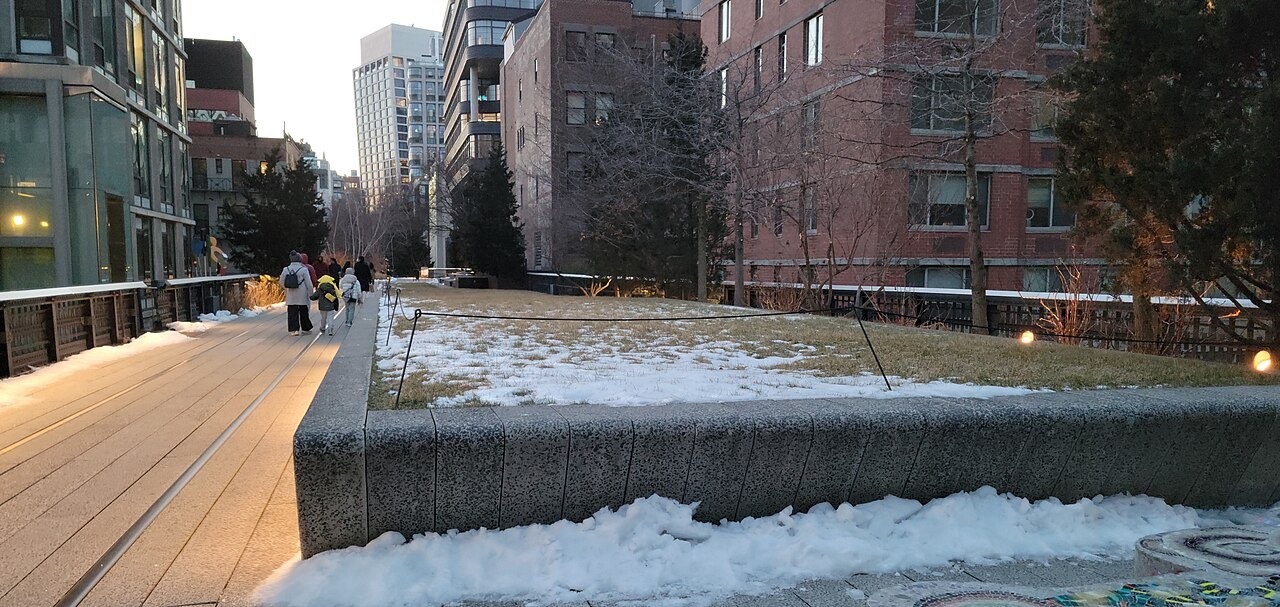 Gansevoort St → W 34 St7The High LineA park nearly a mile and a half long on a freight railroad spur, from Gansevoort Street to 34th Street.
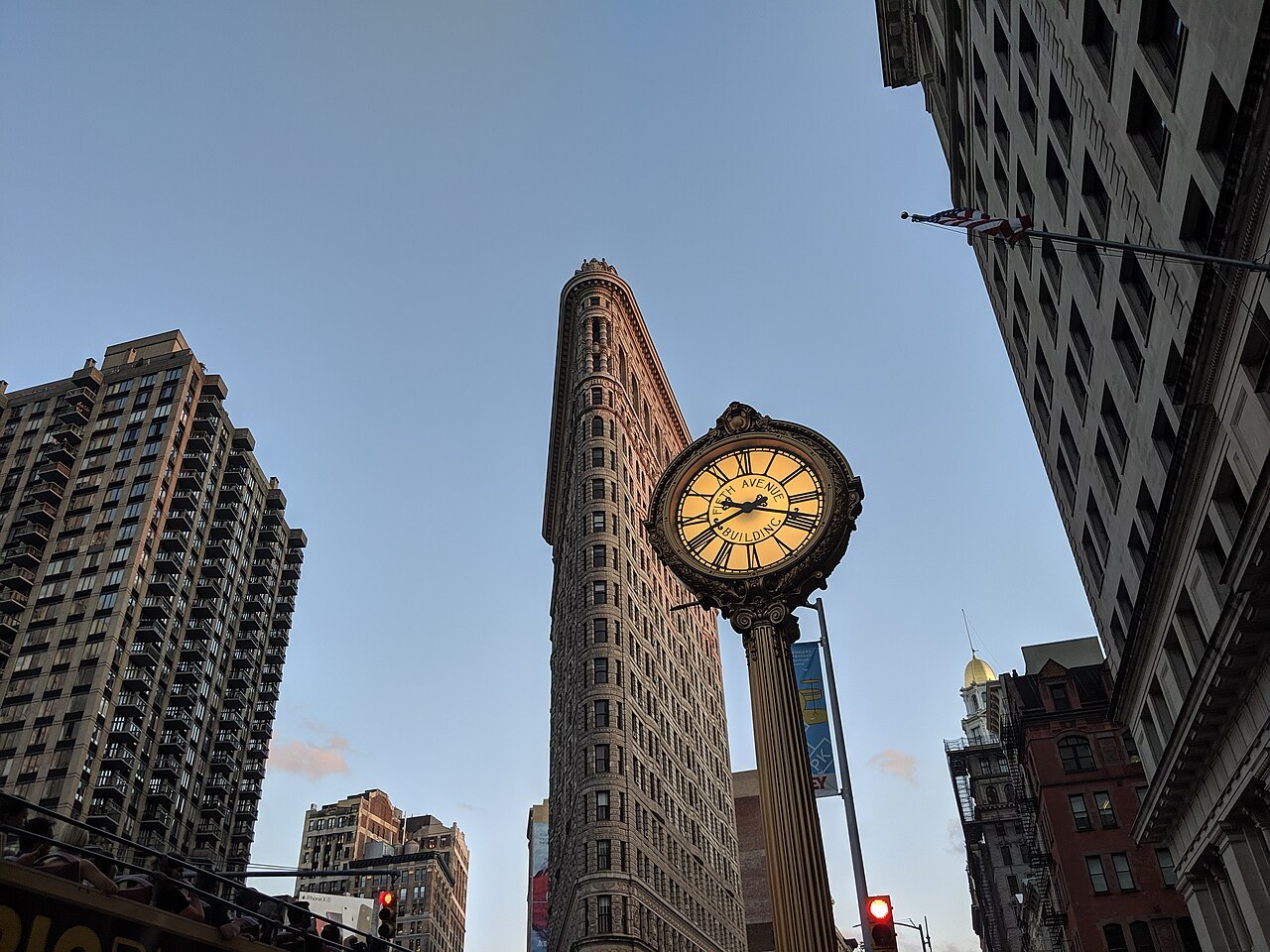 Fifth Ave · Broadway · E 23 St8The Flatiron Building and Madison SquareA 22-story triangle of 1902 on the block where Broadway crosses Fifth Avenue.
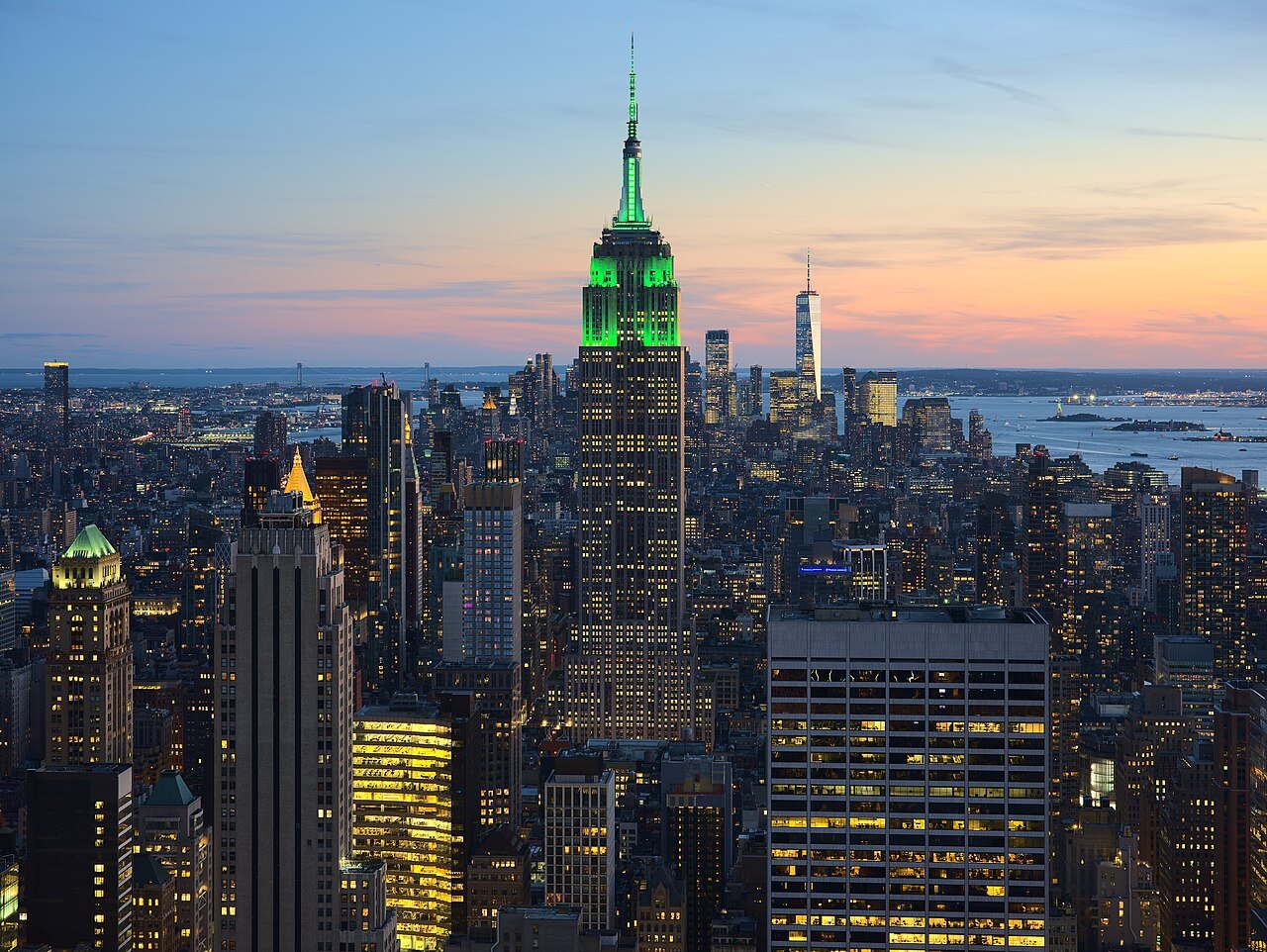 Fifth Ave · W 34 St9The Empire State BuildingBuilt in 1930 and 1931, 1,454 feet tall to the tip of its antenna.
Forty-second Street and up
Midtown, from the terminal to the plaza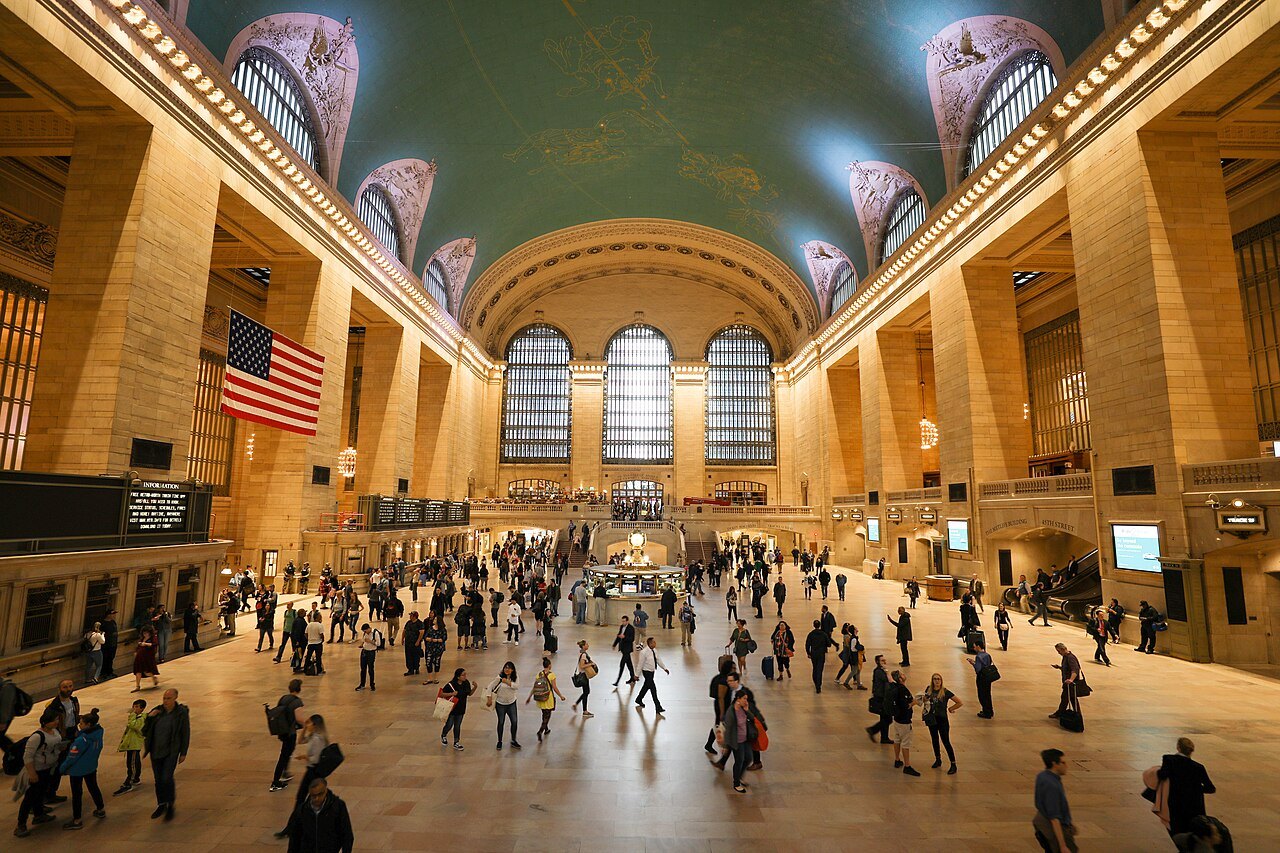 Park Ave · E 42 St10Grand Central TerminalOpened in 1913, its Main Concourse 275 feet long and 125 feet high.
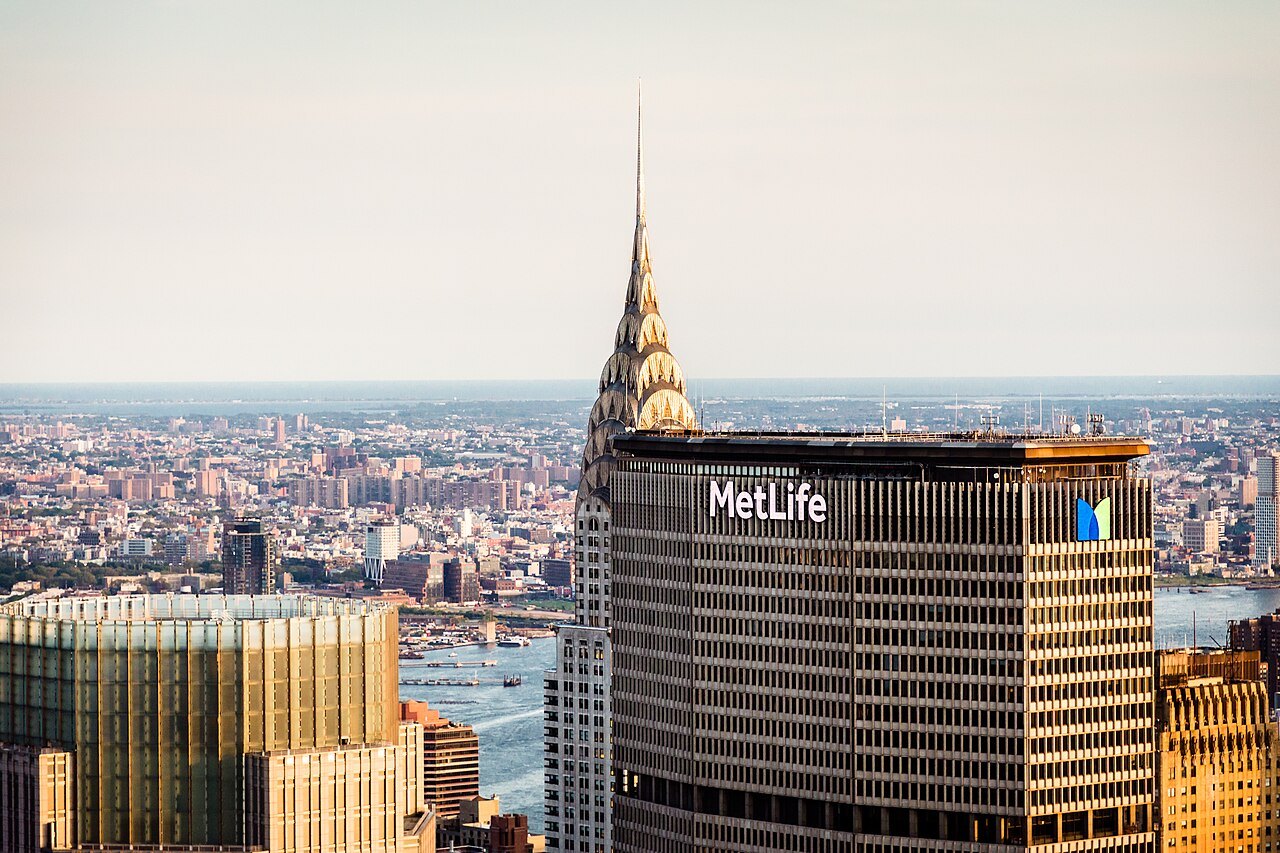 Lexington Ave · E 42 St11The Chrysler Building1,046 feet of Art Deco steel and brick, the world's tallest building for 11 months after 1930.
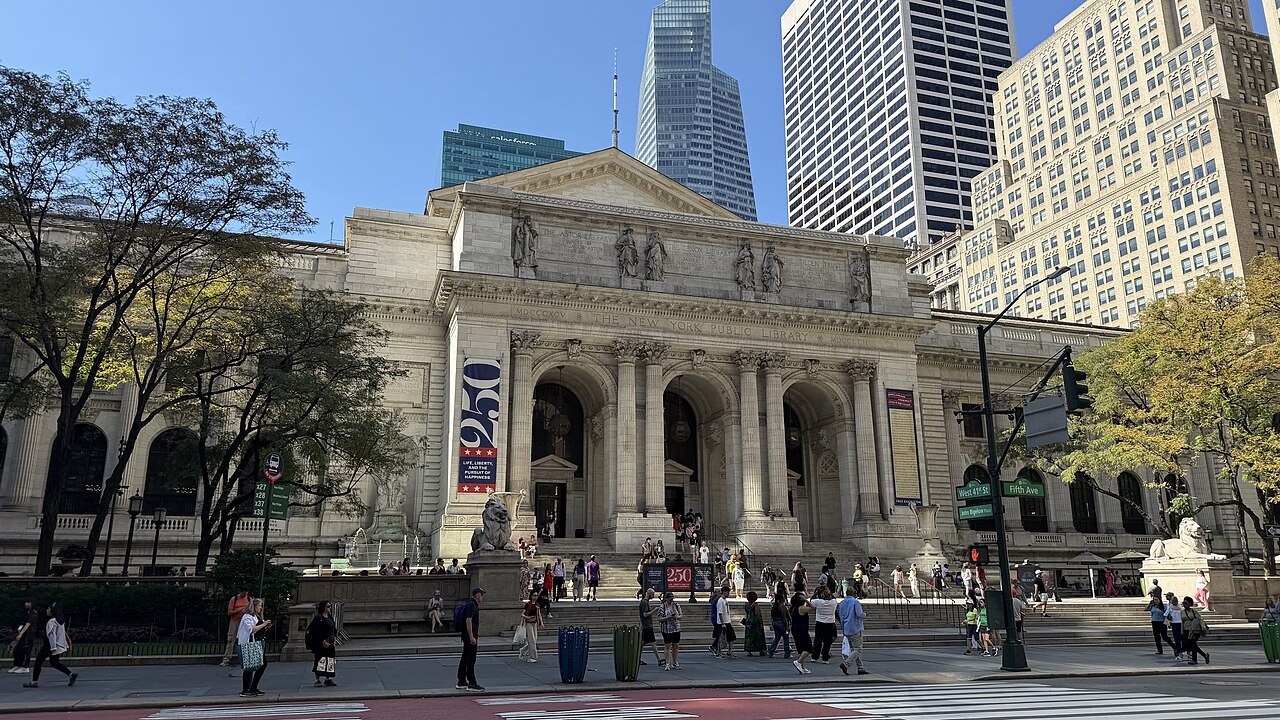 Fifth Ave · E 41 St12The New York Public Library and Bryant ParkA Beaux-Arts library of 1911 guarded by two stone lions, on the site of the Croton Reservoir.
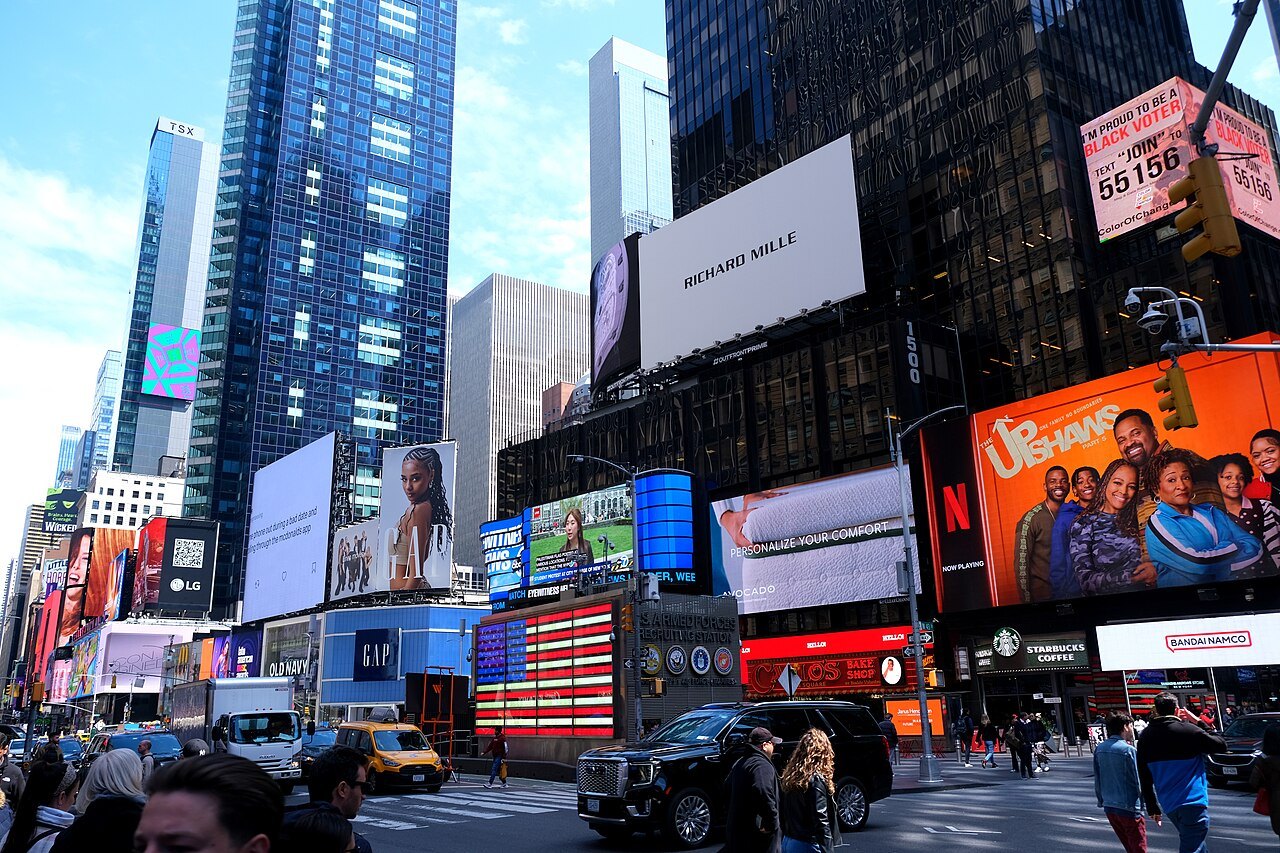 Broadway · Seventh Ave · W 42–47 St13Times SquareA bowtie of plazas five blocks long, renamed in 1904 for The New York Times.
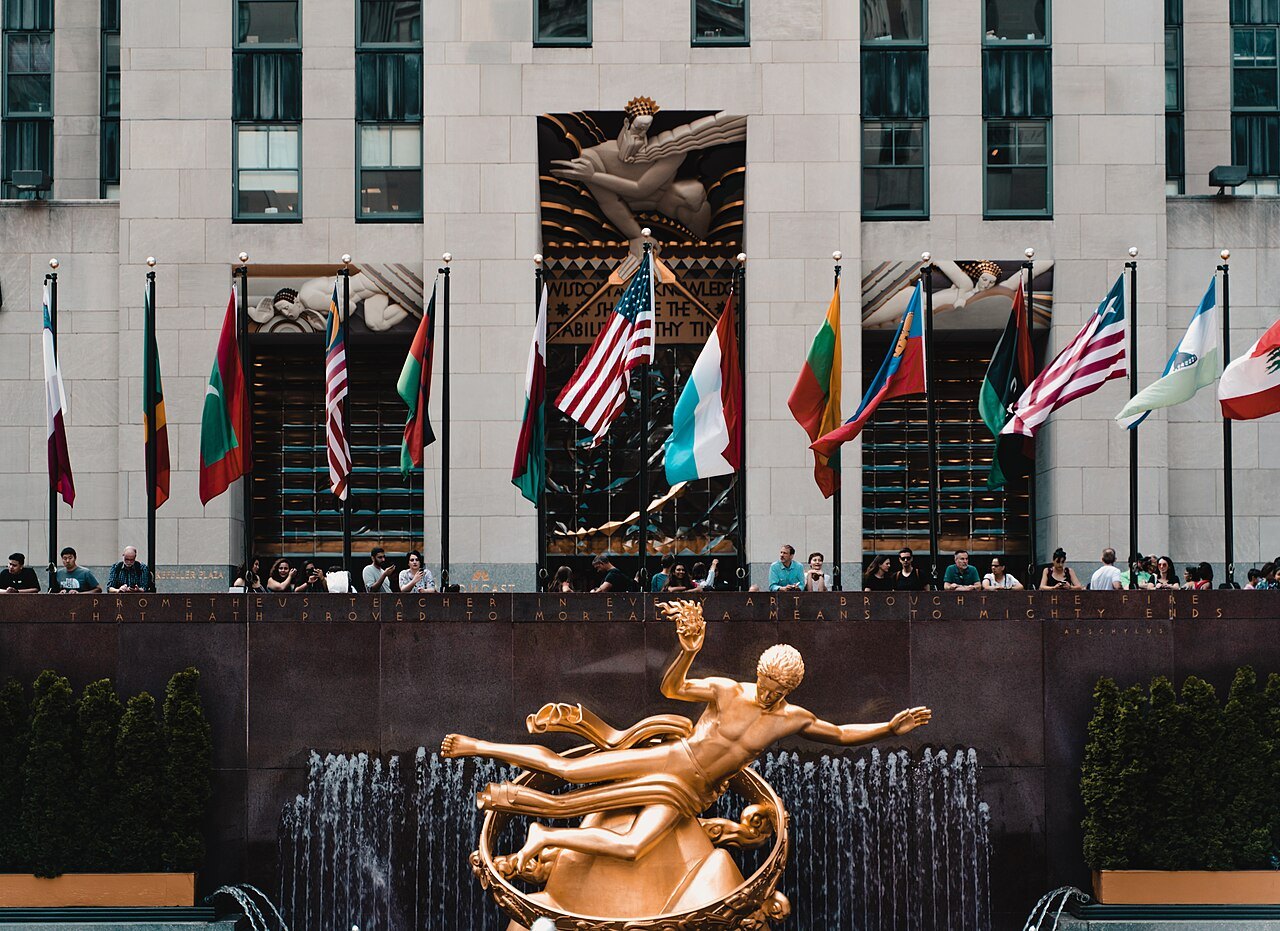 Fifth Ave · W 48–51 St14Rockefeller Center and St. Patrick's CathedralFourteen original Art Deco buildings in a complex of 22 acres, facing a cathedral dedicated in 1879.
Above 59th Street
The park, the museums and the north of the island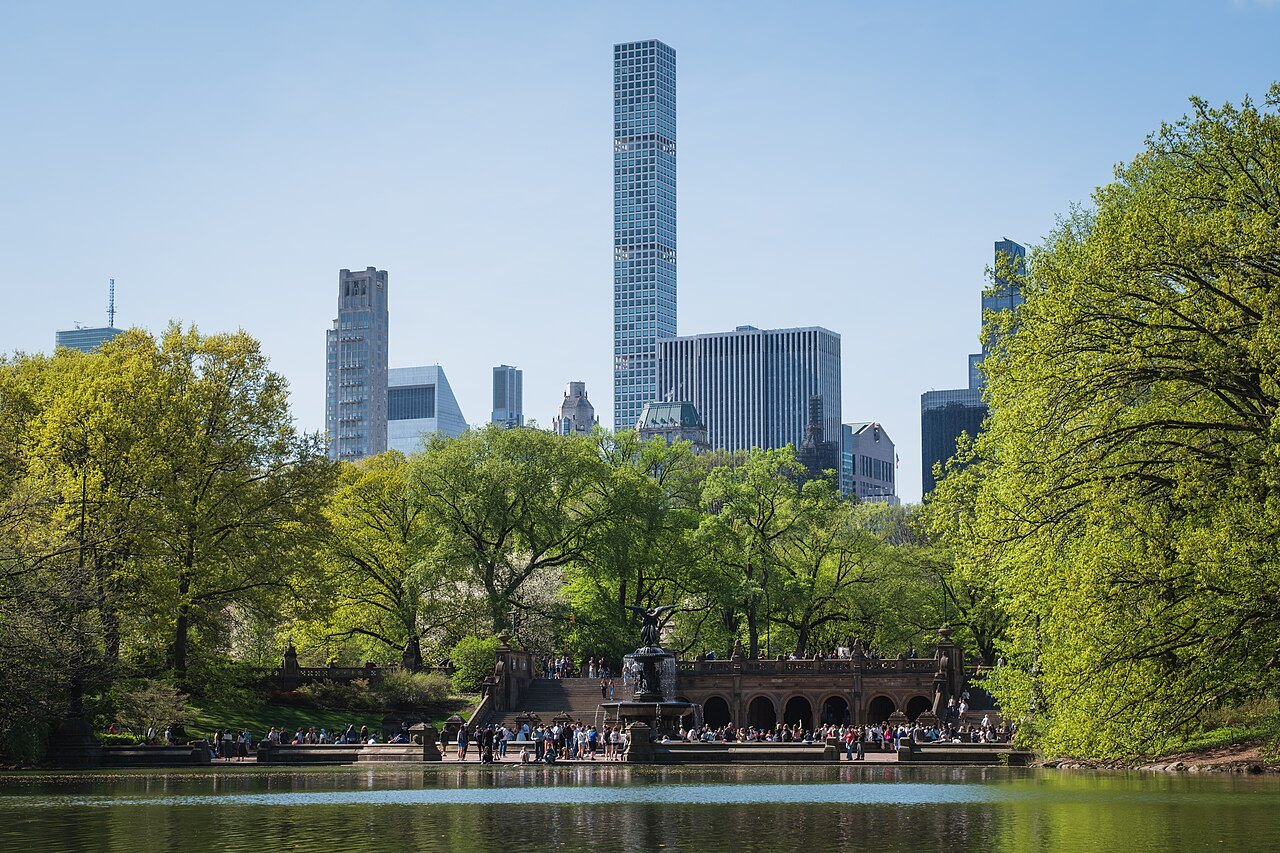 59 St → 110 St15Central Park843 acres, two and a half miles long, the first landscaped park in the United States.
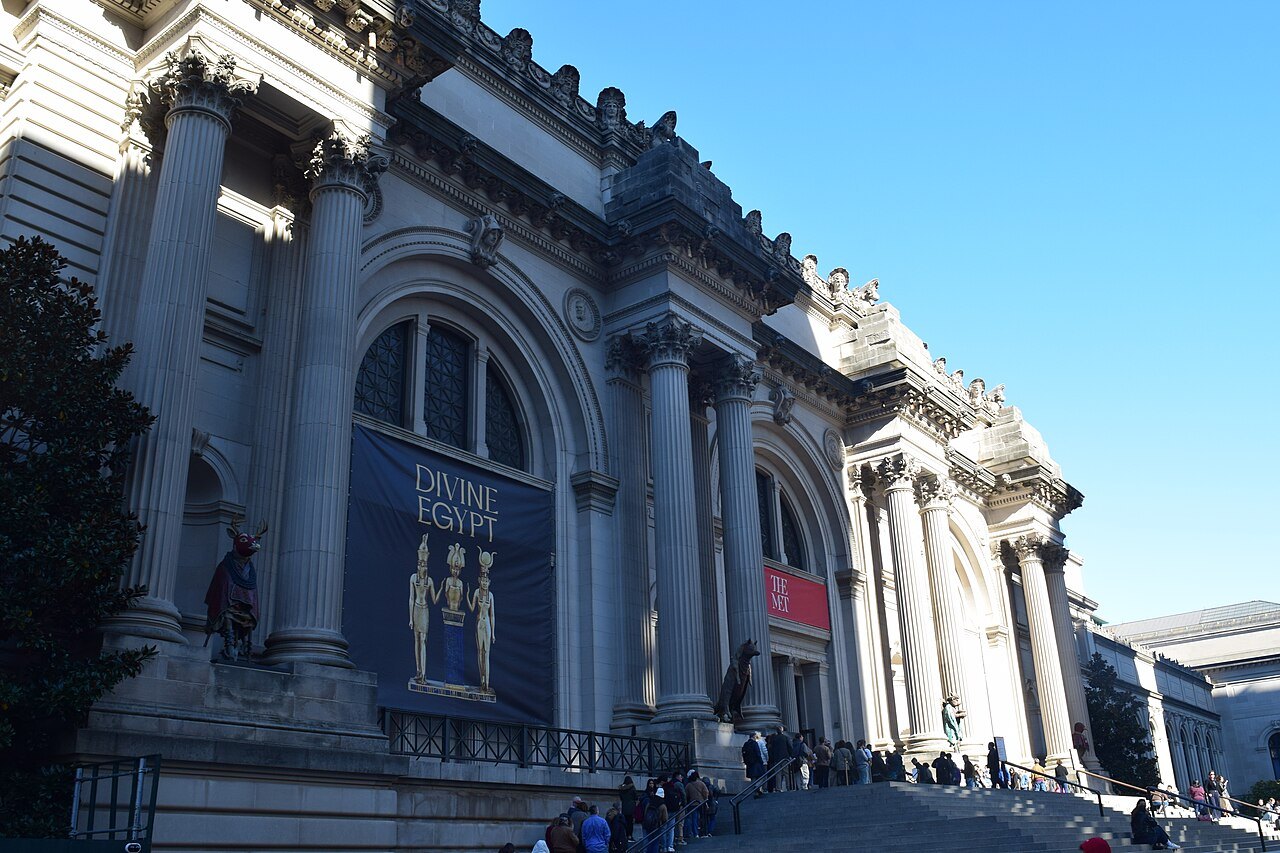 1000 Fifth Ave16The Metropolitan Museum of ArtThe largest art museum in the Americas, its first wing built in 1880.
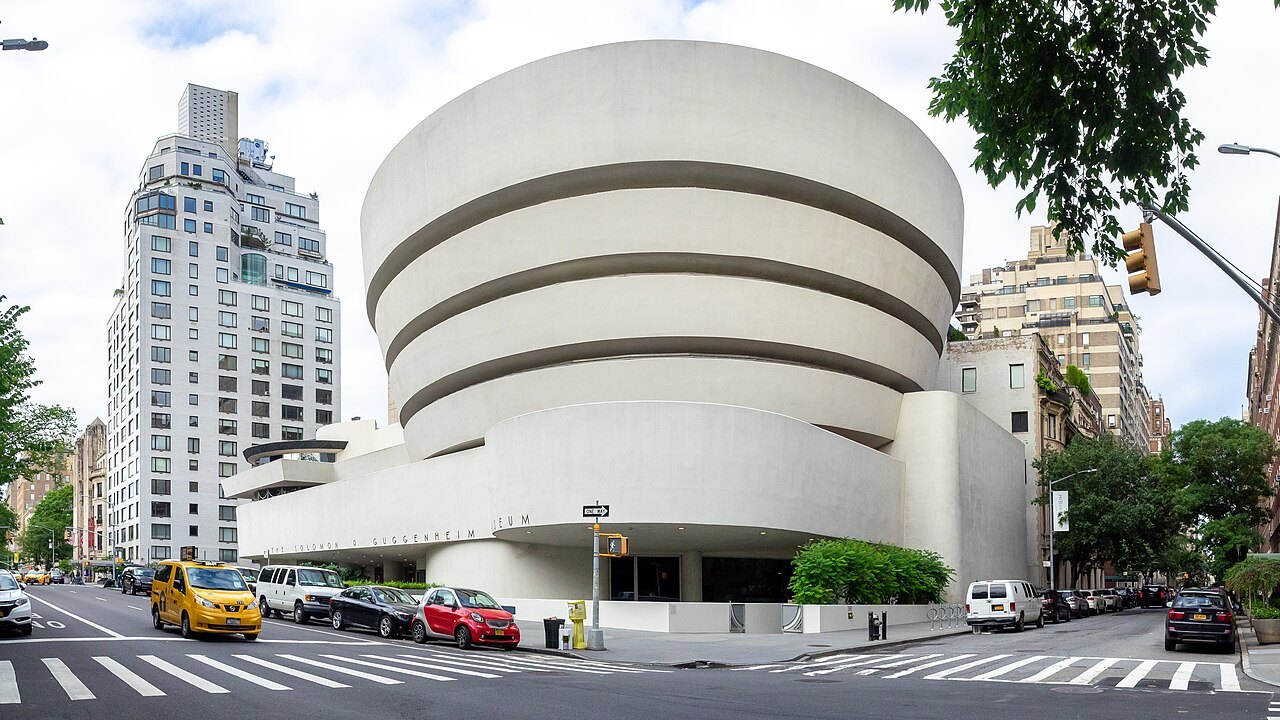 Fifth Ave · E 88–89 St17The GuggenheimFrank Lloyd Wright's spiral of 1959, fifteen years in the designing and building.
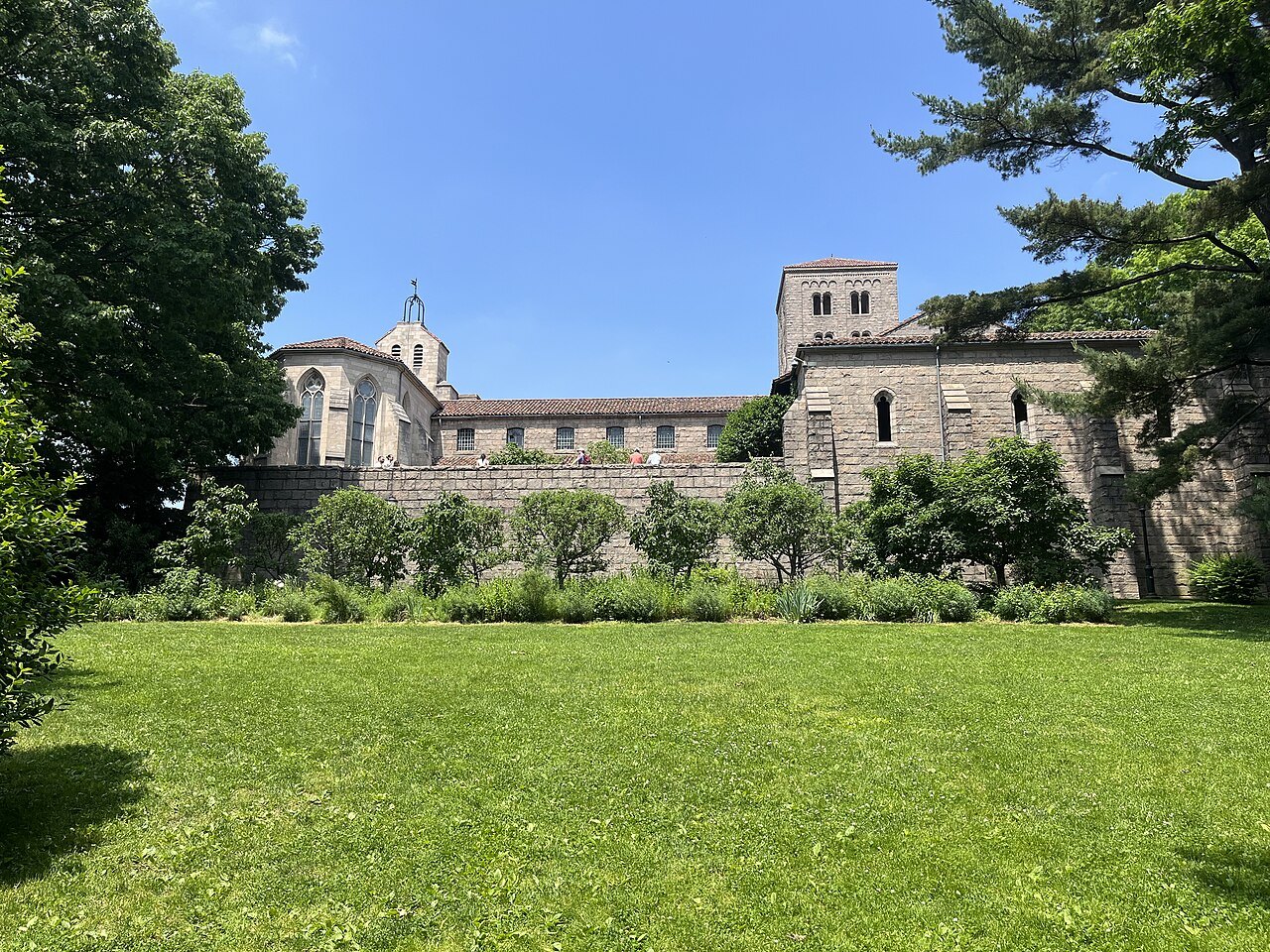 Fort Tryon Park18The CloistersMedieval Europe on a hilltop in Fort Tryon Park, built around four cloisters brought from France.
In full02
The Sights
How the sights are arranged
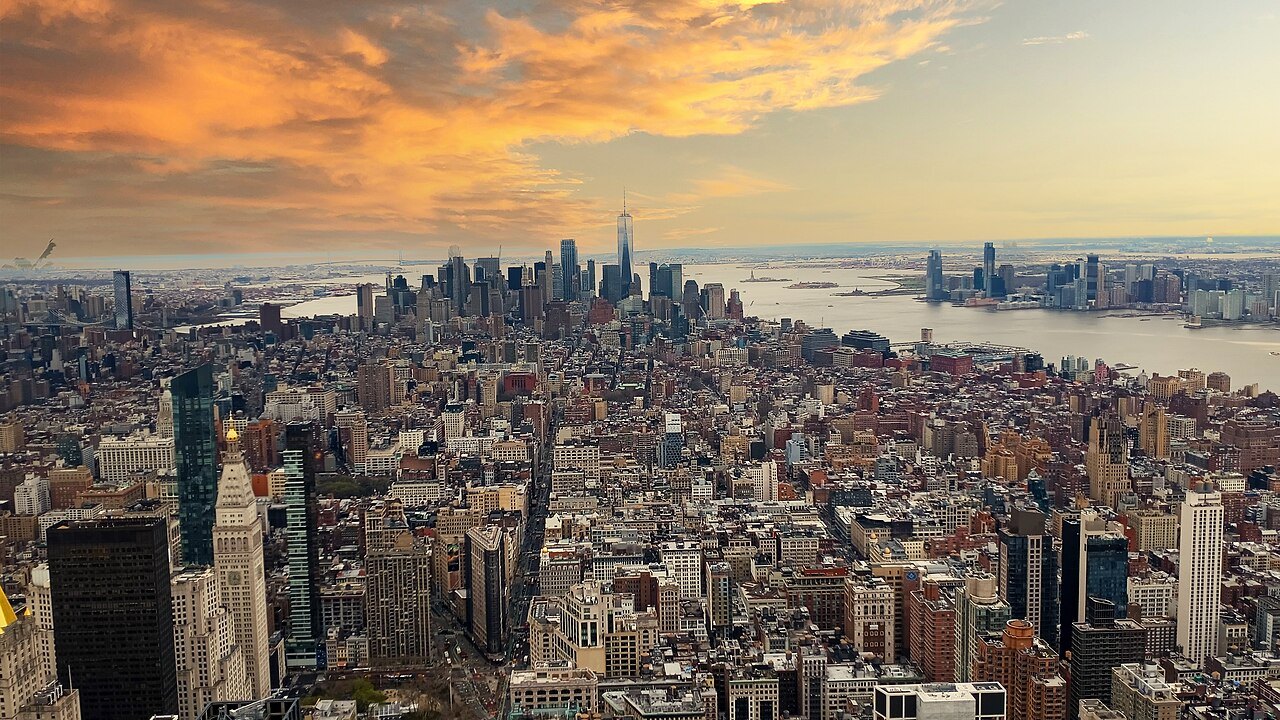
This guide covers Manhattan, the borough, and its eighteen sights run from south to north, the way the island itself runs and the way the city grew. The list begins in the harbor and the old Dutch and colonial town at the southern tip, climbs through the Village and the West Side into Midtown, follows 42nd Street and Fifth Avenue to Central Park, and ends with the museums along the park and the Cloisters at the top of the island.
Each sight has its own page of about a thousand words, with its history, a description of what you will see, practical notes on visiting and the sights nearby. The index on this page gives each one a single line and its address on the grid, so that you can see at a glance which sights stand close together. Below Houston Street the streets have names rather than numbers, and the addresses say so.
Where Manhattan ends
The borough is more than the island. Liberty Island, in Upper New York Bay, is federally owned but belongs to the State of New York, and it is an exclave of Manhattan surrounded by the waters of New Jersey; that is why the Statue of Liberty heads this list. Governors Island in the harbor and Roosevelt Island in the East River are part of the borough too, and so, oddly, is Marble Hill, a scrap of the island's northern tip cut off from the rest by the Harlem River Ship Canal in 1895, whose status was settled by the state legislature only in 1984.
Governors Island, 172 acres in the harbor, has two old forts, Fort Jay and Castle Williams, kept by the National Park Service as a national monument, and it makes a fine short trip of its own.
The Brooklyn Bridge is on this list because half of it belongs to Manhattan, and its walk begins at City Hall. Brooklyn itself, Coney Island, the Bronx and the Hudson Valley are outside the borough, and they appear on the day trips page instead.
Downtown
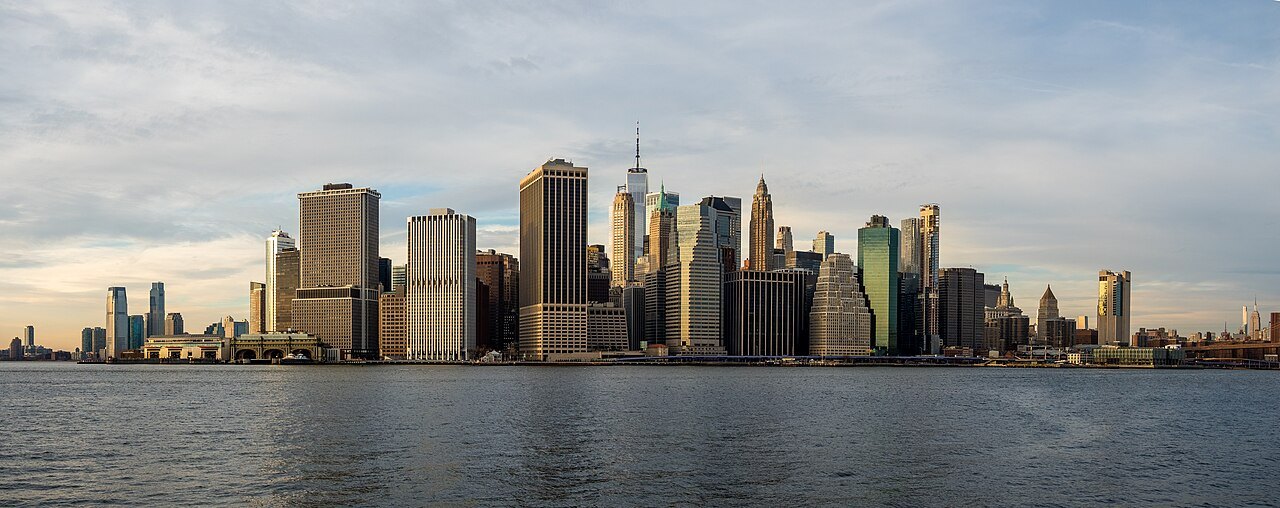
The first six sights are at the southern end of the island, where New Amsterdam was founded. The Statue of Liberty and Ellis Island are reached by ferry from the Battery. Wall Street, Trinity Church and Federal Hall stand in the crooked streets of the old city, the 9/11 Memorial and One World Trade Center rise a few blocks west, and the Brooklyn Bridge starts from City Hall. Chinatown and the Lower East Side, the old immigrant quarter, lie just to the north.
All six can be seen in one long day on foot, though the Statue alone takes half of it. The first day on the itineraries page follows them in order.
The Village and the West Side
North of the old city, Greenwich Village keeps its own pre-grid street plan around Washington Square, at the foot of Fifth Avenue. The High Line, the park built on an old elevated freight railroad, runs from Gansevoort Street in the Meatpacking District up the West Side to 34th Street. The Flatiron Building stands where Broadway crosses Fifth Avenue at Madison Square, and a few blocks north the Empire State Building rises at 34th Street.
Midtown and 42nd Street
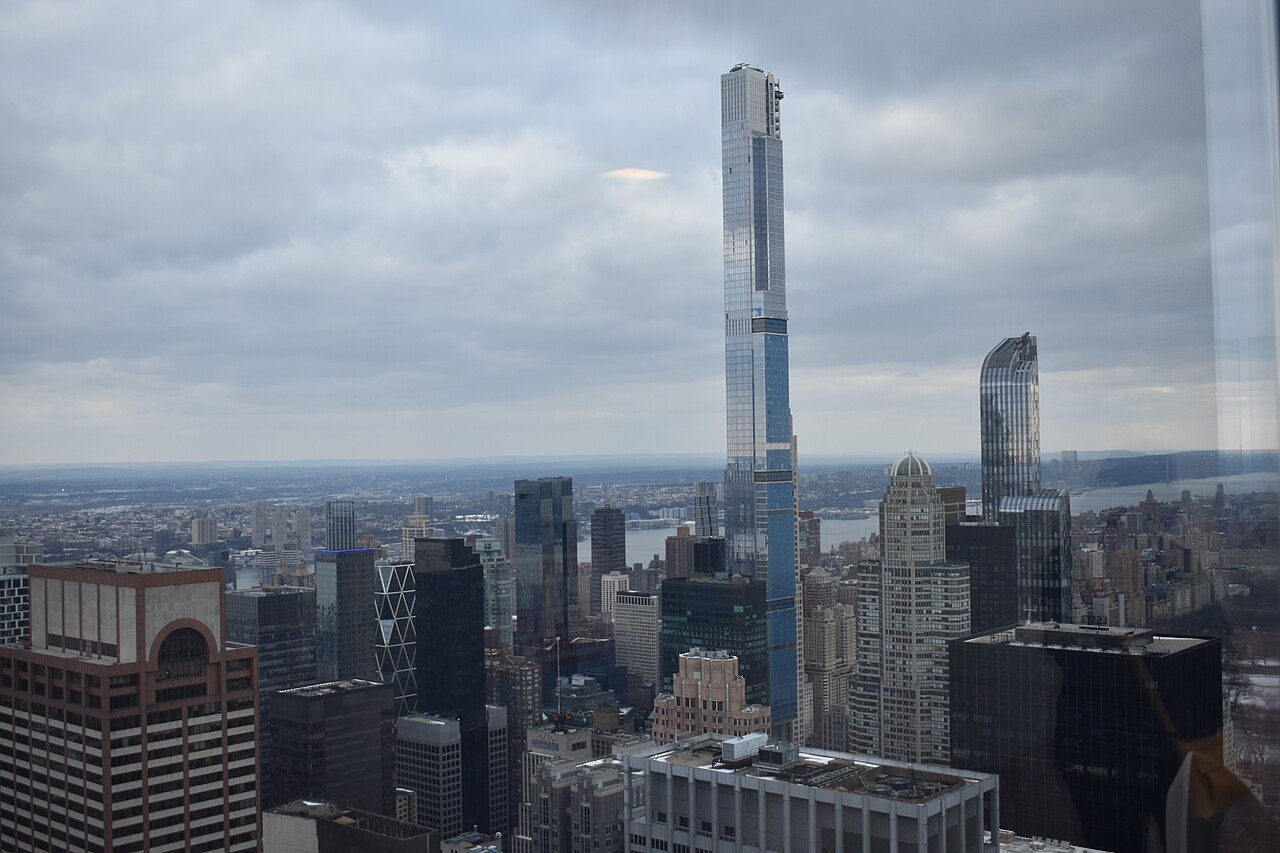
The heart of the list is the walk along 42nd Street that the homepage maps: the Chrysler Building at Lexington Avenue, Grand Central at Park Avenue, the New York Public Library and Bryant Park at Fifth Avenue and Times Square at Broadway, a mile of the most famous buildings in the city. Rockefeller Center and St. Patrick's Cathedral are a few blocks north up Fifth Avenue.
Five sights on one street is the densest concentration of landmarks on the island, and it is the place to start if you have only a few hours.
Central Park and the museums
Central Park fills the middle of the island from 59th to 110th Street, and along its eastern edge, on the stretch of Fifth Avenue called Museum Mile, stand the Metropolitan Museum of Art and the Guggenheim. They make a natural day together: the park in the morning, a museum in the afternoon.
The last sight is the farthest: the Cloisters, the Met's museum of medieval art, on a hilltop in Fort Tryon Park near the northern tip of the island, a long subway ride from Midtown and one of the most rewarding in the city.
Choosing what to see
No one sees all eighteen in a short stay. For a first visit of two or three days, choose the Statue of Liberty, the 9/11 Memorial, the Brooklyn Bridge, the walk along 42nd Street, one observation deck, Central Park and one great museum. With five days you can add the High Line, the Village, Chinatown and the Cloisters.
Match the sights to your interests, too. For architecture, follow the towers: the Flatiron, the Woolworth Building near City Hall, the Chrysler, the Empire State, Rockefeller Center and the Guggenheim. For history, stay downtown, where the city began. For art, give the Met a whole day and the Cloisters another.
Tickets and transit
Most of these places are free: the parks, the bridge, the squares, Grand Central, the 9/11 Memorial and St. Patrick's Cathedral cost nothing to see. The Statue of Liberty ferry, the 9/11 Museum, the observation decks and the museums charge admission, and some sell out; booking ahead explains which.
Every sight on this list is reachable by subway, and many are within walking distance of one another. Getting around explains how to ride.
What is not here
A list of eighteen leaves out far more than it includes. Manhattan also has the American Museum of Natural History on the Upper West Side, the Museum of Modern Art in Midtown, Lincoln Center, the United Nations headquarters on the East River, the Apollo Theater in Harlem and a hundred smaller places worth a visit. Some are mentioned on the neighborhood and itinerary pages, and the journal takes up others in depth.
The eighteen here are the places that define the island, the ones most visitors come for and the ones that explain how the city came to be. Start with them, and let the rest find you as you walk.