Home · Sights · Wall Street and Trinity Church
What you are looking at01
Wall Street and Trinity Church
Broadway · Wall St
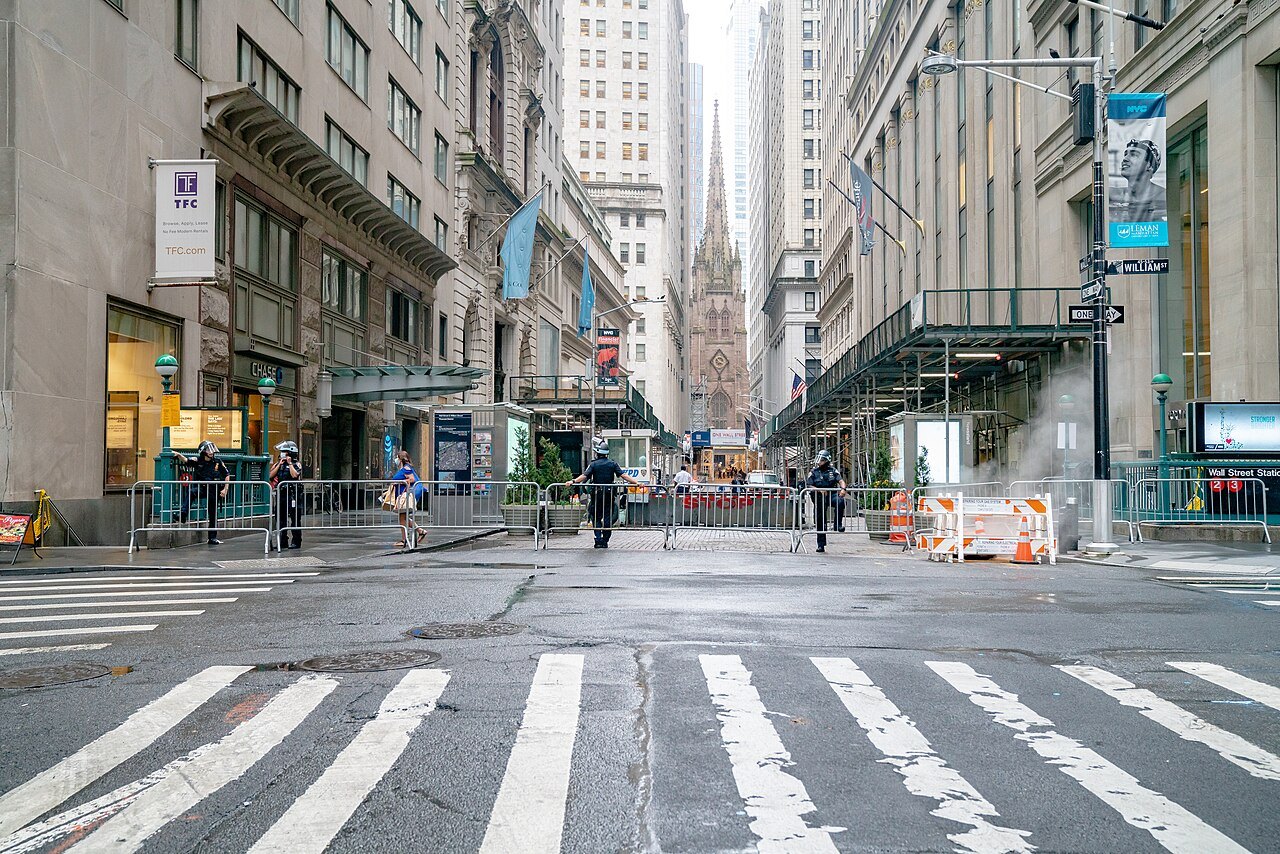
- 1Trinity ChurchRichard Upjohn's Gothic Revival church of 1846, at the head of Wall Street where it meets Broadway.
- 2Trinity ChurchyardThe burial ground around the church, where Alexander Hamilton and Robert Fulton lie.
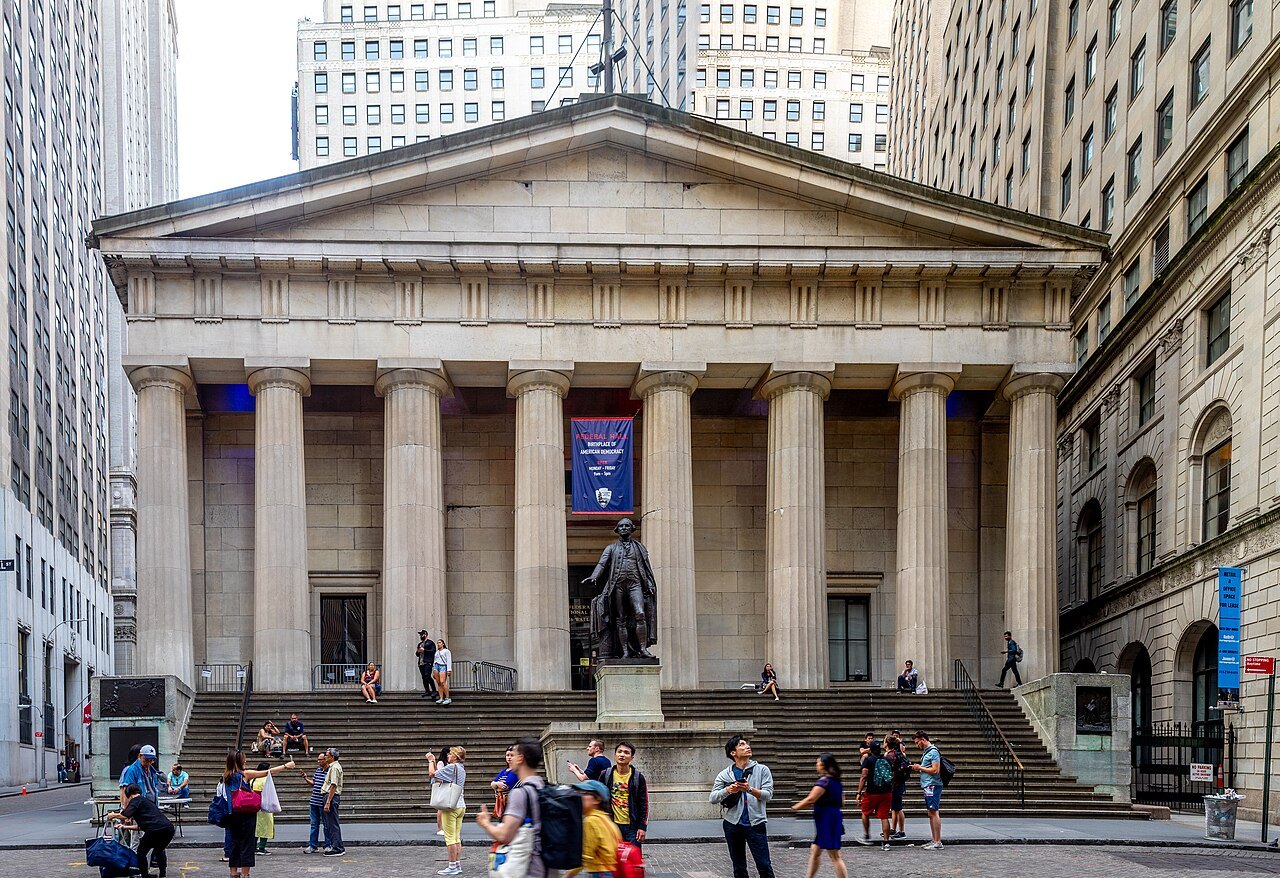
- 3Federal HallA Greek Revival custom house of 1842 on the site where Washington became president in 1789.
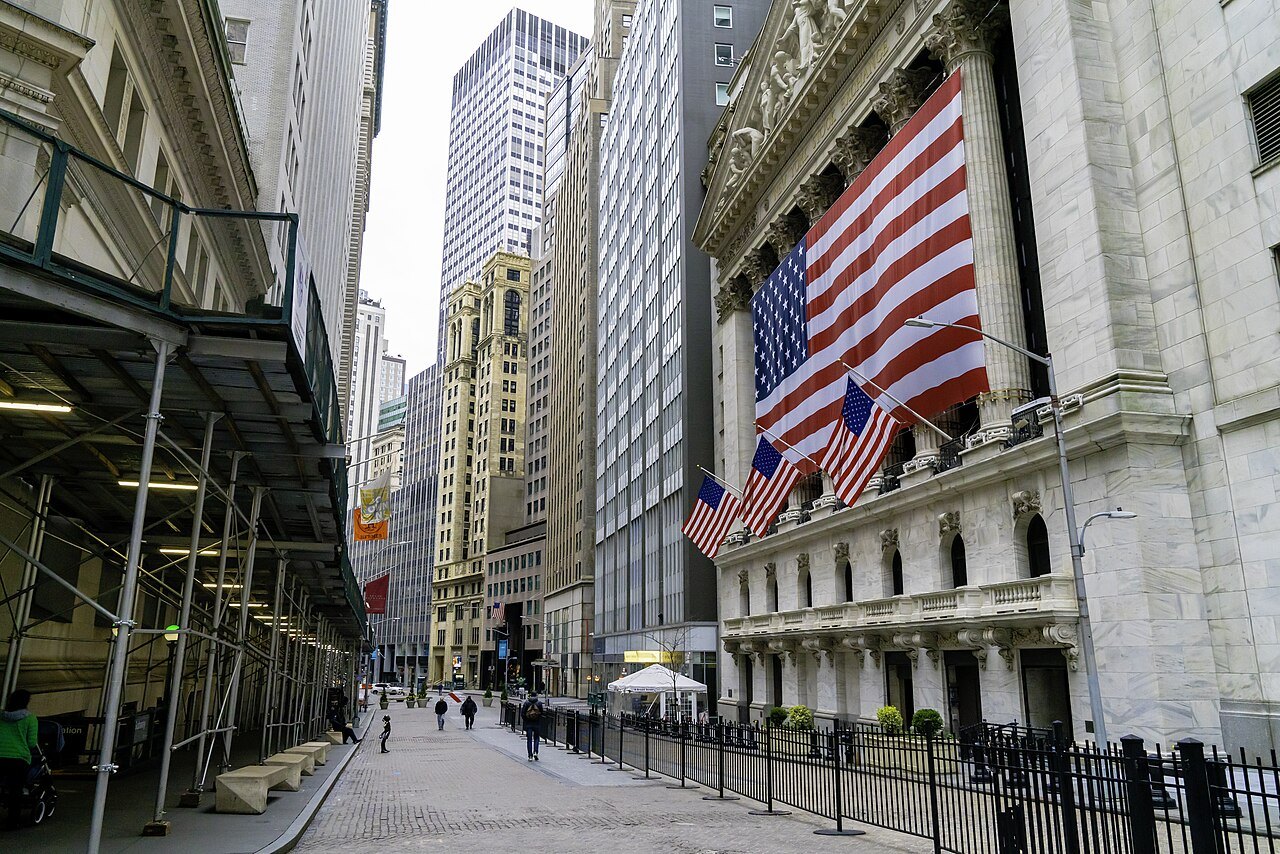
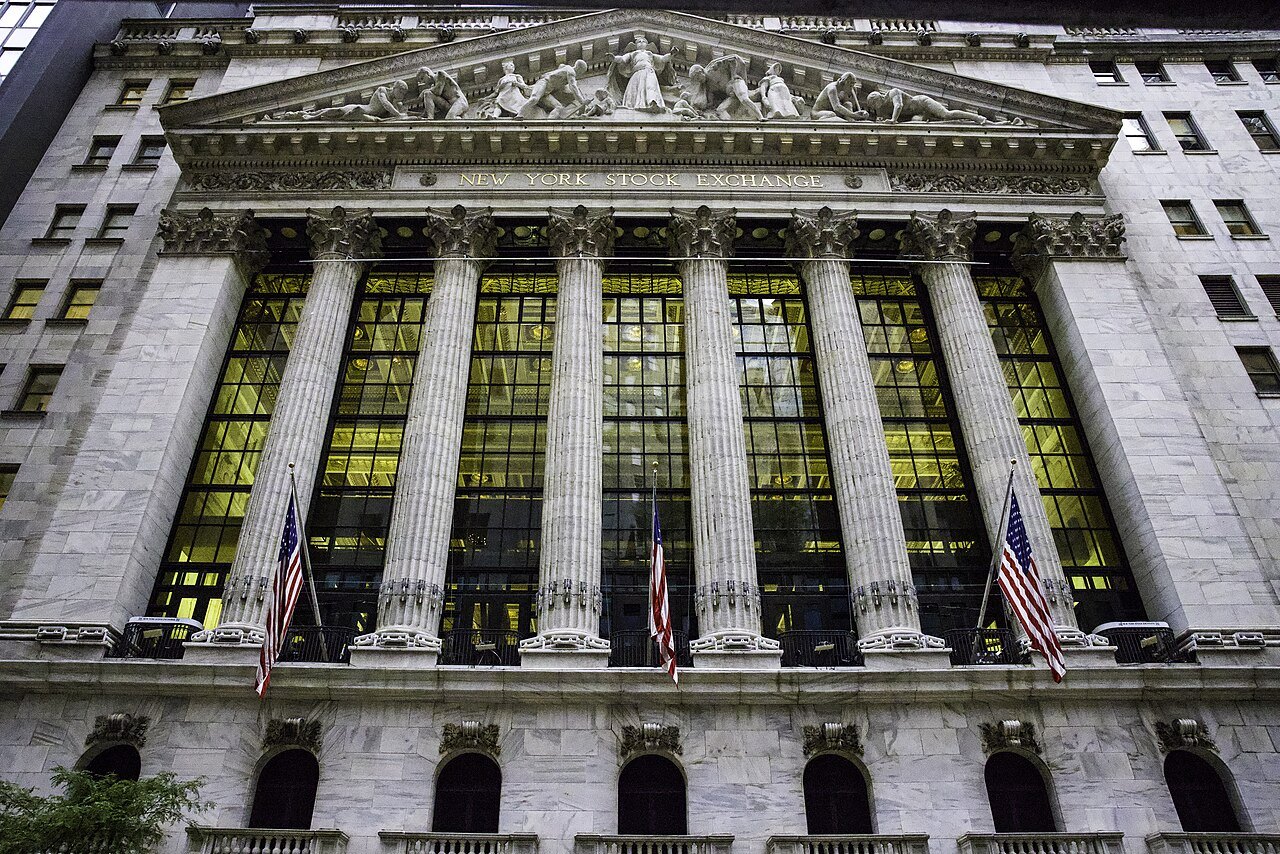
- 4The New York Stock ExchangeGeorge B. Post's temple front of 1903 on Broad Street, its pediment by John Quincy Adams Ward.
- 5Charging BullArturo Di Modica's bronze bull, left outside the Exchange without permission in 1989 and moved to Bowling Green.
- 6Bowling GreenThe oldest public park in the city, still inside its eighteenth-century iron fence.
The sight in full02
Reading the place
Why it matters
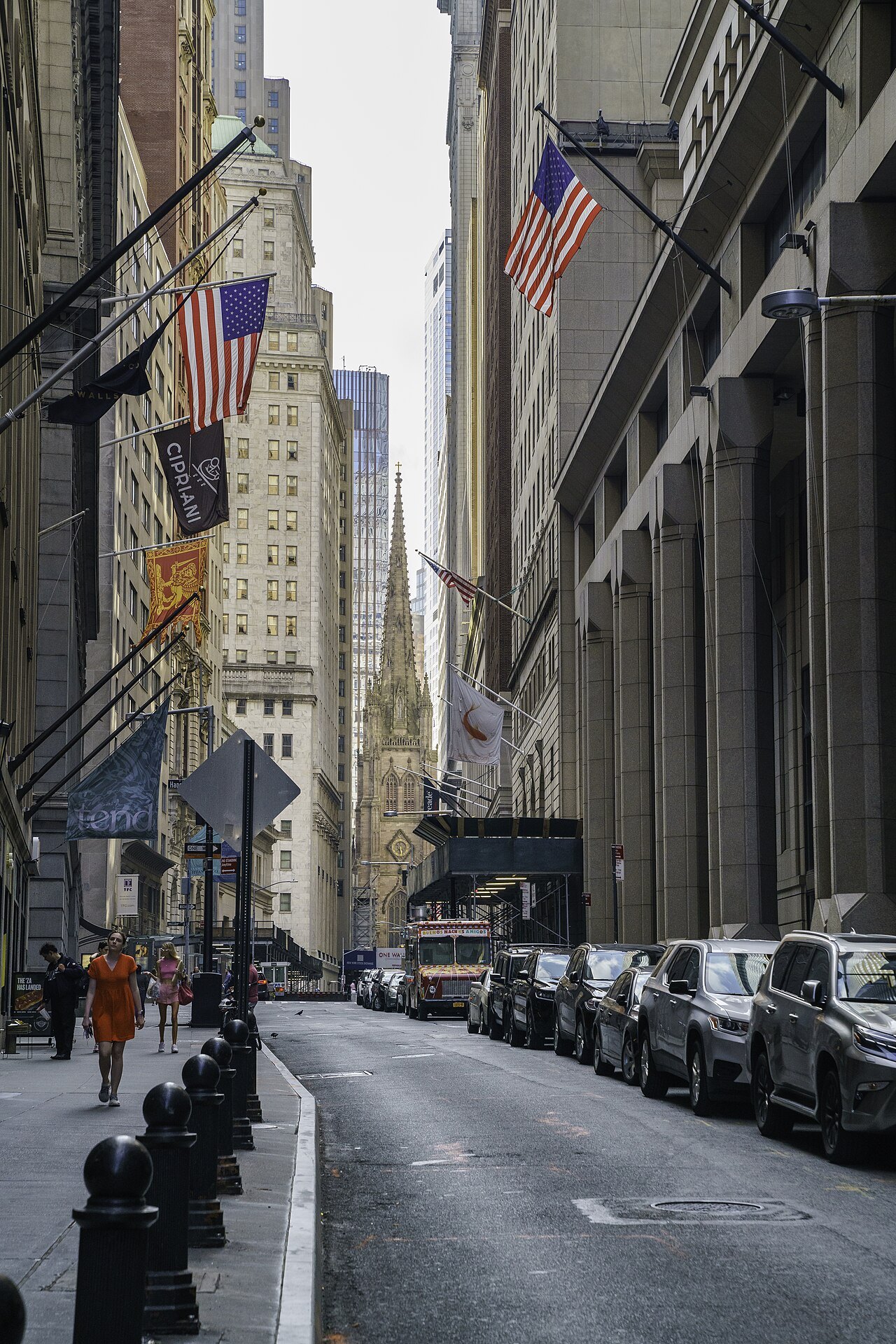
Wall Street runs eight blocks across the southern tip of Manhattan, from Broadway to South Street and the East River, just under two thousand feet in all. It is narrow, it bends, and its name has come to stand for the whole of American finance. It is also one of the oldest streets in the city, laid out long before the grid of 1811, and a walk along it takes in the church, the hall and the exchange that together tell the story of how the town at the tip of the island became a capital of money.
The name is literal. When this was New Amsterdam, the Dutch called the street Het Cingel, the Belt, and a real city wall stood along it from 1653 to 1699, the northern edge of the settlement. After the English took the town in 1664, the tax rolls called it the Belt or the City Wall. In the eighteenth century the street held a slave market and the first securities trading in the city, and from 1703 New York's city hall stood here, the building that became Federal Hall.
Trinity Church
Stand near the river end of Wall Street and look west, and the whole narrow street leads your eye to Trinity Church, standing across Broadway at its head. The present church is the third on the site. Richard Upjohn designed it in the Gothic Revival style, it was built from 1839 to 1846, and when it was consecrated its spire, topped by a gilded cross, dominated the skyline of Lower Manhattan. It was the tallest building in the United States until 1869 and the tallest in New York until 1890.
Around the church lies Trinity Churchyard, one of the three burial grounds the parish uses. Alexander Hamilton is buried here with his wife Elizabeth Schuyler Hamilton and her sister Angelica Schuyler Church, and so are the steamboat builder Robert Fulton and the treasury secretary Albert Gallatin. Columbia University began on the church's land as King's College in 1754.
Trinity also runs St. Paul's Chapel a few blocks north on Broadway. Built from 1764 to 1766, it is the oldest surviving church building in Manhattan. George Washington worshipped there, and after the attacks of 2001 it stood unharmed across the street from the ruins, which is why New Yorkers call it the little chapel that stood.
Federal Hall
Halfway along Wall Street, facing the head of Broad Street, a Greek temple sits on a flight of steps. This is Federal Hall National Memorial, completed in 1842 as the New York Custom House and later used as a subtreasury until 1925. Its front is a colonnade of Doric columns, and inside is a domed rotunda.
The building on this site before it was the first capitol of the United States under the Constitution. The First Congress met there, and George Washington took his oath of office as the first president on its second-floor balcony on April 30, 1789. That building was torn down in 1812. The bronze statue of Washington on the steps, by John Quincy Adams Ward, marks roughly the spot. The National Park Service runs the building, its exhibits can be seen in about half an hour, and it is not always open, so check the Park Service's hours before you go in; the steps and the statue are there whenever you pass.
The Stock Exchange and Broad Street
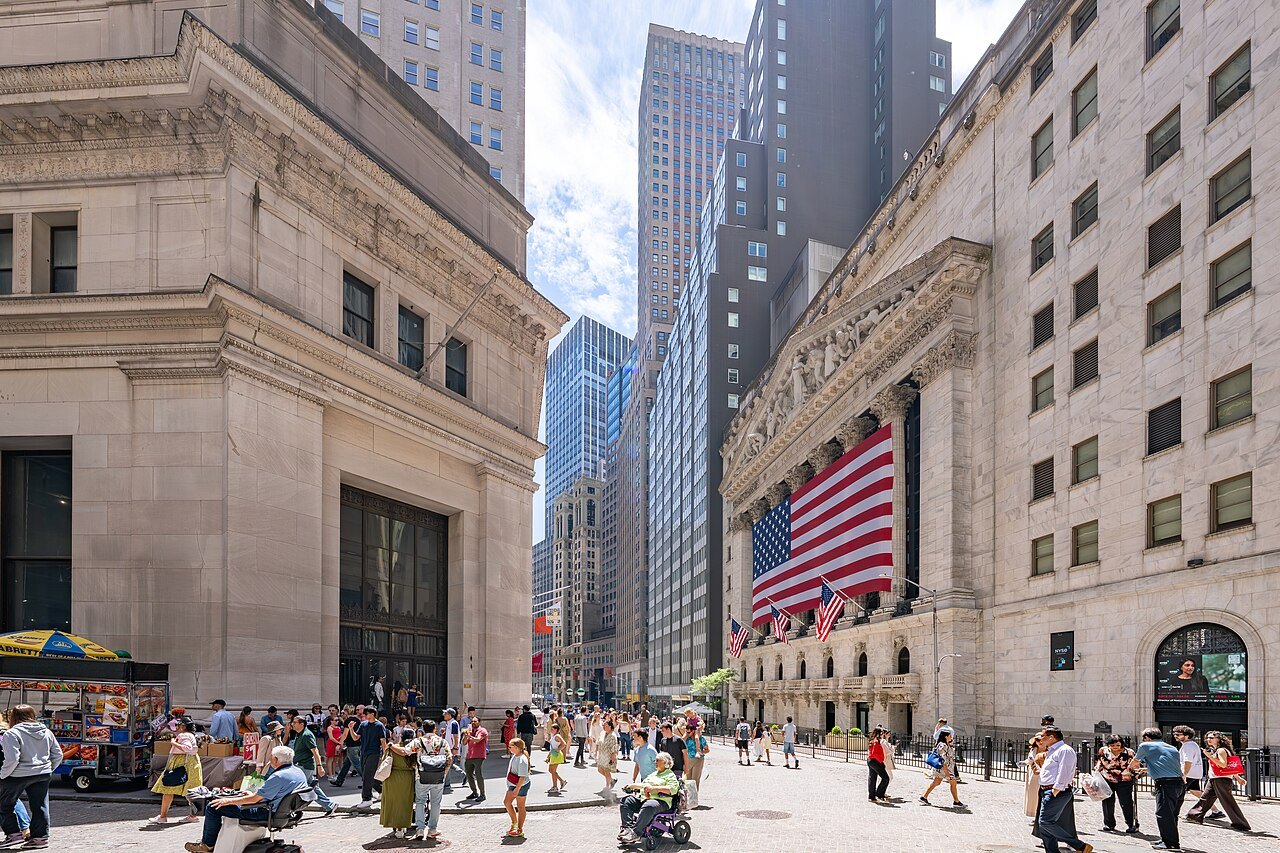
Across from Federal Hall, the New York Stock Exchange fills the corner of Wall and Broad Streets. Its famous front faces Broad Street: a colonnade of six columns under a sculpted pediment by John Quincy Adams Ward and Paul Wayland Bartlett, showing commerce and industry. George B. Post designed the building, and it was completed in 1903. The flag-draped facade is what you come to see; the trading floor was built with little room for visitors, and the Exchange is a working building, not a museum.
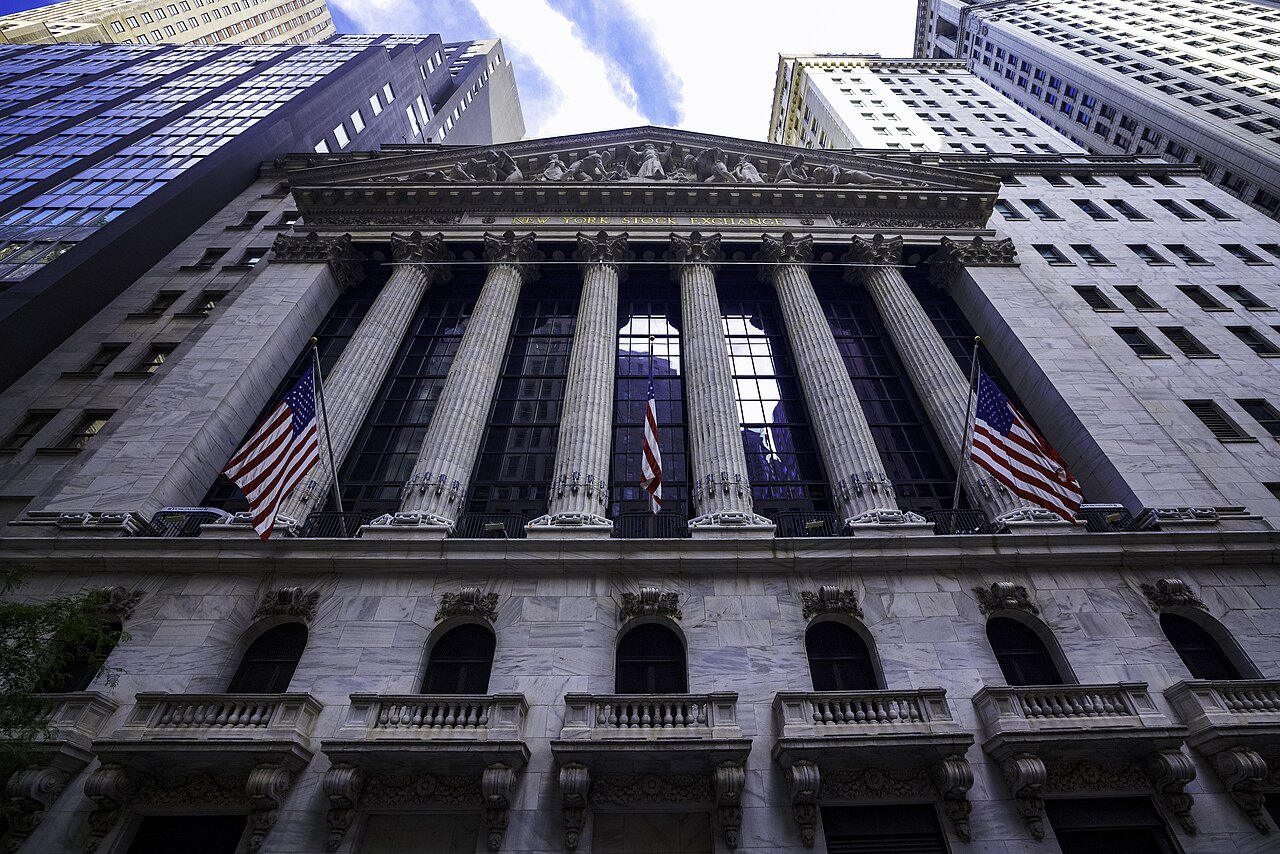
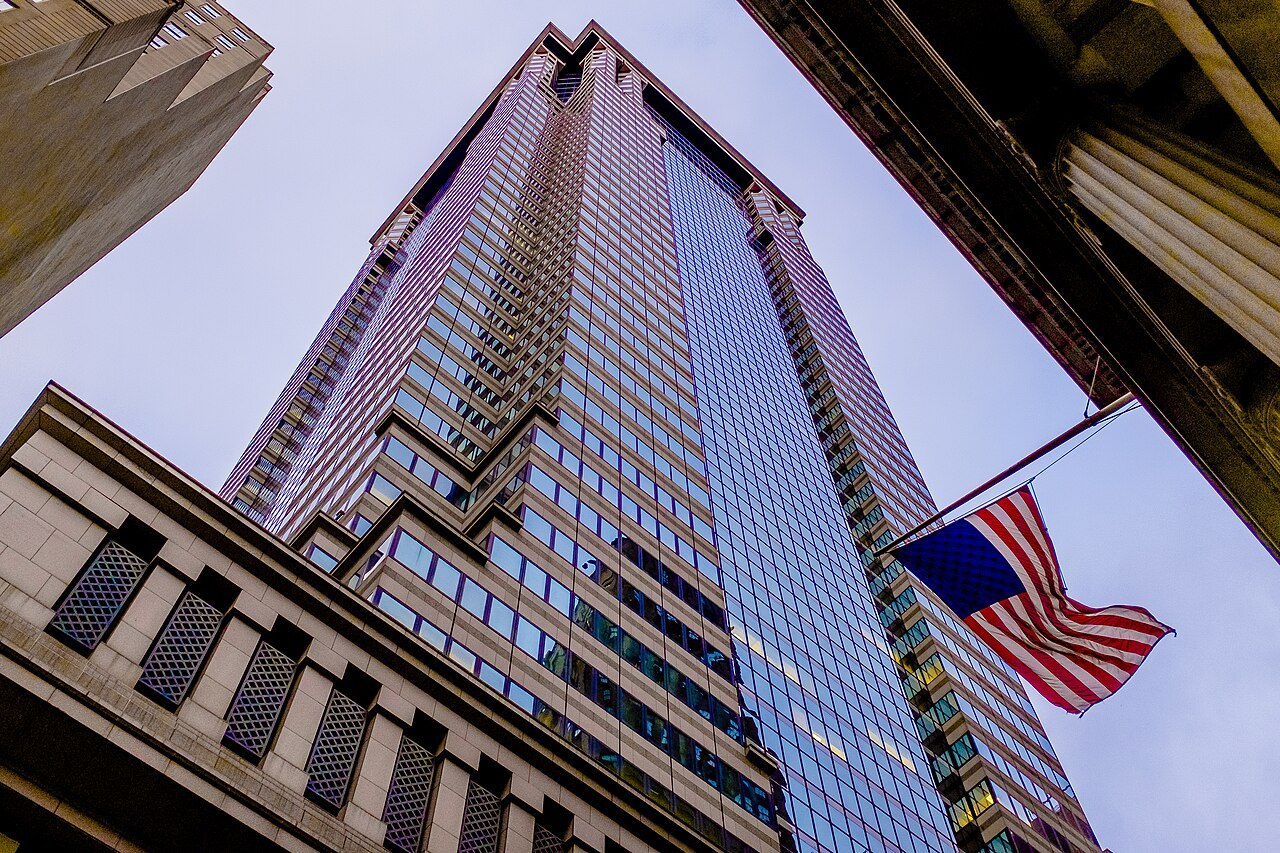
Walk down Broad Street and you pass the heavy bank buildings of the early twentieth century. The whole district reads best on foot, looking up, because the streets are so narrow that the towers lean in over you.
Charging Bull and Bowling Green
Two blocks down Broadway from Trinity is the bronze bull that most visitors come looking for. Charging Bull was made by the Italian artist Arturo Di Modica after the stock market crash of 1987. In December 1989 he brought it on a truck and left it outside the Stock Exchange without permission; the police removed it the same day, and it was installed at Bowling Green six days later, at first on a temporary permit. It has stayed ever since.
The bull stands at the top of Bowling Green, the oldest public park in the city. It was laid out next to the Dutch fort, made a park by the British in 1733, and is still surrounded by its original eighteenth-century cast-iron fence.
How to visit
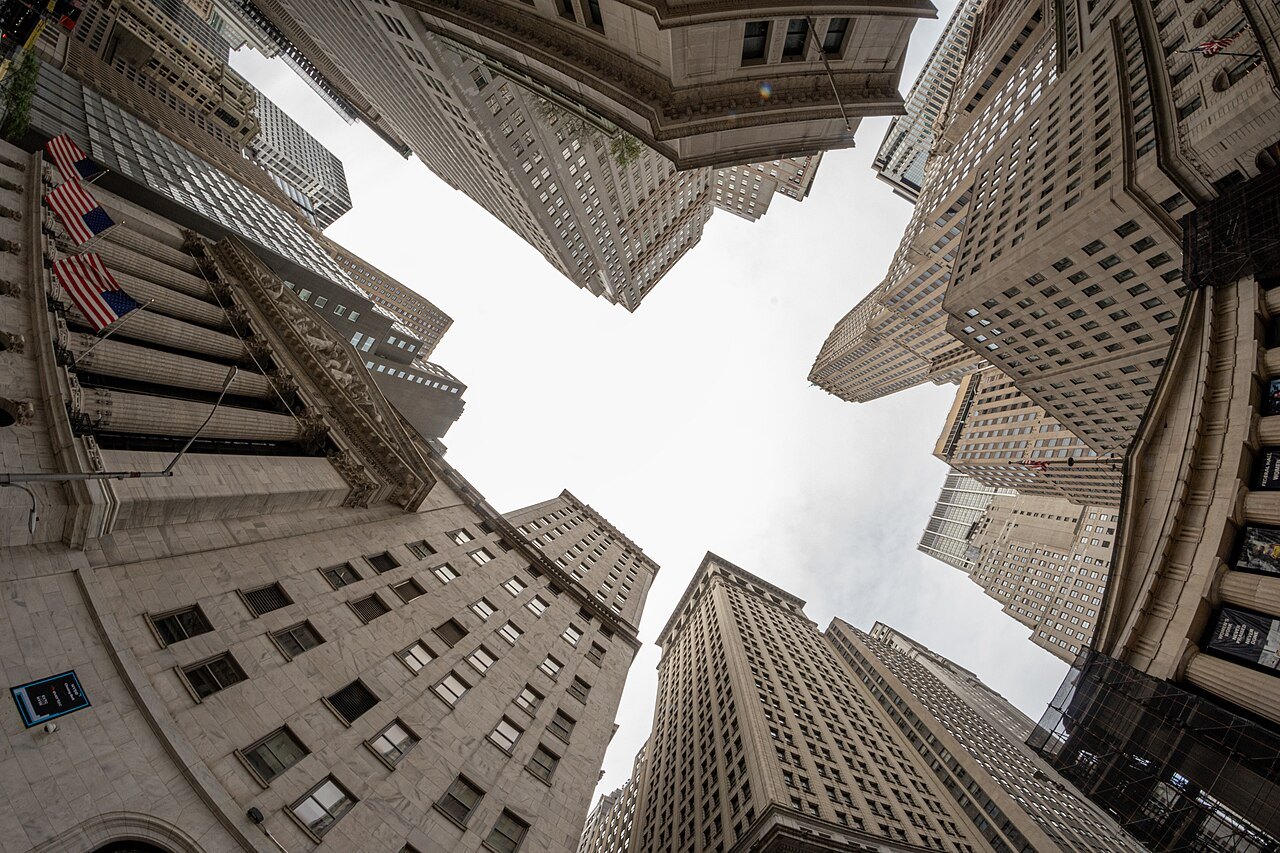
The street is always open and costs nothing to walk. The easiest way is from the top: start at Trinity Church on Broadway, walk down Wall Street past Federal Hall and the Exchange, turn down Broad Street, and come back along Broadway to Bowling Green and the bull. It is a short walk, and an hour lets you look into Trinity and Federal Hall on the way.
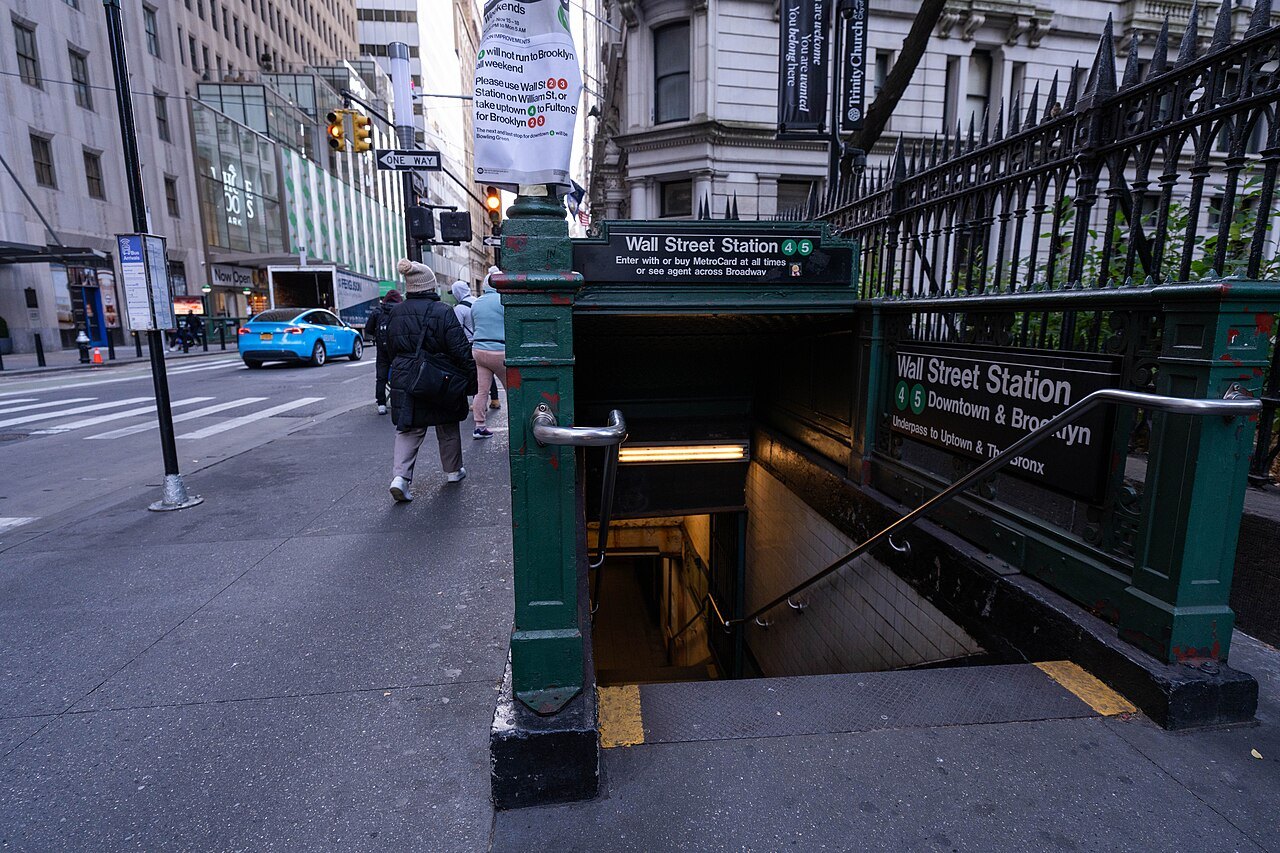
The crowd at the bull can be thick in the middle of the day, and the district is quietest on weekends, when the office workers are gone. Several subway lines stop under Wall Street and Broadway; getting around explains them. Because the old streets have names rather than numbers, the grid page explains where the numbered plan begins.
Nearby
From Bowling Green it is a few minutes to the Battery and the ferries to the Statue of Liberty. North along Broadway are St. Paul's Chapel and the 9/11 Memorial, and east of City Hall the walkway of the Brooklyn Bridge begins.
Where to go next03
Nearby
- Nearby · New York HarborThe Statue of Liberty and Ellis IslandA copper goddess dedicated in 1886 on an island in New York Harbor, and beside her the station where about twelve million immigrants were inspected between 1892 and 1954 — both reached on the same ferry.Read the page →
- Nearby · West St · Vesey StThe 9/11 Memorial and One World Trade CenterTwo square pools set in the footprints of the Twin Towers, their parapets inscribed with the names of the dead, beside a museum seventy feet below ground and the tallest building in the Western Hemisphere.Read the page →
- Nearby · Park Row · City HallThe Brooklyn BridgeThe bridge of 1883 that first tied Manhattan to Brooklyn: two granite towers pierced by Gothic arches, a web of steel cables, and a wooden promenade raised above the traffic for anyone who wants to walk across.Read the page →