Home · When to Come
The year01
Month by month
- JanuaryThe coldest month, with a daily mean just above freezing; quiet after the holidays. The sunrise lines up with the cross streets in early January.
- FebruaryCold, and the driest month of the year; snow is possible, and the museums are at their least crowded.
- MarchWinter lingers, and snow can fall until late in the month before spring arrives.
- AprilSpring, the wettest season; the park turns green and the trees along the Mall come into leaf.
- MayMild and bright. Near the end of the month the setting sun lines up with the cross streets: the first Manhattanhenge.
- JuneSummer begins, and the parks fill: concerts, outdoor theater and long evenings.
- JulyThe hottest month, humid, with late-day thunderstorms. The second Manhattanhenge sunset falls in the middle of the month.
- AugustHot and humid, with heat radiating from the pavement at night; the time for the ferries and the waterfront.
- SeptemberSummer's heat breaks into mild, drier weather, one of the best months for walking.
- OctoberMild and usually settled; the leaves in Central Park begin to turn.
- NovemberThe marathon on the first Sunday, the parade on Thanksgiving, and the tree going up at Rockefeller Center.
- DecemberThe tree lit, the rinks open, the Winter Village in Bryant Park, and the ball drop in Times Square on New Year's Eve.
In full02
When to Come
A city of four real seasons
New York has a humid subtropical climate at the edge of a continental one, which in practice means four distinct seasons. Summers are long, hot and humid, with frequent thunderstorms late in the day. Winters are cold and damp, with snow or a mix of snow and rain on occasion. Spring and fall are unpredictable, anything from chilly to warm, but usually mild and dry, and they are the most comfortable seasons for the thing every visitor does most here, which is walk.
Nothing here shuts for a season. What changes is how the city feels: the parks and the waterfront in summer, the holidays and the rinks in winter, the long walks in spring and fall. This page takes the year month by month and picks out the dates worth building a trip around.
Summer
Summer runs from June to early September. The daily mean temperature in July, the hottest month, is about 77 °F, and on an average of about seventeen days each summer the thermometer passes 90 °F; in some years it tops 100. Nights stay warm, because the pavement and the buildings give back the heat they soaked up during the day, and the city can be several degrees warmer at night than the country around it.
Plan the days around the heat: museums and air-conditioned interiors in the middle of the day, parks and walks in the morning and evening, and the water whenever you can. Central Park has free open-air theater at the Delacorte Theater, where the Public Theater stages Shakespeare in the Park, and summer concerts by the New York Philharmonic and the Metropolitan Opera have been held on its Great Lawn and Sheep Meadow, and the ferries across the harbor and along the East River catch the breeze. Carry water, and expect sudden thunderstorms in the late afternoon.
Winter
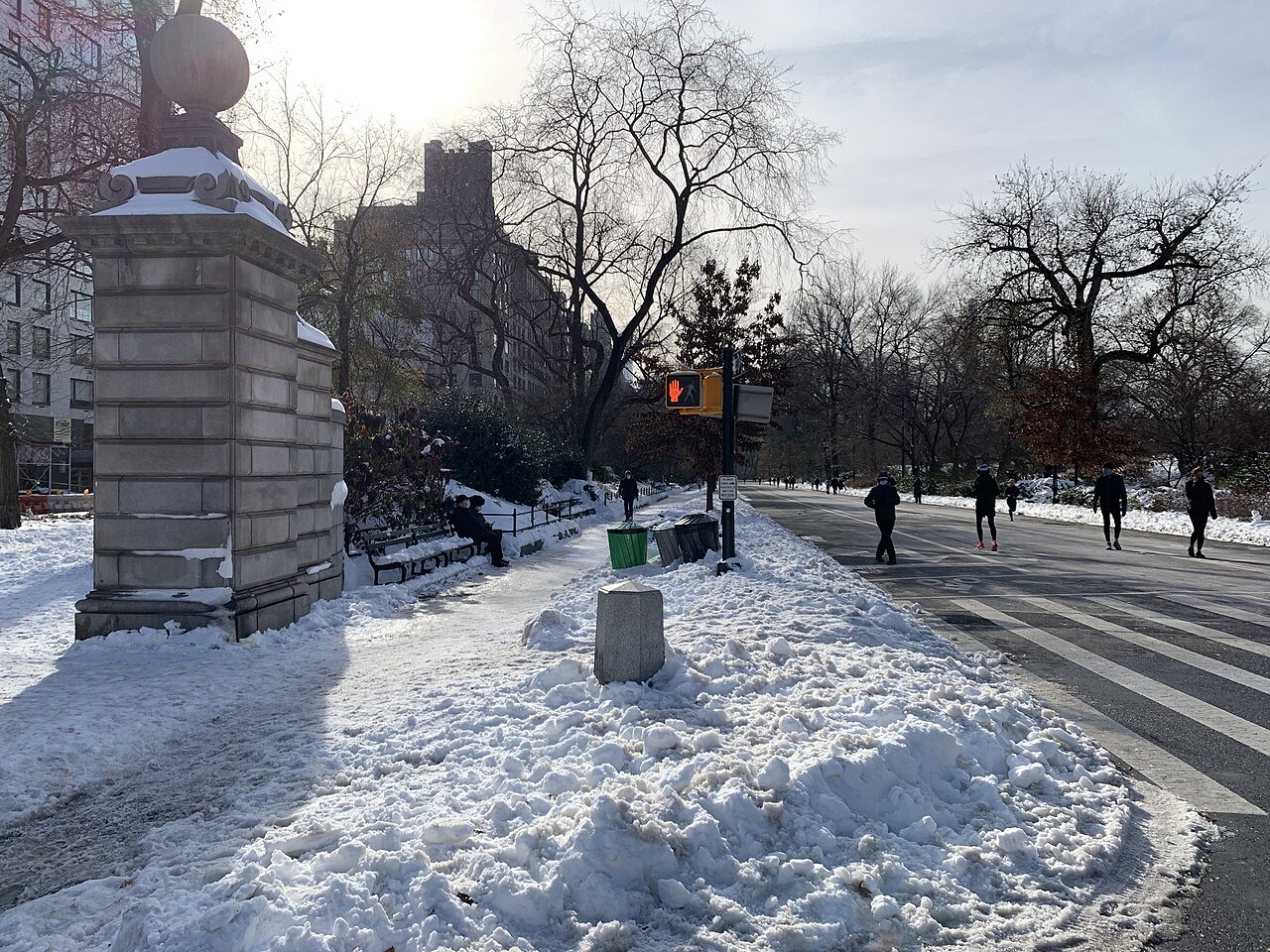
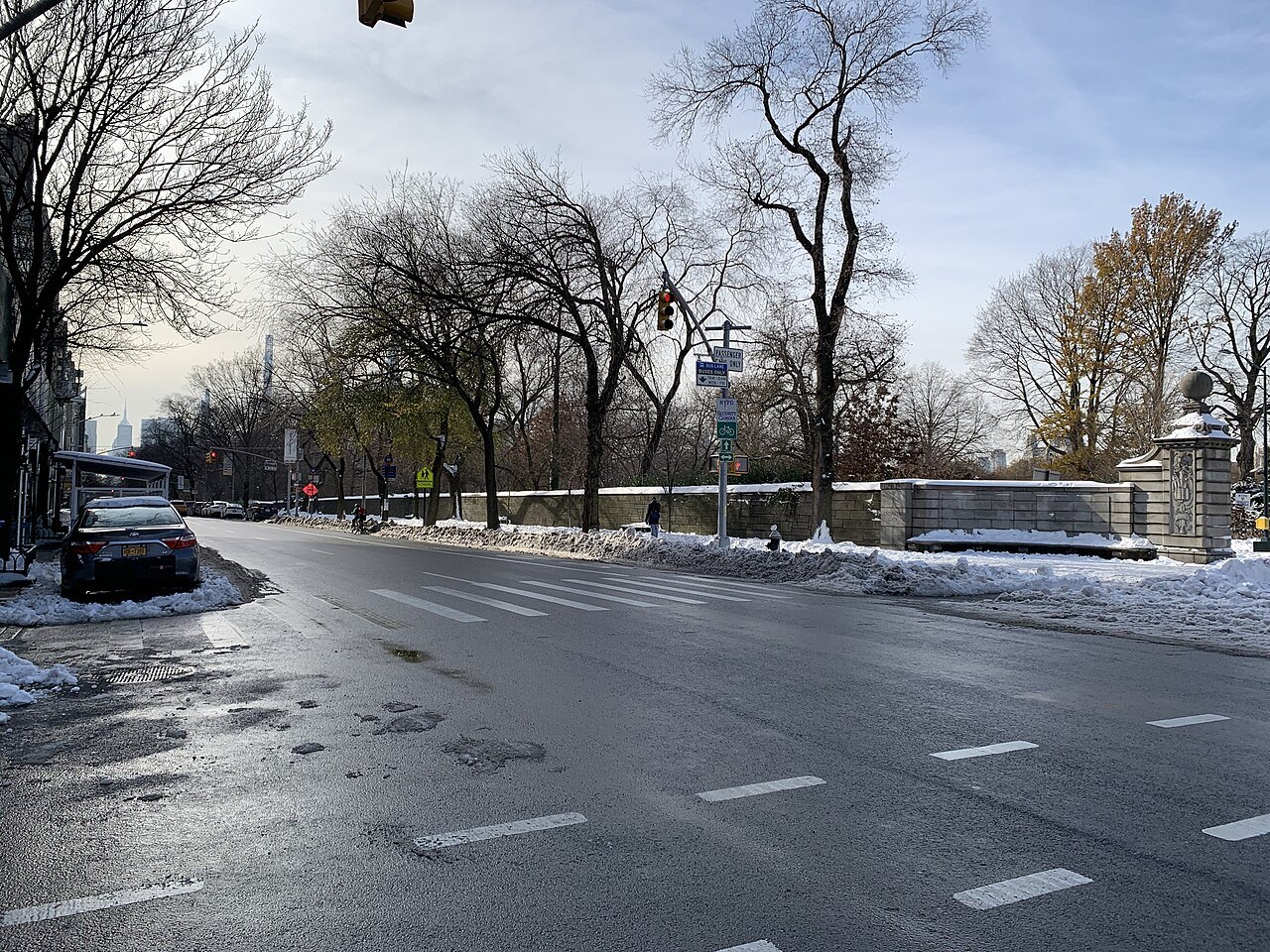
Winter runs from December into March. The daily mean in January, the coldest month, is just above freezing, and the temperature usually drops to around 10 °F several times each winter, while a few days in the coldest month reach 60. Most snow falls between December and late March, about two feet a season on average, but it varies enormously from year to year. The wind off the rivers can make the cross streets bitterly cold.
It is also the season of the holidays, and for many visitors the reason to come. The Rockefeller Center Christmas Tree, a tradition since 1933, goes up in the middle of November and is lit in a ceremony on the last Wednesday of November or the first Wednesday of December, broadcast live every year since 1997. The rink below it has been open in winter since 1936, and Bryant Park's Winter Village adds another rink and a market of small shops. On New Year's Eve the ball drops from the tower at One Times Square, as it has almost every year since 1907. After the holidays the city goes quiet, and January and February are the easiest months of the year to see the great museums without crowds.
Spring and fall
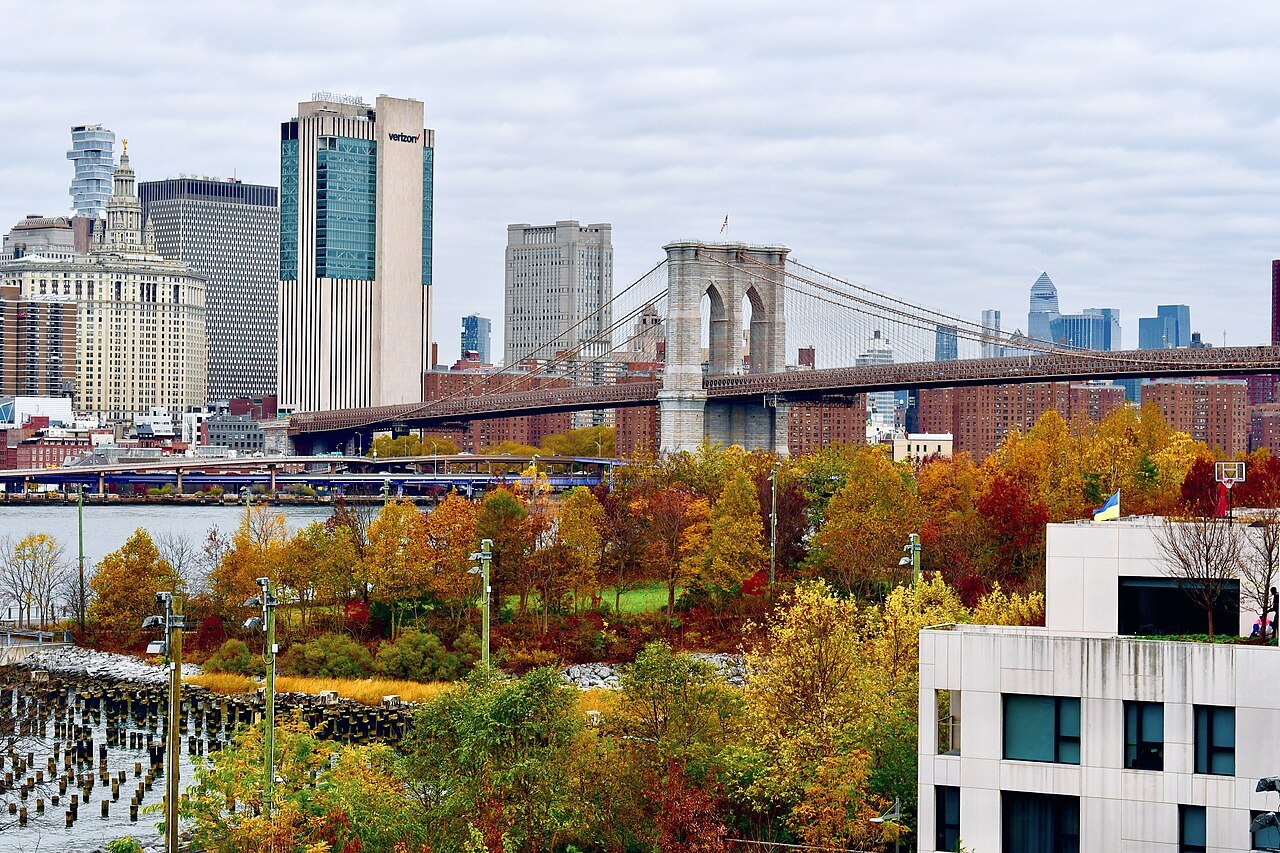
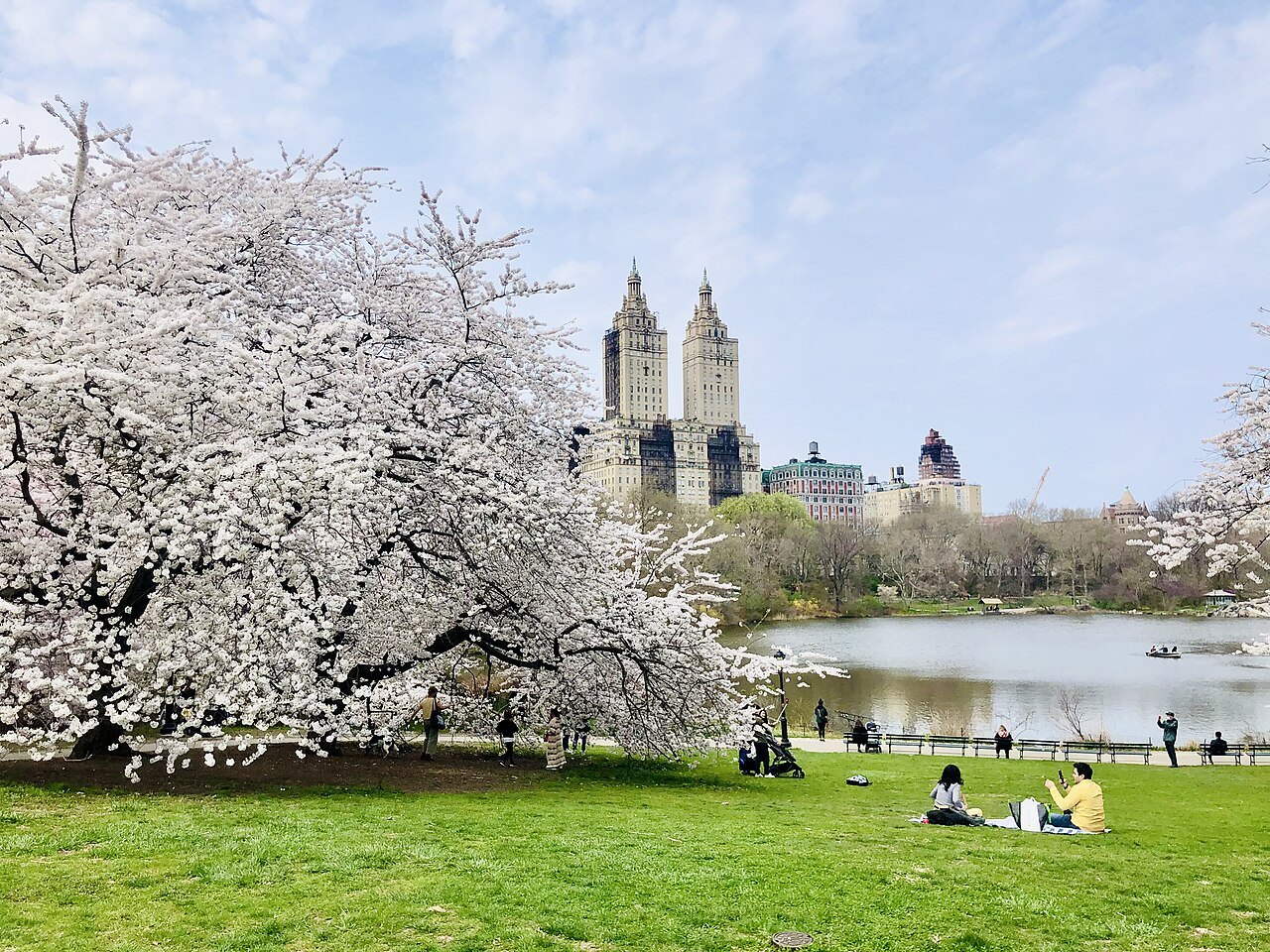
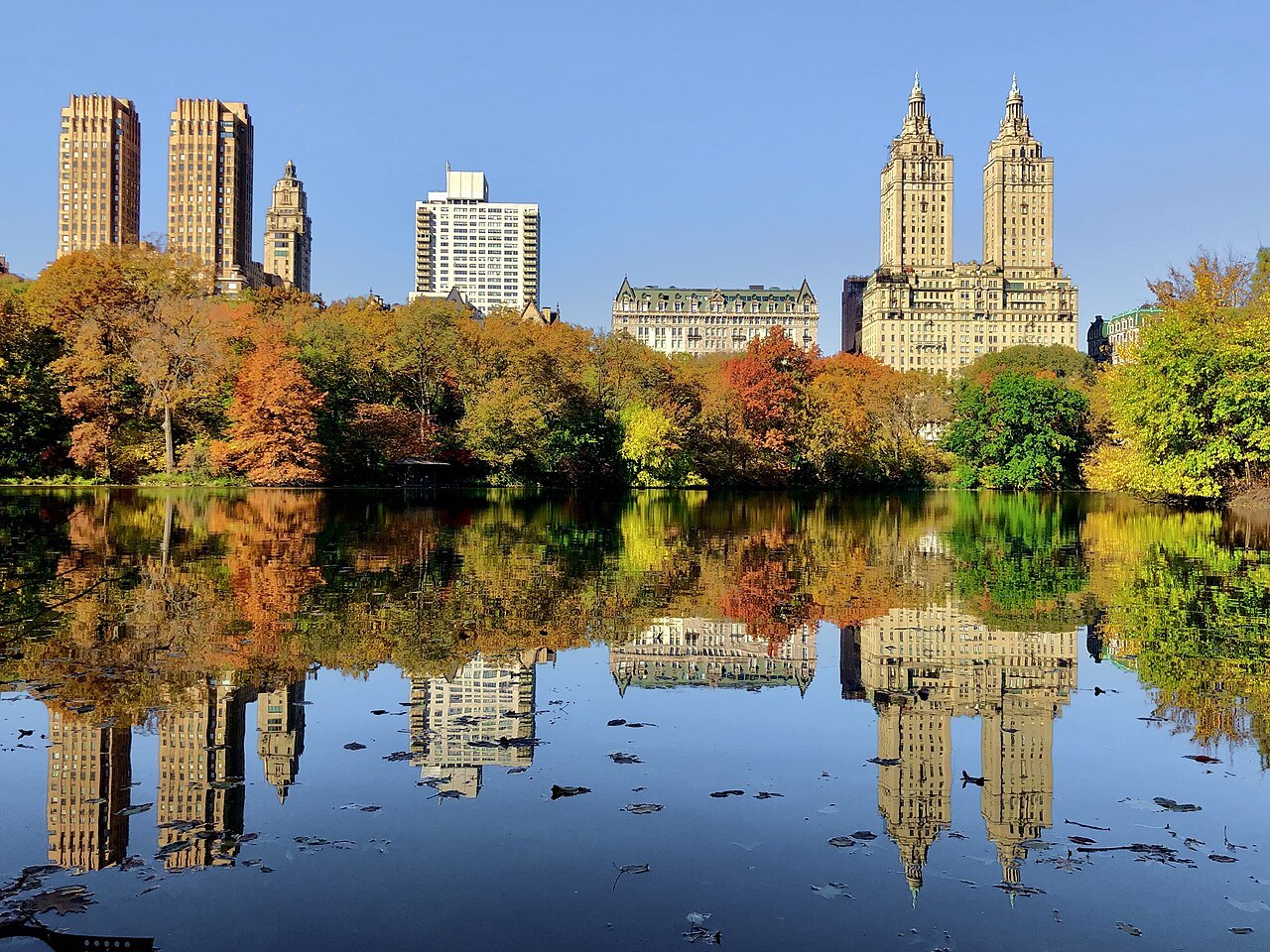
Spring is the wettest season, but it is also when the city comes back to life outdoors. The trees in Central Park come into leaf in April, the walkers and the joggers return, and May brings long, bright days that are rarely too hot. It is the season for the long walks on this site: the High Line, the Brooklyn Bridge, the Village and the whole length of Central Park, before the humidity of summer sets in.
Fall is the season most New Yorkers would choose for a visitor. September breaks the humidity of summer, October is usually mild and settled, and the leaves in Central Park and along the Hudson turn color through the season. The city's cultural year starts again in the fall, with new Broadway shows and the opera and concert seasons.
November ends the fall in a rush of big events. The New York City Marathon, one of the largest in the world, runs through all five boroughs on the first Sunday of the month; its first race, in 1970, was a few loops of Central Park for 127 runners, and it now has tens of thousands of finishers. Then comes the Macy's Thanksgiving Day Parade, first held in 1924, which ends outside Macy's at Herald Square. Its giant balloons began with an air-filled Felix the Cat in 1927, which replaced the live zoo animals of the first parade; a year later Macy's switched to helium and the balloons began to float, and by 1933 more than a million people lined the route.
Manhattanhenge
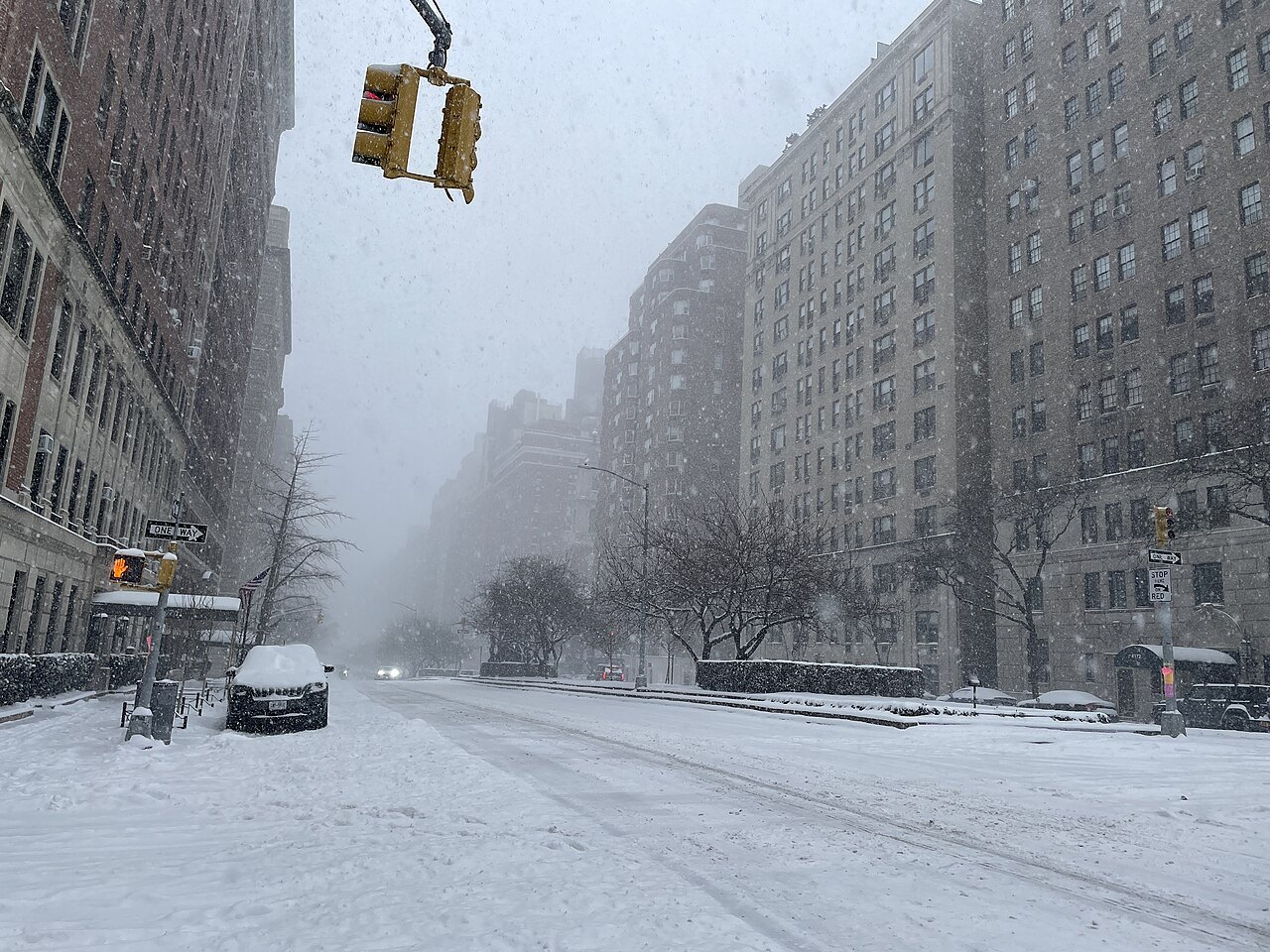
Four times a year the sun lines up exactly with the island's cross streets, because the grid is turned 29 degrees from true north. The two sunsets, around the end of May and the middle of July, are the famous ones: the sun sinks between the towers at the end of every cross street at once, and crowds gather along 14th, 23rd, 34th, 42nd and 57th Streets to watch it. The two sunrises fall in early December and early January.
The exact dates shift slightly from year to year, so check them before you plan around them, and pray for a clear western sky. The grid explains why it happens.
Choosing your dates
For comfort, come from late April to early June or from September to early November. For the holidays, come in the first three weeks of December, and book early, since this is when the city is at its most crowded and most expensive. For the museums and the shortest lines, come in January or February and dress for the cold. For the parks, the rooftops and the evenings outdoors, come in summer and accept the heat.
Whatever the season, allow for weather. A rainy day is a museum day, and the Met, the Cloisters and Grand Central are the best places to spend one. Itineraries suggests how to shape the days, and booking ahead lists what sells out in the busy seasons.
Seen on the way03
More photographs
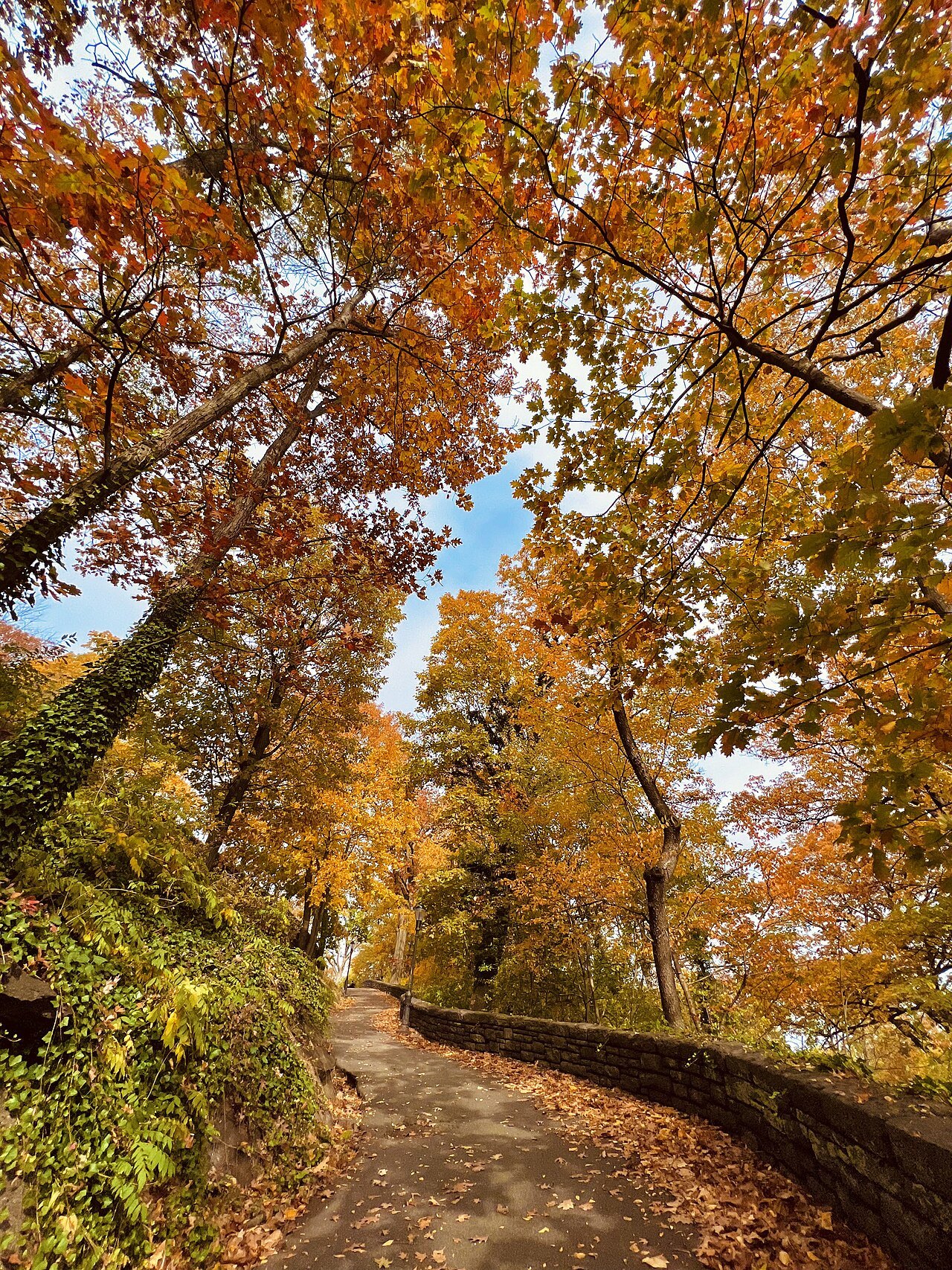
An autumn path under golden trees in Fort Tryon ParkAshley98lee, Wikimedia Commons, CC BY-SA 4.0 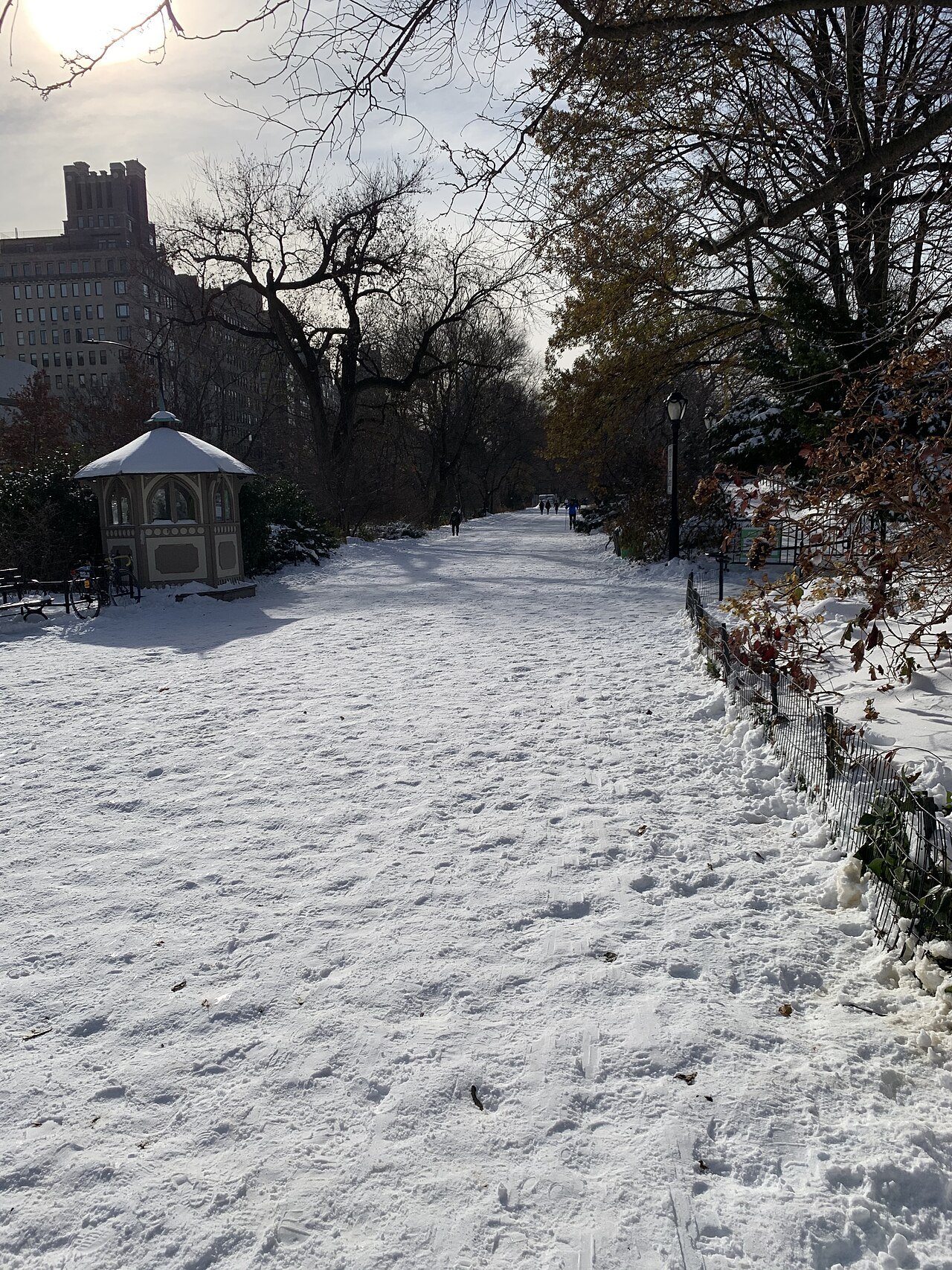
A snow-covered bridle path in Central Park near Engineers' GateDeans Charbal, Wikimedia Commons, CC BY-SA 4.0