Home · Sights · Grand Central Terminal
What you are looking at01
Grand Central Terminal
Park Ave · E 42 St
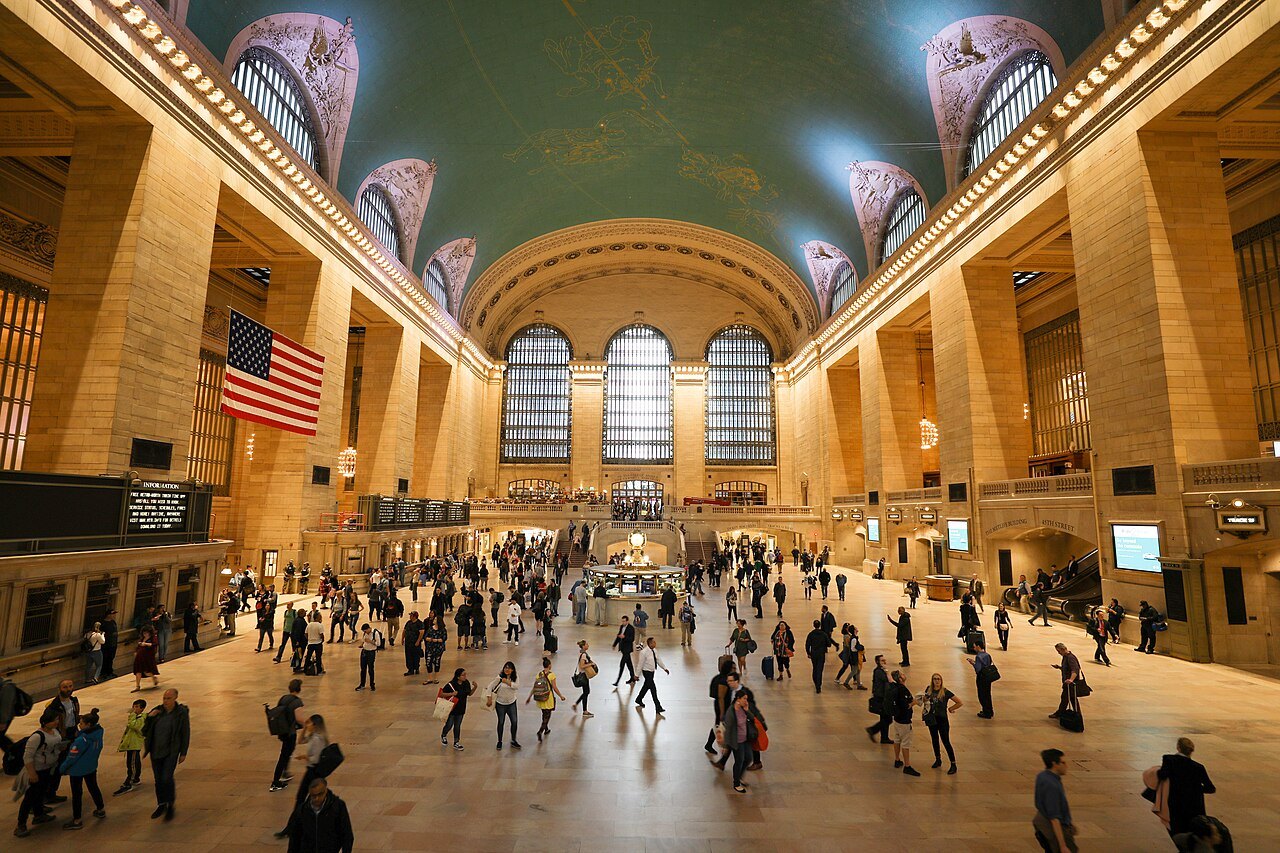
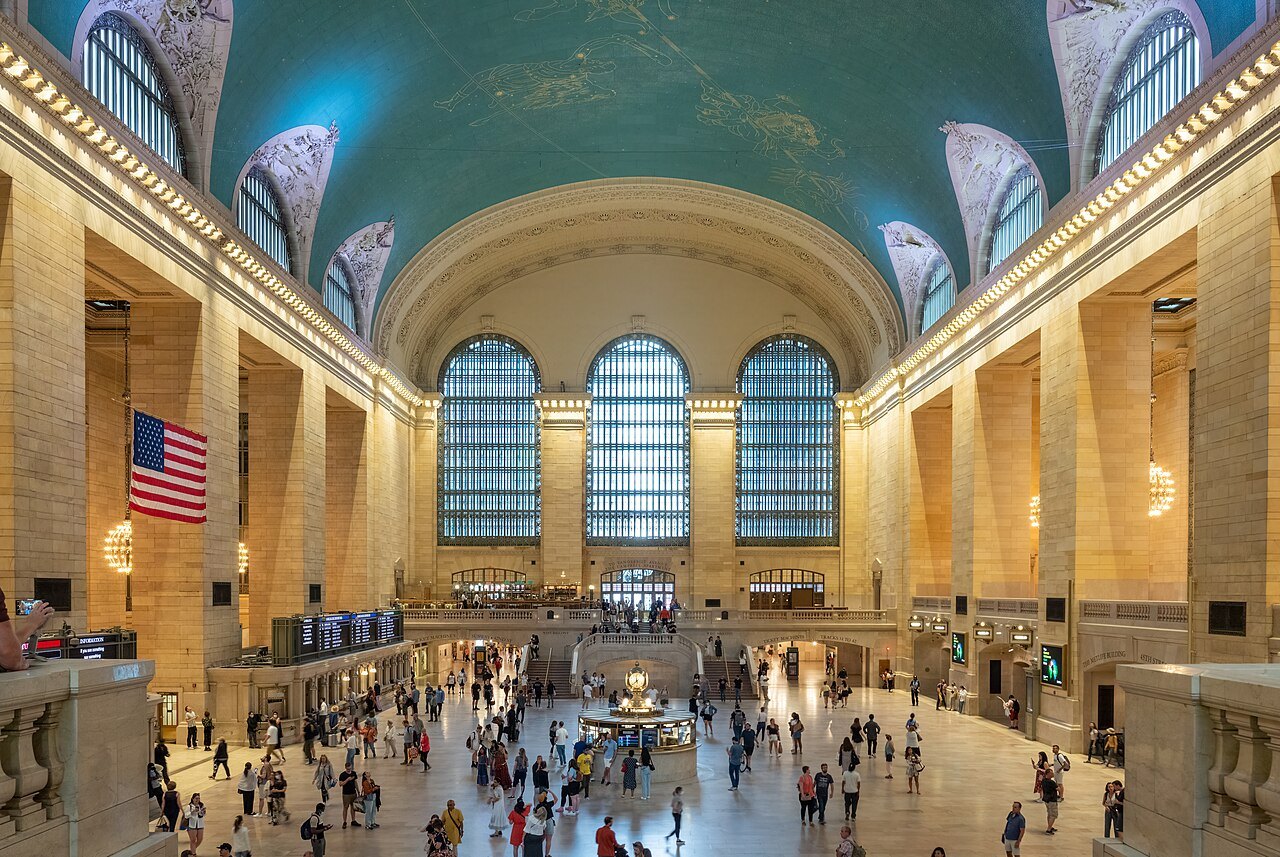
- 1The Main ConcourseA hall 275 feet long and 125 feet high, lit by great windows at both ends.
- 2The celestial ceilingA blue-green sky painted with the constellations, restored in the renovation of the 1990s.
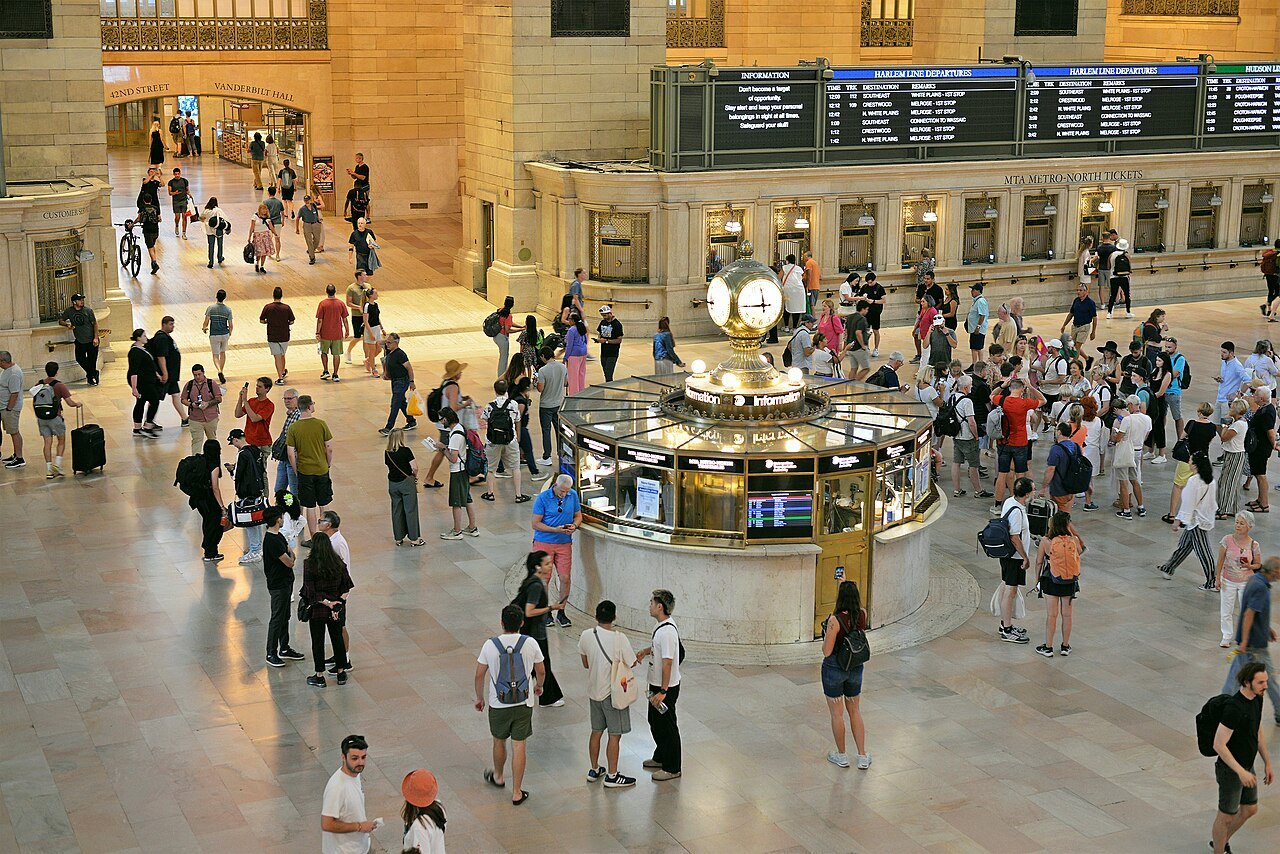
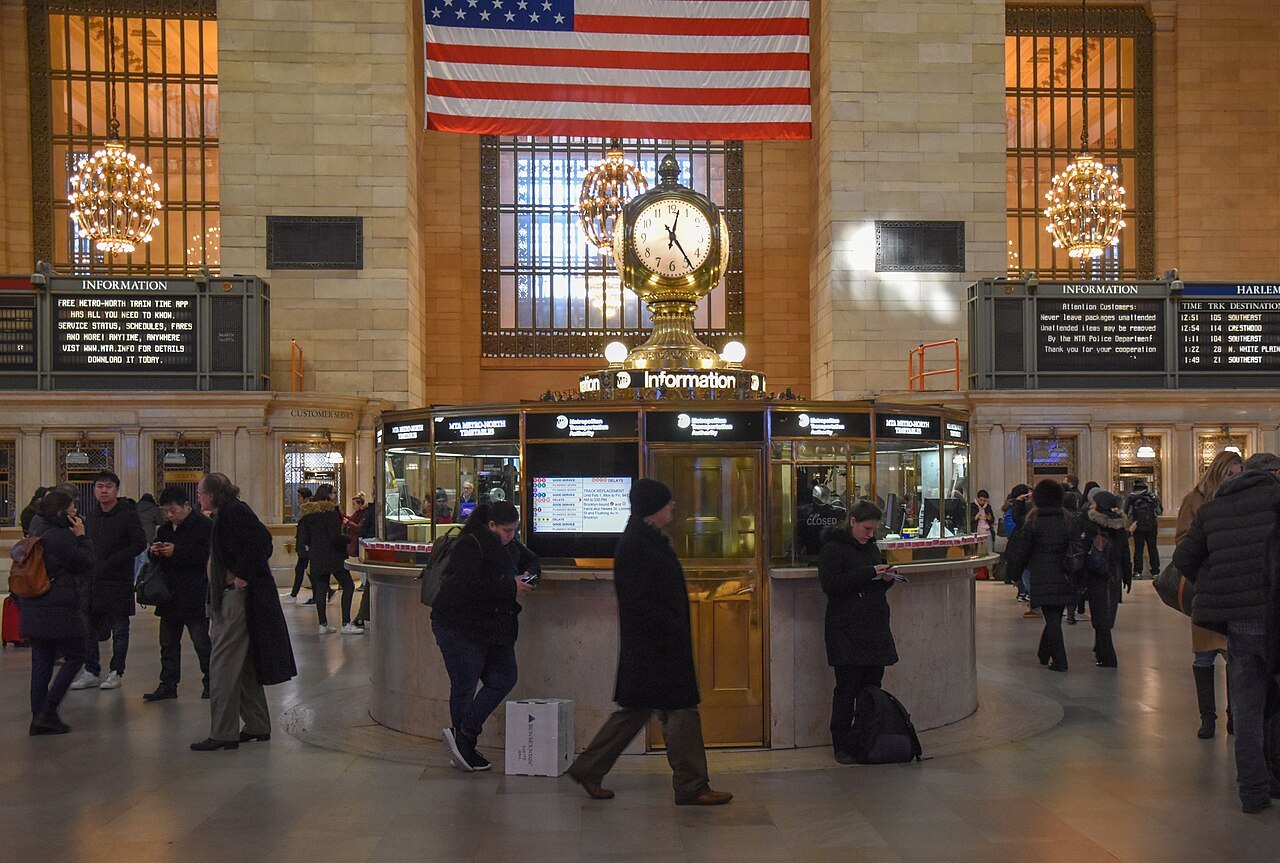
- 3The clockThe four-faced brass clock on the information booth, its faces of opalescent glass.
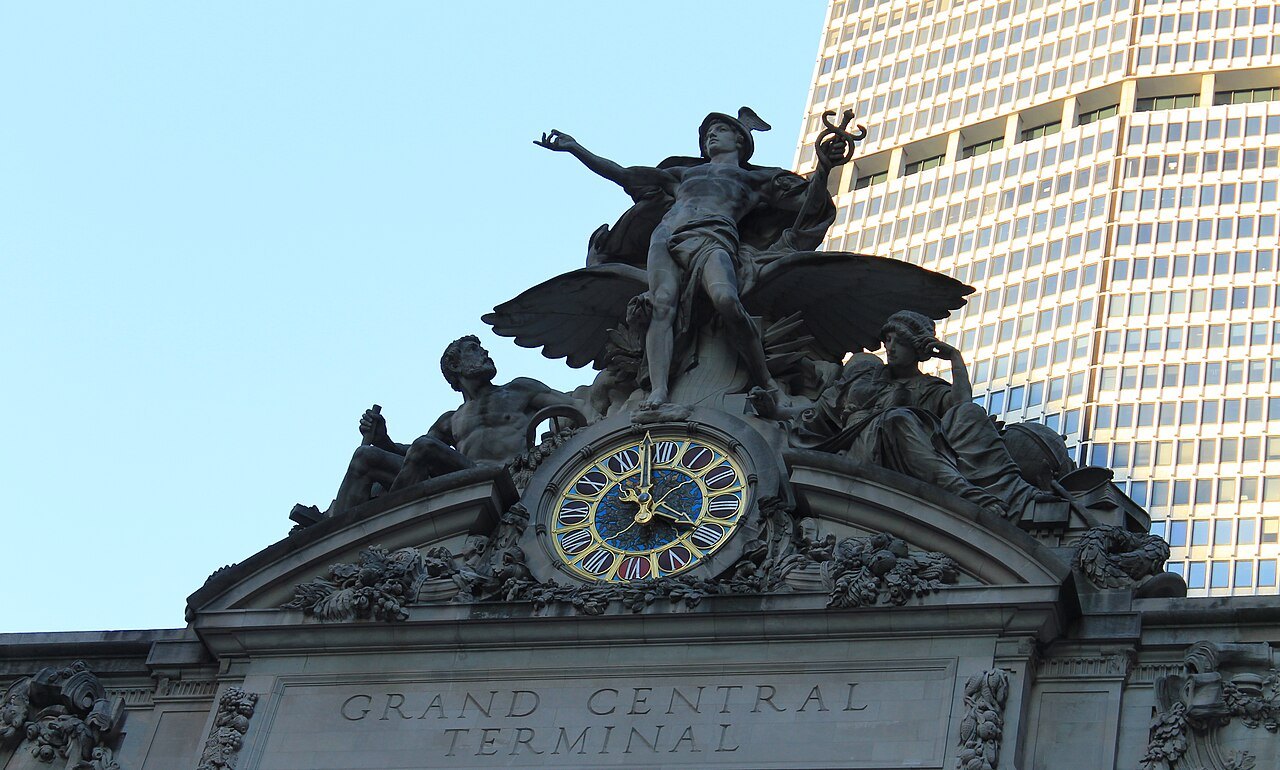
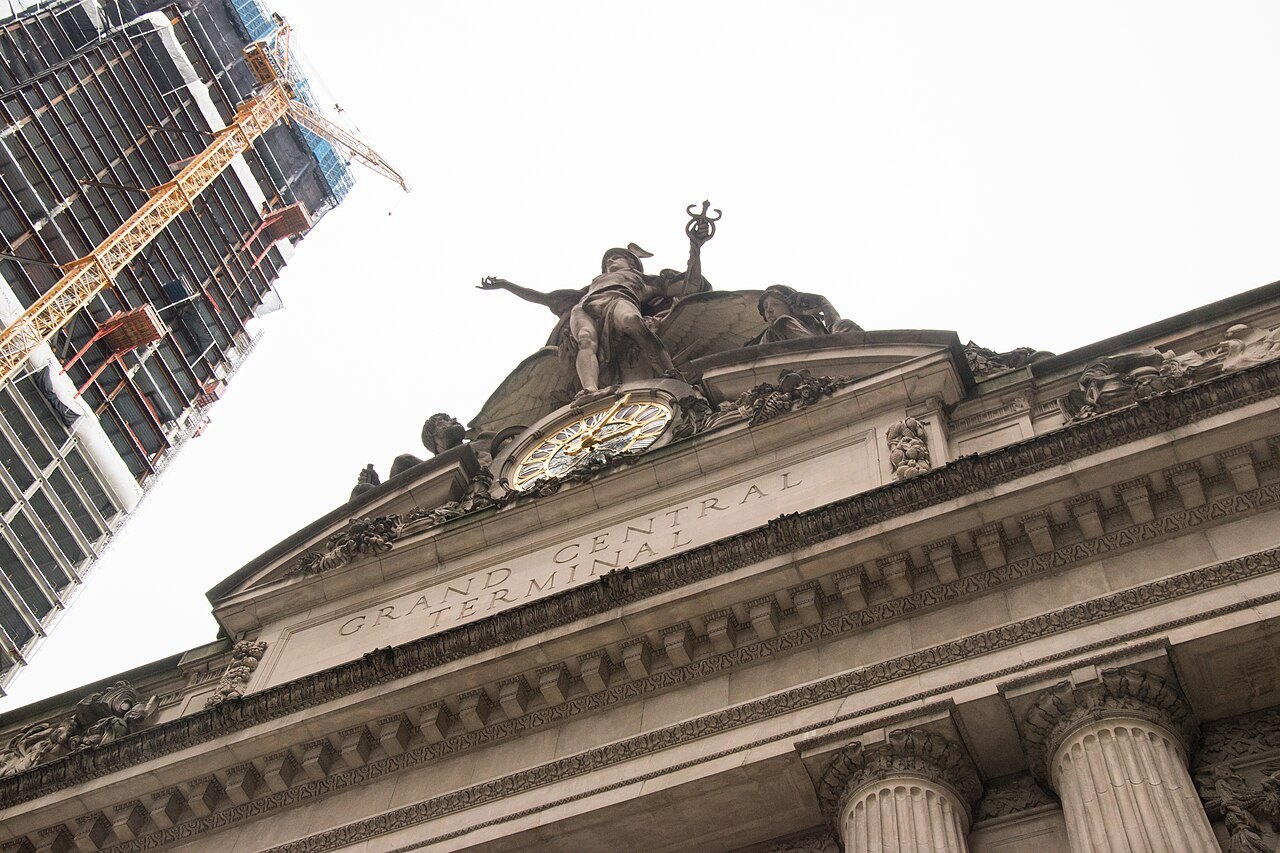
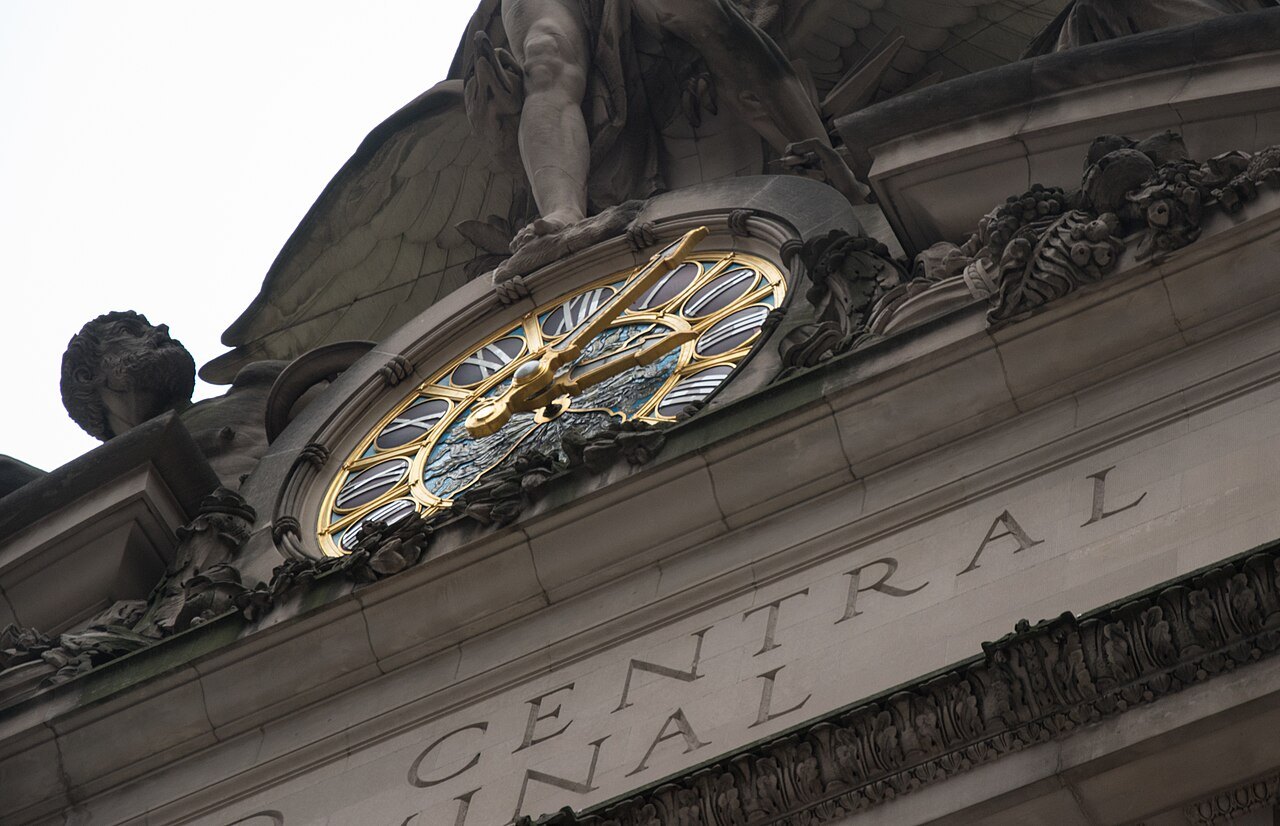
- 4The Glory of CommerceJules-Félix Coutan's statues of Mercury, Hercules and Minerva around the clock on 42nd Street.
- 5The whispering galleryA tiled vault by the Oyster Bar where a whisper in one corner is heard in the opposite one.
- 6Vanderbilt HallThe old main waiting room, restored as a hall for events beside the main entrance.
The sight in full02
Reading the place
Why it matters
Grand Central Terminal fills the blocks north of 42nd Street at Park Avenue, and it is two things at once: a working railroad station and one of the finest public interiors in America. Its trains serve the northern suburbs and Connecticut on Metro-North, and since 2023 the Long Island Rail Road has used a new concourse, Grand Central Madison, dug beneath the old tracks. With forty-four platforms it has more than any other railroad station in the world, and it is the third-busiest station in North America.
It is also a sight in its own right, one of the ten most visited tourist attractions in the world, with some 21.6 million visitors in 2018 who came for the building rather than the trains. It opened in 1913 on the site of two earlier stations, the first of 1871, and its full name, Grand Central Terminal, is carved into its facade on 42nd Street.
The building
The terminal is in the Beaux-Arts style. Its design came from two firms: Reed and Stem drew the original plan, with its ramps between the levels, and Whitney Warren of Warren and Wetmore gave it its grand classical dress. French artists worked on the decoration, among them the sculptor Jules-Félix Coutan and the painter Paul César Helleu.
The main facade faces south down Park Avenue toward 42nd Street. Above the great clock stands Coutan's sculptural group the Glory of Commerce, forty-eight feet wide, with Mercury, the Roman god of commerce, at the center between Hercules and Minerva. Below it stands a statue of Cornelius Vanderbilt, whose family built and owned the railroad and the station.
What you actually see
Come in from 42nd Street through the Jacqueline Kennedy Onassis Foyer and Vanderbilt Hall, the old main waiting room, and the Main Concourse opens ahead of you. It is 275 feet long, 120 feet wide and 125 feet high, lit through great windows in its east and west walls, and at almost any moment it is crossed in every direction by people heading for trains.
Look up at the ceiling: a sky of pale blue-green painted with the constellations, picked out in gold. It is not the original; in 1944 the first ceiling was found to be damaged beyond repair and was covered with a replica. In the mid-twentieth century the whole room deteriorated, its windows darkened and its walls hung with advertisements, and it was the restoration completed in 1998 that returned it nearly to its appearance of 1913, cleaning the ceiling and adding the east staircase, which had been planned from the start but never built.
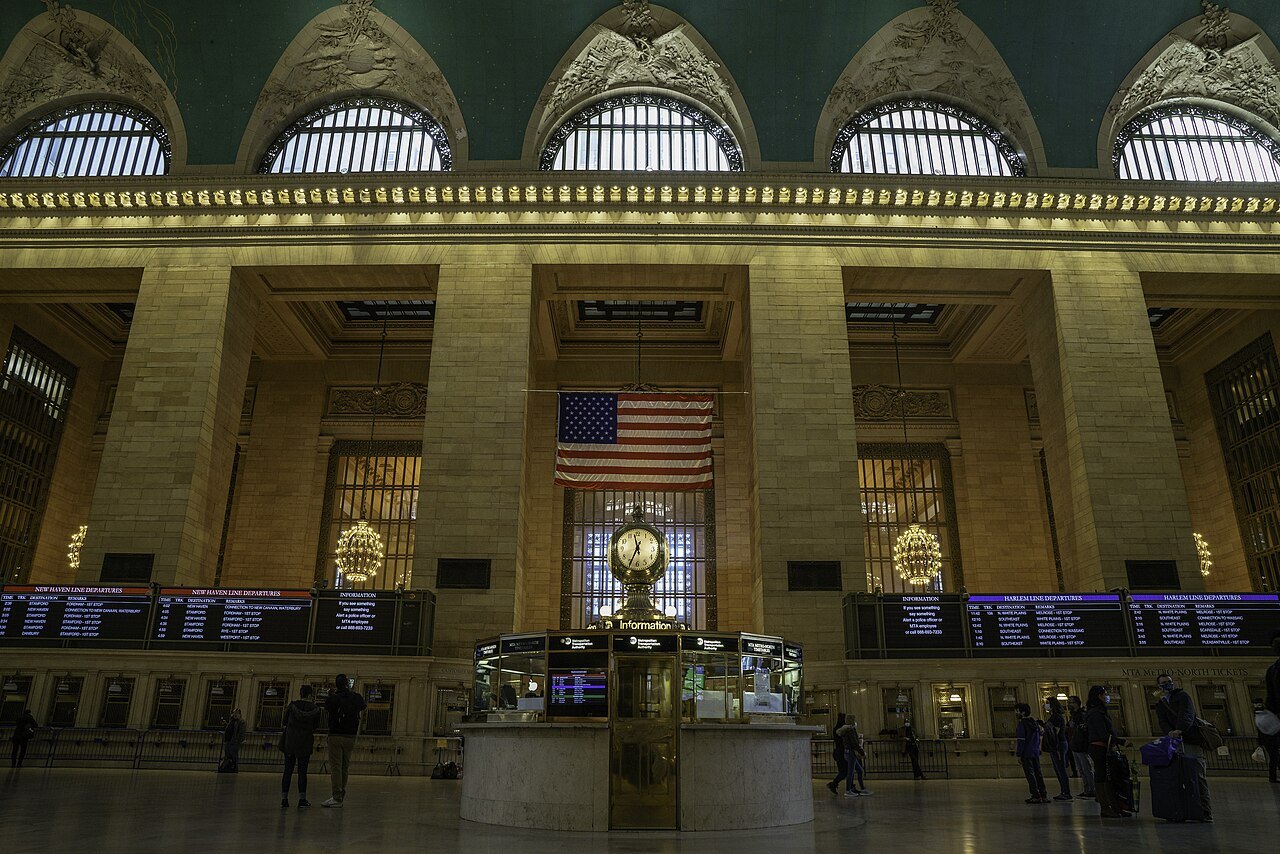
At the center of the floor stands the information booth, topped by a four-faced brass clock that has become the terminal's symbol. Its faces are made of opalescent glass, and a persistent legend says they are real opals worth millions, which they are not. Inside the booth a hidden spiral staircase leads down to a matching booth on the lower level. Everywhere you look, acorns and oak leaves are carved into the stone and cast into the metal, even as a brass acorn on top of the clock: Cornelius Vanderbilt chose the acorn as his family's symbol, with the motto that great oaks from little acorns grow.
Take the ramps down toward the Oyster Bar. Under the bridge that crosses them, the low arches covered in Guastavino tile form a whispering gallery: stand in one corner, face the wall, and a person speaking softly in the diagonally opposite corner sounds as if they were beside you.
The fight to save it
Across Midtown, the old Pennsylvania Station, Grand Central's great rival, was demolished in the 1960s to make way for an office complex and a new arena. The New York Times called its loss a monumental act of vandalism, and the outcry launched the modern historic preservation movement. Grand Central was next in line: in the 1970s its owners planned Grand Central Tower, an office building that would have replaced or overshadowed the Main Concourse.
New Yorkers fought it, and Jacqueline Kennedy Onassis, the former First Lady, was among those who helped stop the demolition; the foyer at the main entrance has carried her name since 2014. The terminal kept its landmark protection, and it is now a National Historic Landmark and, since 2012, a Historic Civil Engineering Landmark as well. Its landmark status is also why the shops inside it can install nothing permanent.
How to visit
The terminal is a public building and walking through it costs nothing. The Main Concourse is at its most dramatic at the busiest times, when the floor fills with commuters, and calmest in the middle of the day and on weekends. The lower level has a food hall and restaurants around the Oyster Bar, and the Grand Central Market, a cluster of food shops, fills one of three passages that run east from the concourse about 240 feet to Lexington Avenue. Until 1991 the terminal also served long-distance trains; that year Amtrak moved all its New York services to Penn Station.
Many subway lines meet here at Grand Central–42nd Street, and the terminal is on the homepage walk along 42nd Street. Getting around explains the subway, and day trips covers the Metro-North trains up the Hudson.
Nearby
Across Lexington Avenue rises the Chrysler Building, best seen from 42nd Street at the terminal's east corner. Walk west along 42nd Street to the New York Public Library and Bryant Park, and on to Times Square.
Where to go next03
Nearby
- Nearby · Lexington Ave · E 42 StThe Chrysler BuildingThe steel crown of Midtown: an Art Deco tower of 1930 whose spire was built in secret and raised in ninety minutes to make it, for eleven months, the tallest building in the world.Read the page →
- Nearby · Fifth Ave · E 41 StThe New York Public Library and Bryant ParkThe marble library of 1911 on the site of the old Croton Reservoir, guarded by two stone lions a mayor named Patience and Fortitude, with a reading room nearly three hundred feet long and a green park at its back door.Read the page →
- Nearby · Broadway · Seventh Ave · W 42–47 StTimes SquareThe bowtie of plazas where Broadway crosses Seventh Avenue, named in 1904 for The New York Times, lit by signs the zoning law requires, and the doorstep of the Broadway theaters.Read the page →