Home · Sights · The New York Public Library and Bryant Park
What you are looking at01
The New York Public Library and Bryant Park
Fifth Ave · E 41 St
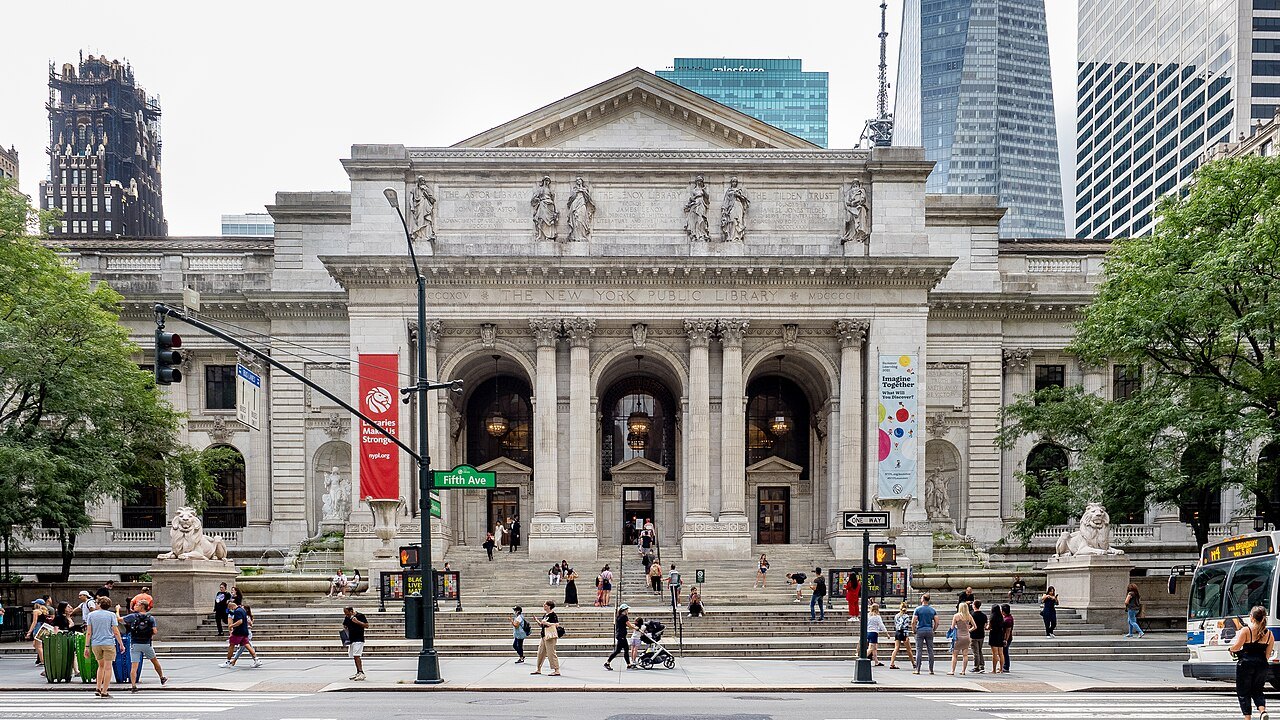
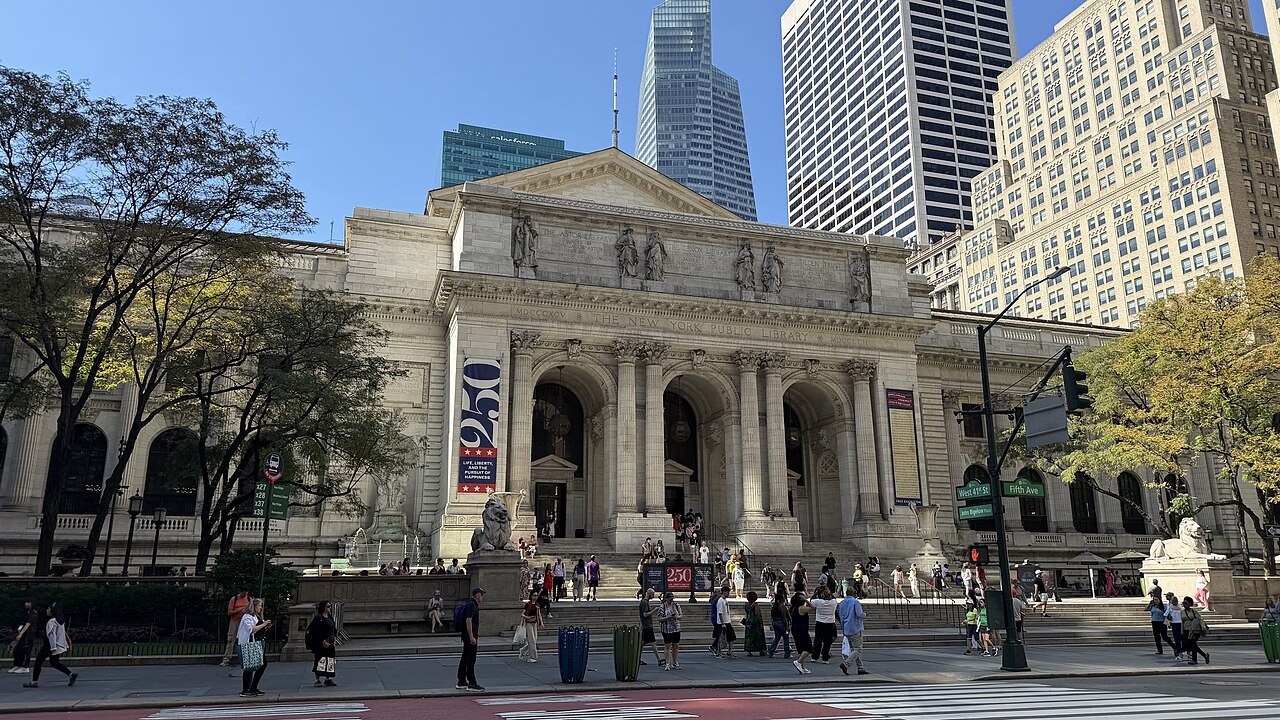
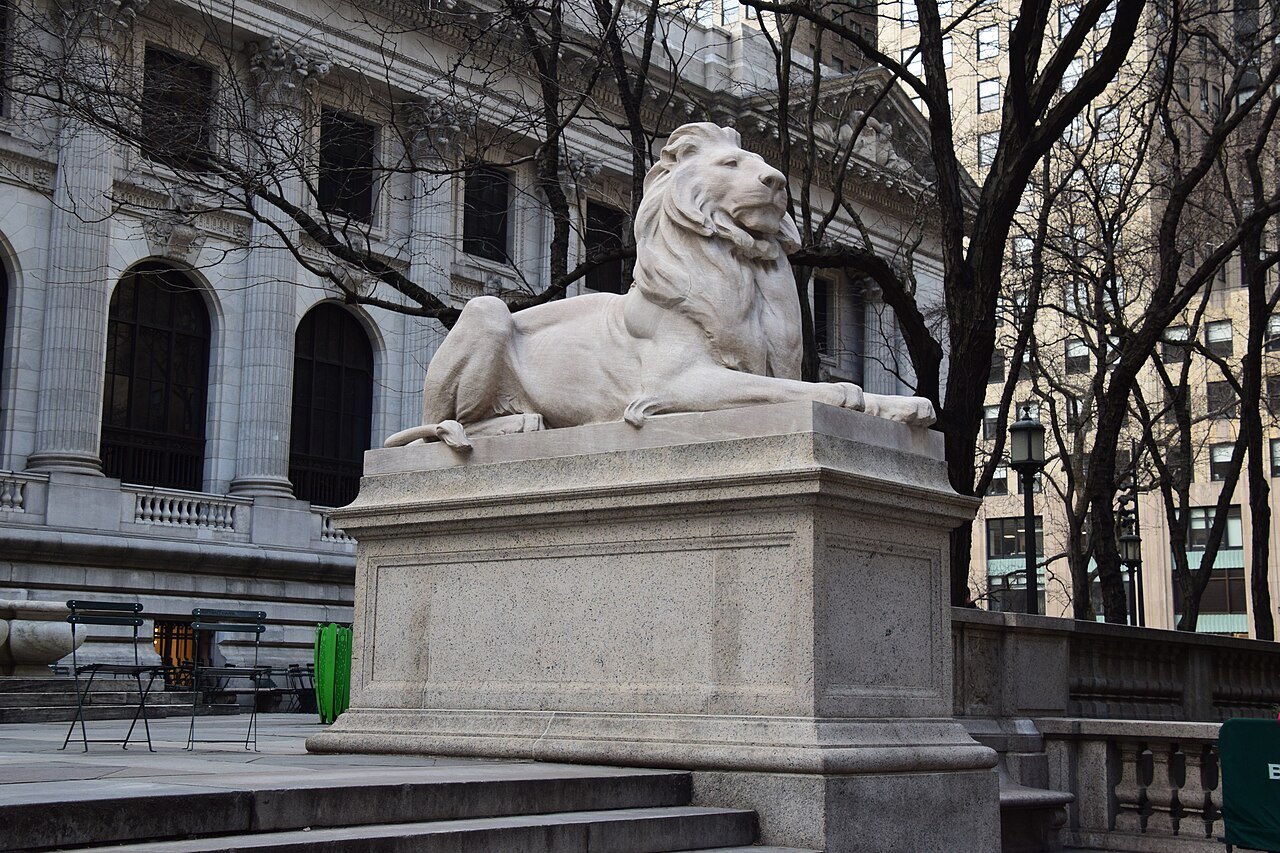
- 1The lionsPatience to the south and Fortitude to the north, carved in marble on either side of the Fifth Avenue steps.
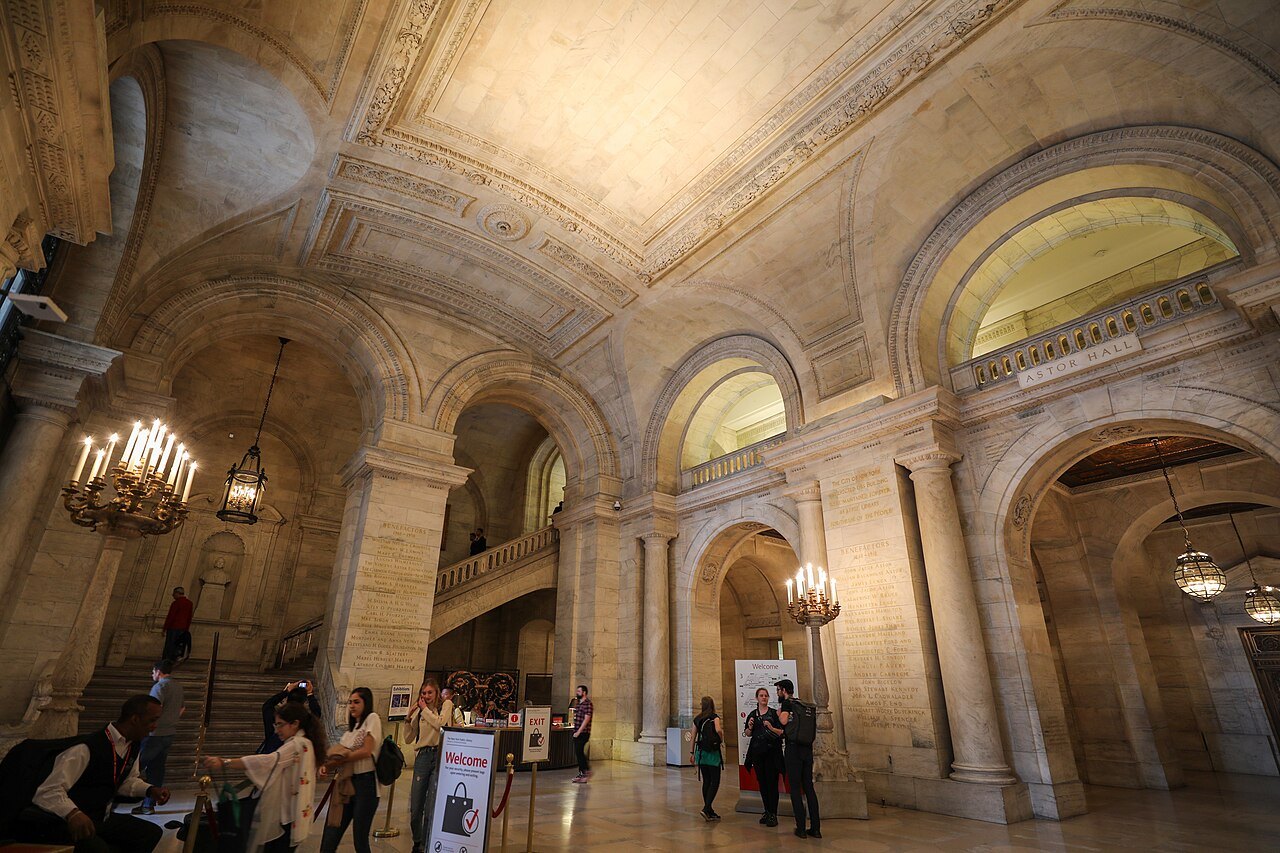
- 2Astor HallThe white marble entrance hall, with busts of the two architects at the foot of its staircases.
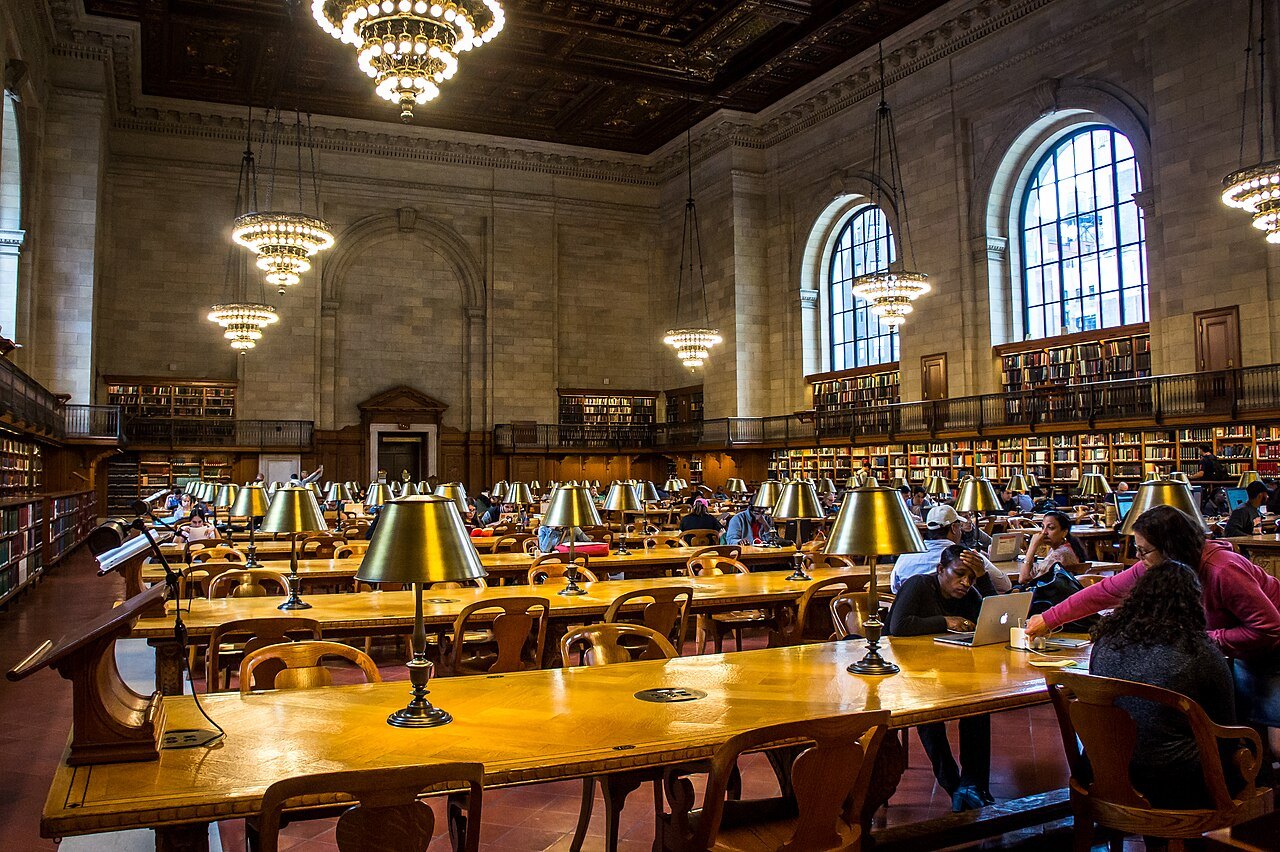
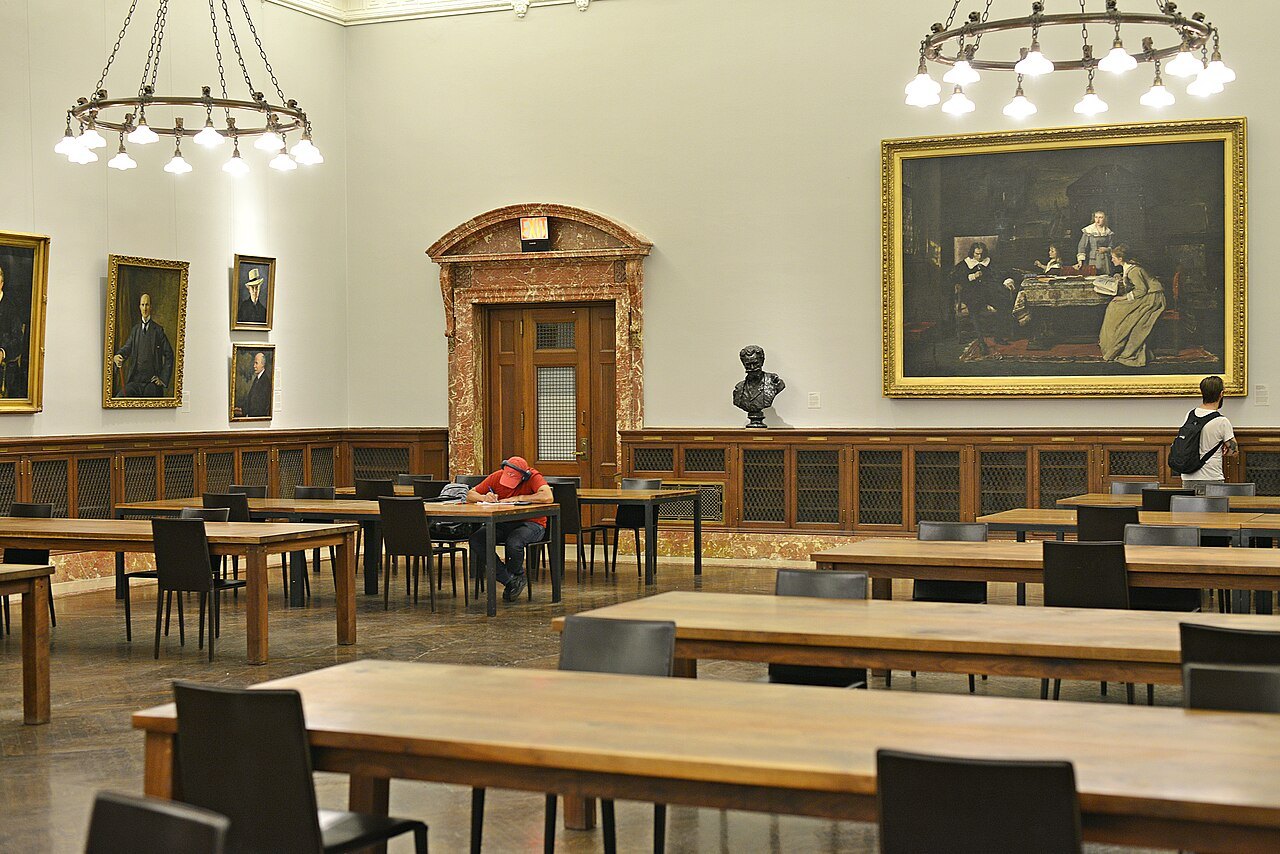
- 3The Rose Main Reading RoomA reading room 297 feet long and 52 feet high, with long oak tables under painted skies.
- 4The Treasures exhibitionA permanent show of the library's most precious books and objects, opened in 2021.
- 5Bryant ParkA park of nearly ten acres behind the library, built over the library's underground stacks.
The sight in full02
Reading the place
Why it matters
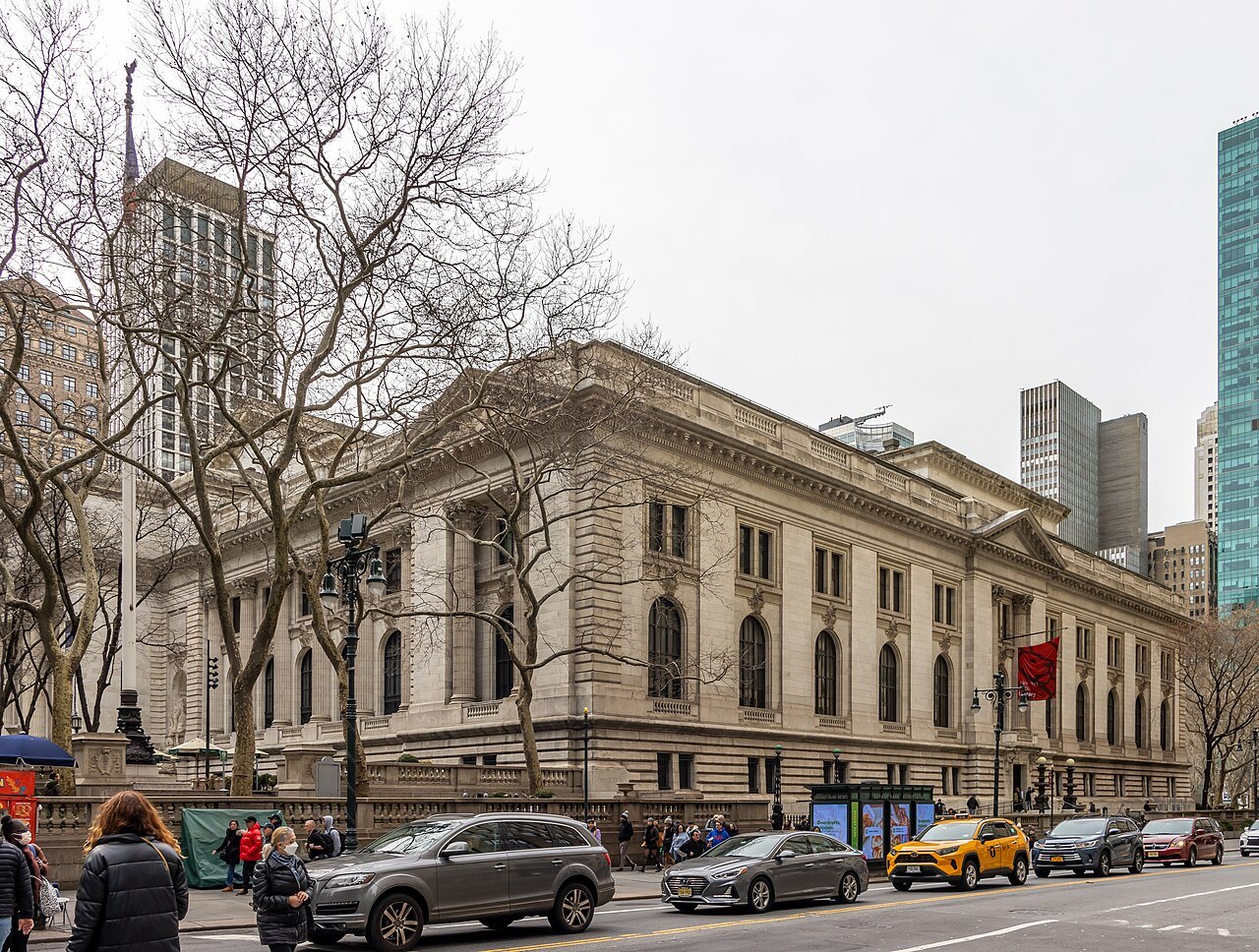
Halfway along the walk from Grand Central to Times Square, 42nd Street passes the back of a white marble palace. Its front is on Fifth Avenue, between 40th and 42nd Streets: the Stephen A. Schwarzman Building, which most people simply call the New York Public Library or the 42nd Street Library. It is the flagship of the city's public library system and one of its four research libraries, it holds an estimated two and a half million volumes in its stacks, and it is a free building that anyone may walk into. Four of its floors are public.
It is also one of the great Beaux-Arts buildings of America, and behind it lies Bryant Park, one of the most loved small parks in Midtown. Together they make one of the calmest places in the busiest part of the city.
A library on a reservoir
The site was once the Croton Reservoir, a walled tank of water that fed the city in the nineteenth century, and remnants of its walls still survive inside the library. In 1897 the state allowed the site to be used for a public library, and the same year a young firm, Carrère and Hastings, won the competition to design it. In 1898 workers began digging through the reservoir's walls, twenty-five feet thick, and the building opened on May 23, 1911.
The library was formed by merging the private collections of the Astor and Lenox libraries with the money of Samuel Tilden, and its first director, John Shaw Billings, sketched the idea at its heart: a huge reading room on top of seven floors of book stacks, with the fastest possible system for bringing books up to readers. John Carrère died just before the building opened, and in March 1911 some two thousand people filed past his coffin in the rotunda.
The lions
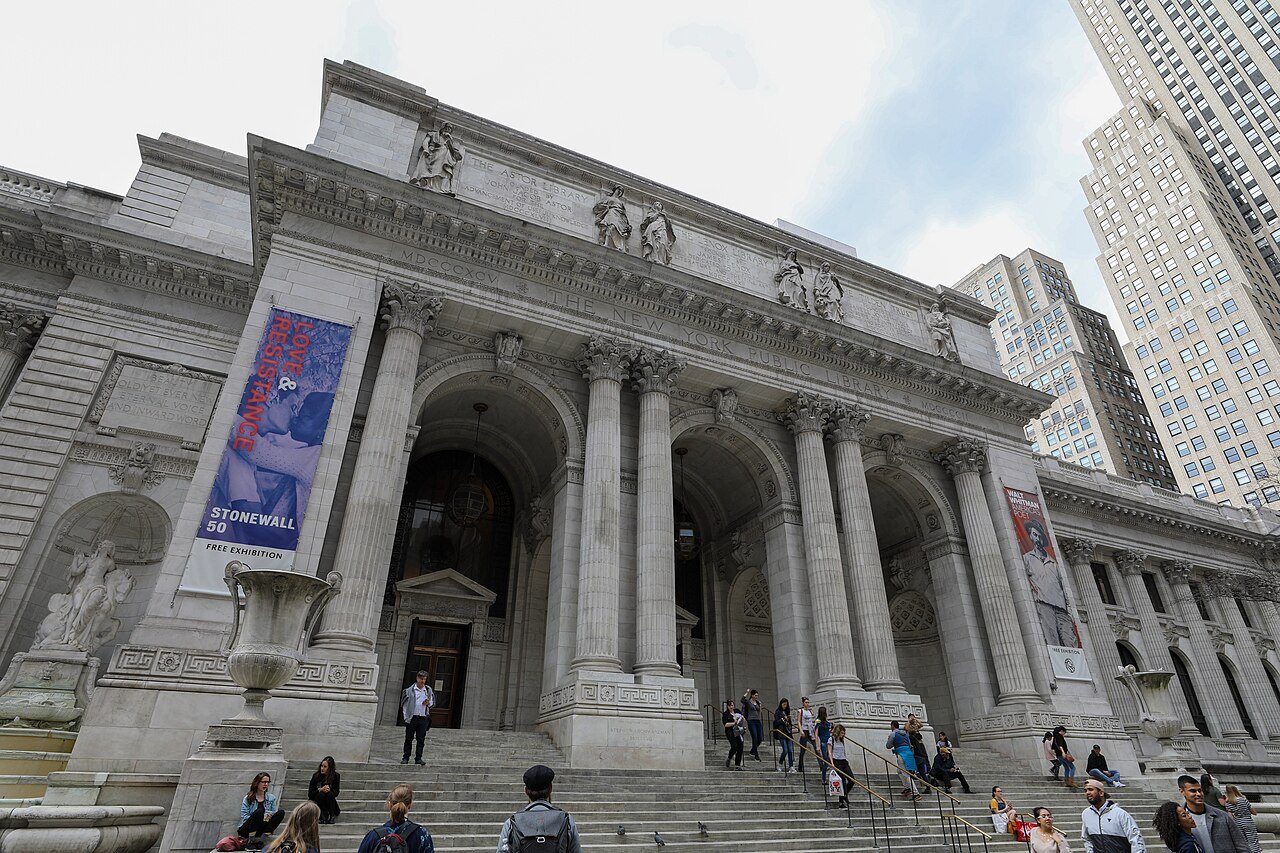
Two marble lions lie on either side of the steps on Fifth Avenue. They were carved by the Piccirilli Brothers to a design by Edward Clark Potter, and they have become the library's emblem. Their first names honored the founders, Leo Astor and Leo Lenox; in the 1930s Mayor Fiorello La Guardia renamed them Patience and Fortitude, the two qualities he felt New Yorkers would need to get through the Great Depression. Patience is on the south side, to the left as you face the steps, and Fortitude is on the north. A legend says they flank the steps so that readers may pass between the lions.
What you actually see
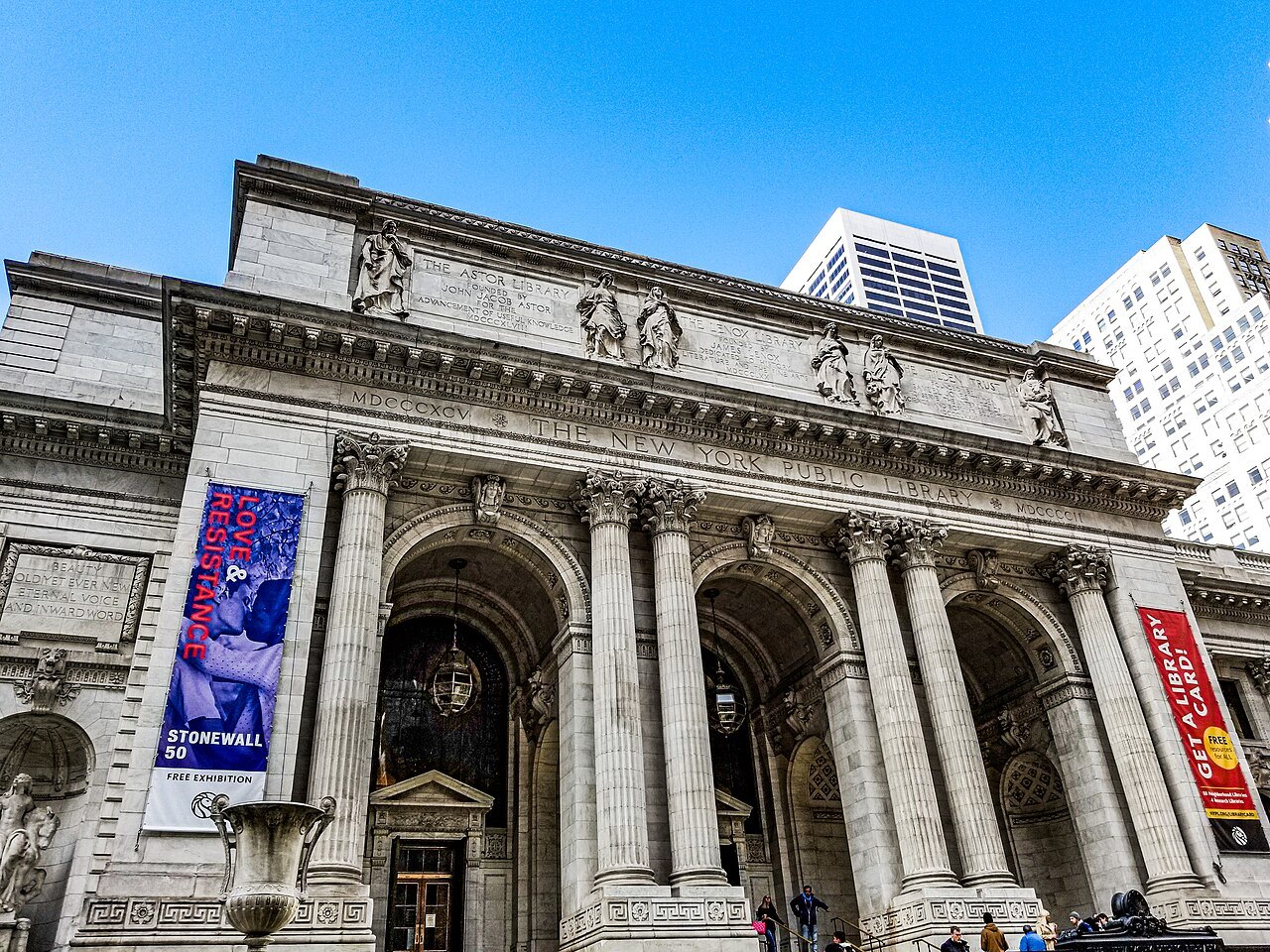
Above the three arched entrances stand allegorical figures by Paul Wayland Bartlett, flanking carved plaques to the Astor, Lenox and Tilden foundations that created the library. Inside the bronze doors is Astor Hall, all white marble, with busts of John Carrère and Thomas Hastings at the foot of its two staircases; which of them did more of the design is still disputed. Upstairs, galleries and exhibition rooms line the corridors, and since late 2021 the Polonsky Exhibition of the library's Treasures has shown some of the most valuable objects in its collections.
The high point, literally, is the Rose Main Reading Room on the top floor. It is 297 feet long and 78 feet wide under a ceiling 52 feet high, sculptured and hung with bronze chandeliers, and it is lined with long tables where readers still work. In 2014 one of the plaster rosettes of the ceiling fell to the floor; the room was closed, its ceiling was restored and reinforced with steel cables, and it reopened on October 5, 2016. The Map Division, with its carved woodwork, was restored in 2005.
It is a working room, full of people reading and writing, so keep your voice down if you look in.
Bryant Park
Behind the library, stretching west to Sixth Avenue, Bryant Park covers about ten acres. It was called Reservoir Square until 1884, when it was renamed for the abolitionist and newspaper editor William Cullen Bryant. After a long decline it was restored between 1988 and 1992 by the landscape architects Hanna/Olin, and the lawn on its western half sits on top of an underground structure that holds the library's stacks.
Around the lawn run shaded walks, and there is a carousel. Carrère and Hastings once planned an arcade with a flower market along the Sixth Avenue side, which was never built. In winter the park hosts a Winter Village with an ice rink and a market of small shops. It is the obvious place to rest on the walk along 42nd Street, and the view from the lawn of the towers around it, with the Chrysler's crown to the east, is one of the best in Midtown.
How to visit
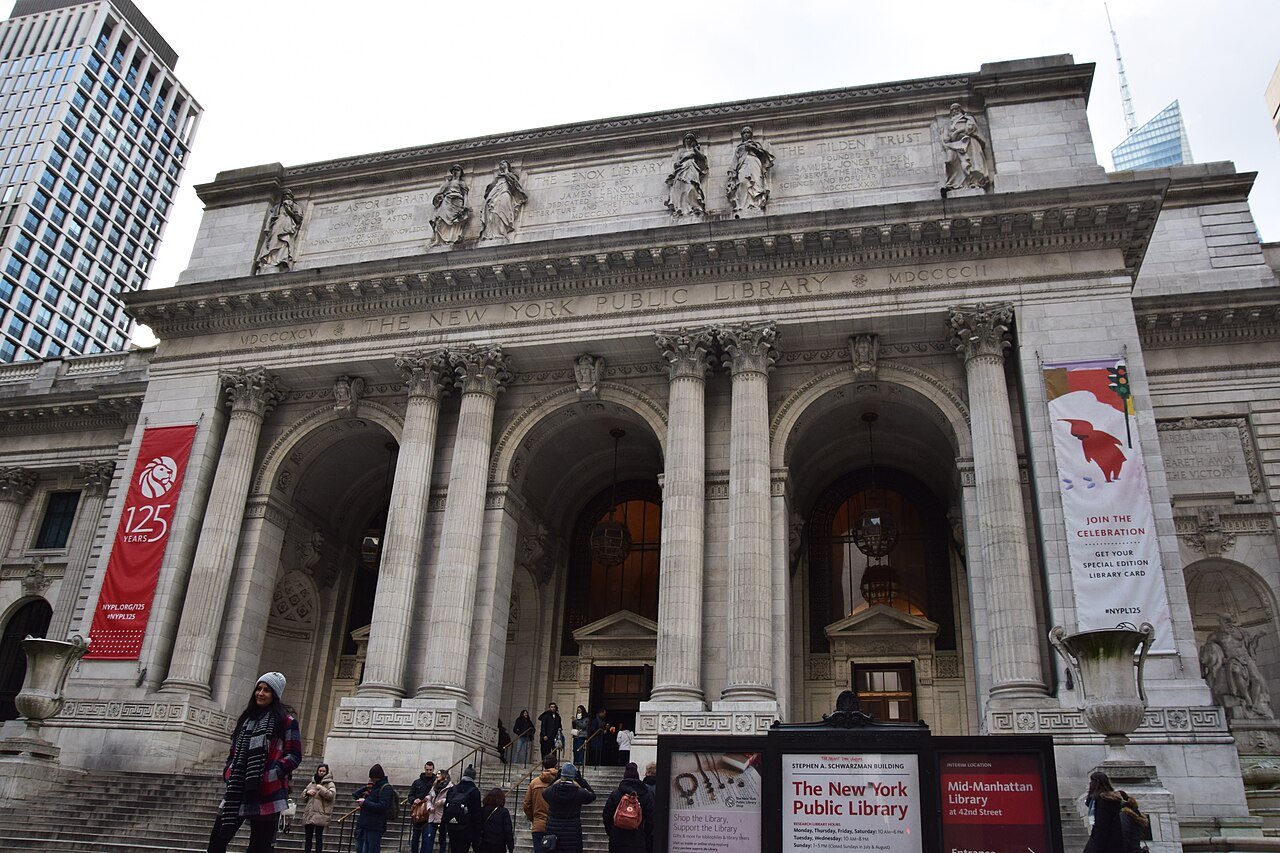
The library and the park are both free. The library keeps its own opening hours, which change, so check its site before going in; the steps and the lions are there at any time. There are no tickets for the building, though tours and some exhibitions may have their own arrangements.
The subway stops at 42nd Street–Bryant Park and Fifth Avenue on the park's corners, and the library is the third stop on the homepage walk. Getting around covers the lines, and when to come covers the winter season in the park.
Nearby
Walk east along 42nd Street to Grand Central and the Chrysler Building, or west to Times Square. Rockefeller Center is a few blocks north up Fifth Avenue.
Where to go next03
Nearby
- Nearby · Park Ave · E 42 StGrand Central TerminalA Beaux-Arts railroad terminal of 1913 whose Main Concourse is one of the great rooms of the city: a painted sky overhead, a brass clock above the information booth, and still, every day, commuters running for the train.Read the page →
- Nearby · Lexington Ave · E 42 StThe Chrysler BuildingThe steel crown of Midtown: an Art Deco tower of 1930 whose spire was built in secret and raised in ninety minutes to make it, for eleven months, the tallest building in the world.Read the page →
- Nearby · Broadway · Seventh Ave · W 42–47 StTimes SquareThe bowtie of plazas where Broadway crosses Seventh Avenue, named in 1904 for The New York Times, lit by signs the zoning law requires, and the doorstep of the Broadway theaters.Read the page →