Home · Sights · Rockefeller Center and St. Patrick's Cathedral
What you are looking at01
Rockefeller Center and St. Patrick's Cathedral
Fifth Ave · W 48–51 St
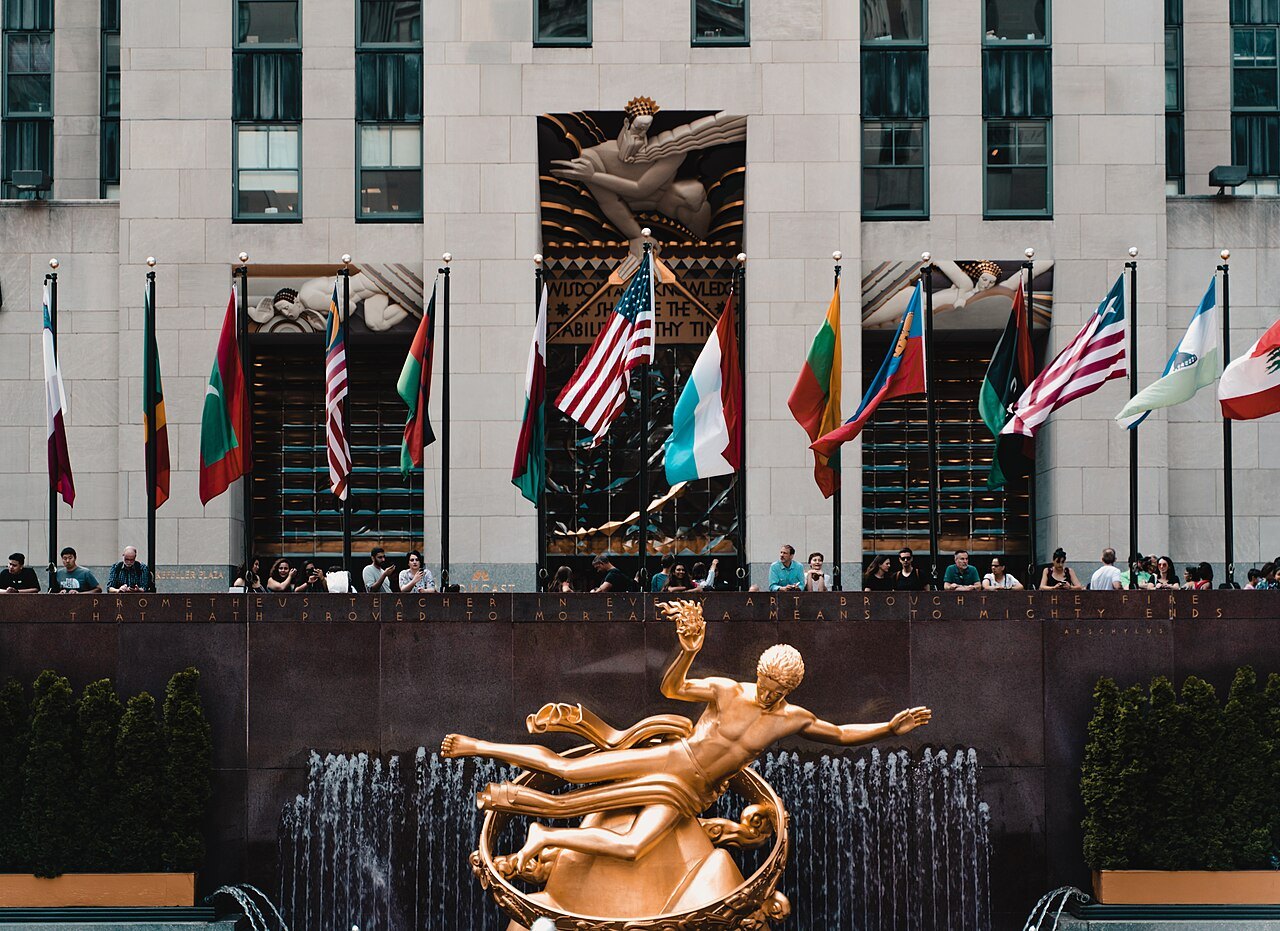
- 1The Channel GardensA promenade of flower beds running in from Fifth Avenue between two small buildings to the plaza.
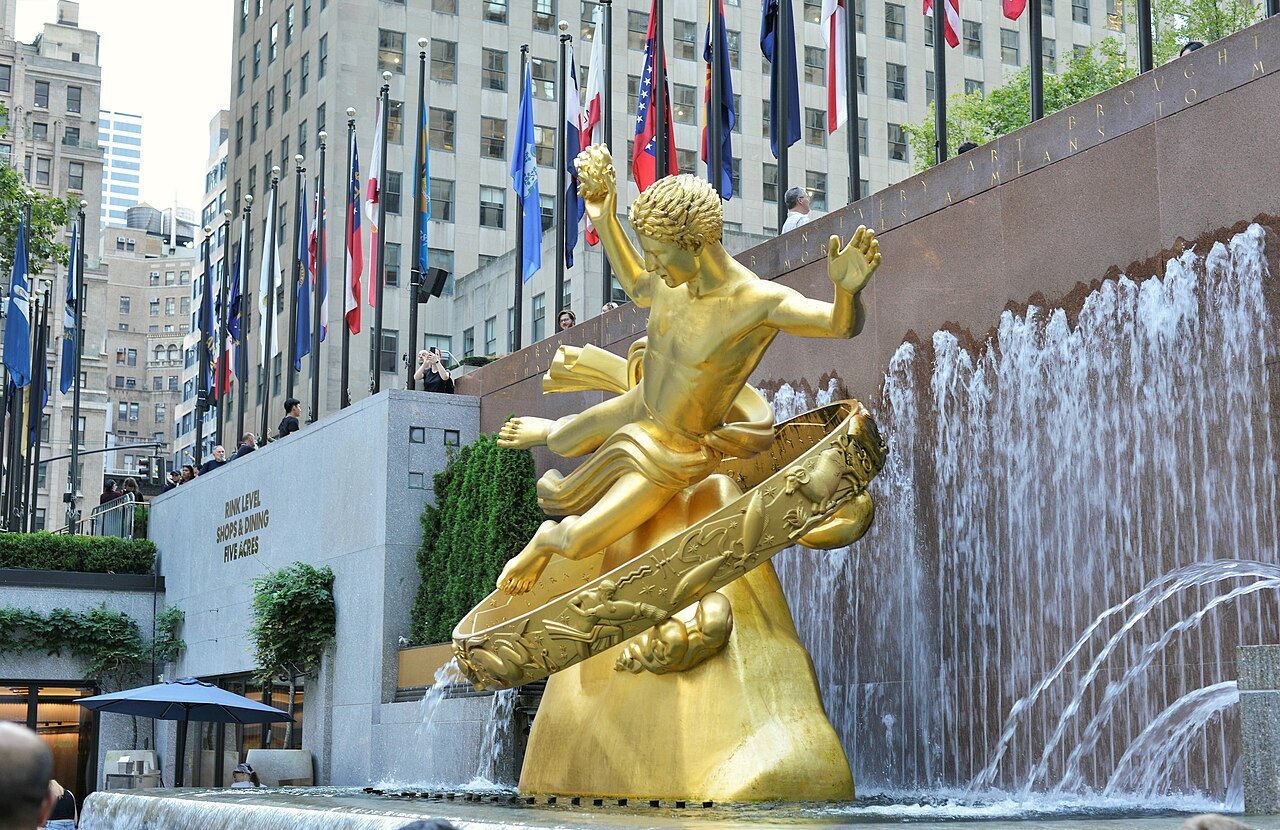
- 2PrometheusPaul Manship's gilded bronze of 1934, flying over the sunken plaza and its winter rink.
- 3Wisdom over the doorLee Lawrie's carved figure above the entrance to 30 Rockefeller Plaza, with light and sound beside him.
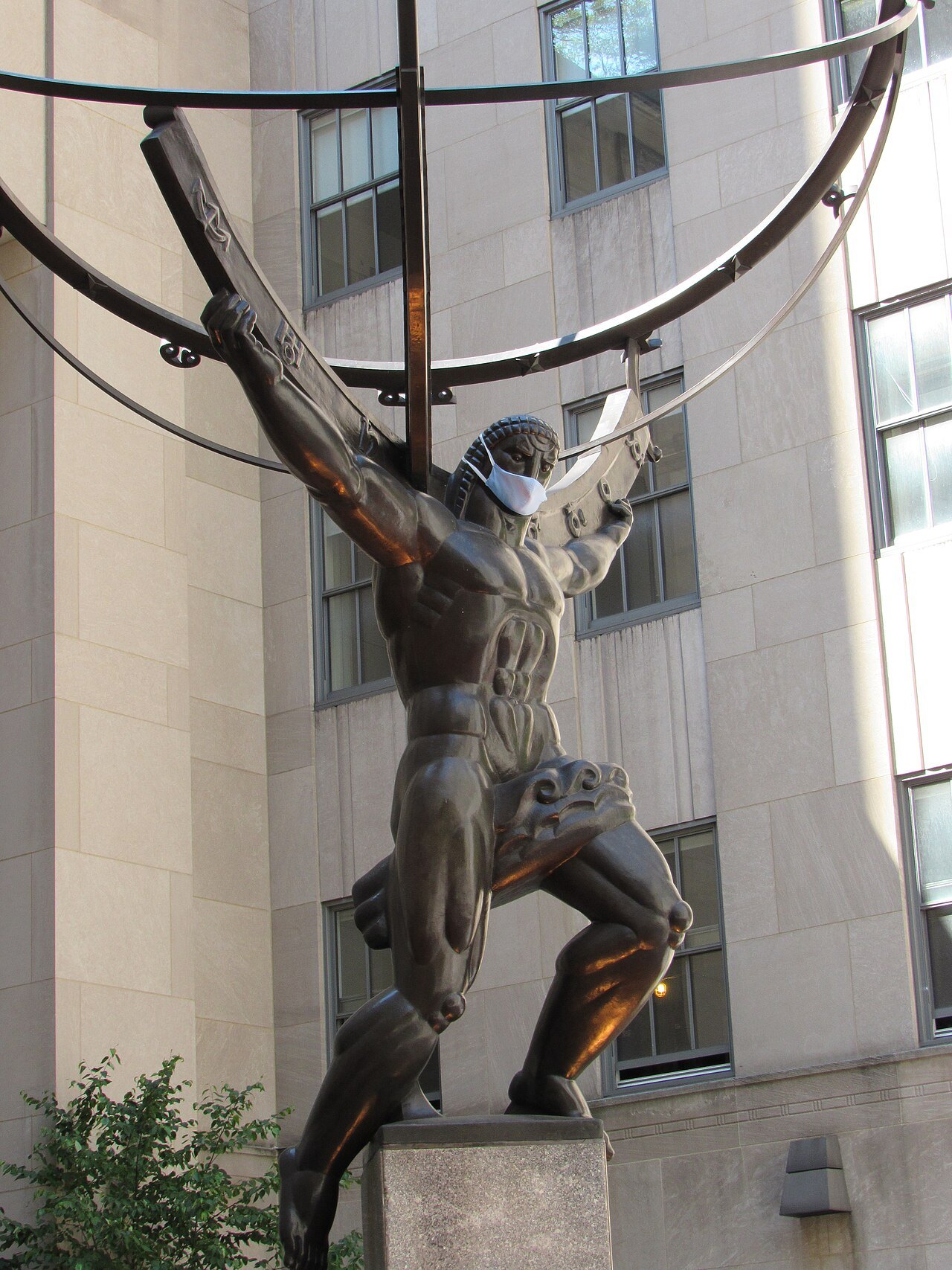
- 4AtlasLee Lawrie's bronze giant of 1937 holding up the heavens, facing the cathedral across Fifth Avenue.
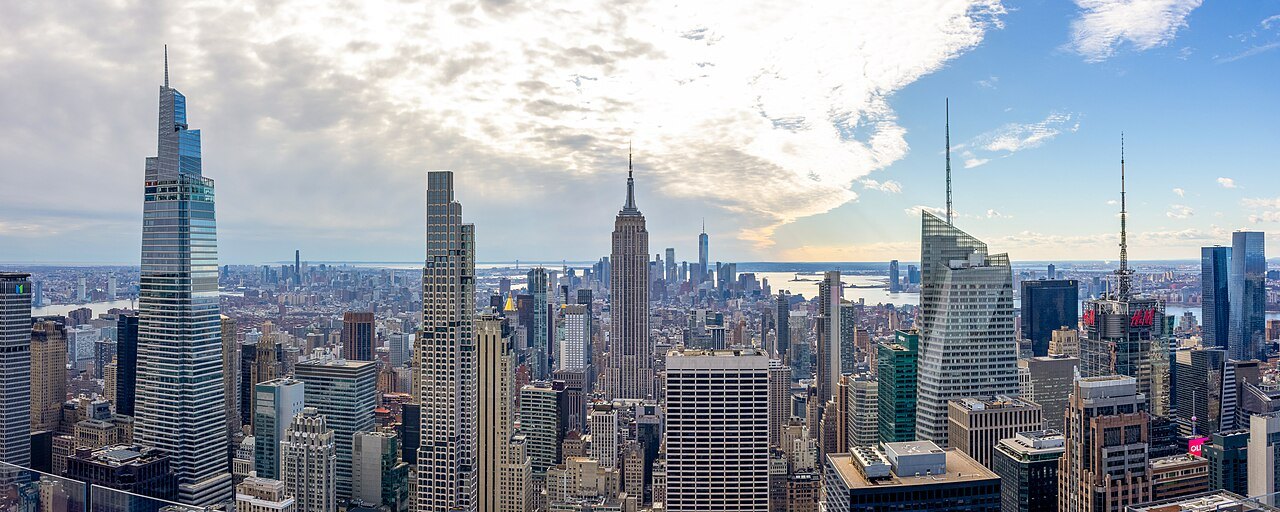
- 5Top of the RockObservation decks from the 67th to the 70th floor, 850 feet up, looking south at the Empire State Building.
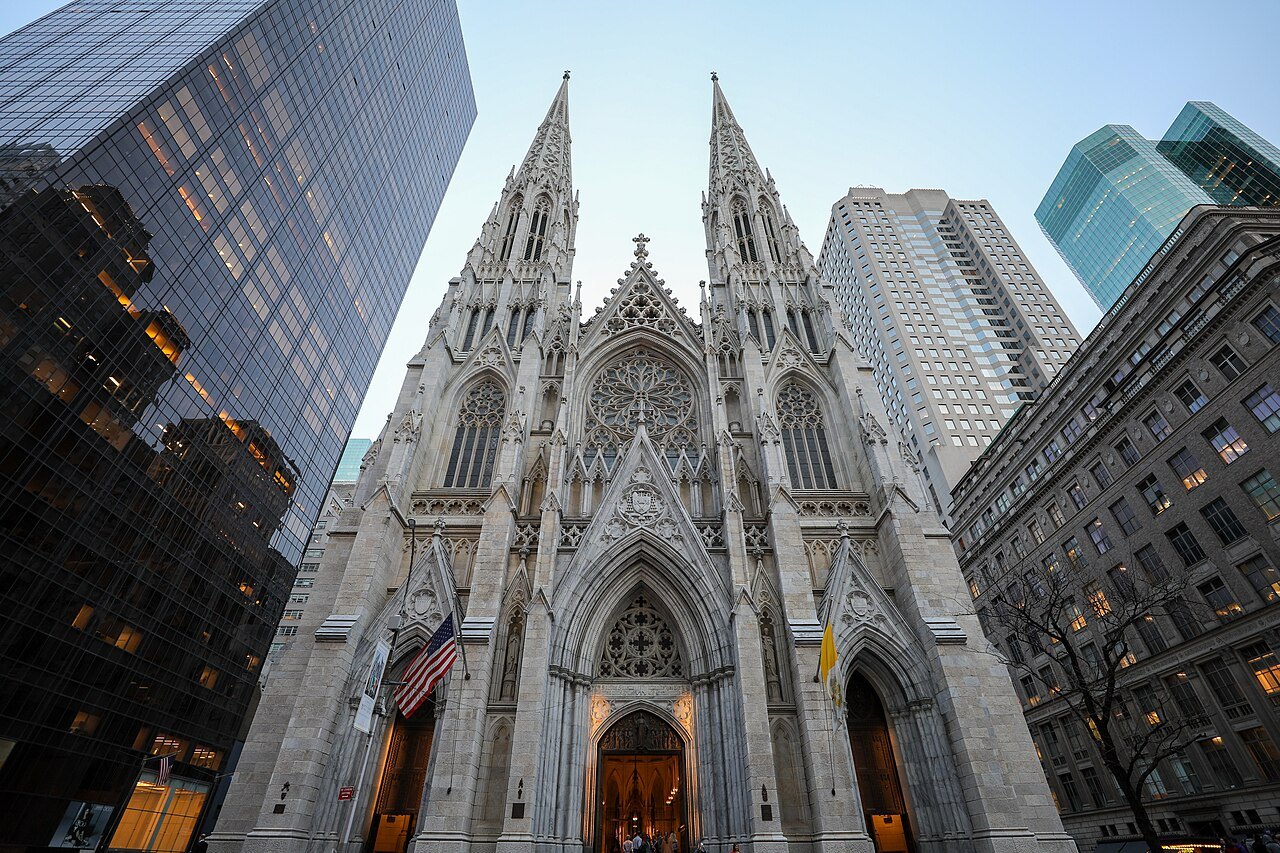
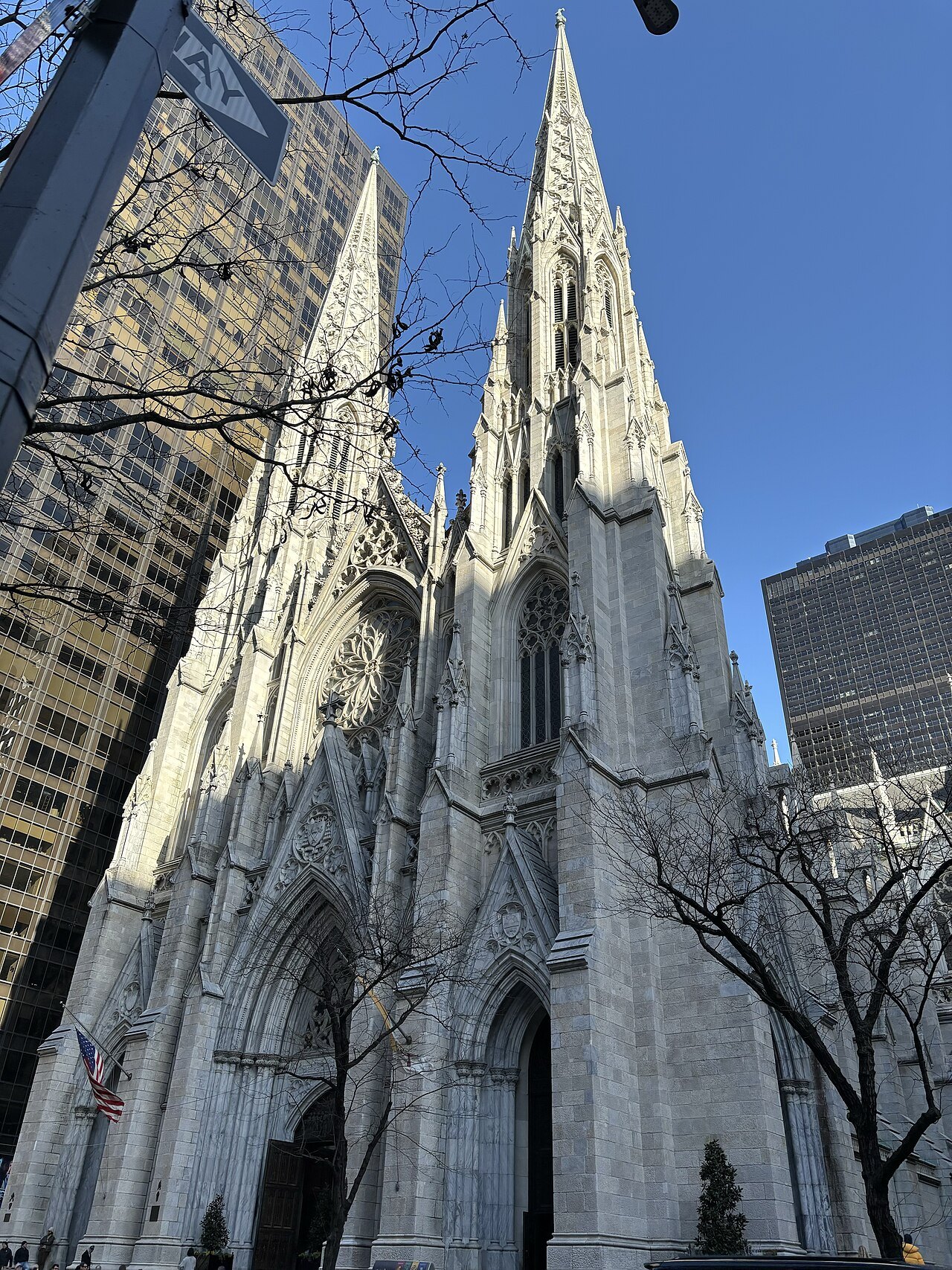
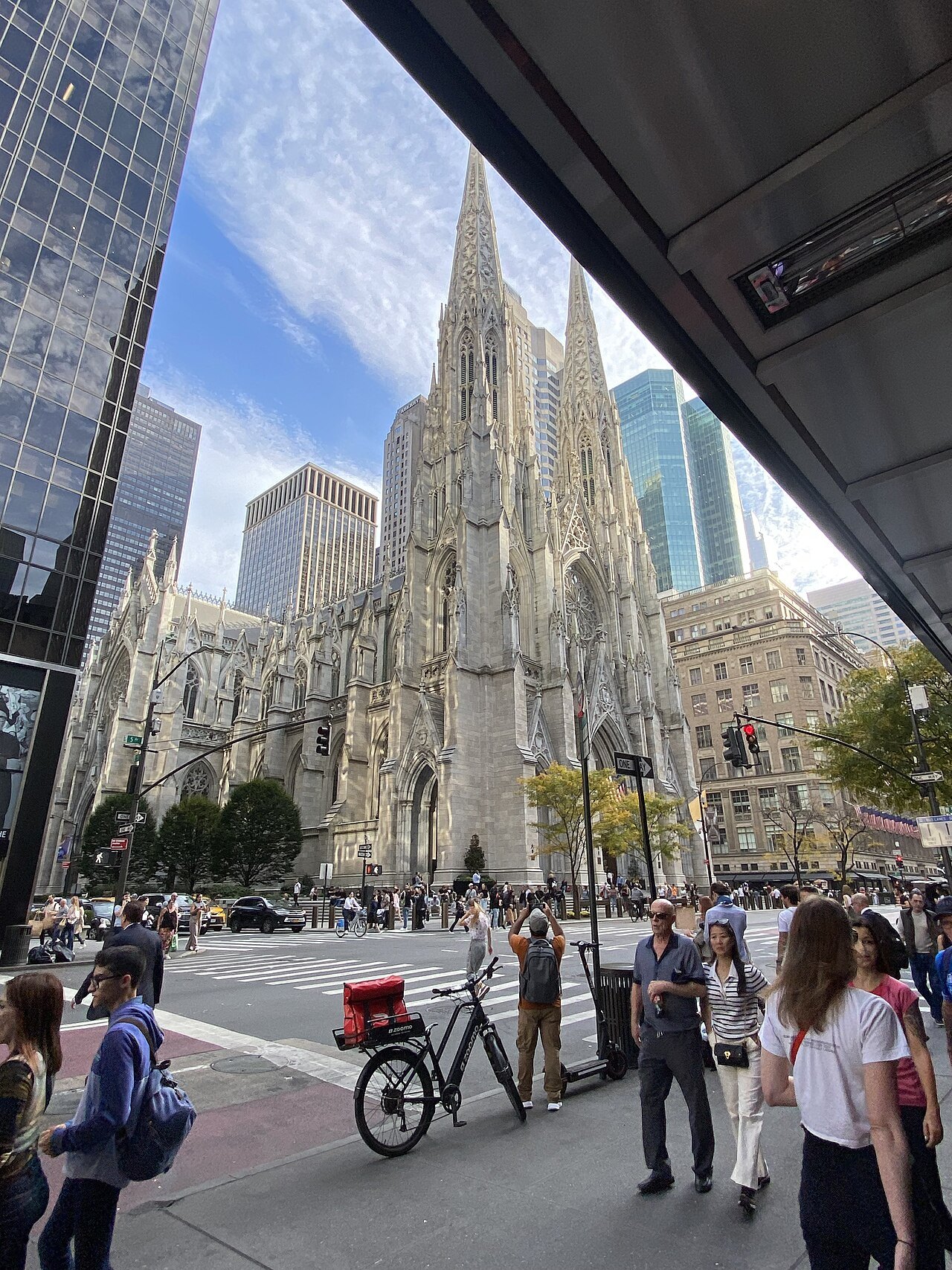
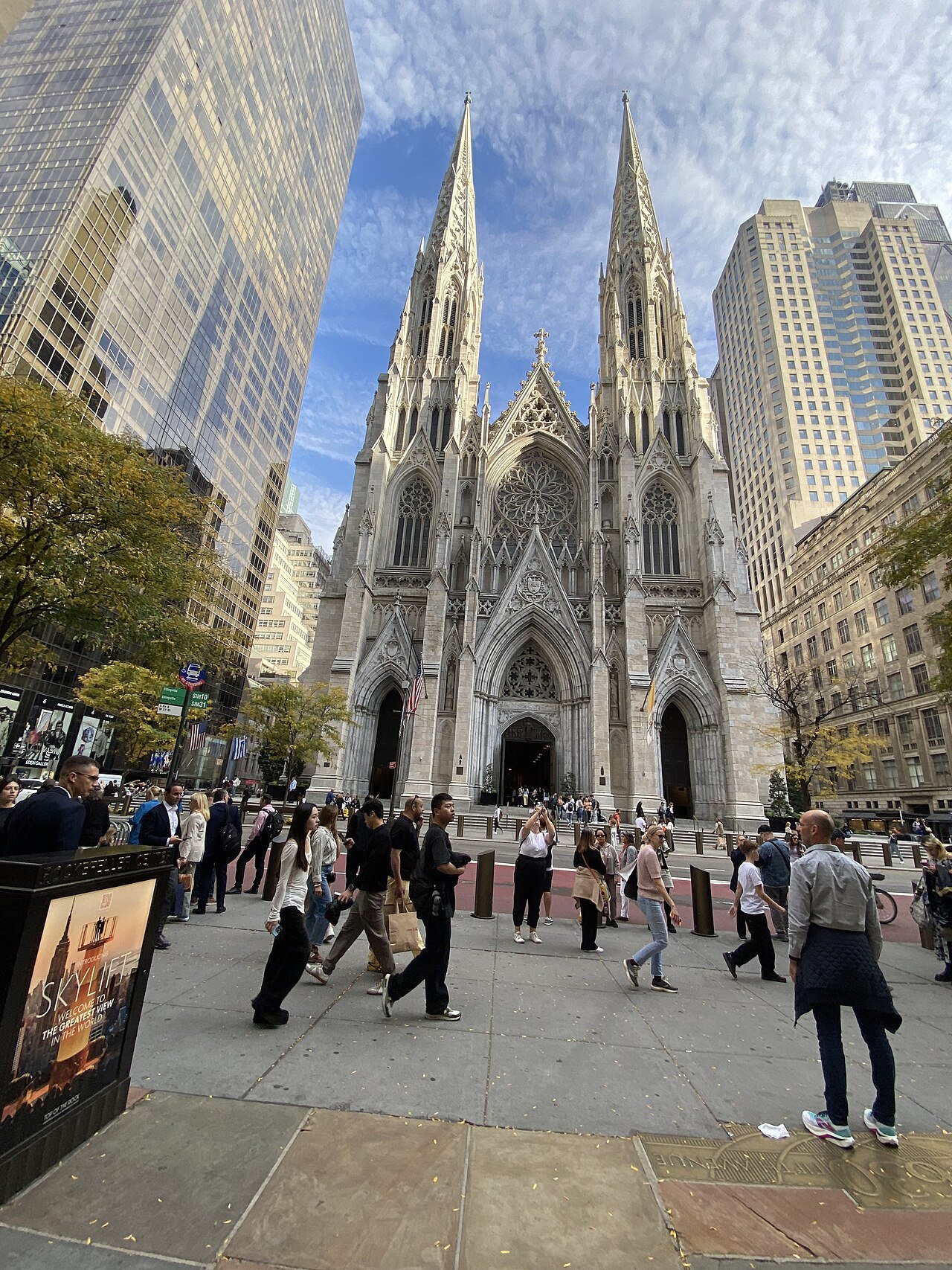
- 6St. Patrick's CathedralJames Renwick Jr.'s marble cathedral, the largest Gothic Revival Catholic cathedral in North America.
The sight in full02
Reading the place
Why it matters
Rockefeller Center is a complex of nineteen commercial buildings on twenty-two acres between 48th and 51st Streets in Midtown. The fourteen original Art Deco buildings fill the blocks between Fifth and Sixth Avenues, split by a sunken plaza and a private street, Rockefeller Plaza. Built by John D. Rockefeller Jr. on land he leased from Columbia University, it was begun in 1931, its first buildings opened in 1933, and its core was finished by 1939. It is described as one of the greatest building projects of the Great Depression, and it is a National Historic Landmark.
It is also where Midtown is at its most generous to people on foot: a garden walk, a plaza, sculpture on almost every building, an underground concourse, a rink in winter and the most famous Christmas tree in the country. Directly across Fifth Avenue stands St. Patrick's Cathedral, and together they make one of the great urban set pieces of the city.
How it was built
The site was first meant for a new home for the Metropolitan Opera, but the opera could not afford to move after the crash of 1929. Rockefeller went ahead anyway and, in 1930, persuaded the Radio Corporation of America and its companies NBC and RKO to take the western part of the site for a media complex, which gave the western half the name Radio City. The lead architect of the team, known as the Associated Architects, was Raymond Hood.
Radio City Music Hall, on Sixth Avenue, opened on December 27, 1932, with an auditorium that was the largest in the world at the time; it is still the home of the Rockettes. The centerpiece, 30 Rockefeller Plaza, the former RCA Building, rises sixty-six stories and 850 feet, and it was delayed in opening in 1933 by a scandal over a lobby mural, Man at the Crossroads, which was covered up and destroyed.
What you actually see
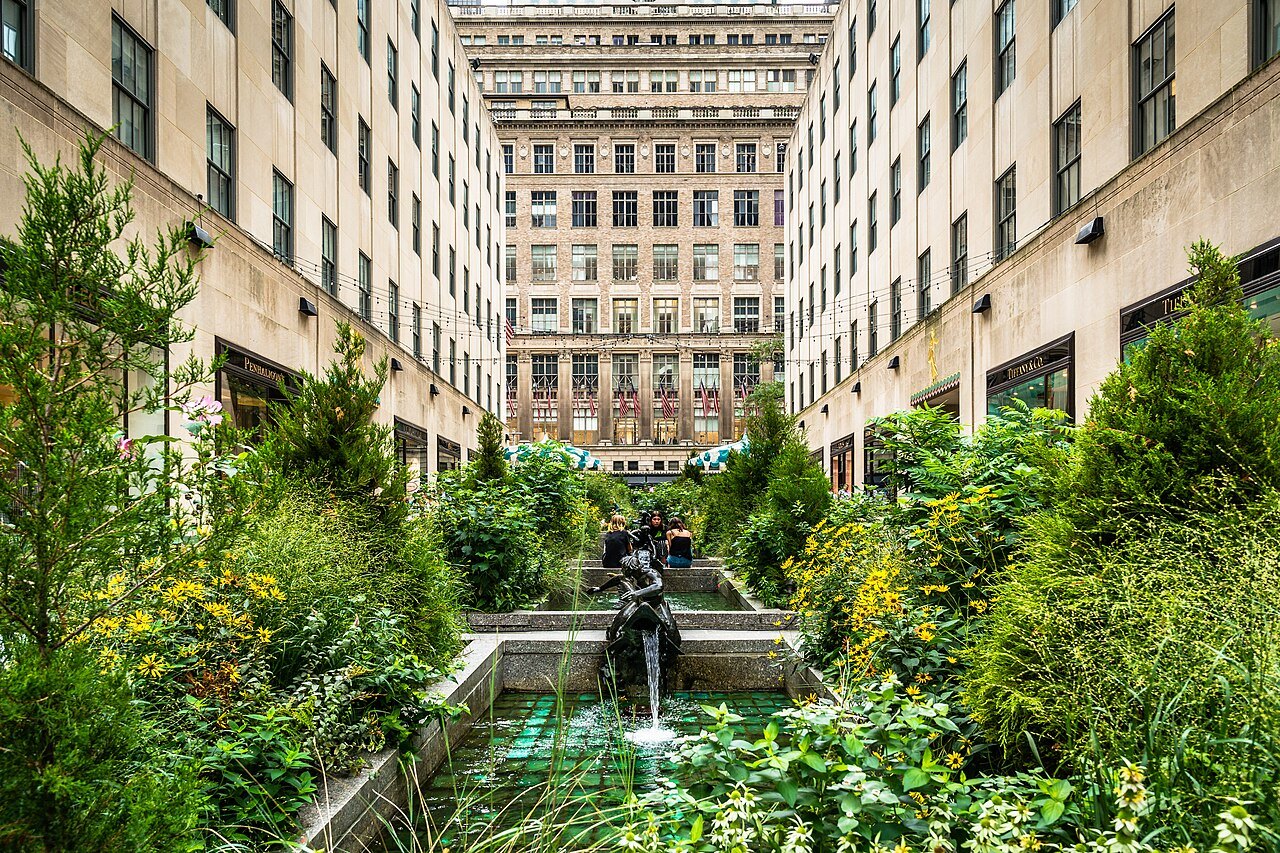
Enter from Fifth Avenue between 49th and 50th Streets. The Channel Gardens, a narrow promenade of flower beds and fountains, run west between two low buildings, the French building, La Maison Française, and the British Empire Building, so called for the governments that once took their space. At the end the ground falls away into the lower plaza.
Over the plaza flies Prometheus, Paul Manship's gilded bronze of 1934, bringing fire to mankind. Since 1936 the sunken plaza has been an ice rink in winter, replacing shops that never paid their way, and every December since 1933 a giant Christmas tree has stood above it; the annual lighting of the tree is one of the city's great seasonal events.
Behind it rises 30 Rockefeller Plaza. Look up at the entrance: above the doors Lee Lawrie carved Wisdom, A Voice from the Clouds, flanked by figures of Sound and Light, with a cast-glass wall above the doors also designed by him and above a line from Isaiah, Wisdom and Knowledge shall be the stability of thy times. Back toward Fifth Avenue, in the courtyard of the International Building, Lee Lawrie's bronze Atlas, made with Rene Paul Chambellan, carries the vault of the heavens on his shoulders. Installed in 1937 and weighing seven tons, it is the largest sculpture in the complex.
Top of the Rock
The observation deck at the top of 30 Rockefeller Plaza, called Top of the Rock, first opened in 1933. Its entrance is on 50th Street; elevators rise to an indoor observatory on the 67th floor, escalators continue to the 69th, and the open deck on the 70th floor is 850 feet above the street.
It is lower than the Empire State Building's 86th floor, but it has the advantage of looking straight at it: the classic view of Midtown with the Empire State Building in the middle stands here, and to the north the whole of Central Park lies spread out below. The views compares it with the other decks.
St. Patrick's Cathedral
Across Fifth Avenue, filling the block between 50th and 51st Streets, stands St. Patrick's Cathedral, the seat of the Catholic Archbishop of New York. It was designed by James Renwick Jr. in the Gothic Revival style, and it is the largest cathedral of its kind in North America. Work stopped during the Civil War; the cathedral was completed in 1878 and dedicated on May 25, 1879, and its twin spires, 329 feet high, were added in 1888.
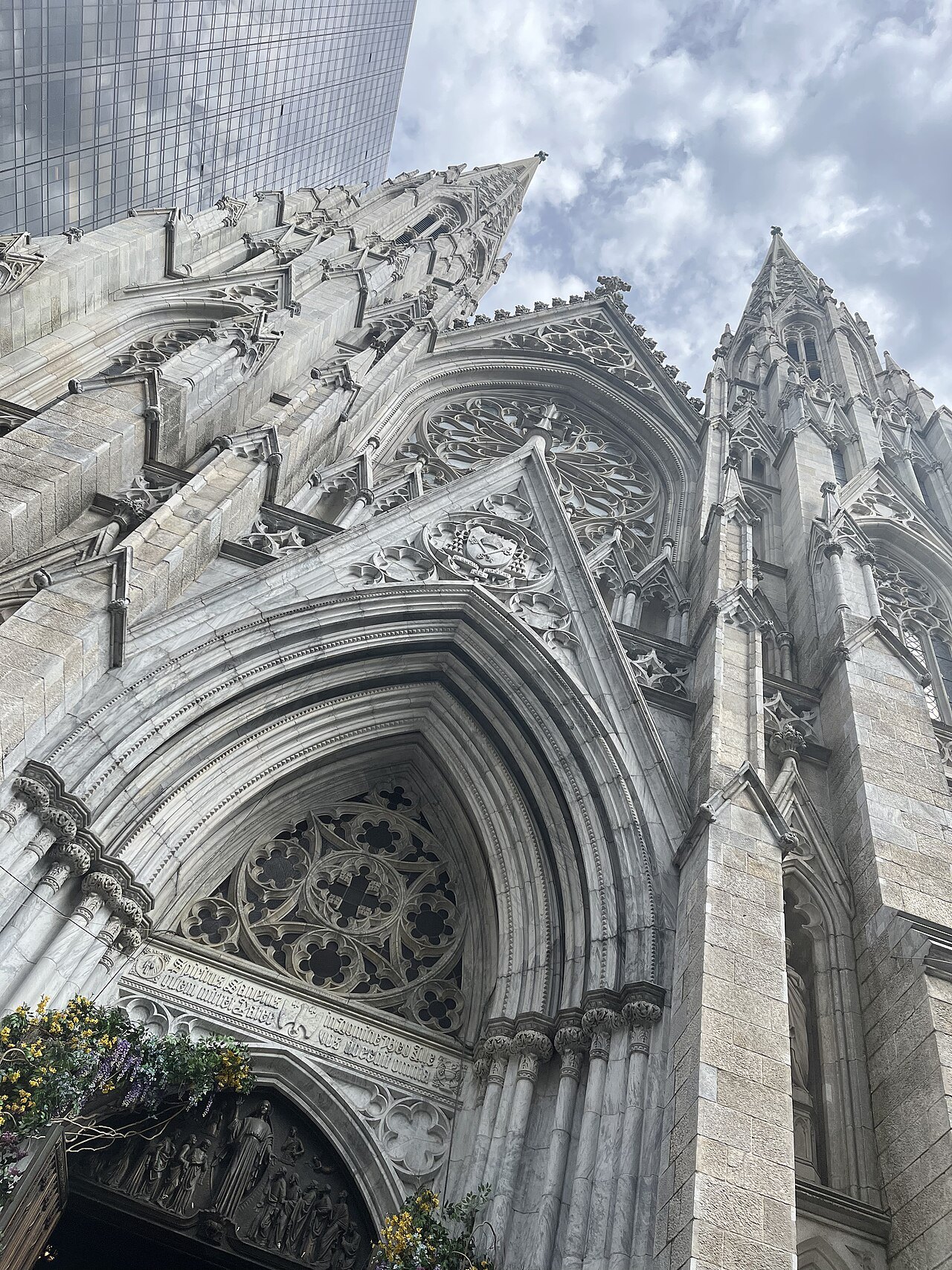
The cathedral is clad in marble and lit by several dozen stained-glass windows, and inside there are two pipe organs; the northern tower holds nineteen bells. Its walls are white marble, chosen over cheaper brownstone and granite for its durability and beauty, and it has been restored several times, in the 1940s, the 1970s and the 2010s. It is a parish church as well as a cathedral, so services go on while visitors look around; come in quietly.
How to visit
The plaza, the gardens and the lobbies are free to walk through, and St. Patrick's is free to enter. Top of the Rock is ticketed; booking ahead explains how. The center is at its most crowded in December, around the tree and the rink.
The subway stops at 47th–50th Streets–Rockefeller Center on Sixth Avenue, and the center is on the homepage walk. When to come covers the holiday season.
Nearby
Walk north up Fifth Avenue to the corner of Central Park at 59th Street, south to the New York Public Library, or west to Times Square.
Where to go next03
Nearby
- Nearby · 59 St → 110 StCentral ParkThe 843 acres the grid left open: a landscape built by hand in the 1850s and 1860s to look like nature, with a lake, a terrace, a castle on a rock, and fifty blocks of lawns and woods between the towers.Read the page →
- Nearby · Fifth Ave · E 41 StThe New York Public Library and Bryant ParkThe marble library of 1911 on the site of the old Croton Reservoir, guarded by two stone lions a mayor named Patience and Fortitude, with a reading room nearly three hundred feet long and a green park at its back door.Read the page →
- Nearby · Broadway · Seventh Ave · W 42–47 StTimes SquareThe bowtie of plazas where Broadway crosses Seventh Avenue, named in 1904 for The New York Times, lit by signs the zoning law requires, and the doorstep of the Broadway theaters.Read the page →