What you are looking at01
Central Park
59 St → 110 St
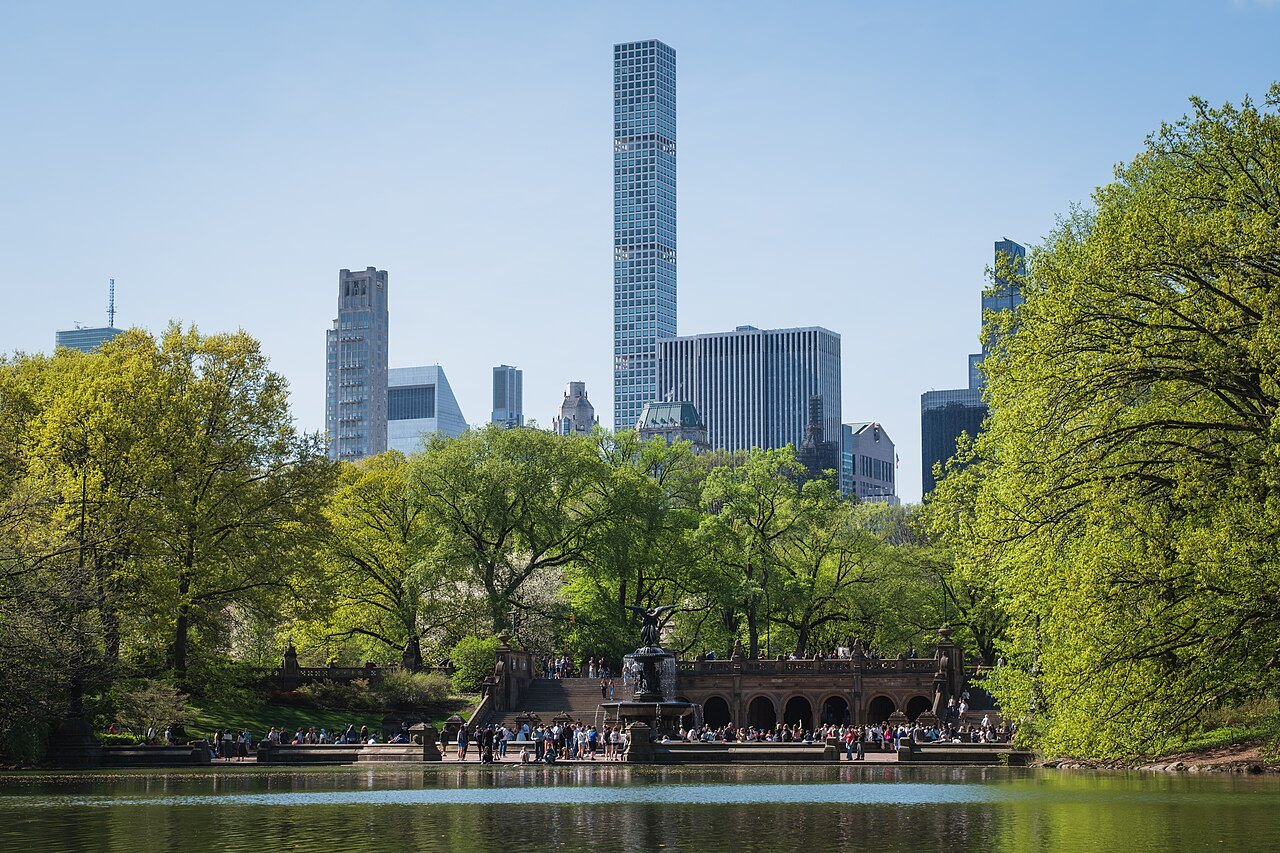
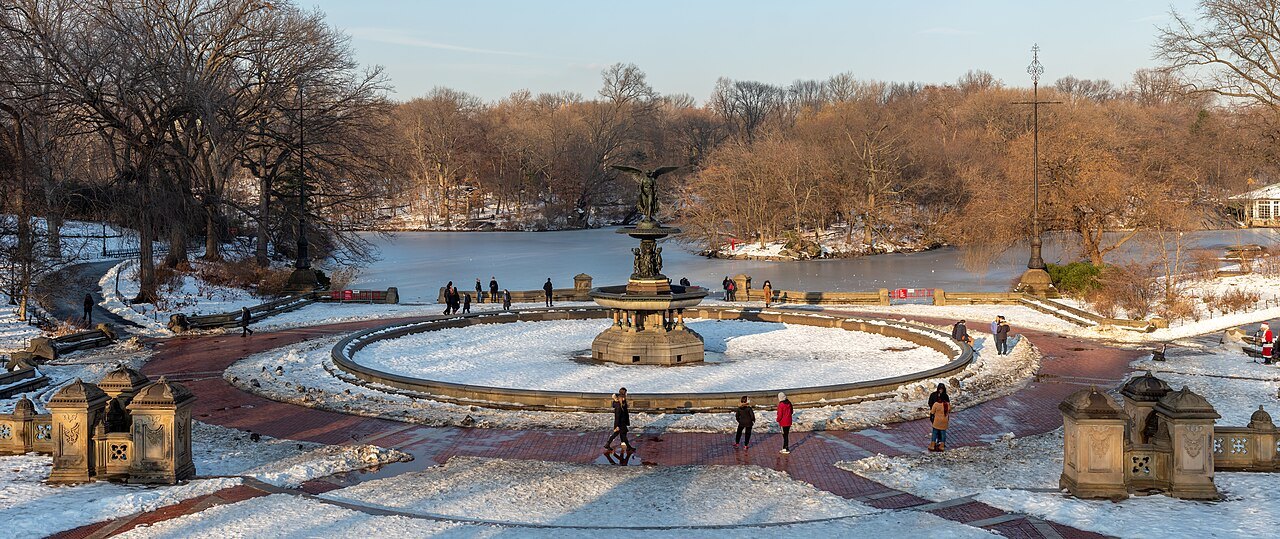
- 1Bethesda TerraceThe formal terrace at the heart of the park, with Emma Stebbins's Angel of the Waters on its fountain.
- 2The Mall and Literary WalkThe long, straight promenade under the elms, with busts of writers along its southern end.
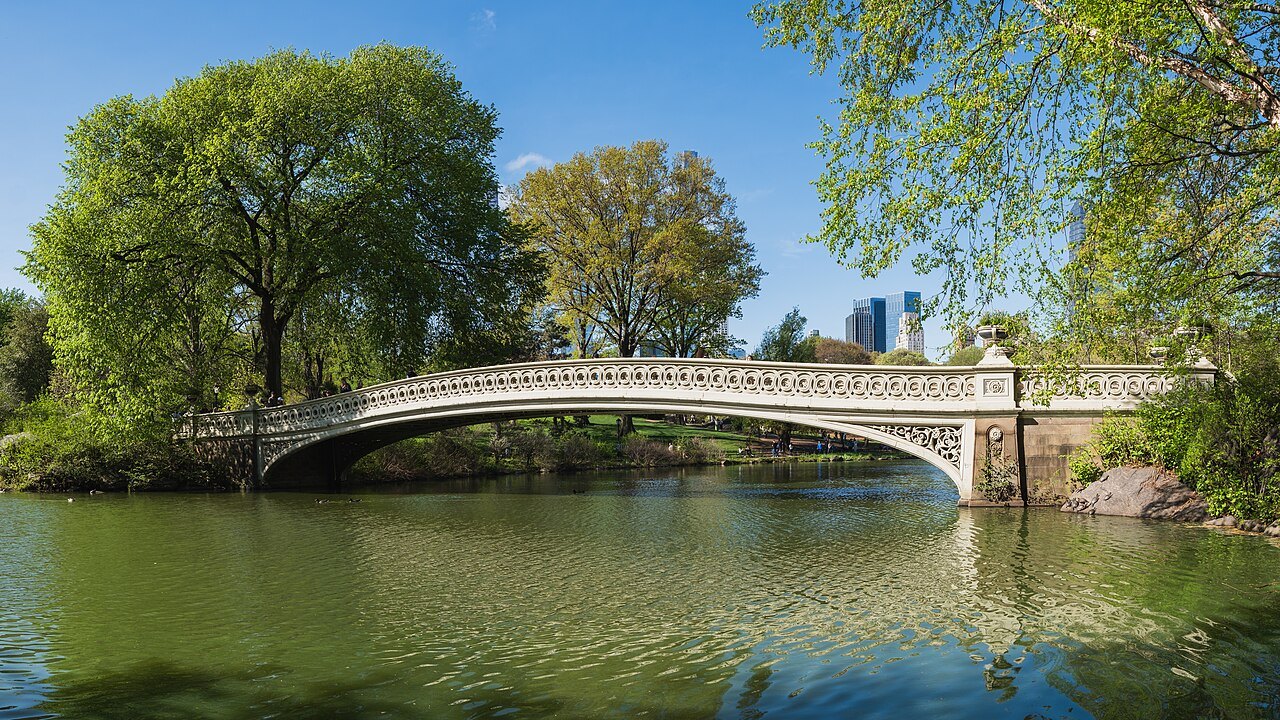
- 3The Lake and Bow BridgeThe largest body of water south of the reservoir, crossed at its center by a cast-iron bridge.
- 4Strawberry FieldsThe memorial to John Lennon near Central Park West and 72nd Street.
- 5Belvedere CastleA small stone castle on a rock above Turtle Pond, with a view over the Great Lawn.
- 6Cleopatra's NeedleAn Egyptian obelisk behind the Met, the oldest human-made structure in the park.
The sight in full02
Reading the place
Why it matters
Central Park is the great rectangle of green that interrupts the Manhattan grid for fifty-one blocks, from 59th Street to 110th Street, and from Fifth Avenue to Central Park West at Eighth Avenue. It is 2.5 miles long and half a mile wide, it covers 843 acres, and it is described as the first landscaped park in the United States. It is also the most visited urban park in the country, with an estimated 42 million visits a year, most of them by New Yorkers who come at least once a week.
For a visitor it is the necessary other half of Manhattan. After the canyons of Midtown, the park is where the city lets you breathe, and where you can see the skyline as a wall of towers standing at the edge of a meadow. It is a National Historic Landmark and a scenic landmark of the city.
How it was made
The grid laid out by the Commissioners' Plan of 1811 had no room for a large park; a single surveying bolt from that survey is still embedded in a rock north of the Dairy, marking where West 65th Street would have crossed Sixth Avenue. By the 1840s the city was growing so fast that its leading citizens began calling for one, and in 1853 a park was approved. In 1858 Frederick Law Olmsted and Calvert Vaux won the design competition with their Greensward Plan, working with the architect Jacob Wrey Mould and the gardener Ignaz Anton Pilat.
Almost nothing you see is natural. The site was rocky and swampy, and its hills, lakes and woods were all shaped by hand; topsoil was carted in by the ton because the original soil could not support the trees in the plan. The eight lakes and ponds were made by damming natural streams and seeps. Building it had a cost too: the people living on the site, including Seneca Village, a majority-Black settlement, were removed through eminent domain and their homes razed. The Lake opened first, in December 1858, and the park was finished in 1876.
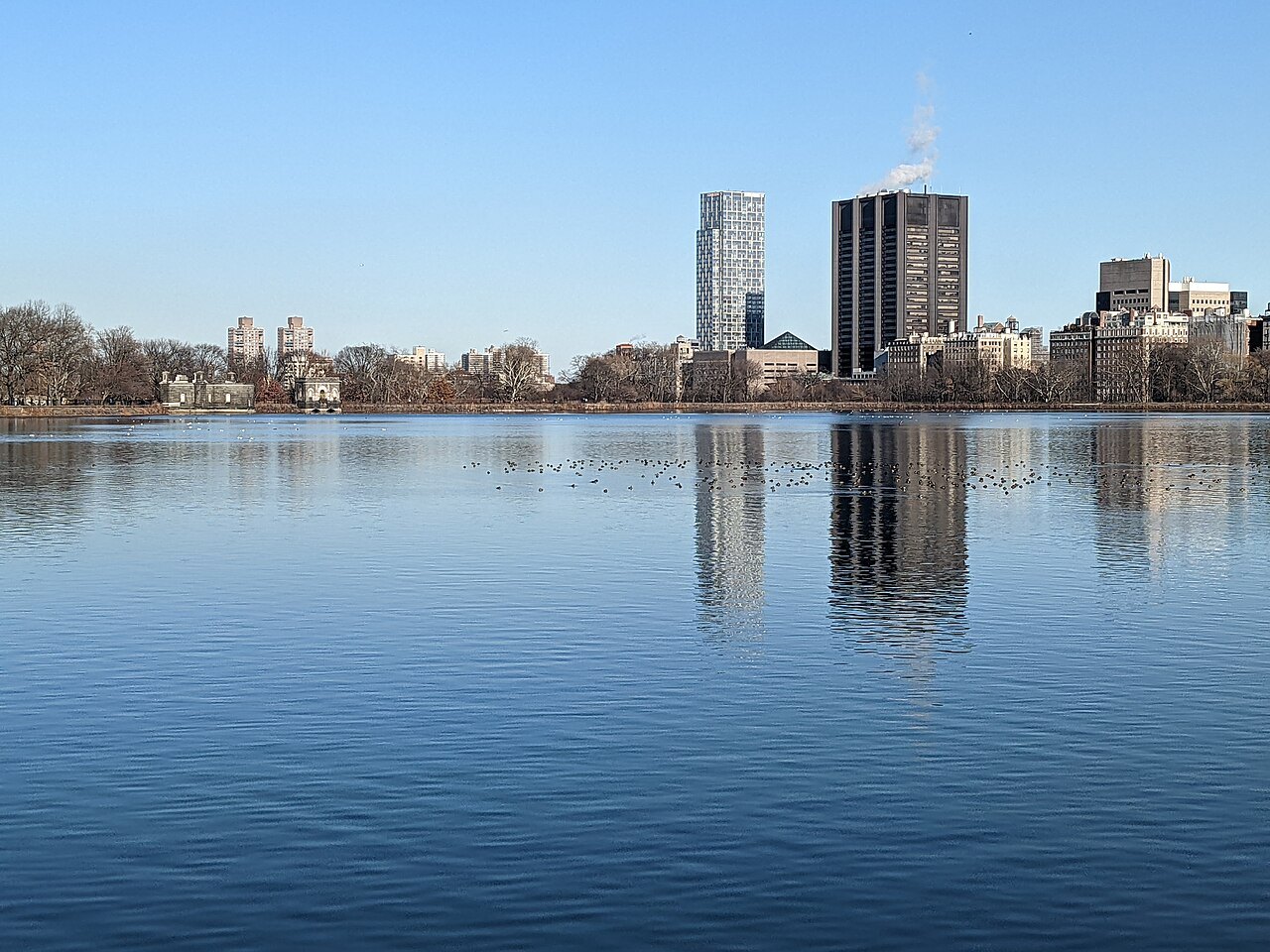
One of Olmsted and Vaux's cleverest ideas was to sink the four crosstown roads, the transverses, below the level of the park, so that traffic crosses it without being seen, and to separate carriage drives, bridle paths and footpaths with dozens of bridges, each in a different design.
What you actually see
Enter at the southeast corner, at Grand Army Plaza on Fifth Avenue and 59th Street, and follow the paths north past the Pond. In a few minutes you reach the Mall, the only straight line in the design: a broad promenade under a canopy of elms, with busts of authors and poets along Literary Walk at its southern end.
The Mall ends at Bethesda Terrace, one of the few structures finished during the Civil War. Two staircases lead down under the road through an arcade with a tiled ceiling, restored in 2007, to a terrace on the shore of the Lake. At its center stands Bethesda Fountain, crowned by Angel of the Waters, Emma Stebbins's statue of 1873; it was the first large public sculpture commissioned from an American woman and the only statue in the original plan of the park. A renovation of the fountain was announced in 2026, so part of the terrace may be fenced off when you visit.
From the terrace look west across the Lake to Bow Bridge, which spans it at its center, and to the towers of Central Park West above the trees. North of the Lake lies the Ramble, a wooded area of winding paths and rocky outcrops that opened in 1859. On the far side of the Ramble stands Belvedere Castle, built by Vaux and Mould on a rock above Turtle Pond, restored and reopened in 2019; from its terraces you look out over the Great Lawn, which Robert Moses laid out in the 1930s on the site of a shantytown of the Depression.
Around the edges
On the west side, near Central Park West and 72nd Street, is Strawberry Fields, the memorial to John Lennon, who was killed outside the nearby Dakota apartment building. The city dedicated it in 1981, and it was rebuilt and rededicated on what would have been his 45th birthday in 1985. Nearby are the Sheep Meadow, once a parade ground and grazing lawn, and Tavern on the Green, which occupies the old sheepfold.
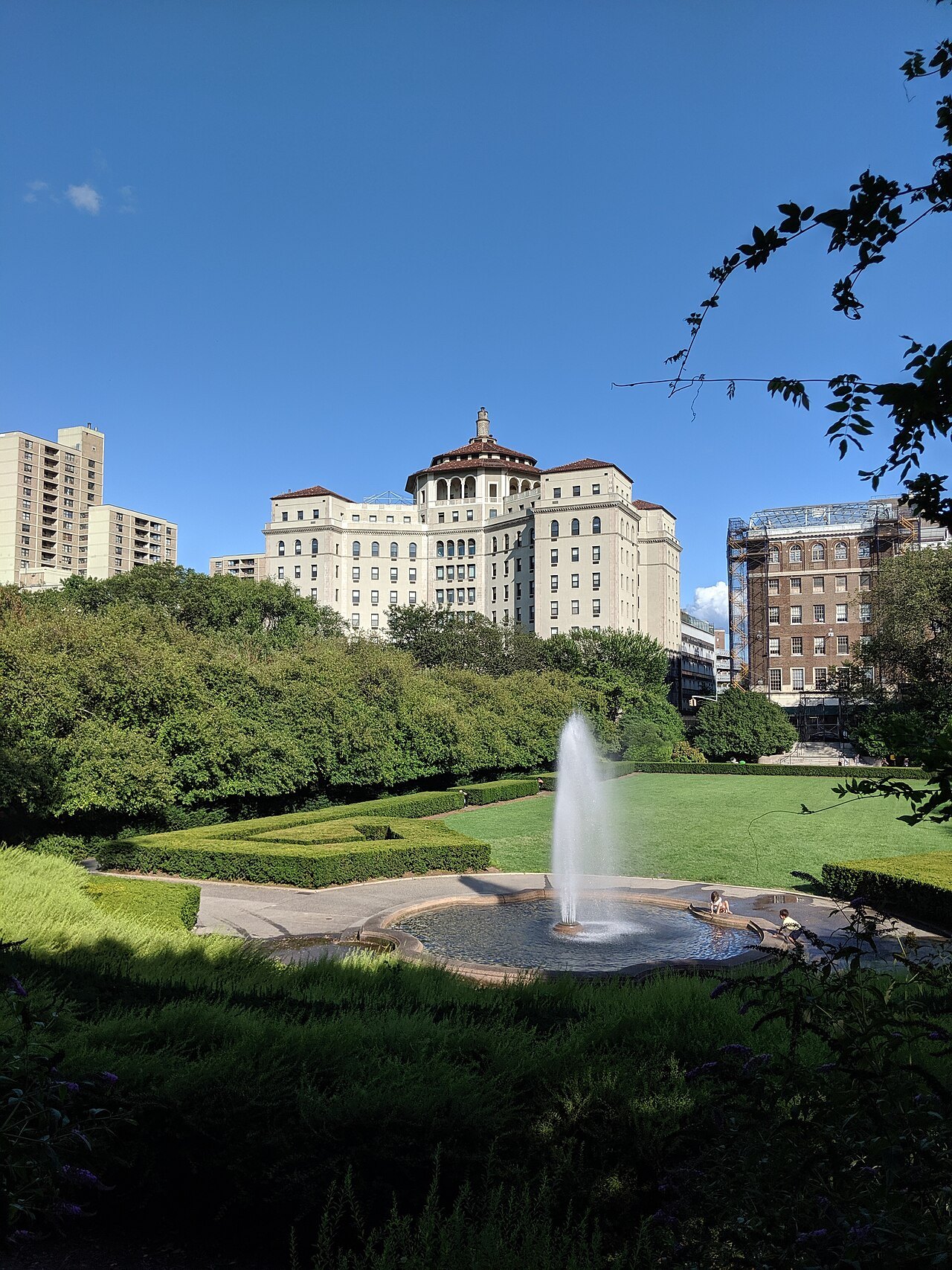
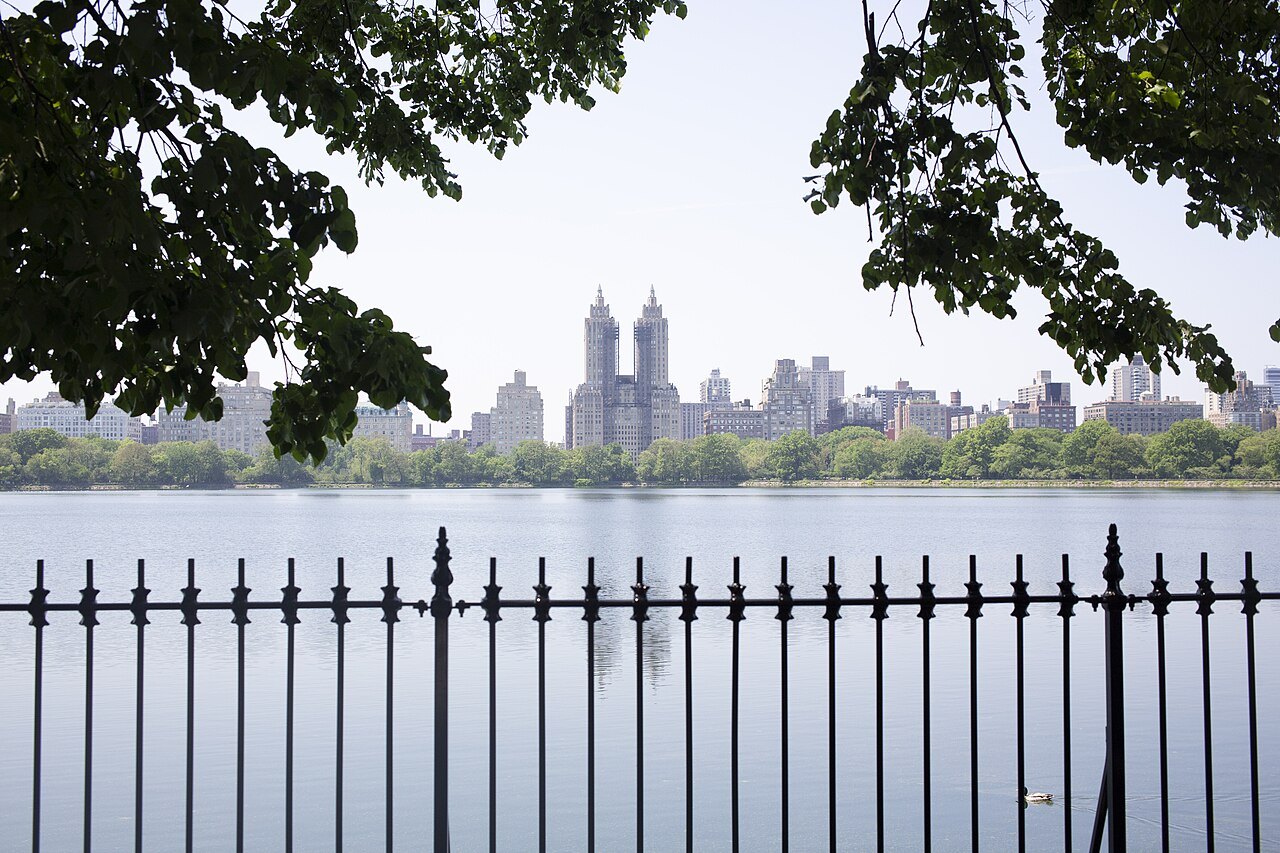
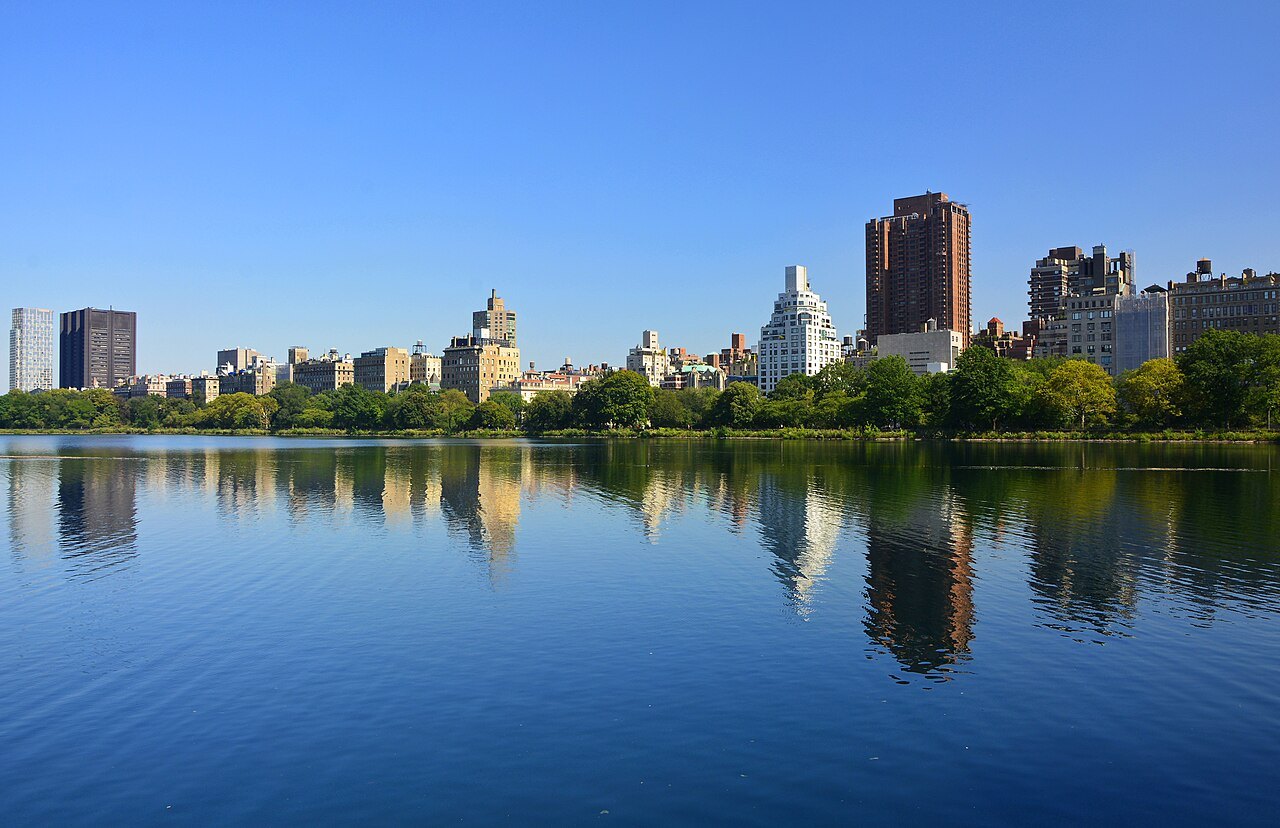
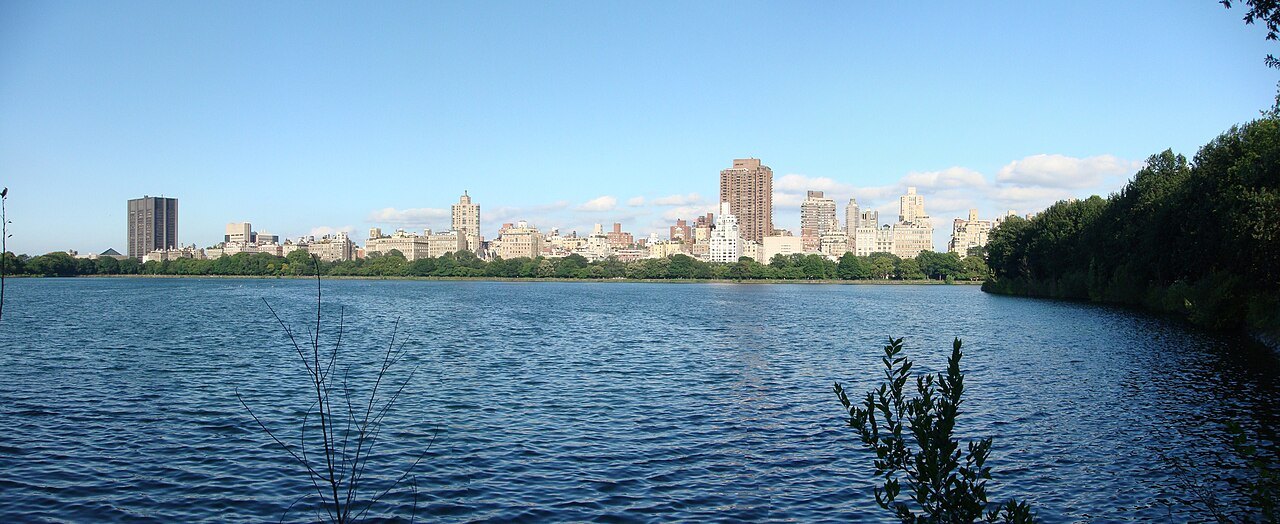
On the east side, at Conservatory Water, stands the statue of Alice in Wonderland, and near East Drive and 66th Street the statue of Balto, the sled dog of the 1925 serum run to Nome. Behind the Metropolitan Museum of Art rises Cleopatra's Needle, a red granite obelisk raised at Heliopolis around 1450 BC and the oldest human-made thing in the park. Further north lies the Jacqueline Kennedy Onassis Reservoir, which divides mid-park from the North End, and above it the park turns wilder, with the North Woods, the Conservatory Garden and the Harlem Meer.
How to visit
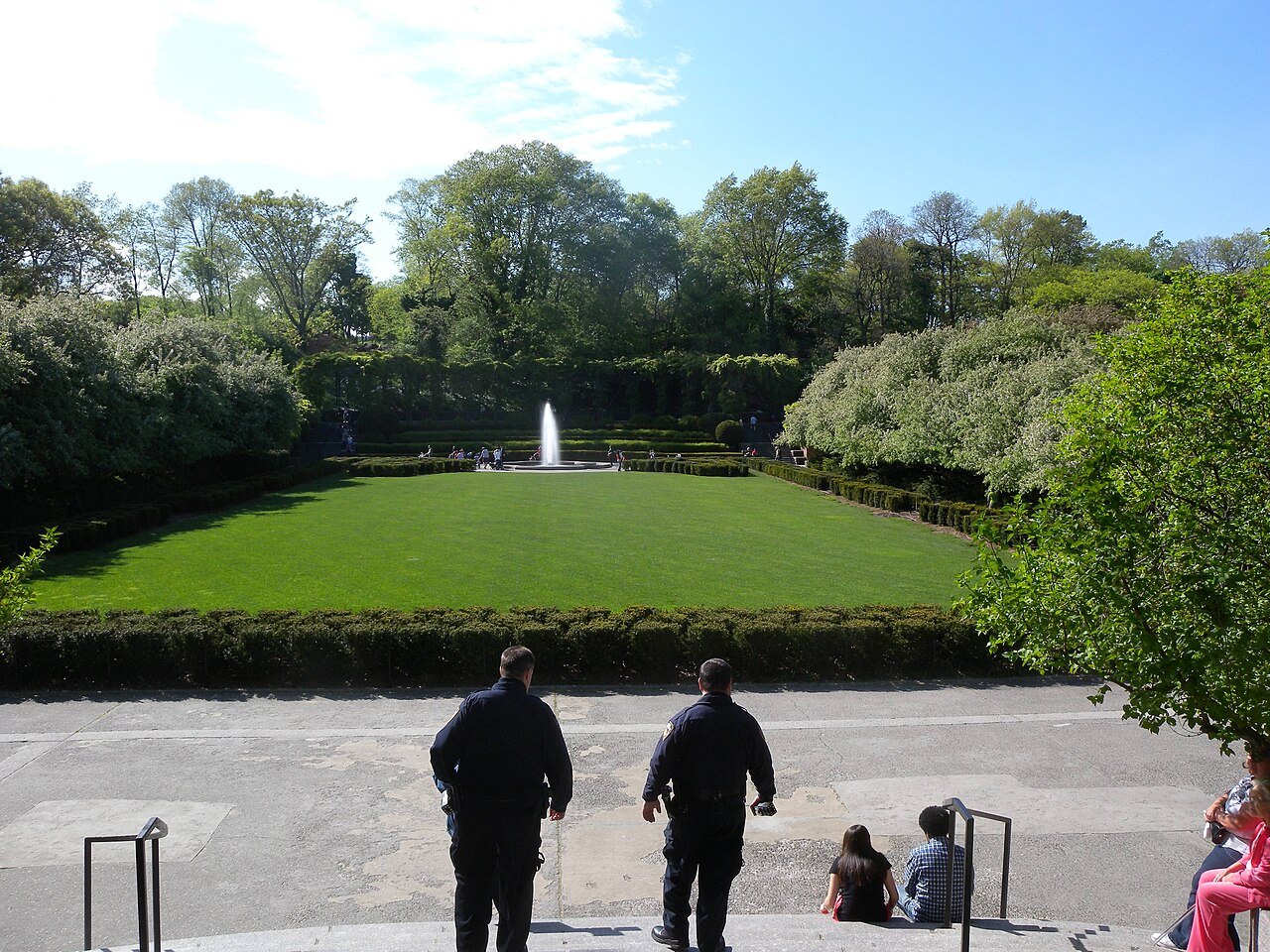
The park is free, and it closes for a few hours overnight; the Central Park Conservancy, which has managed it since 1998, posts its current hours and closures. It has five visitor centers, among them Belvedere Castle, the Dairy and one at Columbus Circle. In summer the Public Theater's Shakespeare in the Park is staged at the Delacorte Theater, and in winter Wollman Rink opens for skating near the Pond.
The southern end is the busiest part, and the most rewarding walk for a first visit runs from Grand Army Plaza up the Mall to Bethesda Terrace, across Bow Bridge and through the Ramble to Belvedere Castle. Several subway lines stop along the south edge at 59th Street, and others run along both sides; getting around covers them, and when to come covers the seasons in the park.
Nearby
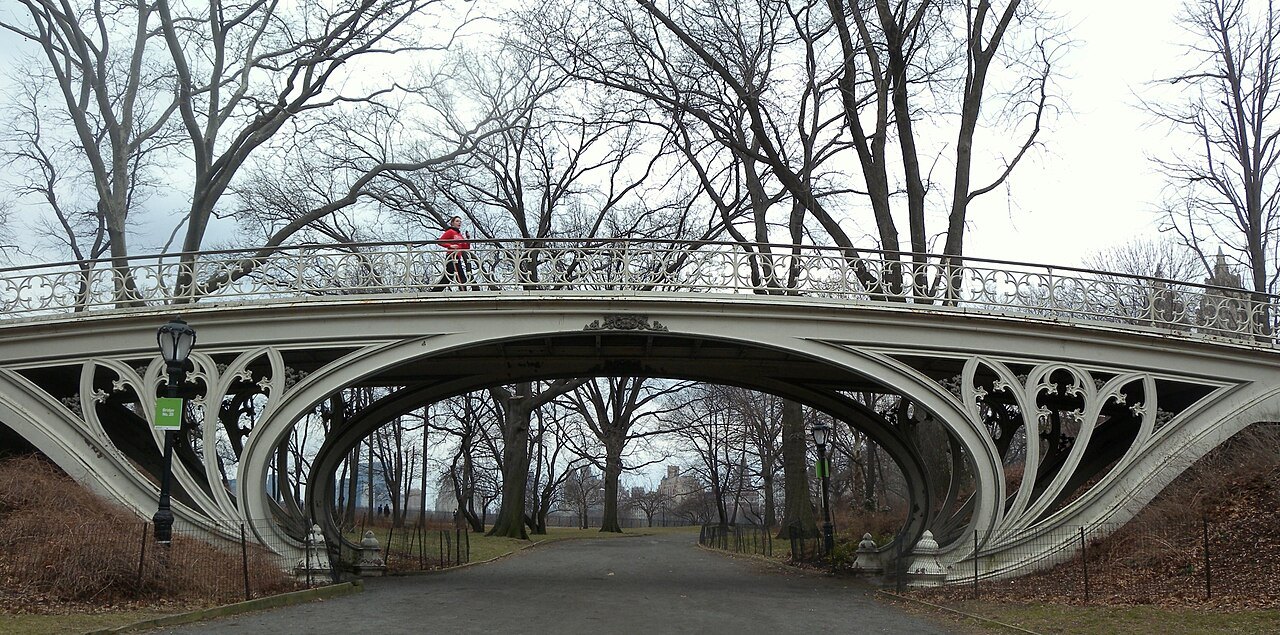
On Fifth Avenue, on the park's eastern edge, stands the Metropolitan Museum of Art, and at the corner of 89th Street the Guggenheim Museum. Rockefeller Center is a short walk south down Fifth Avenue from Grand Army Plaza.
Where to go next03
Nearby
- Nearby · 1000 Fifth AveThe Metropolitan Museum of ArtThe largest art museum in the Americas, almost a quarter of a mile long on the edge of Central Park: an Egyptian temple under glass, a Ming garden court, knights on horseback and five thousand years of painting under one roof.Read the page →
- Nearby · Fifth Ave · E 88–89 StThe GuggenheimFrank Lloyd Wright's white spiral on Museum Mile, finished in 1959 after fifteen years of drawings and quarrels: a ramp that winds six stories up around an open rotunda under a skylight, with the art hung along the curve.Read the page →
- Nearby · Fifth Ave · W 48–51 StRockefeller Center and St. Patrick's CathedralThe Art Deco city within the city that the Rockefellers built in the Depression, from Prometheus over the skating rink to the Top of the Rock, and across Fifth Avenue the white Gothic cathedral of 1879.Read the page →