Home · Getting Here
Every way in01
Where each arrival puts you
JFK
John F. Kennedy International, the busiest of the three, is in Queens, about 16 miles southeast of Midtown. AirTrain JFK links the terminals to the subway and the Long Island Rail Road.
LaGuardia
The smallest and closest of the airports, in northern Queens, mostly for domestic flights. MTA buses serve every terminal, with free transfers to the subway.
Newark
Newark Liberty International, in New Jersey about nine miles west-southwest of Manhattan. AirTrain Newark runs to a rail station with trains to Penn Station.
Penn Station
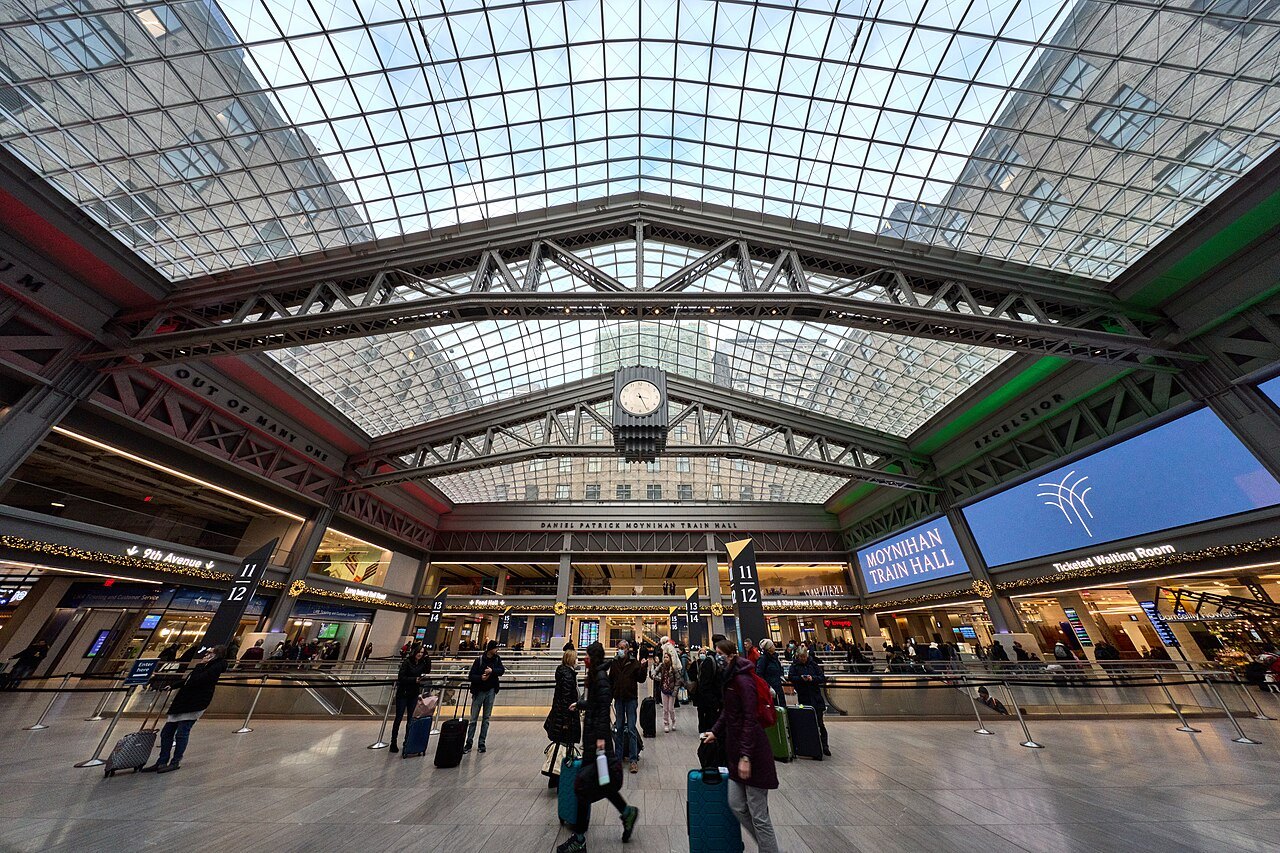
The main intercity station, under Madison Square Garden and in Moynihan Train Hall between Seventh and Ninth Avenues at 31st to 33rd Streets.
Grand Central
Metro-North trains from the Hudson Valley and Connecticut, and the Long Island Rail Road's newer concourse beneath.
Port Authority Bus Terminal
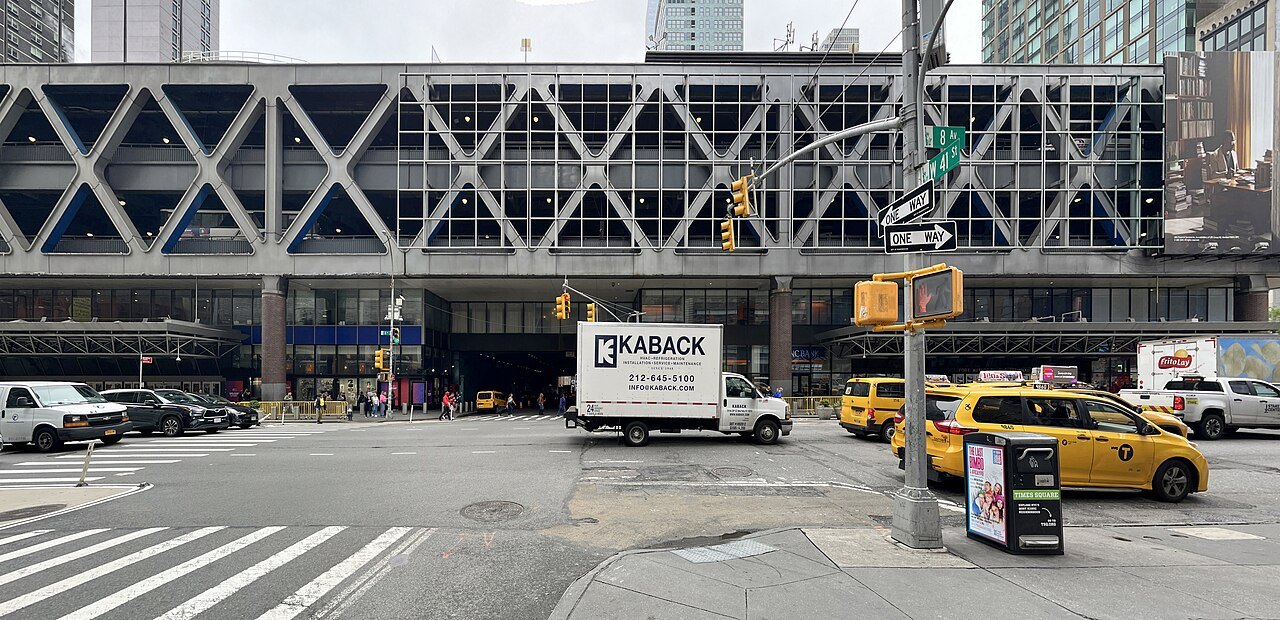
The busiest bus terminal in the world, on Eighth Avenue between 40th and 42nd Streets, a block west of Times Square.
In full02
Getting Here
How the city is reached
Manhattan is an island, and nearly everything about arriving here comes down to crossing water. The three airports that serve New York are all off the island: John F. Kennedy International and LaGuardia in Queens, and Newark Liberty International across the Hudson River in New Jersey. Trains come in through tunnels under the rivers to Penn Station, and commuter lines from the north run down the island to Grand Central. Long-distance buses arrive at the Port Authority Bus Terminal on the West Side of Midtown.
The good news is that all of these points are well connected, and from any of them the island's own transit carries you the last few miles. Plan the final stretch before you land, and for your first ride remember that Manhattan's addresses are easy to find once you know the grid.
John F. Kennedy International
JFK is the primary international airport of the New York area and the busiest of the three, with nearly a hundred airlines flying to every inhabited continent. It lies on the shore of Jamaica Bay in Queens, about 16 miles southeast of Midtown, and it has five passenger terminals. It opened in 1948 as Idlewild Airport and was renamed for President Kennedy after his assassination in 1963.
The rail link is AirTrain JFK, a driverless elevated train that runs around the clock between the terminals, where riding is free, and two stations outside the airport, where you pay a fare to leave. At Jamaica, about eight minutes from the terminals, it connects with the Long Island Rail Road, whose trains run on to Penn Station, and with the subway; at Howard Beach it connects with the subway. By road it is a long ride that depends on traffic, and trips by yellow taxi between Manhattan and JFK are charged a flat rate rather than by the meter.
LaGuardia
LaGuardia, named for the former mayor Fiorello La Guardia, sits on Flushing Bay in northern Queens and is the closest airport to Manhattan, as well as the smallest: it covers 680 acres, against more than 5,000 at JFK, and it is the third-busiest of the three. It is mainly domestic: a perimeter rule bars most nonstop flights to places more than 1,500 miles away. Long criticized for its old facilities, it was rebuilt in a reconstruction completed in January 2025.
There is no train to LaGuardia. MTA buses, including two Select Bus Service routes, serve every terminal, and if you pay by tapping with OMNY you get a free transfer to the subway at the next station. Taxis charge the metered rate plus an airport surcharge.
Newark Liberty International
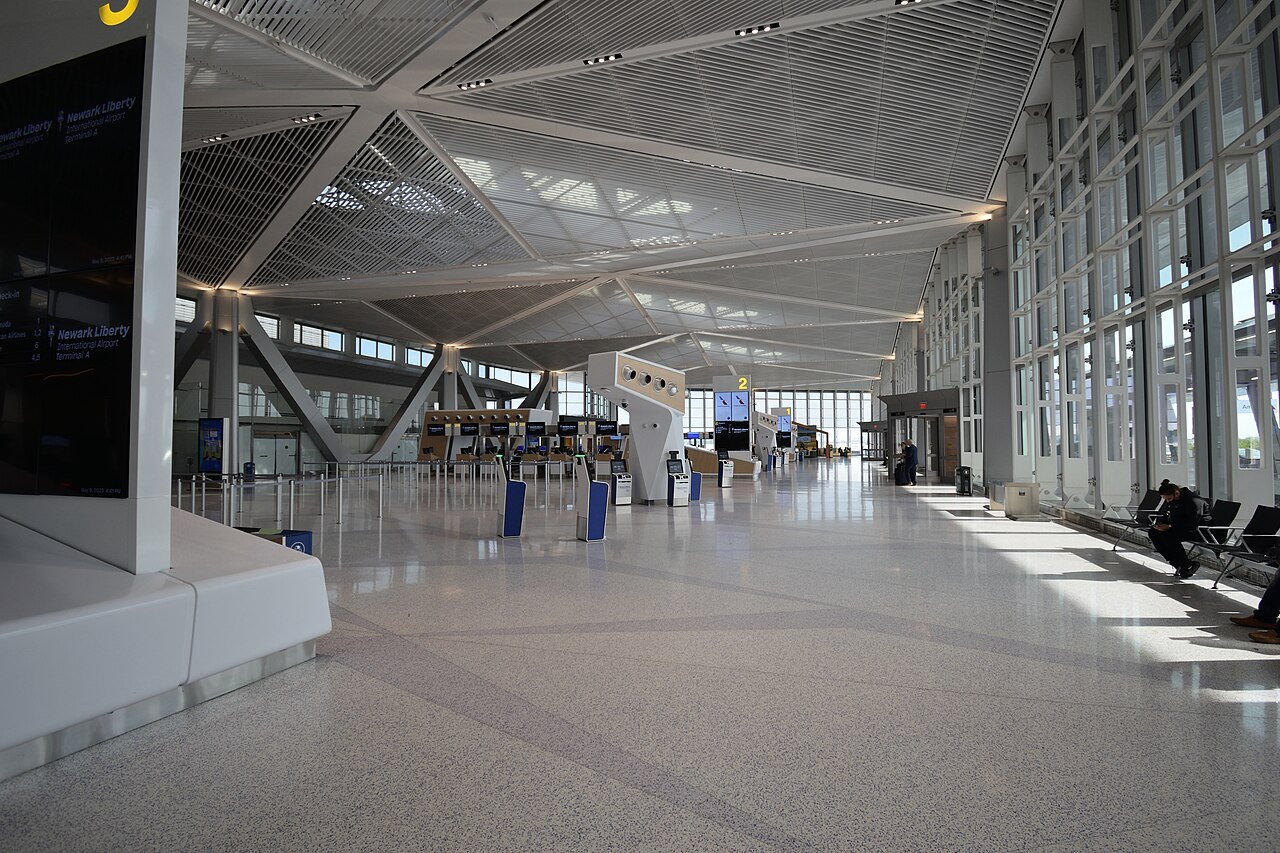
Newark is in New Jersey, about nine miles west-southwest of Manhattan, and it is the second-busiest airport of the three and a major gateway to Europe, South America, the Caribbean and Asia. Its old Building One of 1935 is on the National Register of Historic Places.
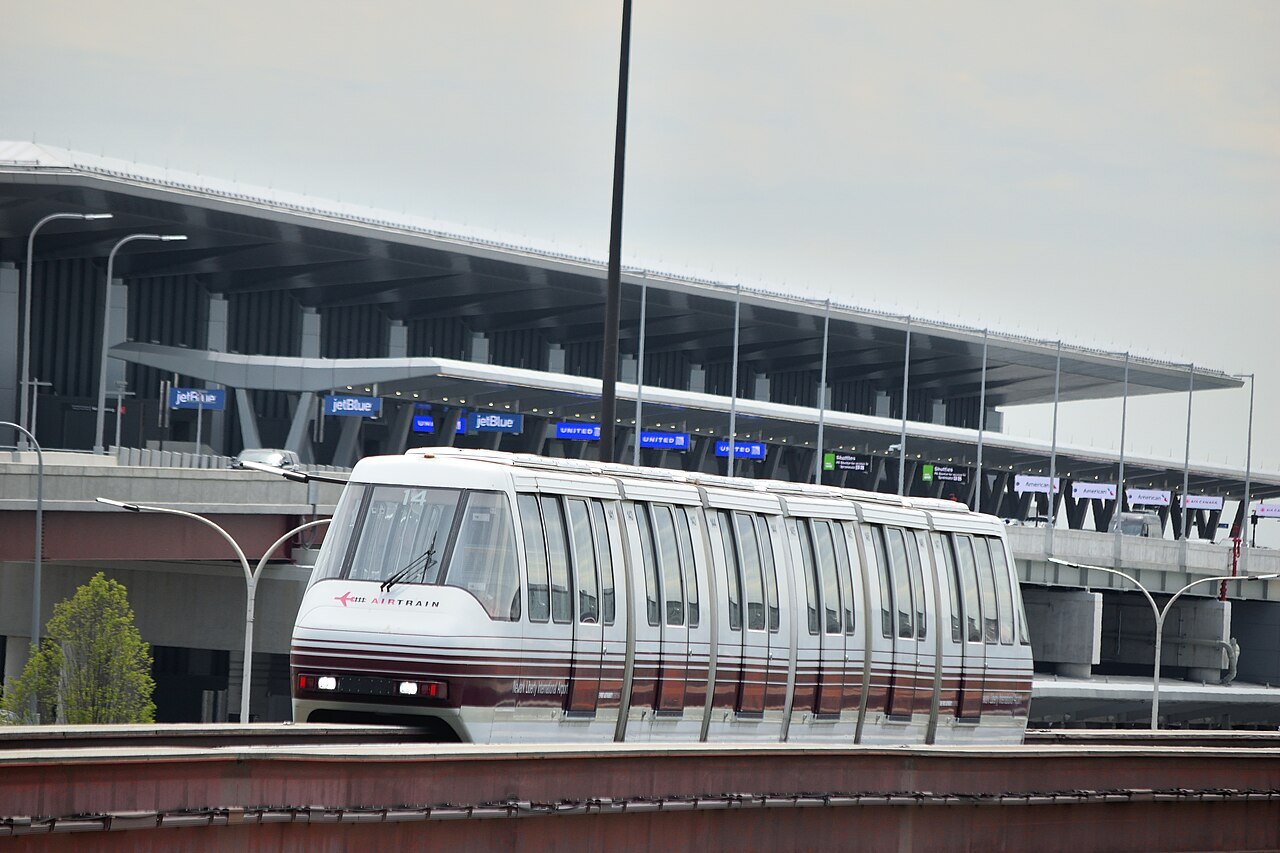
AirTrain Newark, a monorail opened in 1996, connects the terminals with the Newark Liberty International Airport station on the Northeast Corridor. From there New Jersey Transit and Amtrak trains run straight to Penn Station in Midtown, making it an easy way into the city despite the distance. The monorail is due to be replaced by a new cable system by 2030.
Penn Station and Moynihan Train Hall
Penn Station is the main intercity railroad station in the city and the busiest transportation facility in the Western Hemisphere. It serves more than 600,000 passengers on an ordinary weekday. It lies underground between Seventh and Ninth Avenues and 31st and 33rd Streets, beneath Madison Square Garden, and it sits at the center of the Northeast Corridor, with Amtrak trains from Boston to the north and Philadelphia, Baltimore and Washington to the south. Long Island Rail Road and New Jersey Transit commuter trains share it, and several subway lines stop below.
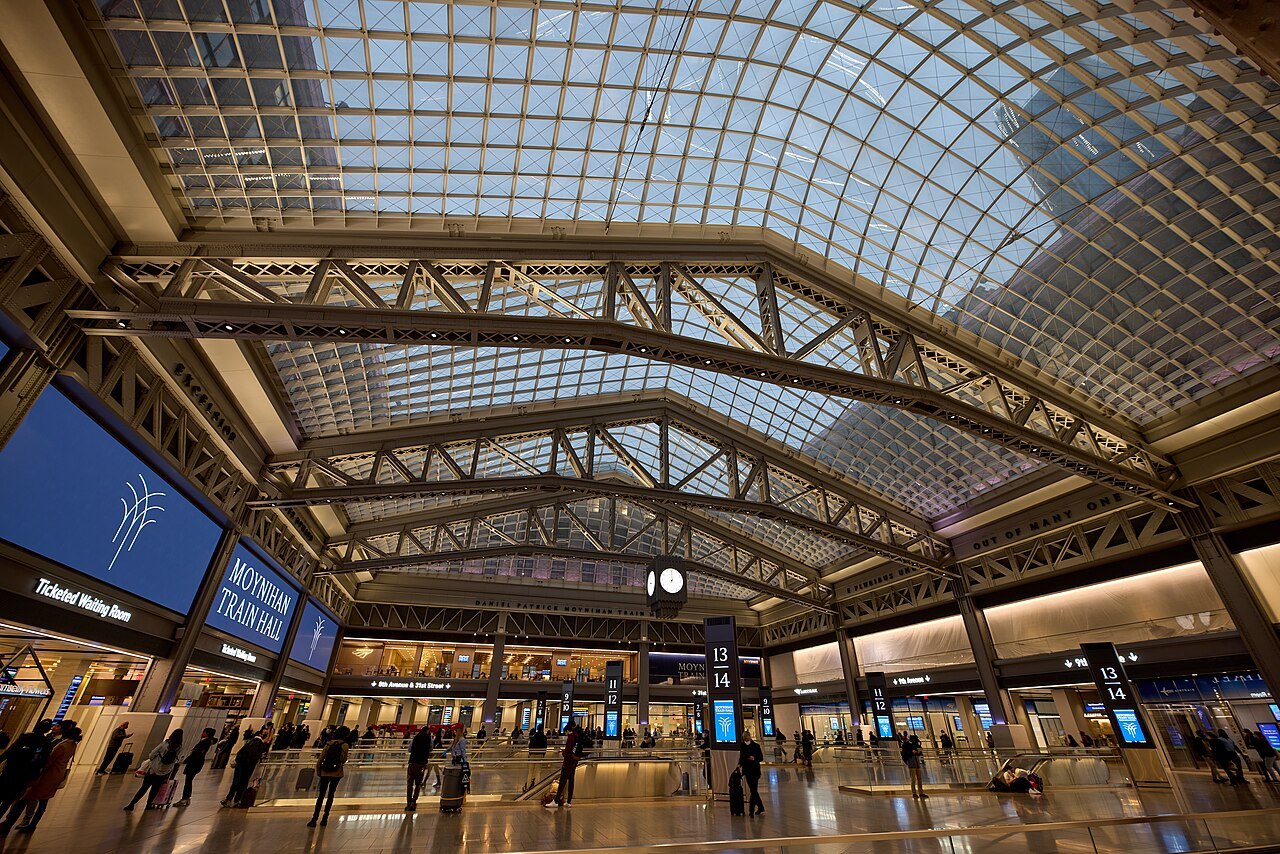
The original Penn Station, a Beaux-Arts masterpiece of 1910, was torn down in 1963, a loss that launched the historic preservation movement. Since January 2021 there has been a grand way in again: Moynihan Train Hall, built inside the old main post office across Eighth Avenue, a landmark designed by the same architects, McKim, Mead and White. Its central atrium has a glass roof, and it serves most of the station's platforms for Amtrak and the Long Island Rail Road. The station is a short walk from the Empire State Building and Herald Square.
Grand Central and the bus terminal
Grand Central Terminal, at Park Avenue and 42nd Street, is the terminus of Metro-North's commuter lines from the Hudson Valley and Connecticut, and since 2023 the Long Island Rail Road has used a new concourse, Grand Central Madison, beneath it. Long-distance Amtrak trains do not stop here. It is also a sight in its own right, and many visitors pass through it without ever catching a train. The most scenic of its lines is the Hudson Line, which runs north along the east shore of the Hudson River to Poughkeepsie; day trips uses it for the Hudson Valley.
The Port Authority Bus Terminal, at 625 Eighth Avenue between 40th and 42nd Streets, is the busiest bus terminal in the world, serving about 225,000 people on an average weekday. It is the arrival point for long-distance intercity buses and for commuter buses from New Jersey through the Lincoln Tunnel, a block to the west. Times Square is one block east, and the subway runs underneath.
Arriving
Whichever way you come, the last stretch is the subway or a taxi. The subway reaches every one of the rail stations and the bus terminal directly, and it takes the same tap-to-pay cards and phones that pay for buses; getting around explains how it works. New York's taxis come in two colors: yellow cabs can pick up anywhere in the city, while the apple-green boro taxis cannot pick up in Midtown or Lower Manhattan, or at the airports, so at an airport the cab you want is yellow.
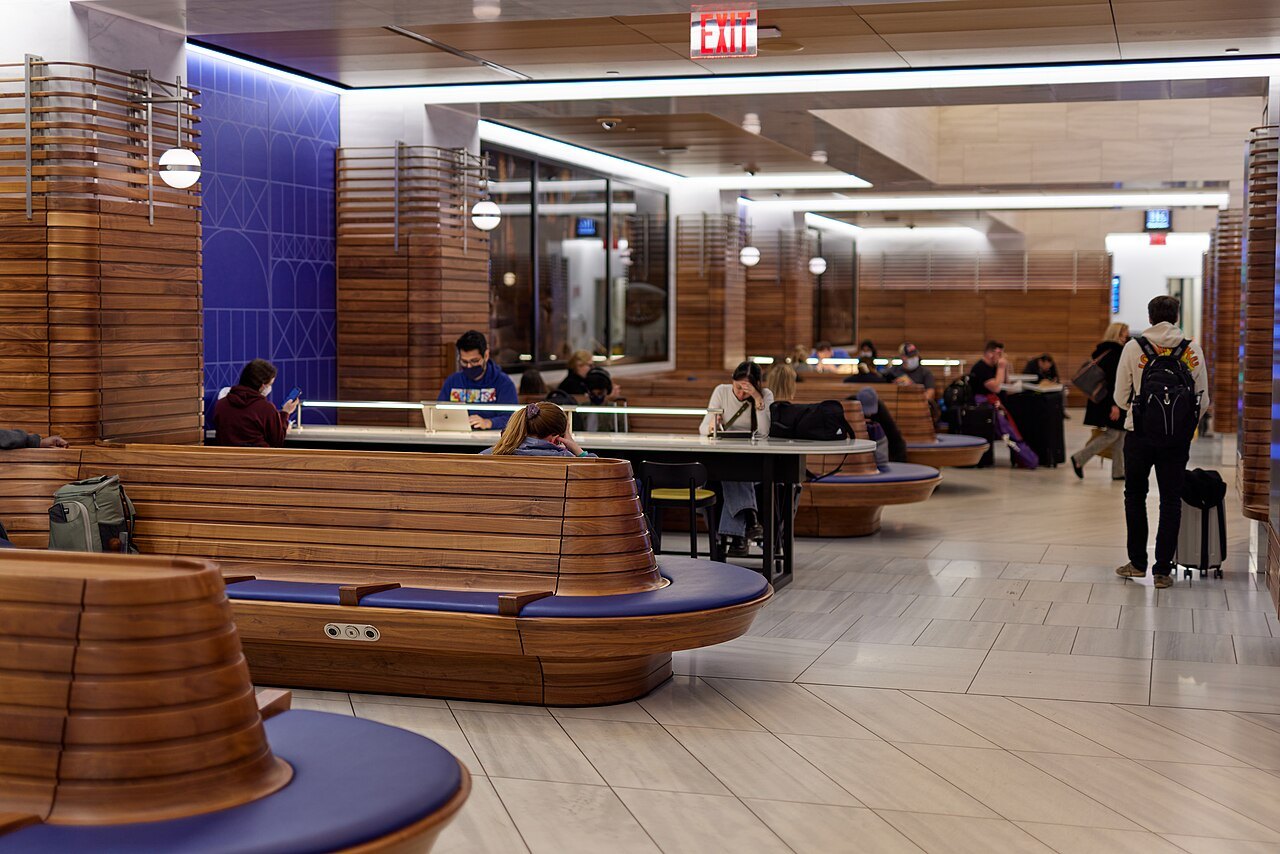
If you are staying in Midtown, Penn Station, Grand Central and the bus terminal all put you within walking distance of your hotel. Where to stay suggests which neighborhood to choose for each kind of trip.
Some links on this page are affiliate links. If you book through one we may earn a commission, at no extra cost to you. It does not affect what is recommended here, and no sight page on this site carries one.
Arranged before you land:
Seen on the way03
More photographs
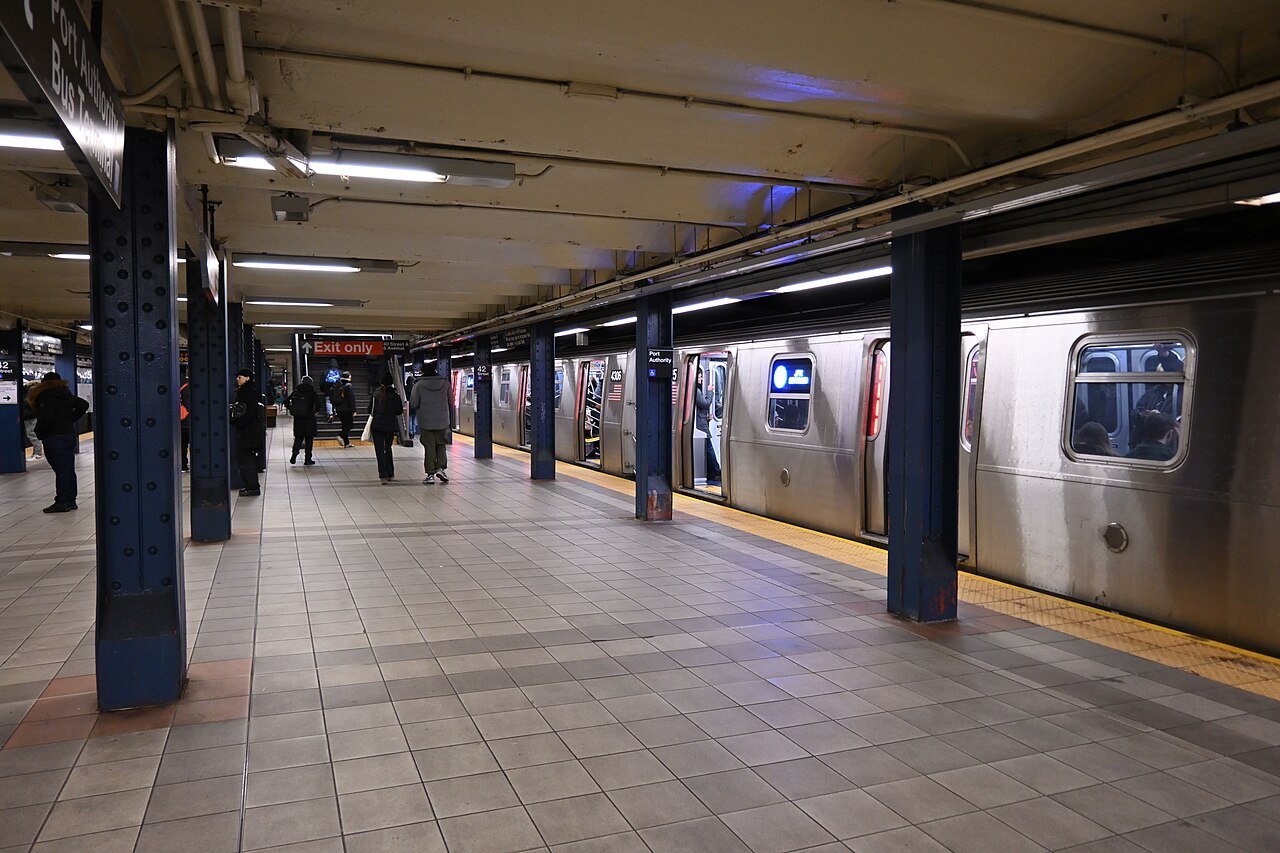
A downtown A train at the 42nd Street–Port Authority station4300streetcar, Wikimedia Commons, CC BY 4.0 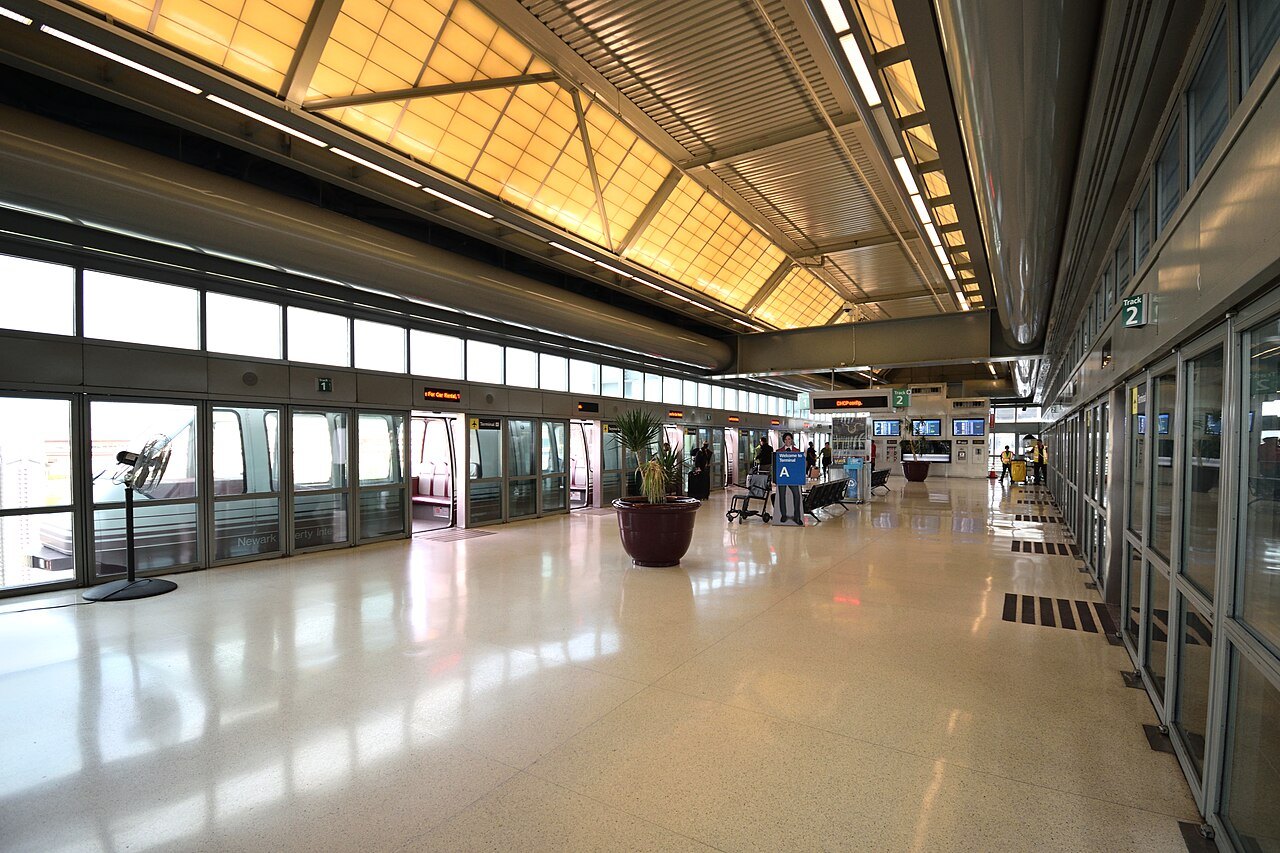
The glass-walled AirTrain platform at Newark's Terminal ASchvaxet, Wikimedia Commons, CC BY-SA 4.0 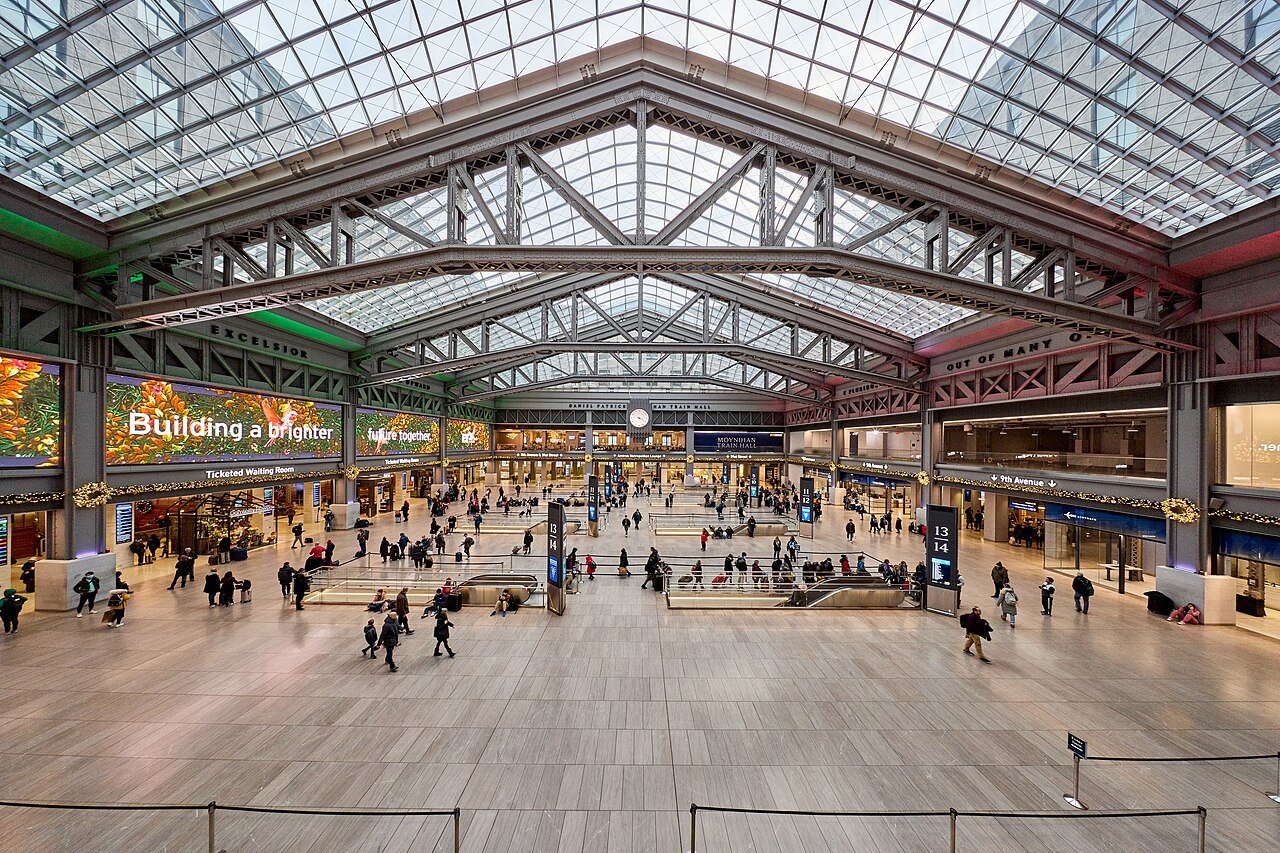
The concourse of Moynihan Train Hall from above, under its glass roofD. Benjamin Miller, Wikimedia Commons, CC0