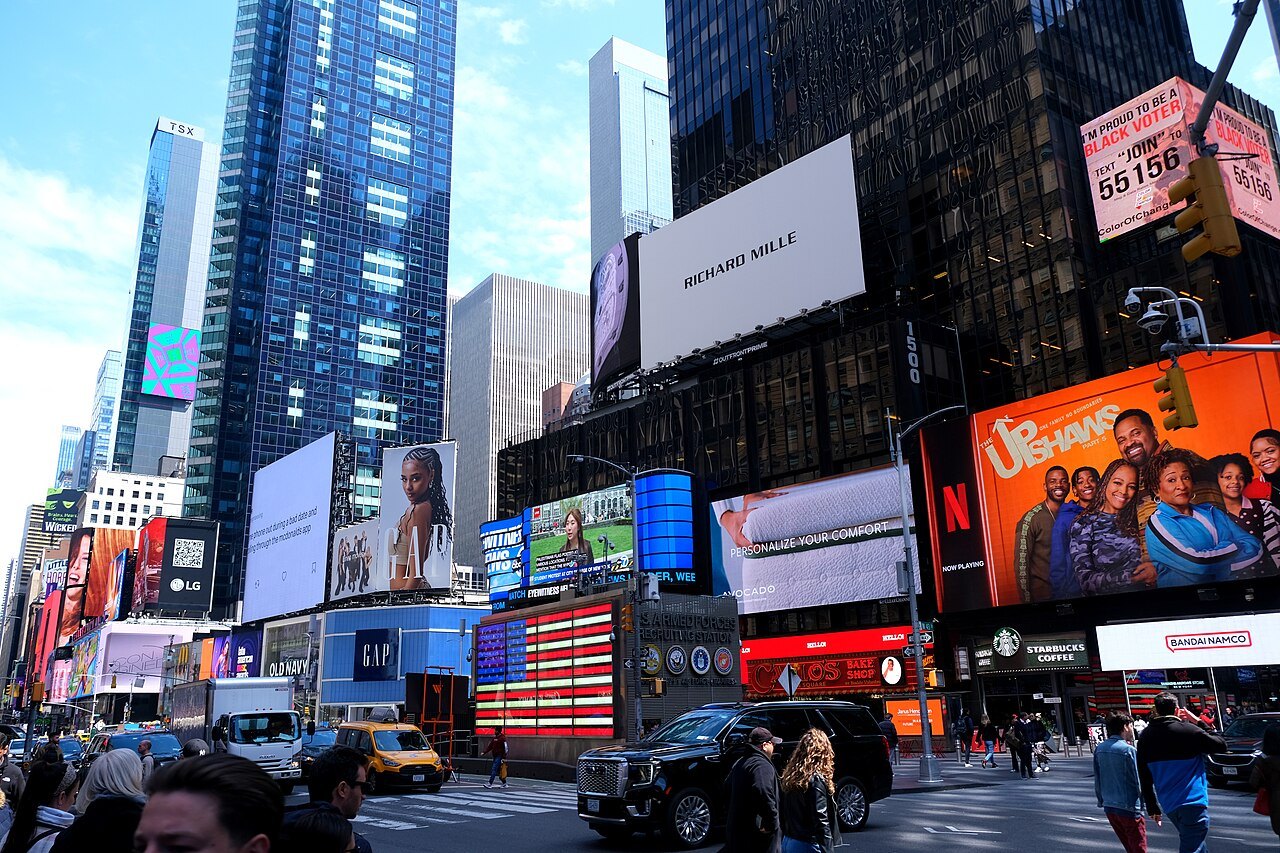
What you are looking at01
Times Square
Broadway · Seventh Ave · W 42–47 St
- 1One Times SquareThe narrow tower at the south end, built for The New York Times, where the ball drops on New Year's Eve.
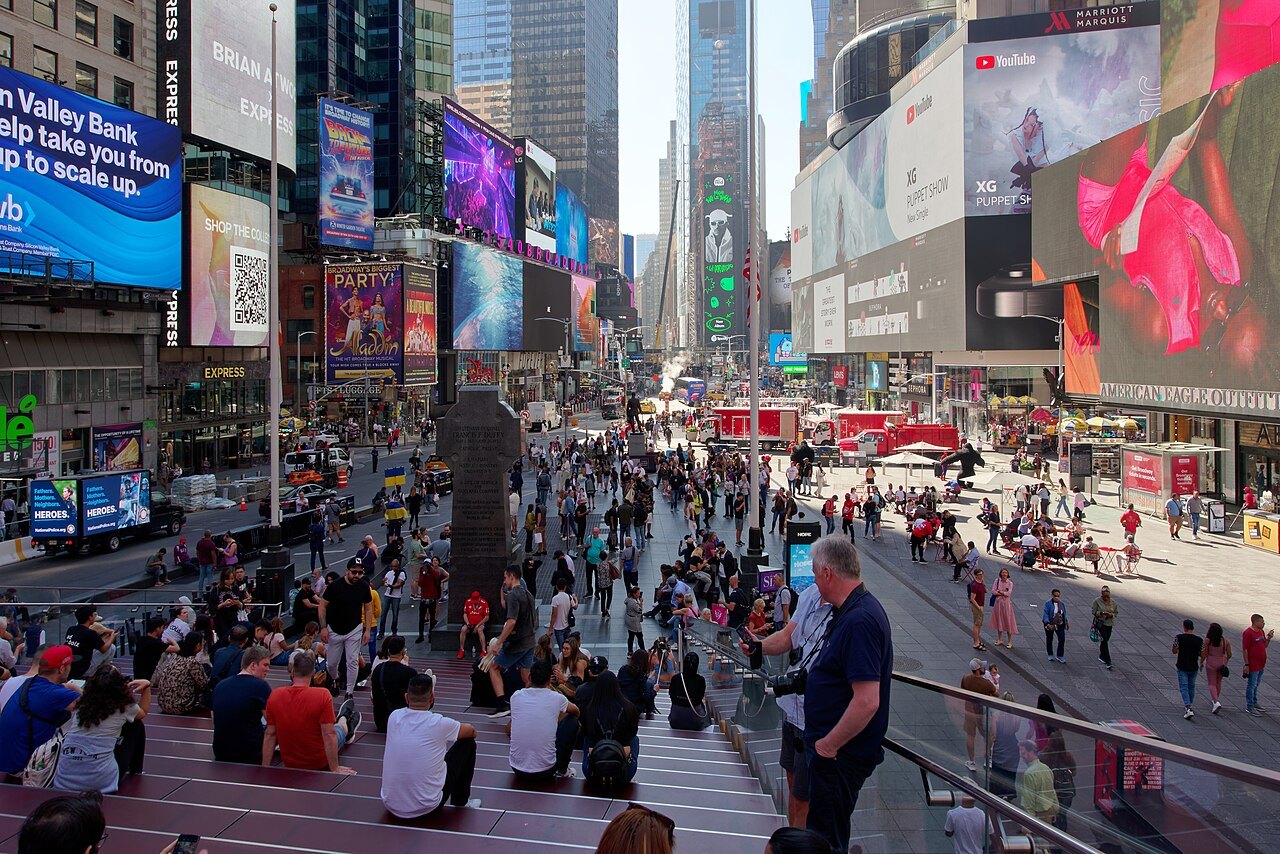
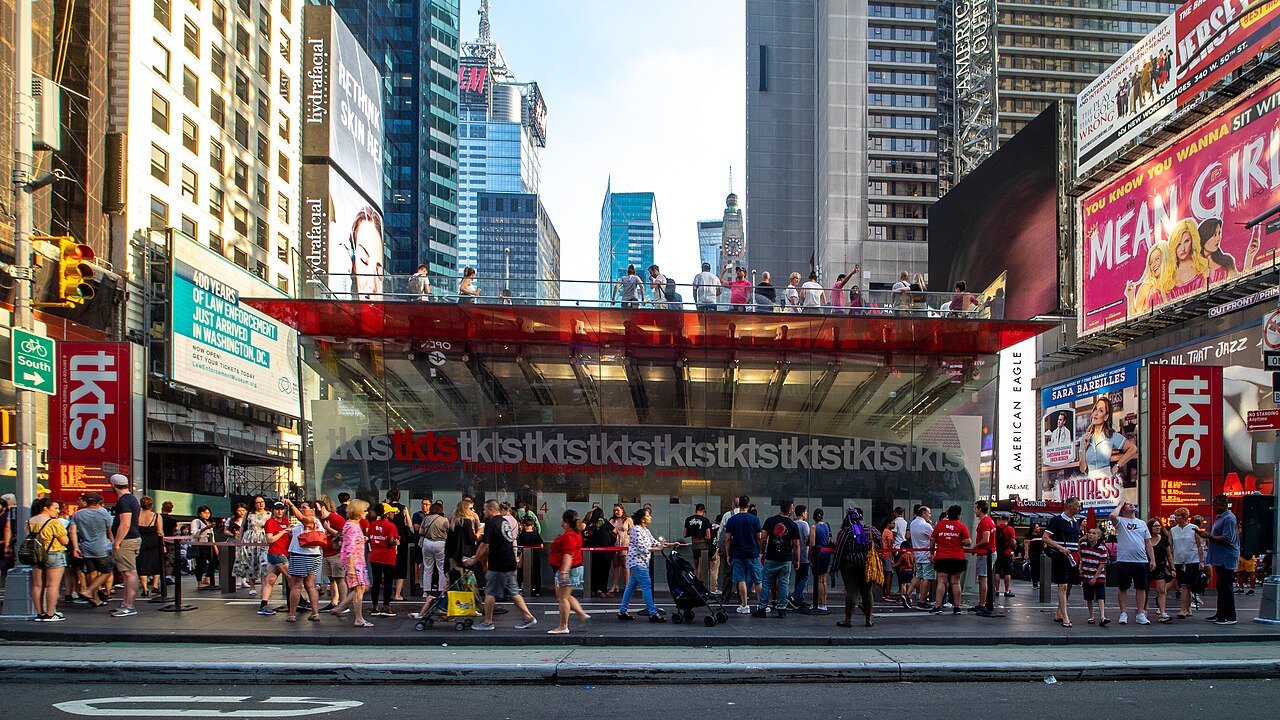
- 2Duffy Square and the red stepsThe northern triangle, with its glass-and-red stairway above the TKTS ticket booth.
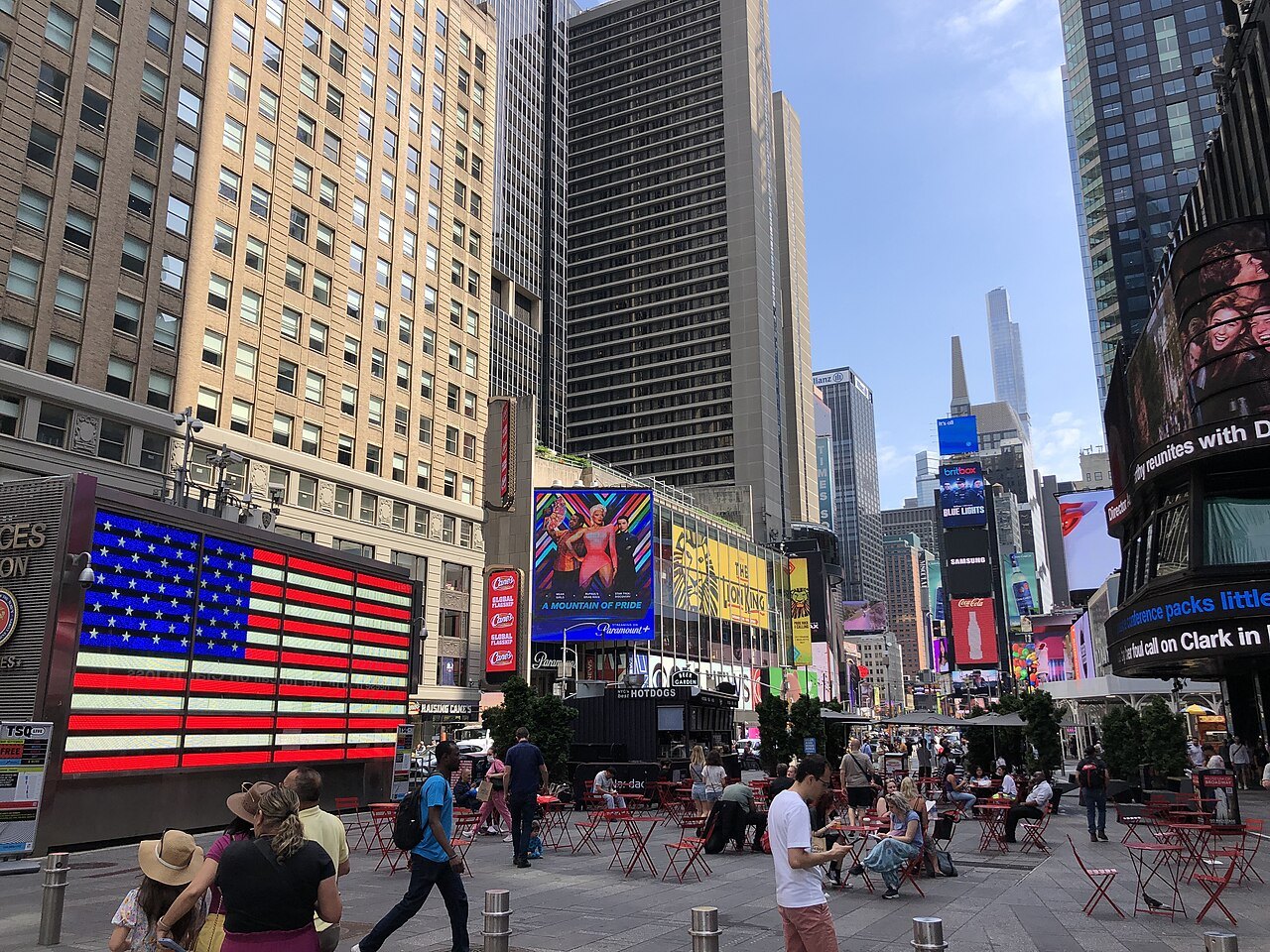
- 3The plazasThe stretches of Broadway closed to cars in 2009 and turned over to people on foot.
- 4The signsWalls of illuminated signs that every building here is required by zoning to carry.
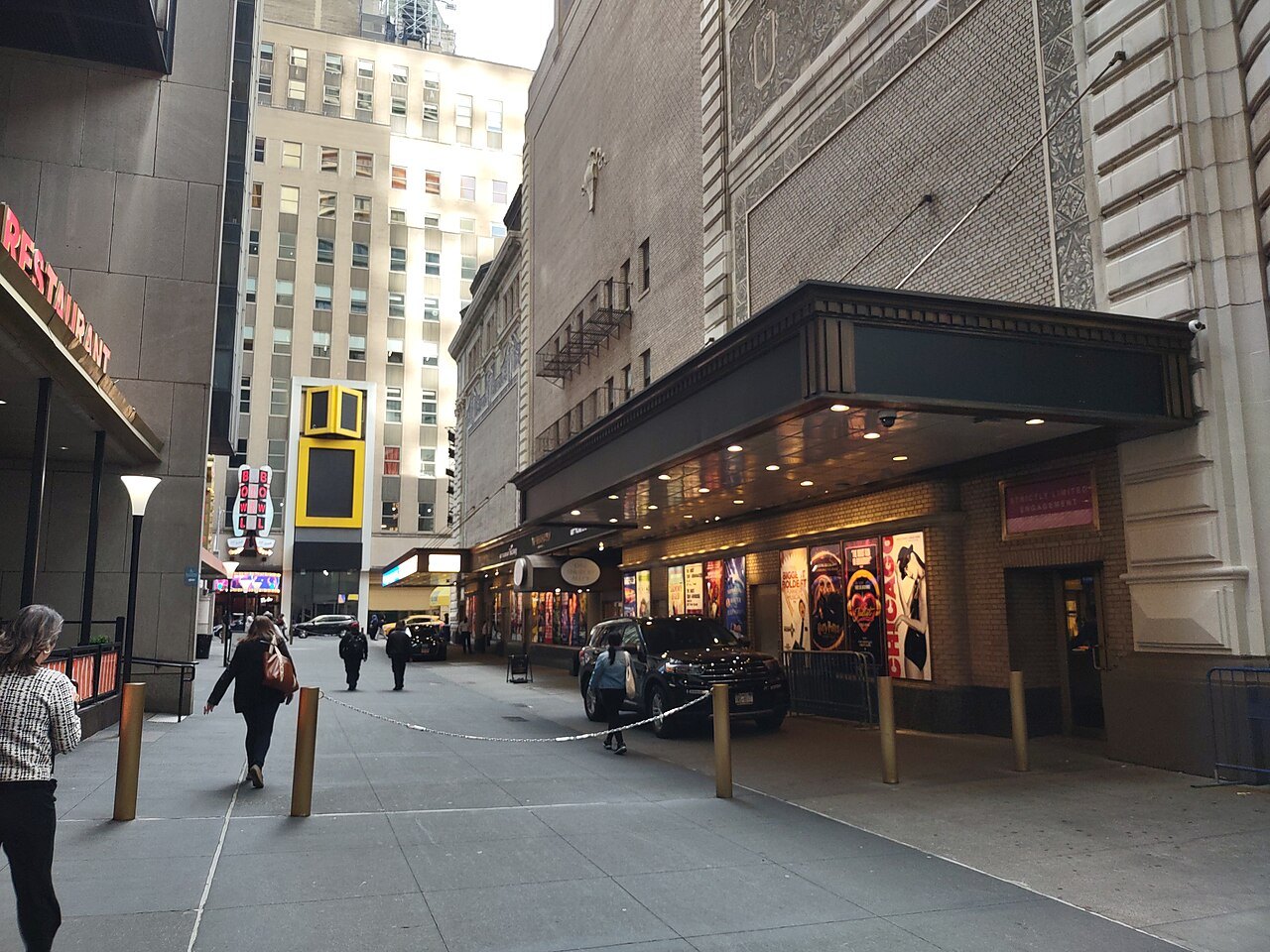
- 5Shubert Alley and the theatersThe Theater District's side streets, lined with the old Broadway playhouses.
The sight in full02
Reading the place
Why it matters
Times Square is where Broadway runs diagonally across Seventh Avenue in Midtown, and the two streets make a bowtie of open space five blocks long, between 42nd and 47th Streets. It is one of the busiest pedestrian places in the world: about 330,000 people cross it on an ordinary day and more than 460,000 on its busiest, and it is the center of the Theater District, where most of the Broadway playhouses stand.
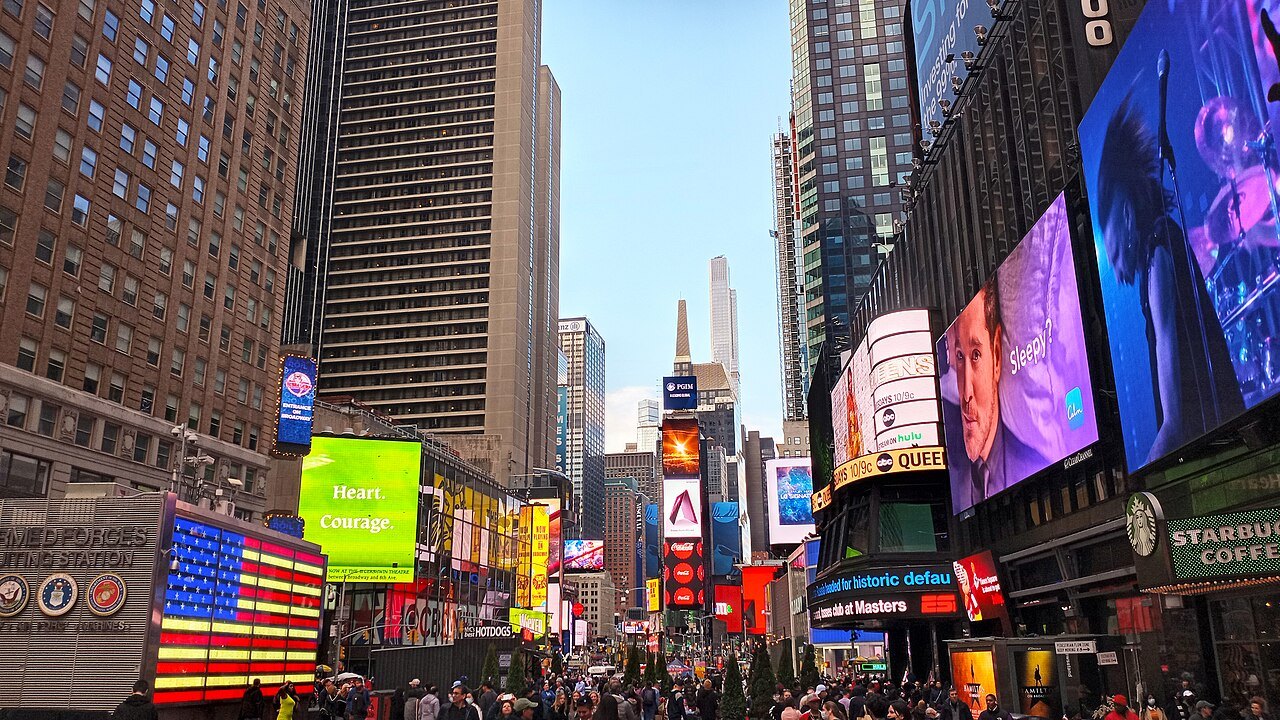
It is not beautiful in the way of a cathedral or a park, and many New Yorkers avoid it. But no visit feels complete without standing in it once, and seeing it at night, when the signs light the square brighter than day, is one of the sights of the city that stays with people. It is also the best place in Manhattan to see what the grid looks like when something refuses to obey it: Broadway, the old road, cutting across the numbered streets on its own diagonal.
How it got its name
Until 1904 the square was called Longacre Square, after Long Acre in London, where the horse and carriage trade was centered; this was the carriage-making quarter of New York. In 1904 the publisher of The New York Times moved the paper into a new tower at the south end of the square and persuaded the city to build a subway station there, and on April 8, 1904, the square was renamed for the newspaper. The Times Building, now called One Times Square, still stands at the narrow southern point.
On December 31, 1907, a lighted ball was lowered from the roof of the tower for the first time. The ball drop has taken place every New Year's Eve since, except in 1942 and 1943, when wartime blackout rules replaced it with a moment of silence, and it now draws more than a million people into the square.
The Crossroads of the World
By the early 1890s this stretch of Broadway was already ablaze with electric light, and it earned the nickname the Great White Way. Theaters, restaurants and hotels crowded in, and by the twentieth century the square was known as the Crossroads of the World.
Its decline was just as famous. From the 1960s to the early 1990s the blocks around 42nd Street were filled with sex shops and peep shows, and a magazine in 1981 called 42nd Street the sleaziest block in America.
The turn came in the 1990s. New office towers rose on Broadway, the German media company Bertelsmann bought one of them in 1992, and Mayor Rudolph Giuliani led a campaign that closed the pornographic theaters and brought in tourist attractions and chain stores. Critics called the result the Disneyfication of Times Square and pointed to the low-rent residents pushed out of neighboring Hell's Kitchen; either way, the square became the crowded, family-friendly place it is today. To make sure the square would never go dark, the zoning since 1987 has required building owners here to display illuminated signs, the only district in the city with such a rule.
What you actually see
Stand at the southern end, by One Times Square, and look north: the space opens up in front of you, framed on every side by moving screens stacked many stories high. The best overview is from the red steps at Duffy Square, the northern triangle at 47th Street. The steps are made of glass, rise over the TKTS booth, and give a grandstand view south down the whole square. Duffy Square is named for Father Francis Duffy, chaplain of New York's Fighting 69th Infantry Regiment; his statue by Charles Keck stands there, and so does one of the composer and showman George M. Cohan.
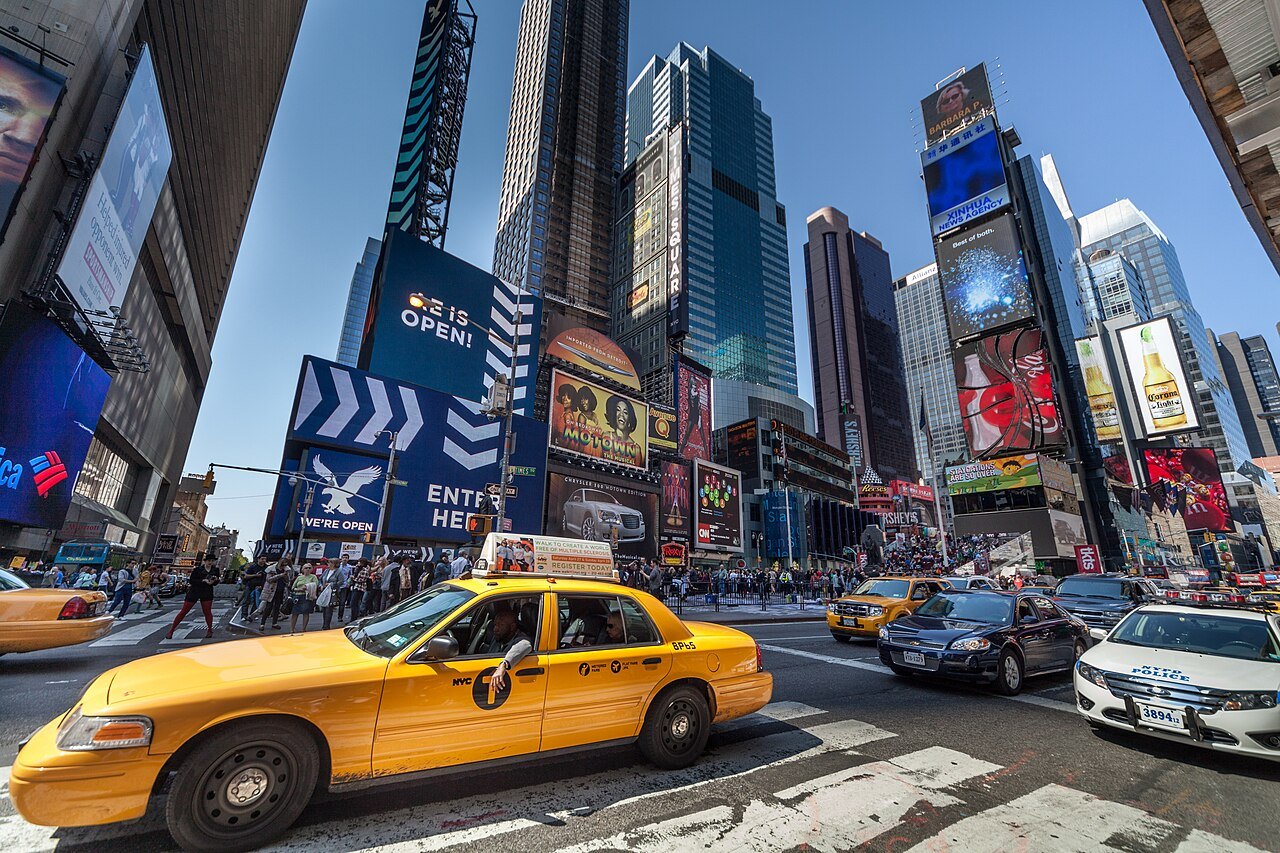
Since 2009 the stretches of Broadway between 42nd and 47th Streets have been closed to cars and turned into pedestrian plazas, a trial announced by Mayor Michael Bloomberg, who argued it would cut pollution and accidents and help traffic move through the Midtown grid; local businesses opposed it at first. The first seats were cheap plastic lawn chairs, which amused New Yorkers for a summer before sturdier furniture replaced them.
On the side streets around the square stand the theaters themselves. The Theater District, as the city's zoning defines it, runs from 40th to 57th Street between Sixth and Eighth Avenues, and after a long campaign to save the old playhouses, twenty-six current or former Broadway theaters now have landmark status. The district also takes in Duffy Square, Shubert Alley, the Brill Building, television studios, recording studios and theatrical agencies.
How to visit
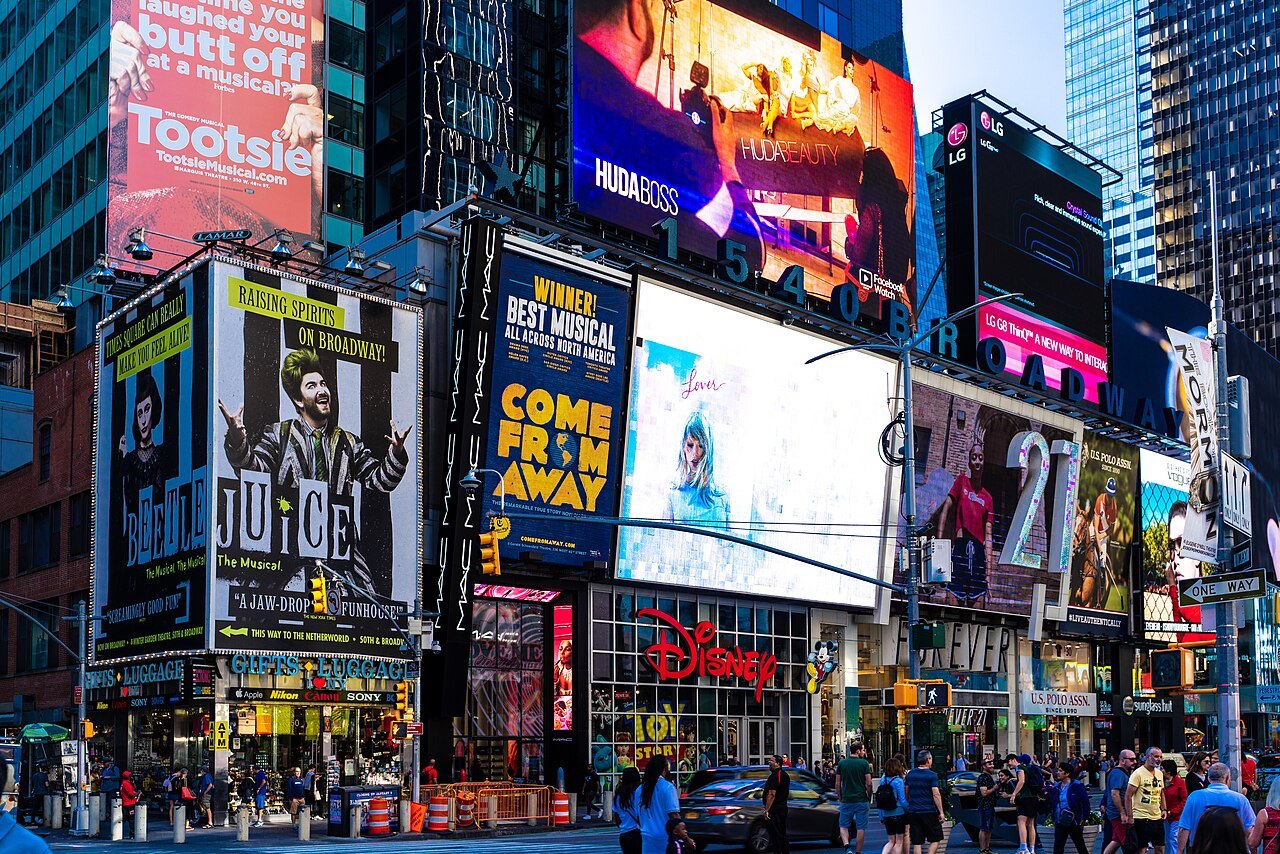
The square costs nothing and never closes. It is at its most spectacular after dark. It is a place for a short visit rather than a long one, and it is on the homepage walk along 42nd Street.
The TKTS booth under the red steps, run by the nonprofit Theatre Development Fund since 1973, sells reduced-price tickets for Broadway and Off-Broadway shows, and there is a second booth at Lincoln Center; booking ahead explains when it is worth queuing and when to buy tickets in advance. The Times Square–42nd Street subway station, one of the busiest in the system, is right under the square; getting around covers the lines.
Nearby
Walk east along 42nd Street to the New York Public Library and Bryant Park, or east along 47th or 48th Street to Rockefeller Center. Central Park begins twelve blocks north at 59th Street.
Where to go next03
Nearby
- Nearby · Fifth Ave · E 41 StThe New York Public Library and Bryant ParkThe marble library of 1911 on the site of the old Croton Reservoir, guarded by two stone lions a mayor named Patience and Fortitude, with a reading room nearly three hundred feet long and a green park at its back door.Read the page →
- Nearby · Fifth Ave · W 48–51 StRockefeller Center and St. Patrick's CathedralThe Art Deco city within the city that the Rockefellers built in the Depression, from Prometheus over the skating rink to the Top of the Rock, and across Fifth Avenue the white Gothic cathedral of 1879.Read the page →
- Nearby · 59 St → 110 StCentral ParkThe 843 acres the grid left open: a landscape built by hand in the 1850s and 1860s to look like nature, with a lake, a terrace, a castle on a rock, and fifty blocks of lawns and woods between the towers.Read the page →