Home · Sights · The Empire State Building
What you are looking at01
The Empire State Building
Fifth Ave · W 34 St
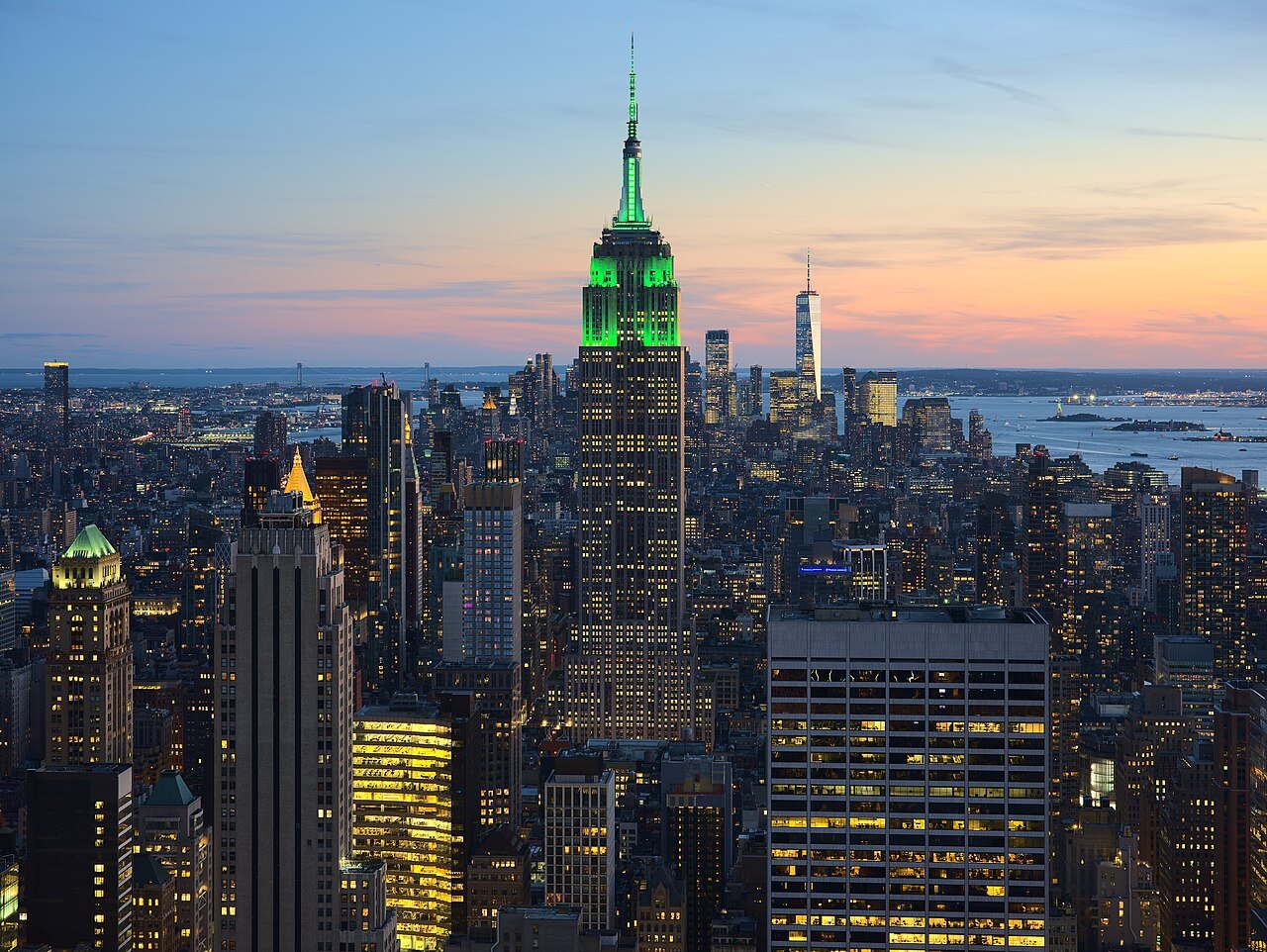
- 1The 86th-floor deckAn open-air terrace all the way around the tower, as well as an enclosed gallery for bad weather.
- 2The 102nd floorThe small, higher observatory at the base of the mast, with windows all round.
- 3The mastThe spire above the 102nd floor, first designed as a mooring mast for airships and never used as one.
- 4The facadeIndiana limestone with bright steel mullions running straight up the tower in unbroken lines.
- 5The lightsThe top lit in colors for holidays, causes and the city's teams since 1977.
The sight in full02
Reading the place
Why it matters
The Empire State Building stands on the west side of Fifth Avenue between 33rd and 34th Streets, on the site of the first Waldorf-Astoria Hotel. It is 1,250 feet tall to the roof of its 102nd floor and 1,454 feet to the tip of its antenna. For nearly forty years after it opened it was the tallest building in the world, until the North Tower of the World Trade Center topped out in 1970, and after the attacks of 2001 it was again the tallest in New York until One World Trade Center passed it in 2012.
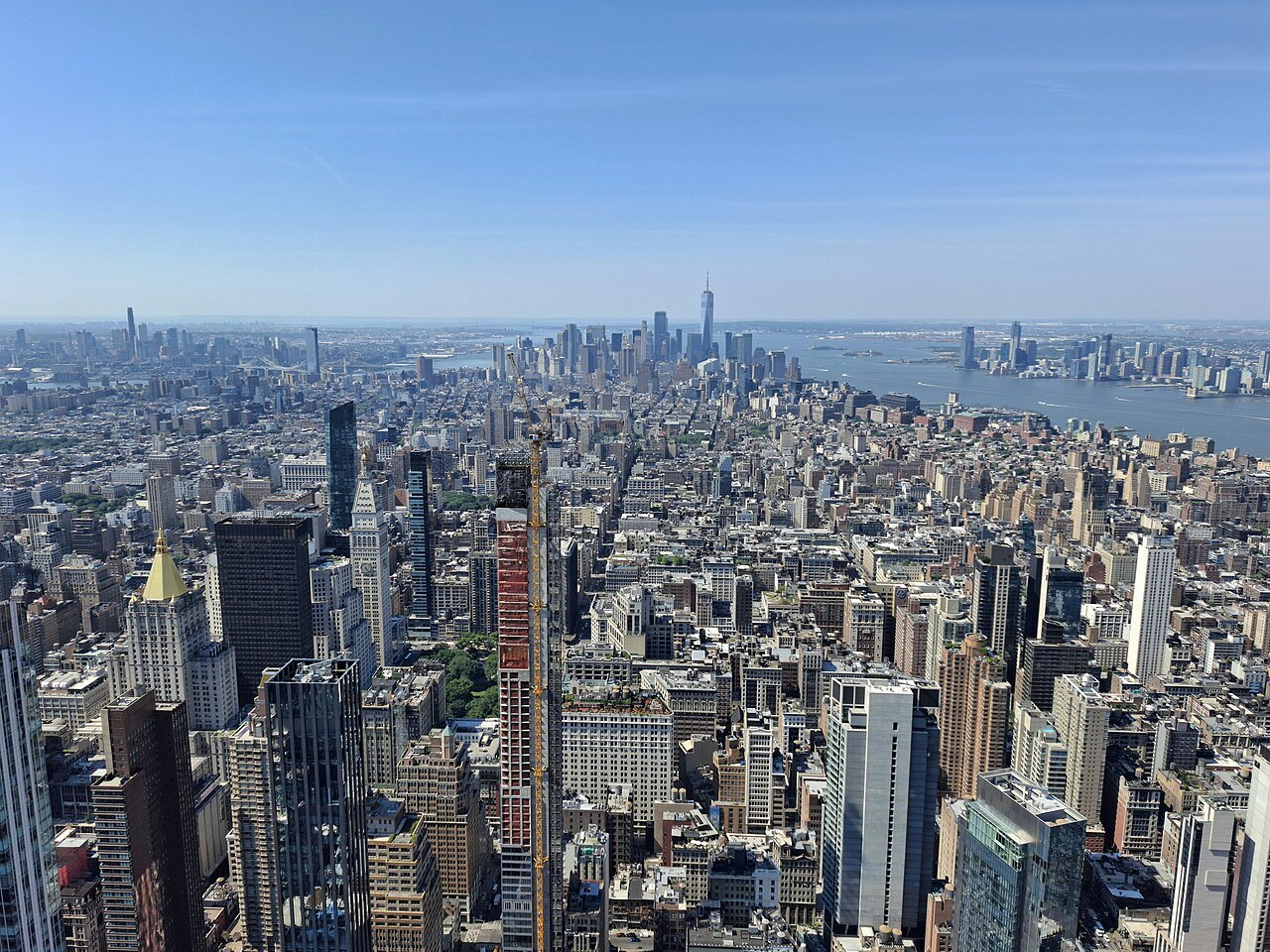
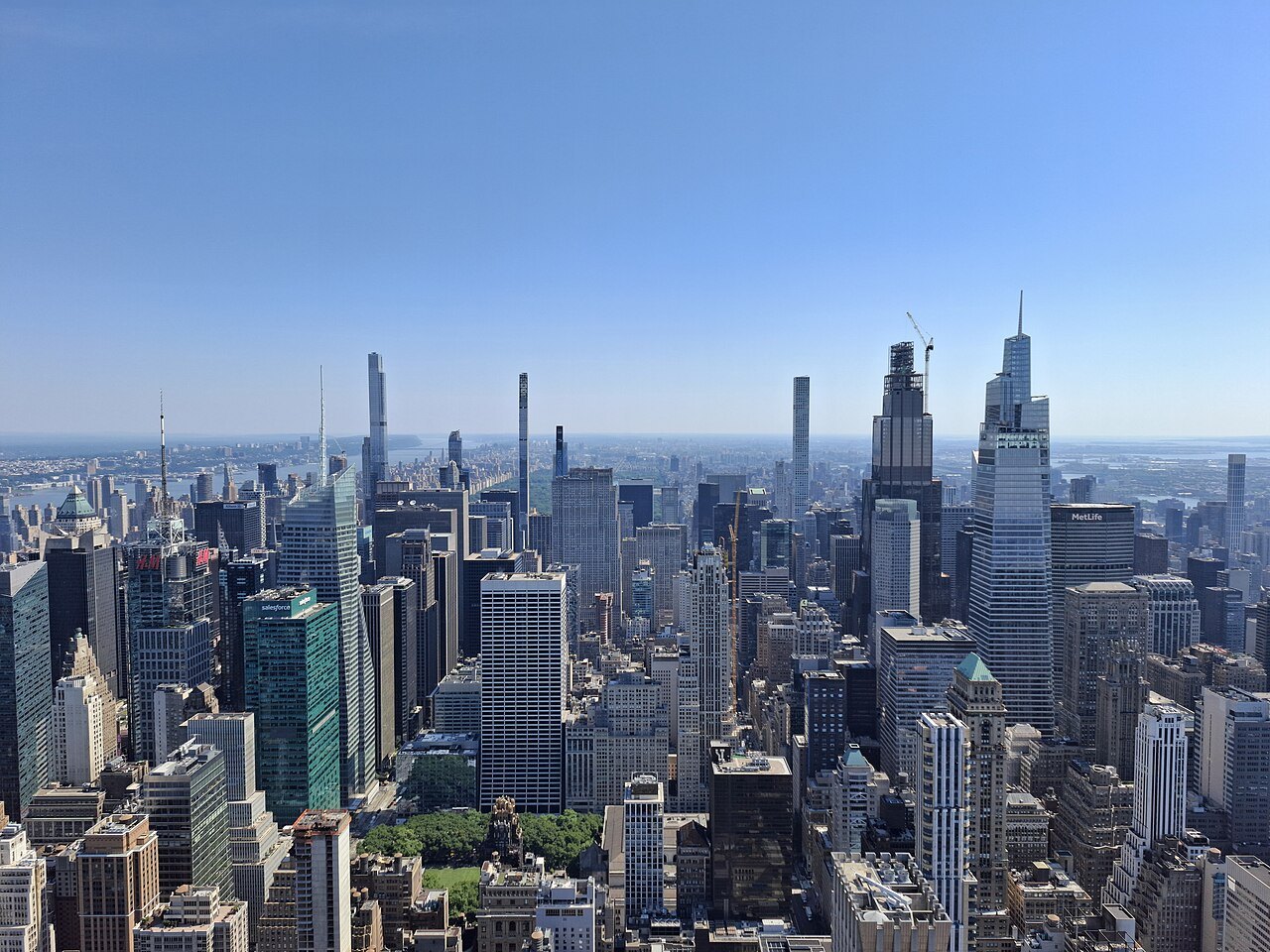
It is still the building most people picture when they think of a skyscraper. It has appeared in more than 250 films and television series since King Kong climbed it in 1933, and about four million people a year go up to its observatories, which makes it the obvious first viewpoint of a trip. The views compares it with the city's newer decks.
Built in a year
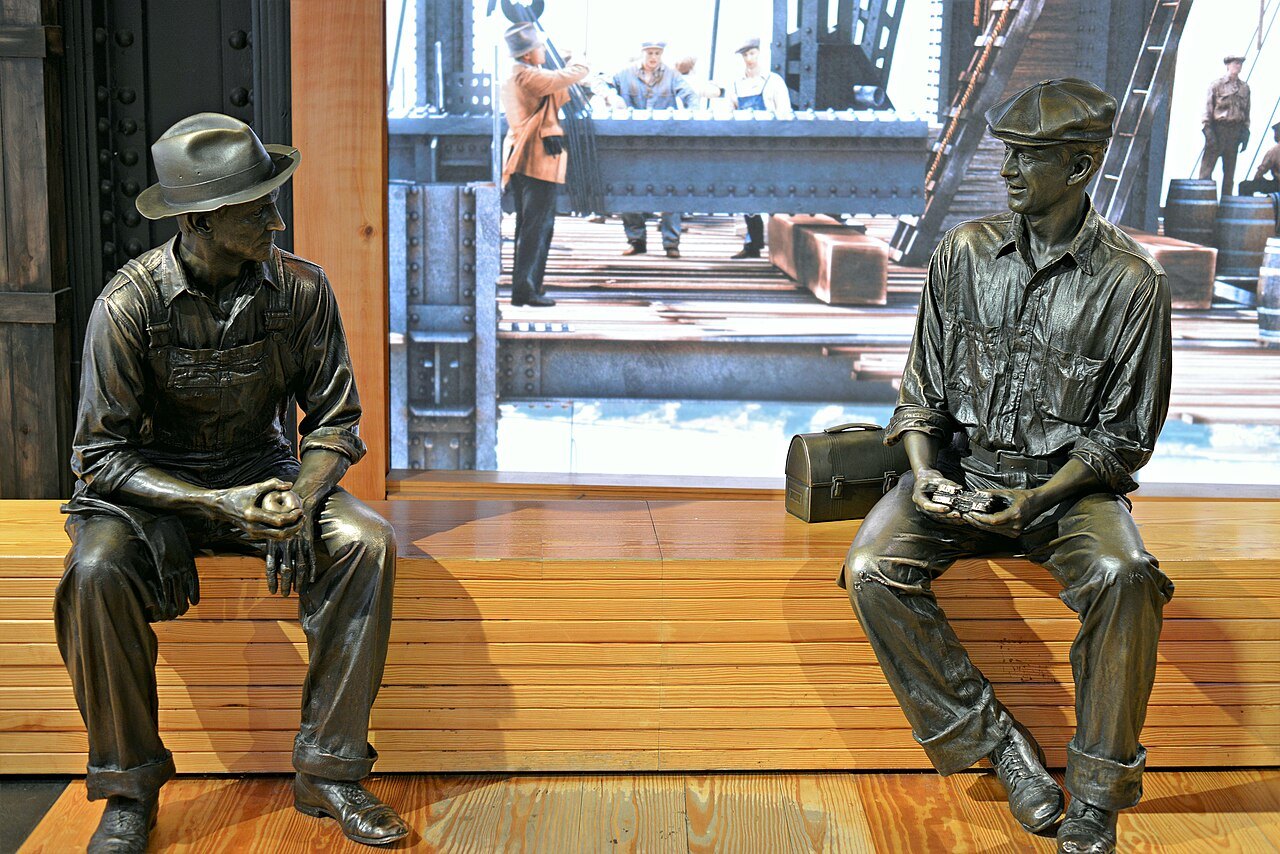
The building was designed by the architects Shreve, Lamb and Harmon in the Art Deco style. Construction started on March 17, 1930, and the building opened on May 1, 1931, thirteen and a half months later, a speed that has become part of its legend. It was a race: the Chrysler Building and 40 Wall Street were both competing to be the tallest in the world at the same moment.
The spire had a practical purpose, or was meant to. The plans of December 1929 added a metal crown and a mast on top, intended as a mooring point where airships would tie up and passengers would climb down to the 102nd floor. High winds made it impossible, and the idea was abandoned; the mast now carries broadcasting equipment.
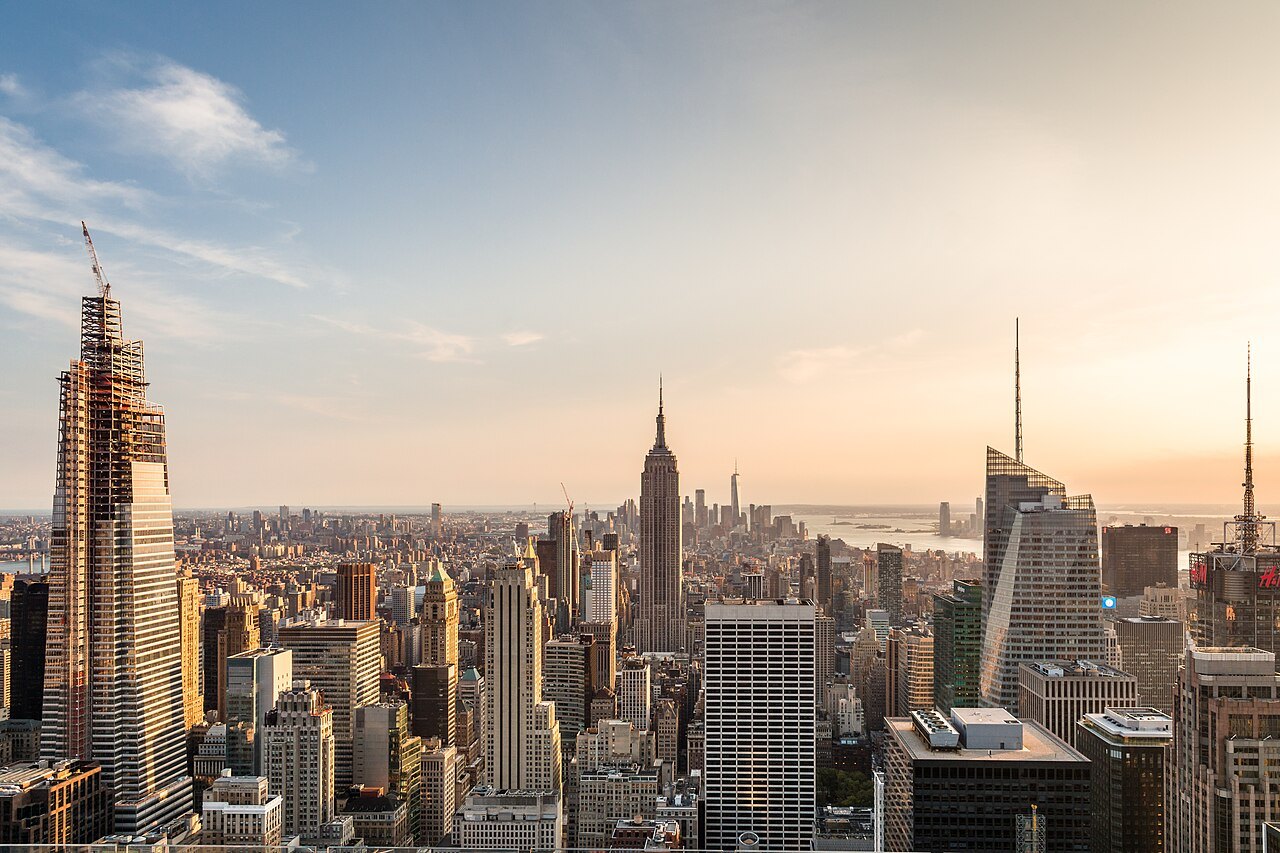
The building opened in the depths of the Great Depression. Much of its office space stayed empty, and because of the Depression and then the Second World War its owners did not make a profit until the early 1950s.
What you actually see
From the street the tower is best seen from a distance, because close to it the setbacks hide the top. From Fifth Avenue a few blocks south, or from Madison Square, you see how the building steps back in stages from a five-story base to the tall central shaft and then to the crown. The facade is Indiana limestone, which gives the tower its pale blond color, and the windows are set in vertical bands between strips of nickel-chrome steel that catch the light, so the building reads as a bundle of lines drawn straight up into the sky.
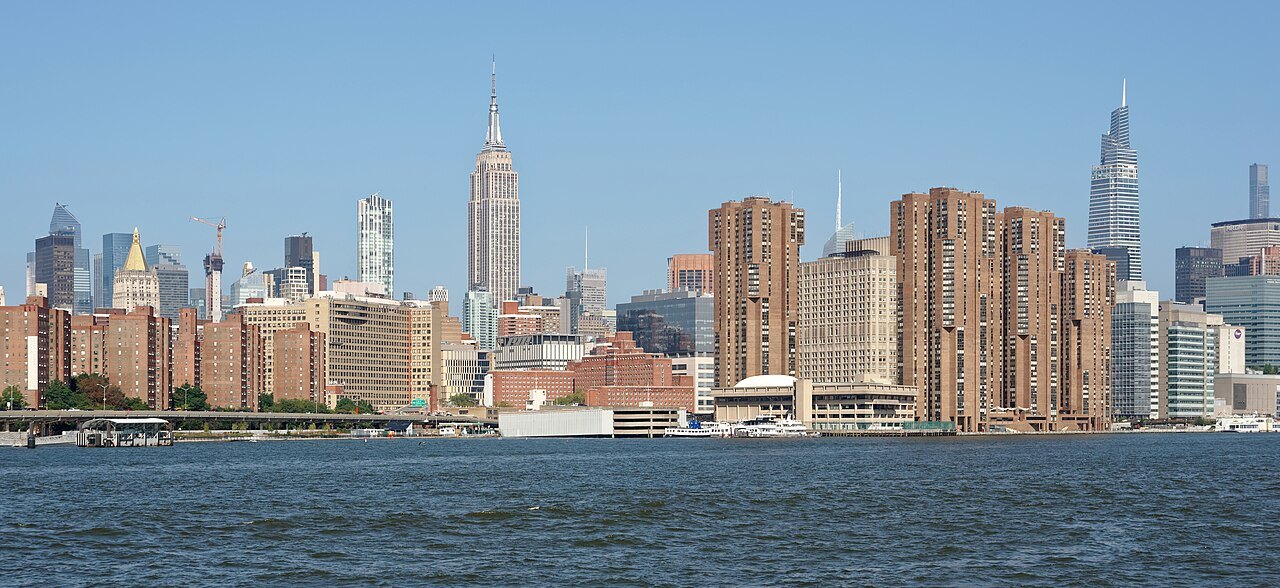
Tenants use the Art Deco lobby on Fifth Avenue, with golden letters spelling Empire State above its high triple window. Visitors to the observatories use a separate entrance at 20 West 34th Street, and since 2019 the route up has passed through ten thousand square feet of exhibits about how the building was made and used. At the west end of the lobby an aluminum relief shows the tower as first built, without its antenna, and until the 1960s the lobby ceiling was painted with an Art Deco mural of the sky and the machine age.
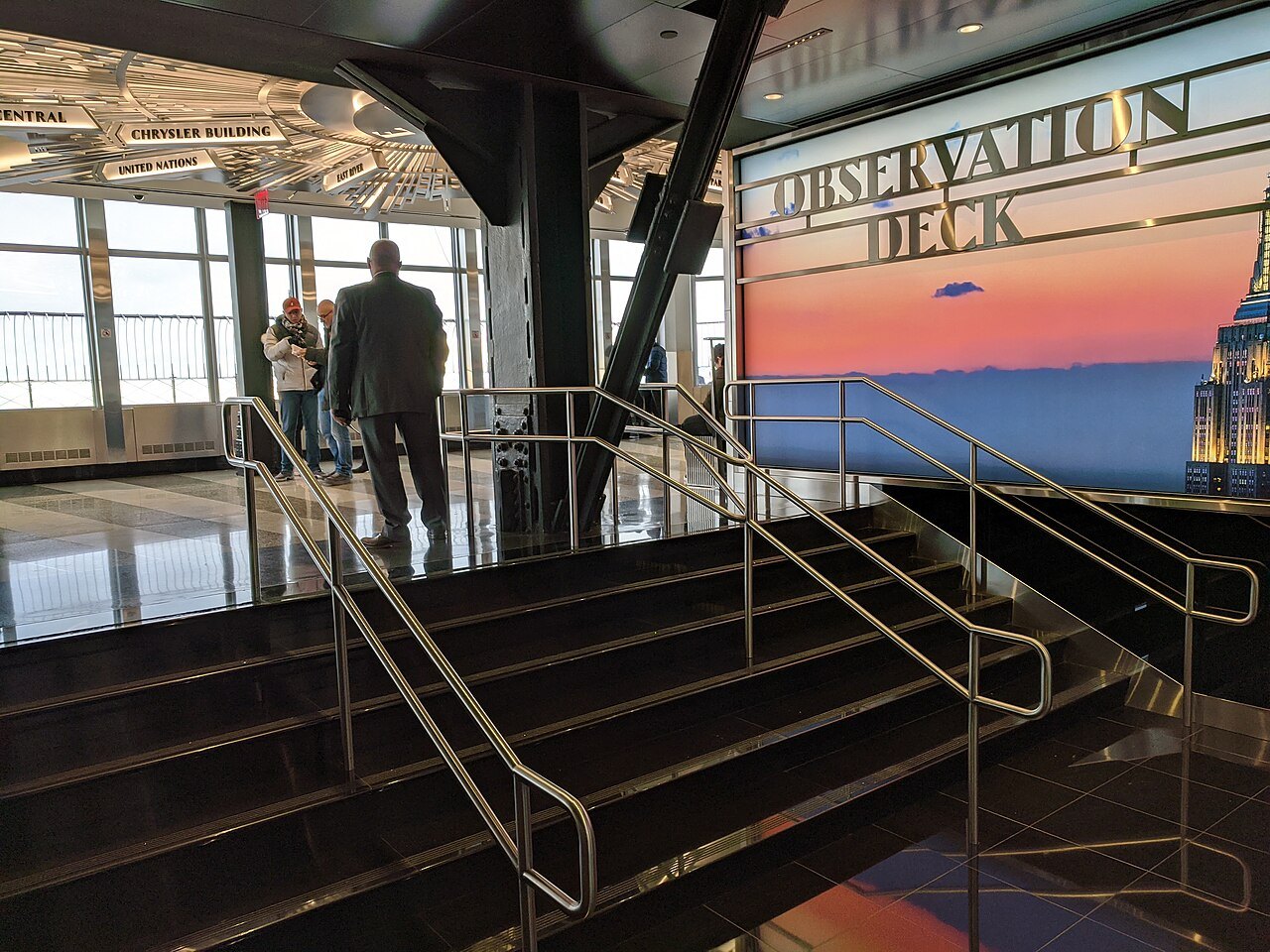
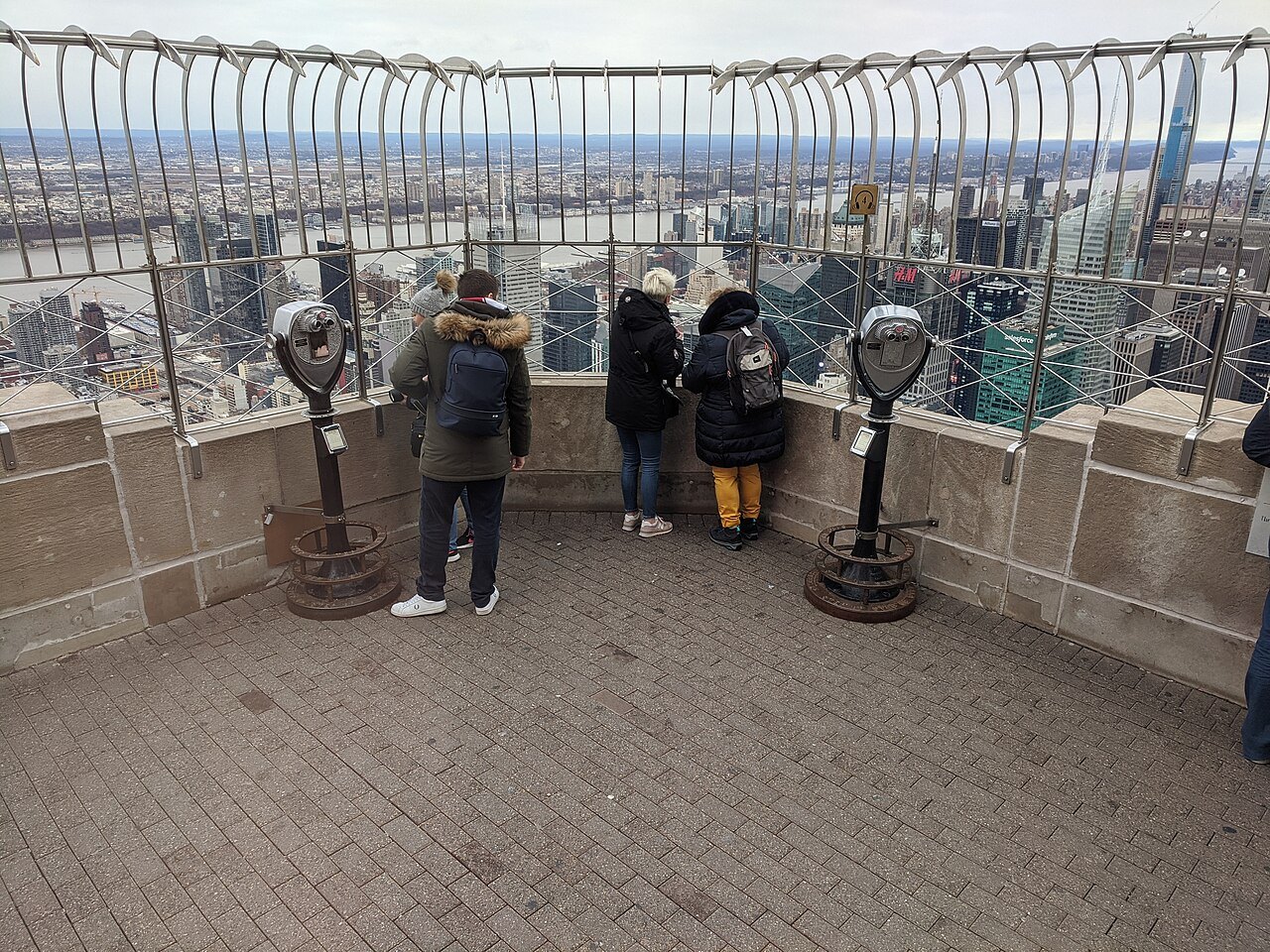
The 86th-floor observatory, about 1,050 feet above the street, has both an enclosed gallery and an open-air terrace running all around the building, so it stays open in any weather, and the wind and the noise of the city coming up from below are part of the experience. The 102nd-floor observatory, at the foot of the mast, is smaller and higher, with windows on every side. A third, indoor observatory opened on the 80th floor in 2019, with a drawing of the skyline by the British artist Stephen Wiltshire.
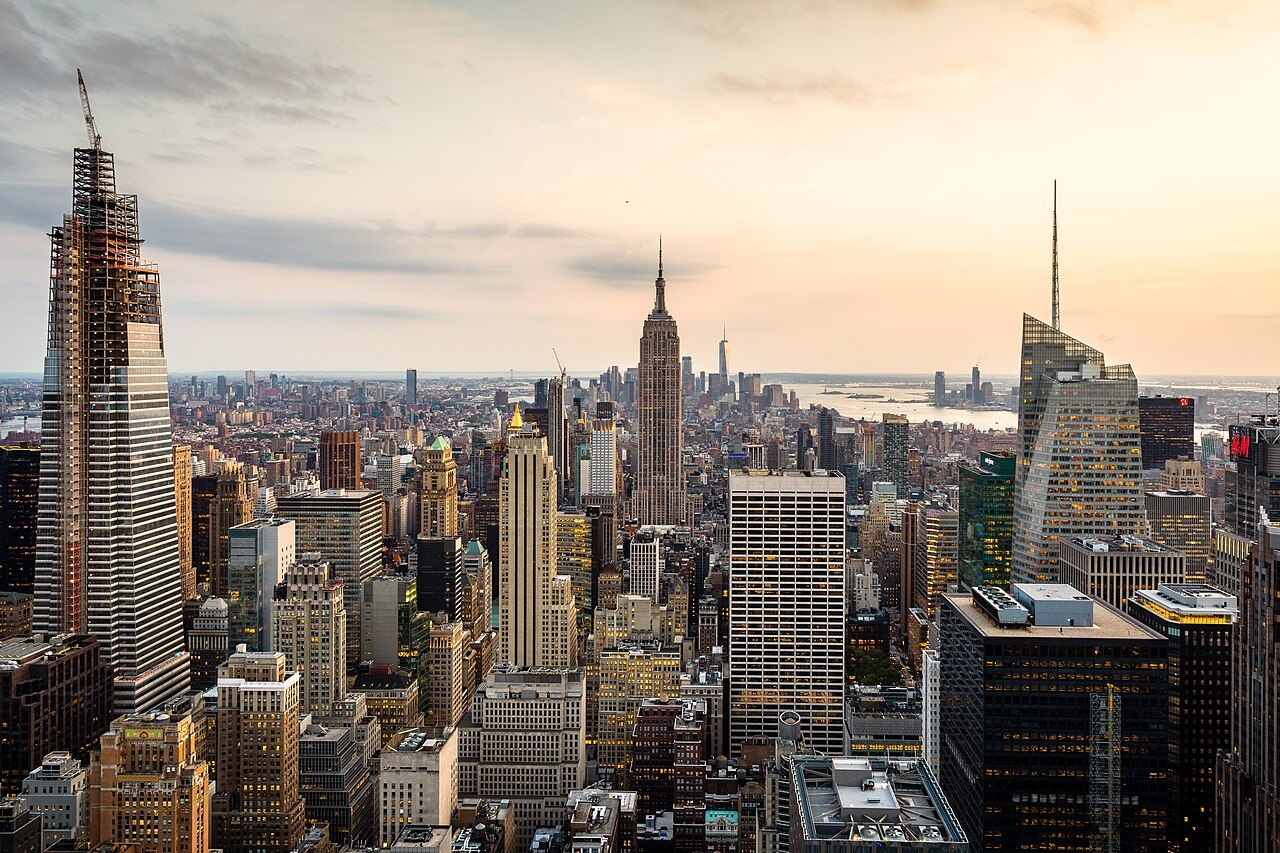
From the top the grid lies below you as nowhere else: the avenues running north to Central Park, the cross streets cutting across them, Broadway slicing through at its angle, and the rivers on both sides.
The lights and the crash
The top of the building has been lit since the 1930s. White searchlights first shone in November 1932 to announce Franklin Roosevelt's victory in the presidential election. Since October 1977 the spire has been lit in colors chosen for holidays and events, and for the city's teams on the nights they play at home; since 2012 the lights have been LED fixtures able to show millions of colors.
On July 28, 1945, in thick fog, an Army B-25 bomber flew into the north side of the building between the 79th and 80th floors. Fourteen people were killed, yet many floors were open again two days later, and the accident led the government to set a minimum flying height over the city.
How to visit
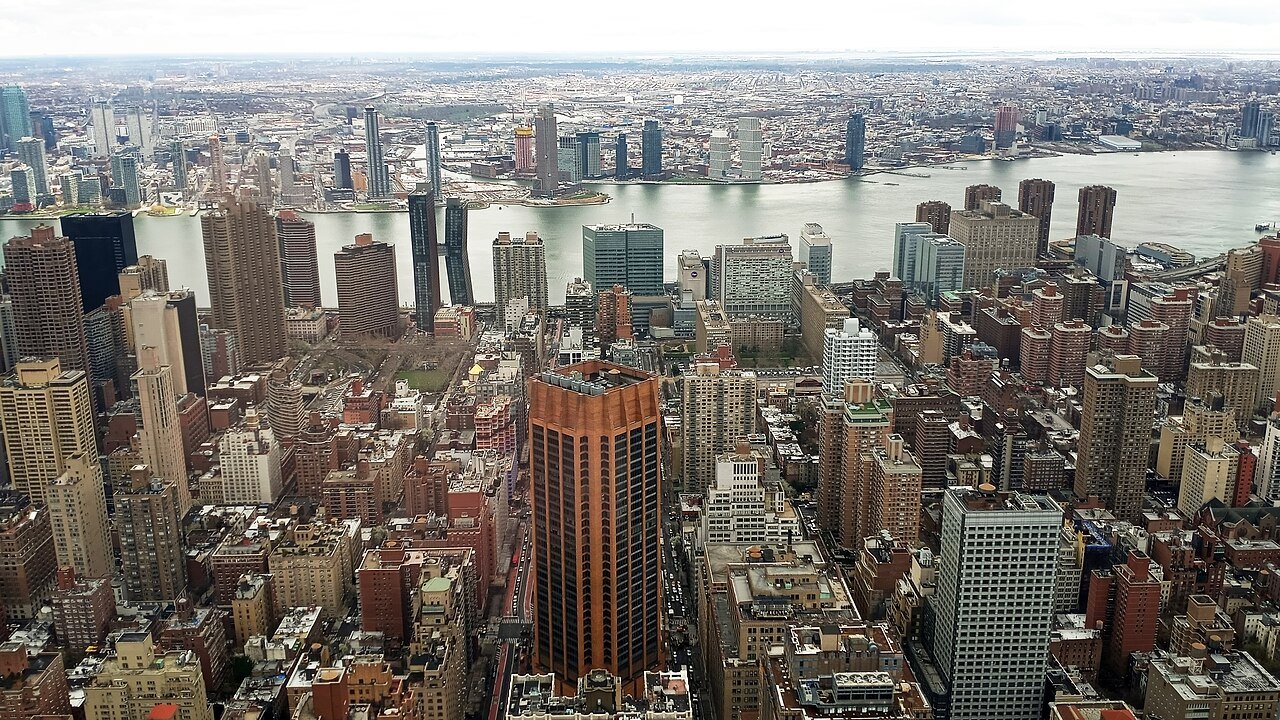
The observatories need a ticket, and buying it online before you go saves time in line. The building publishes its own advice on the quietest times to go; late at night the lights of the city make a different view from the daytime one, and the observatories stay open late. Booking ahead explains how the timed entries work.
Several subway lines stop at 34th Street, at Herald Square a block west. The street-level view costs nothing, and some of the best views of the building itself are from elsewhere: from the Top of the Rock to the north, from Madison Square to the south, and from the far ends of 34th Street.
Nearby
Walk south down Fifth Avenue to the Flatiron Building at 23rd Street, or north to the New York Public Library at 42nd Street. West along 34th Street lies the northern end of the High Line at Hudson Yards.
Where to go next03
Nearby
- Nearby · Fifth Ave · Broadway · E 23 StThe Flatiron Building and Madison SquareA 22-story wedge of 1902 standing on the triangle where Broadway crosses Fifth Avenue, and across the street a park that once held the Statue of Liberty's arm and gave its name to Madison Square Garden.Read the page →
- Nearby · Fifth Ave · E 41 StThe New York Public Library and Bryant ParkThe marble library of 1911 on the site of the old Croton Reservoir, guarded by two stone lions a mayor named Patience and Fortitude, with a reading room nearly three hundred feet long and a green park at its back door.Read the page →
- Nearby · Gansevoort St → W 34 StThe High LineA freight railroad of 1934 that runs through the West Side at third-floor height, turned into a park of wild planting and lookouts, a mile and a half long, with a new island park at one end and a climbable sculpture at the other.Read the page →