What you are looking at01
The High Line
Gansevoort St → W 34 St
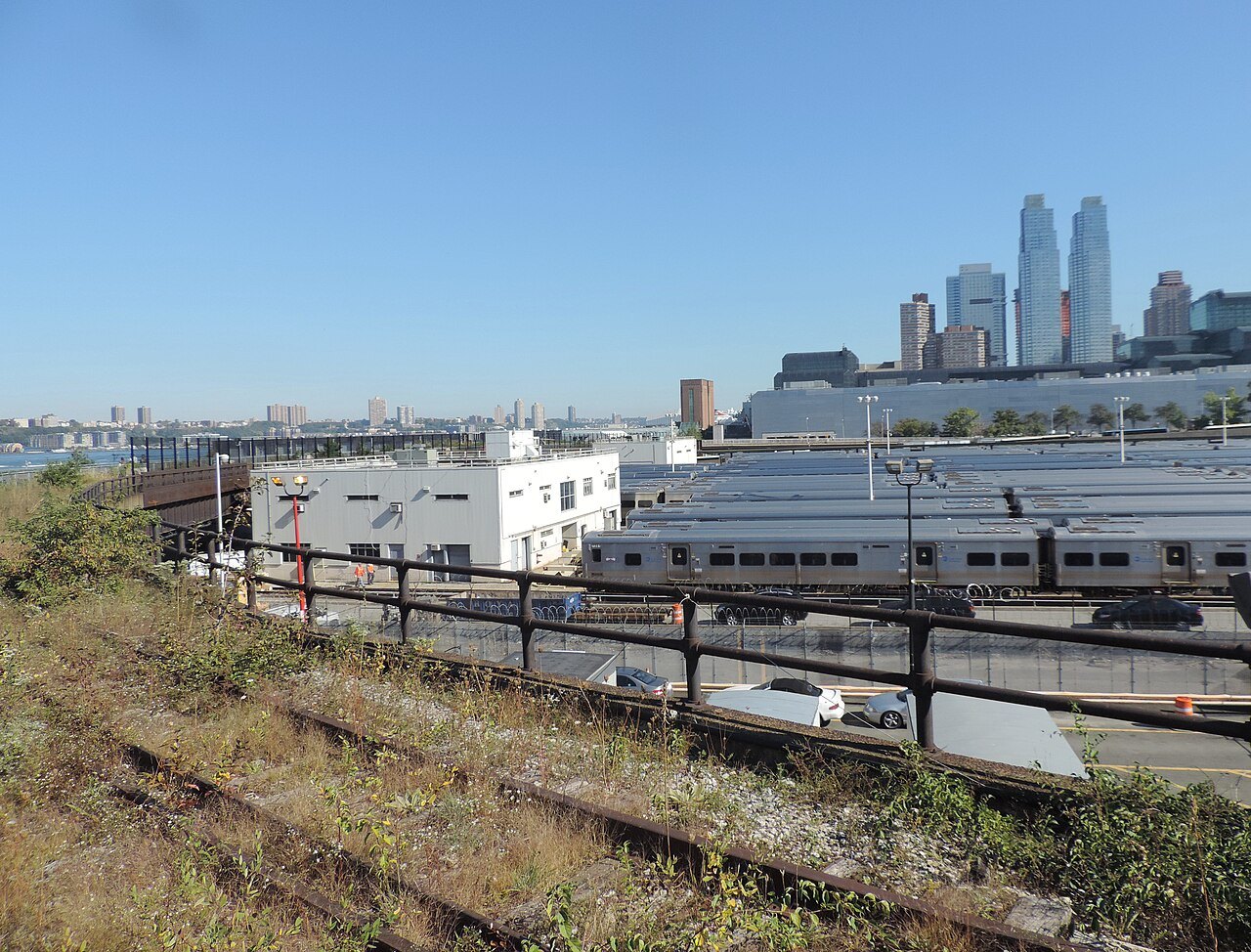
- 1The old tracksRails left in place between the beds of planting, all along the route.
- 2The Tenth Avenue SquareA stepped amphitheater at 17th Street with a window straight down onto the avenue.
- 3The 23rd Street lawnThe one wide stretch of grass, where the viaduct broadens over an old track spur.
- 4The SpurThe newest arm, reaching over 30th Street to Tenth Avenue, with the park's largest garden.
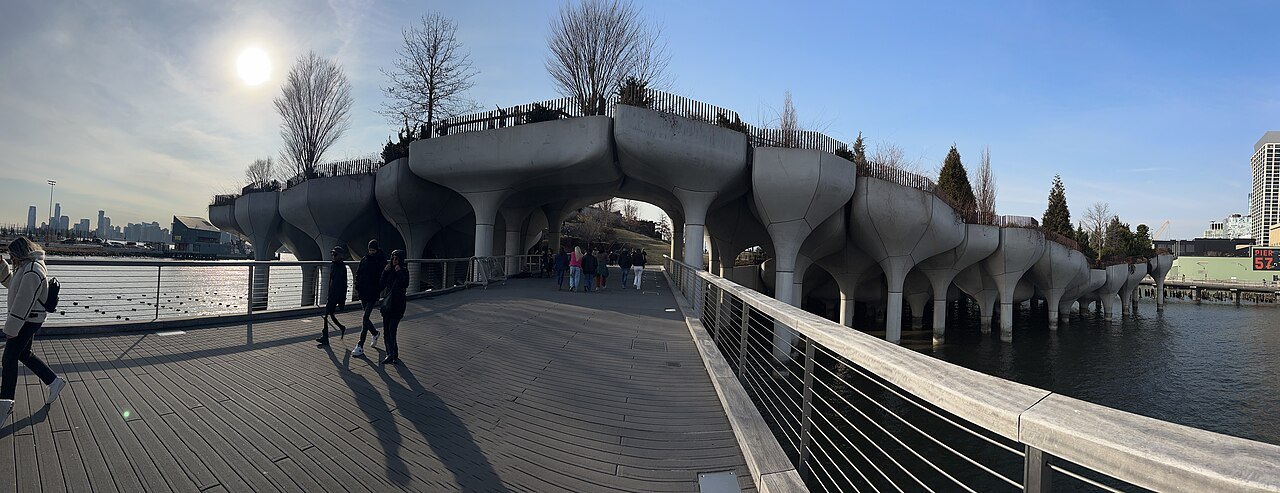
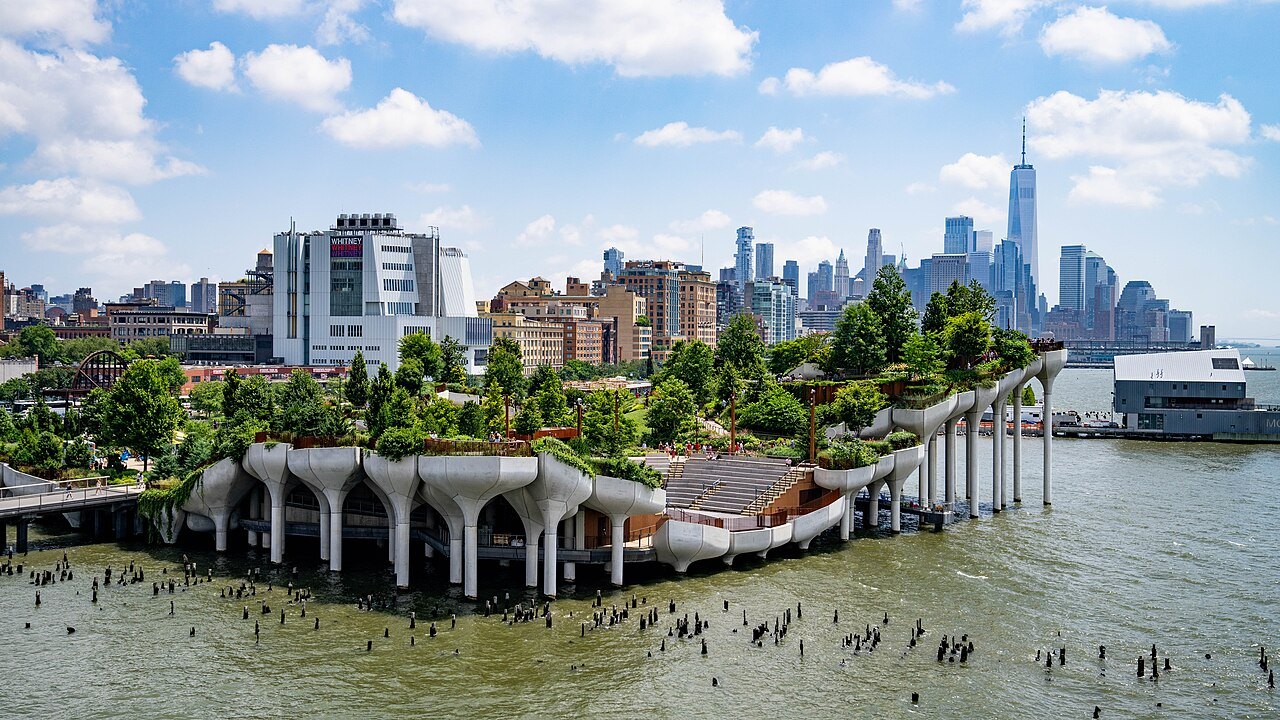
- 5Little IslandA park on concrete tulips above the Hudson at West 13th Street, opened in 2021.
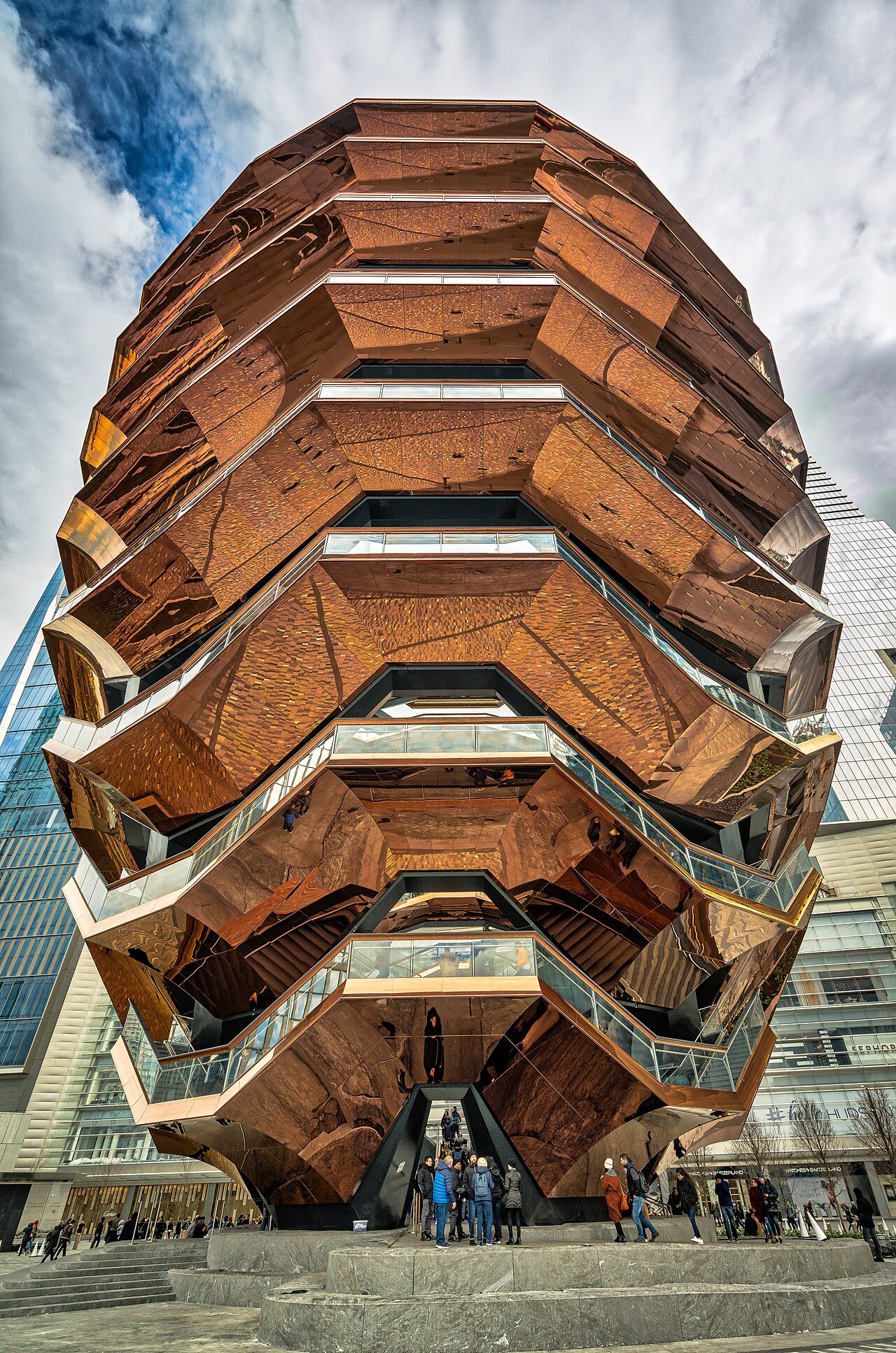
- 6VesselThomas Heatherwick's honeycomb of 154 flights of stairs at Hudson Yards, near the northern end.
The sight in full02
Reading the place
Why it matters
The High Line is a public park on top of an old elevated railroad on the West Side of Manhattan. It runs for nearly a mile and a half from Gansevoort Street in the Meatpacking District, three blocks below 14th Street, north through Chelsea to the rail yards at 34th Street, weaving between warehouses and new towers two or three stories above the street. Since the first section opened in June 2009 it has become one of the most imitated pieces of landscape design in the world, and one of the most visited places in the city.
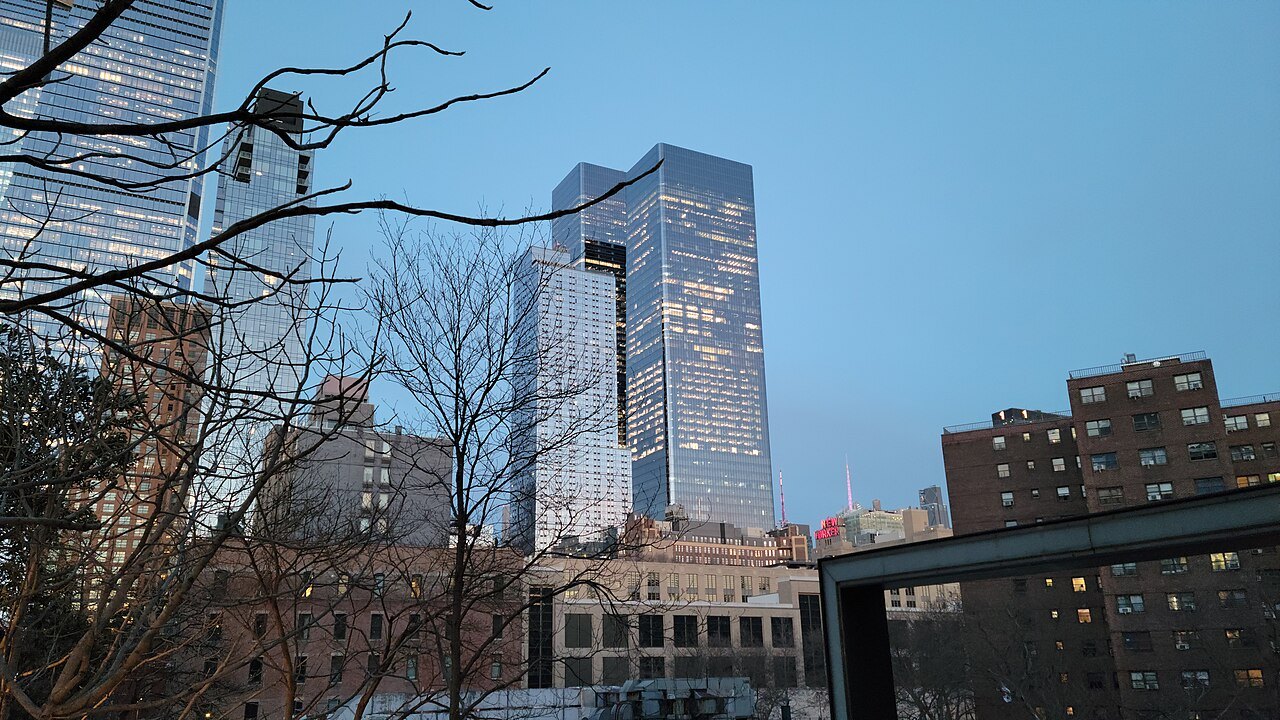
It works because it gives you something the grid never does: a continuous walk above the traffic, with no crossings, through the backs of buildings and across the avenues, with the Hudson River glimpsed at the ends of the side streets.
A freight line in the air
Before the viaduct, the New York Central Railroad's freight trains ran at street level down Tenth and Eleventh Avenues, carrying coal, dairy products and beef to the warehouses of the West Side. So many people were killed in accidents with the trains that the avenues were known as Death Avenue. In 1929 the city, the state and the railroad agreed on the West Side Improvement Project, and the elevated line was dedicated on June 29, 1934. It connected directly to factories and warehouses, so that trains could load and unload inside the buildings.
Interstate trucking took the freight away after the 1950s. The southern part of the viaduct was pulled down in stages, and in 1980 the line was effectively abandoned. Tough wild grasses, sumac and small trees sprang up in the gravel, and urban explorers climbed up to see them; 161 species of plants grew on the viaduct before it became a park, and about 400 grow there now. In 1999 two local residents, Joshua David and Robert Hammond, founded Friends of the High Line to save the structure from demolition and turn it into a park. Work began in 2006, and the park opened in phases in 2009, 2011 and 2014.
What you actually see
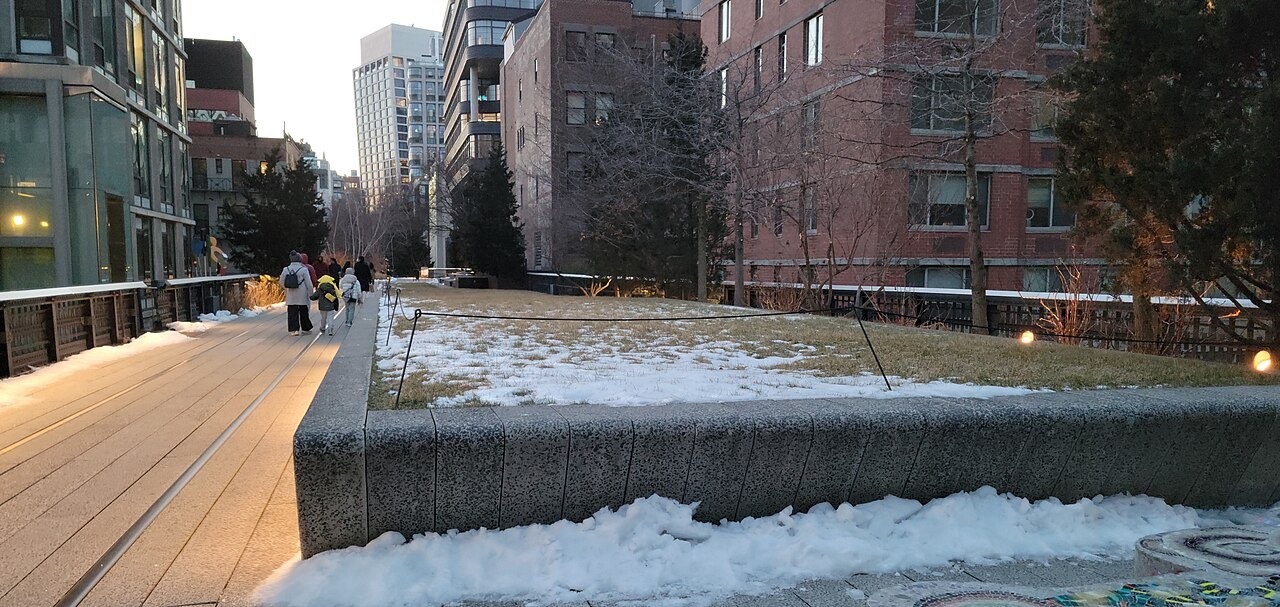
The design is by the landscape architects James Corner Field Operations, the architects Diller Scofidio and Renfro and the Dutch planting designer Piet Oudolf, and its idea is to keep the feeling of the wild railway. The old rails stay in place, running in and out of the planting, and the beds are full of grasses, perennials and small trees chosen to look self-seeded and to change through the seasons.
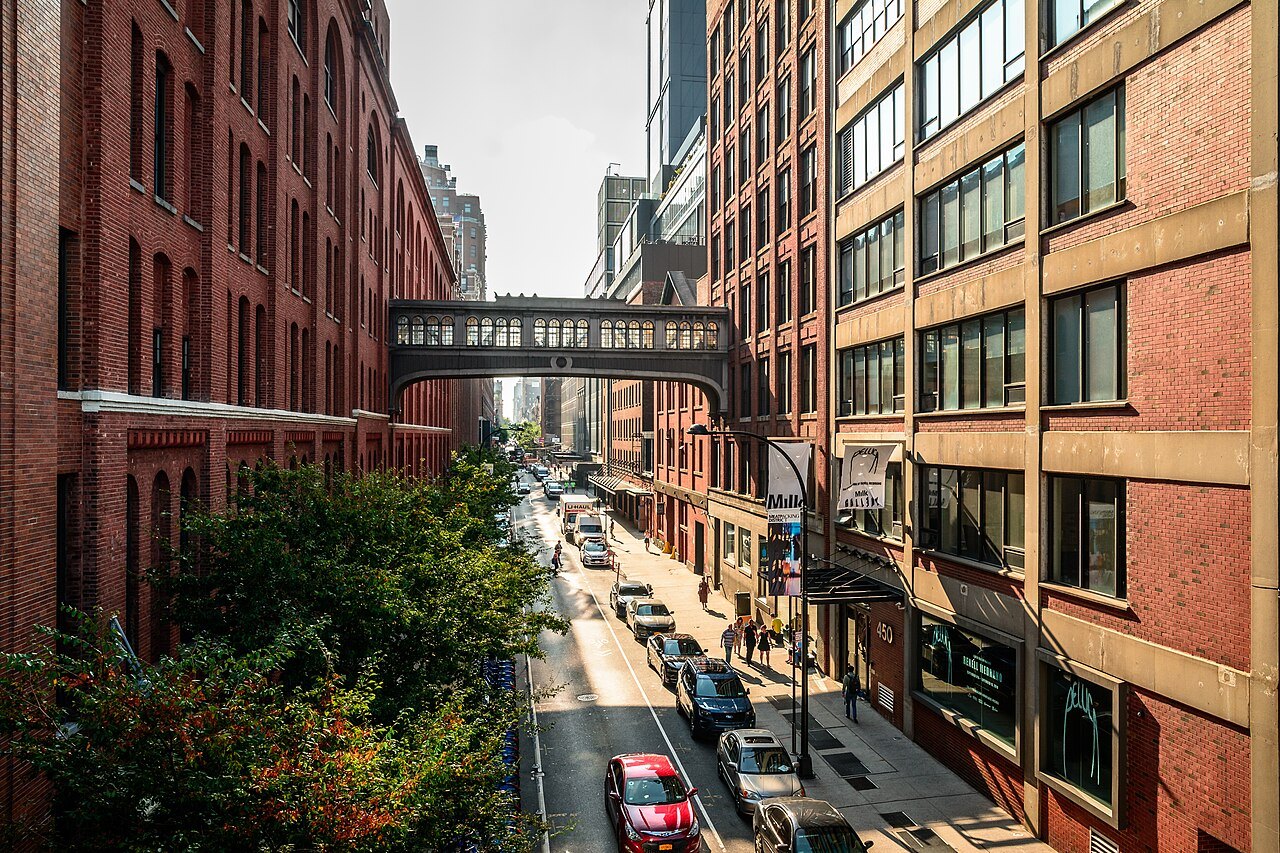
Walking north from Gansevoort Street, the line passes through the western edge of Chelsea Market, a food hall in the old National Biscuit Company factory where the Oreo was invented, at 15th Street. At 17th Street the Tenth Avenue Square steps down like an amphitheater toward a glass window over the avenue, where you can sit and watch the traffic come straight at you. At 23rd Street the viaduct widens and there is a lawn. Beyond 26th Street a raised walkway called the flyover lifts you into the treetops, with a lookout facing east.
At 30th Street the park curves west around the towers of Hudson Yards. The Spur, opened in 2019, reaches east over 30th Street to Tenth Avenue, with a hall of sixty-foot ceilings, the park's biggest garden, and a plaza for large works of art that change about every eighteen months. Since 2023 a walkway from the Spur has led to Moynihan Train Hall, Penn Station's new concourse.
The two new neighbors
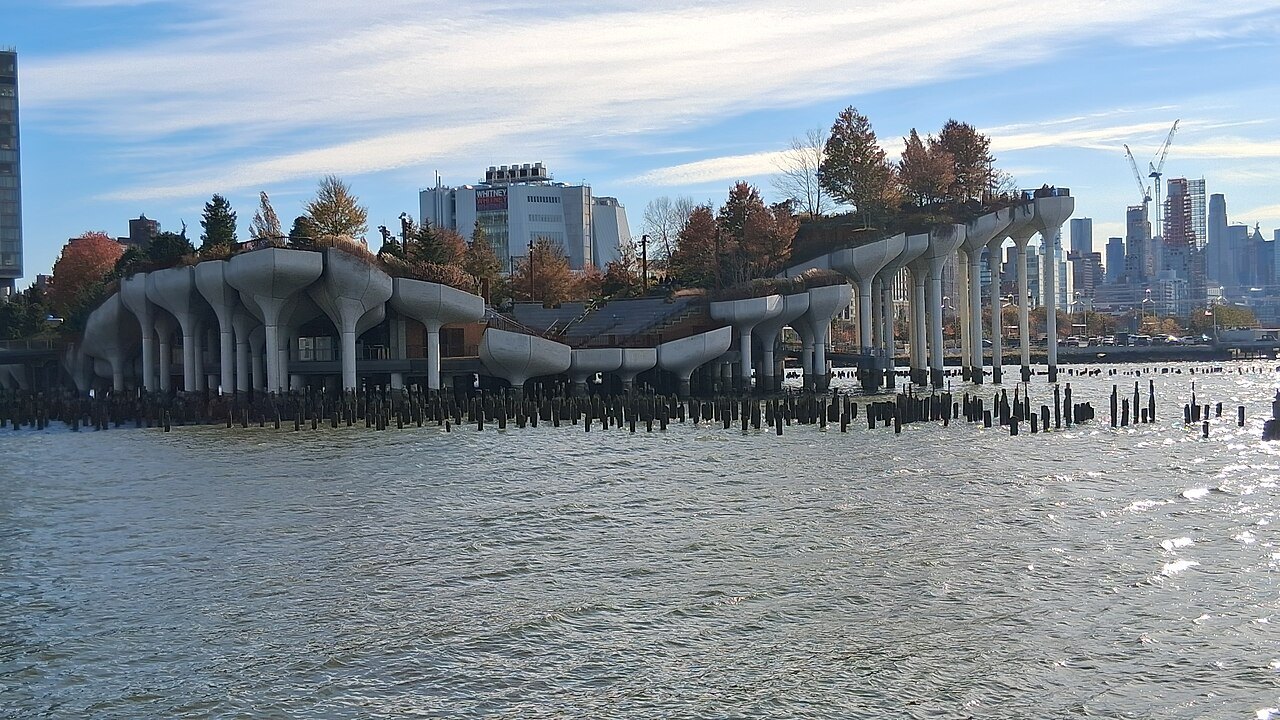
Across West Street from the southern end, at the level of West 13th Street, Little Island sits in the Hudson on 132 concrete supports shaped like tulips, rising to different heights so that the park's lawns and paths roll up and down. Designed by Heatherwick Studio, it opened on May 21, 2021, with lookouts over the river and a 687-seat amphitheater.
At the northern end, at Hudson Yards, stands Vessel, also designed by Thomas Heatherwick: a sixteen-story honeycomb of 154 flights of stairs, about 2,500 steps and 80 landings. It opened in 2019, was closed several times after visitors died there, and reopened in October 2024 with glass safety barriers. Look up its status and whether it needs a ticket before you plan to climb it.
How to visit
The High Line is a free public park, run by the nonprofit Friends of the High Line, and it keeps daily hours that change with the season, published on its own site. Its accessible entrances, each with stairs and an elevator, are at Gansevoort, 14th, 16th, 23rd and 30th Streets, and there are more stairways in between. The conservancy lends wheelchairs to visitors who ask in advance, and it publishes the status of its elevators online.
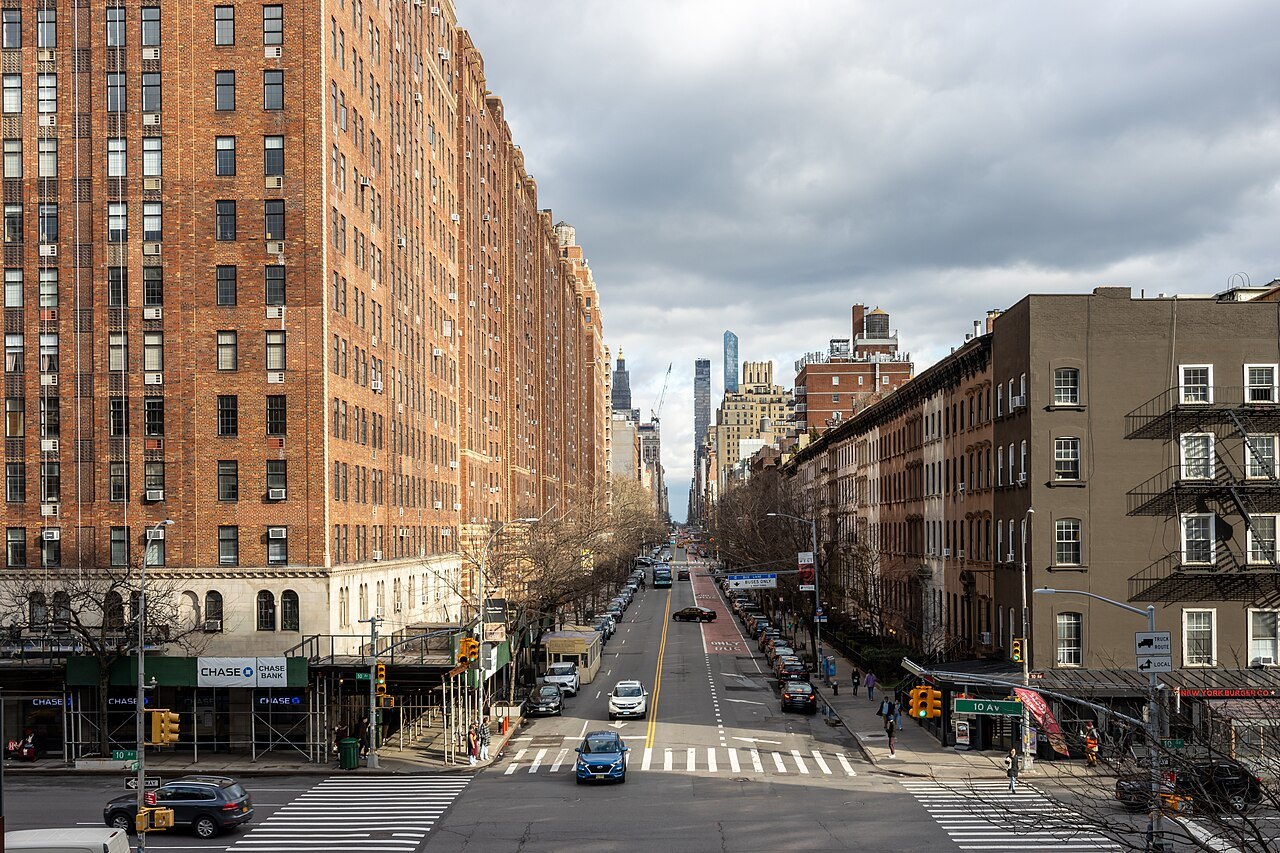
Most people walk north from Gansevoort Street, which saves the towers of Hudson Yards for the end, and the park had about eight million visitors a year by 2019, so the narrow stretches can be slow going. Bicycles are not allowed on the park, though there are racks at street level near the stairs, and it is a park with rules of its own, which the conservancy publishes; getting around covers the subway at each end.
Nearby
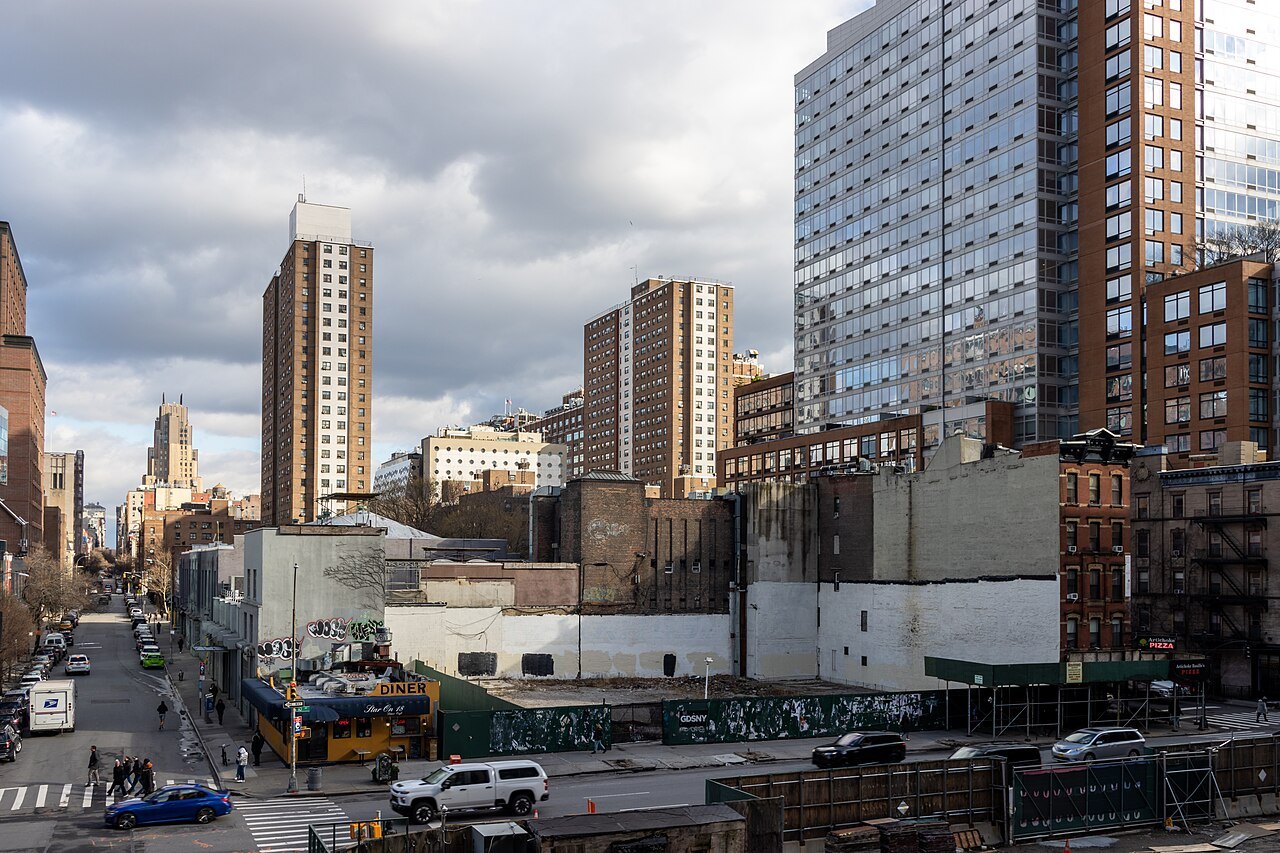
The southern end is a short walk from Greenwich Village. From the northern end at 34th Street, the Empire State Building is straight along 34th Street to the east, and the Flatiron Building is reached by walking east along 23rd Street.
Where to go next03
Nearby
- Nearby · Fifth Ave · Washington SqWashington Square and Greenwich VillageA marble arch at the end of Fifth Avenue, a square that was once a burial ground and a parade ground, and around it the crooked streets of a village older than the grid, where the Beats, the folk singers and the Stonewall uprising began.Read the page →
- Nearby · Fifth Ave · Broadway · E 23 StThe Flatiron Building and Madison SquareA 22-story wedge of 1902 standing on the triangle where Broadway crosses Fifth Avenue, and across the street a park that once held the Statue of Liberty's arm and gave its name to Madison Square Garden.Read the page →
- Nearby · Fifth Ave · W 34 StThe Empire State BuildingThe Art Deco tower that went up in thirteen and a half months during the Depression, rising 1,454 feet to the tip of a mast once meant for airships, with an open-air deck on the 86th floor and a view over the whole grid.Read the page →