Home · Sights · Washington Square and Greenwich Village
What you are looking at01
Washington Square and Greenwich Village
Fifth Ave · Washington Sq
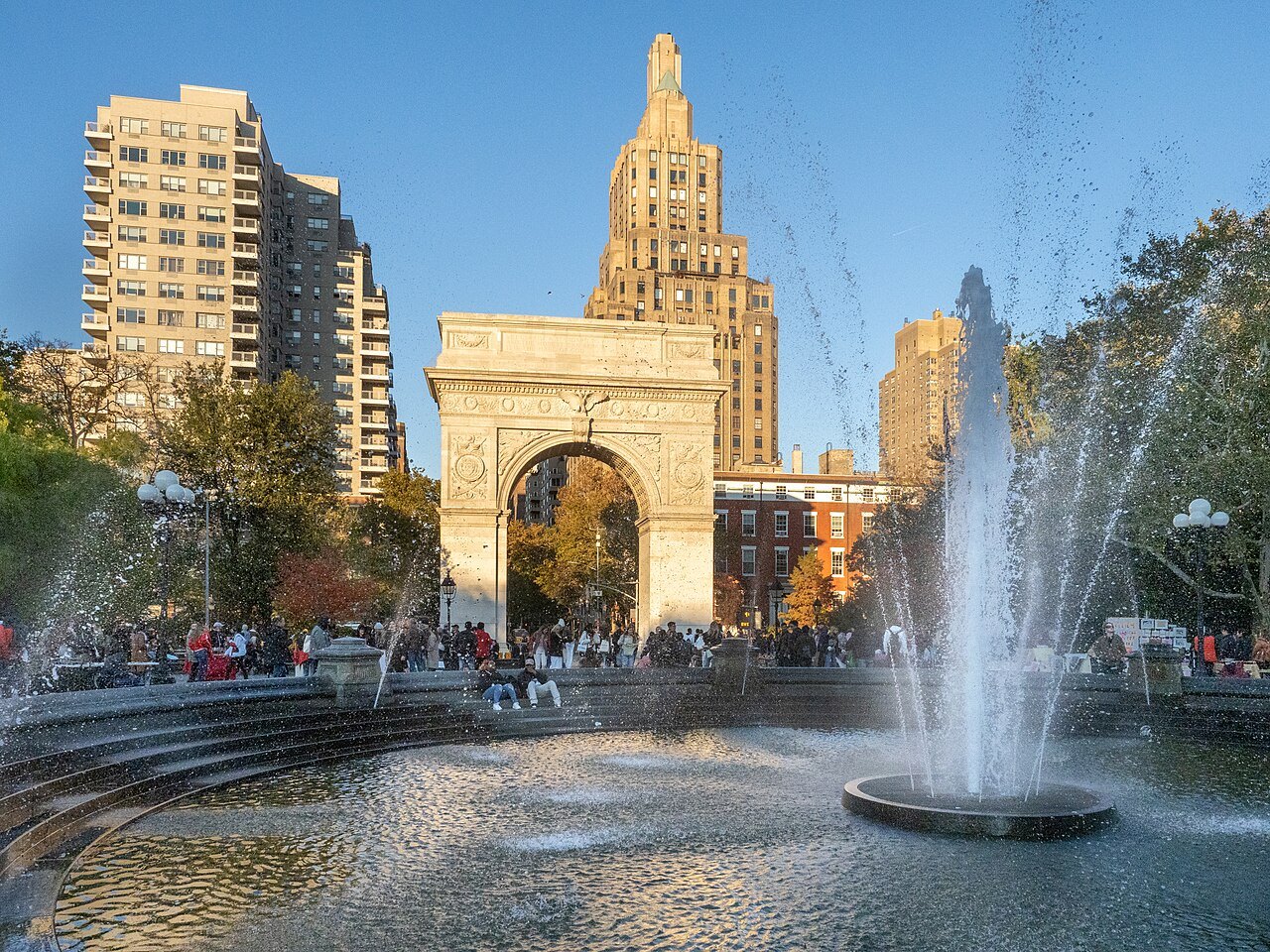
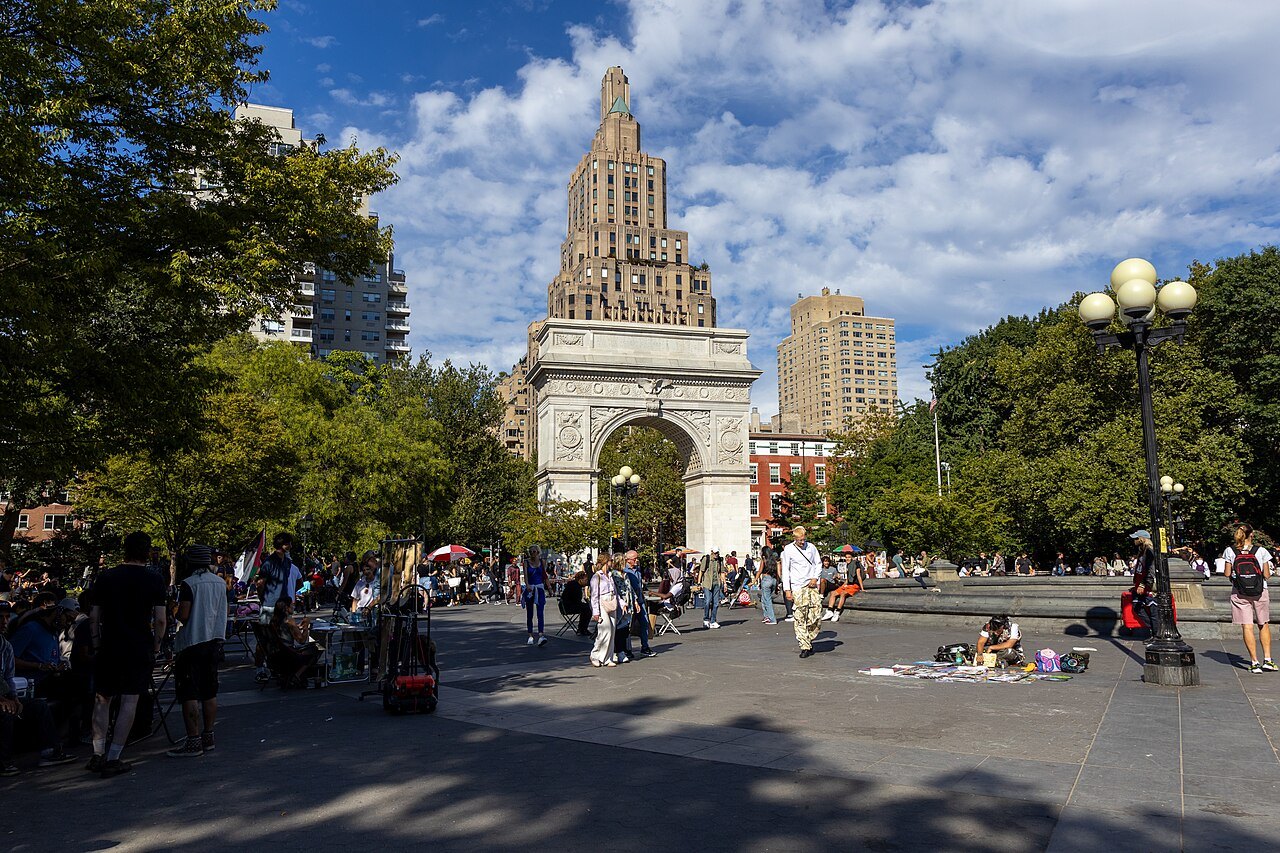
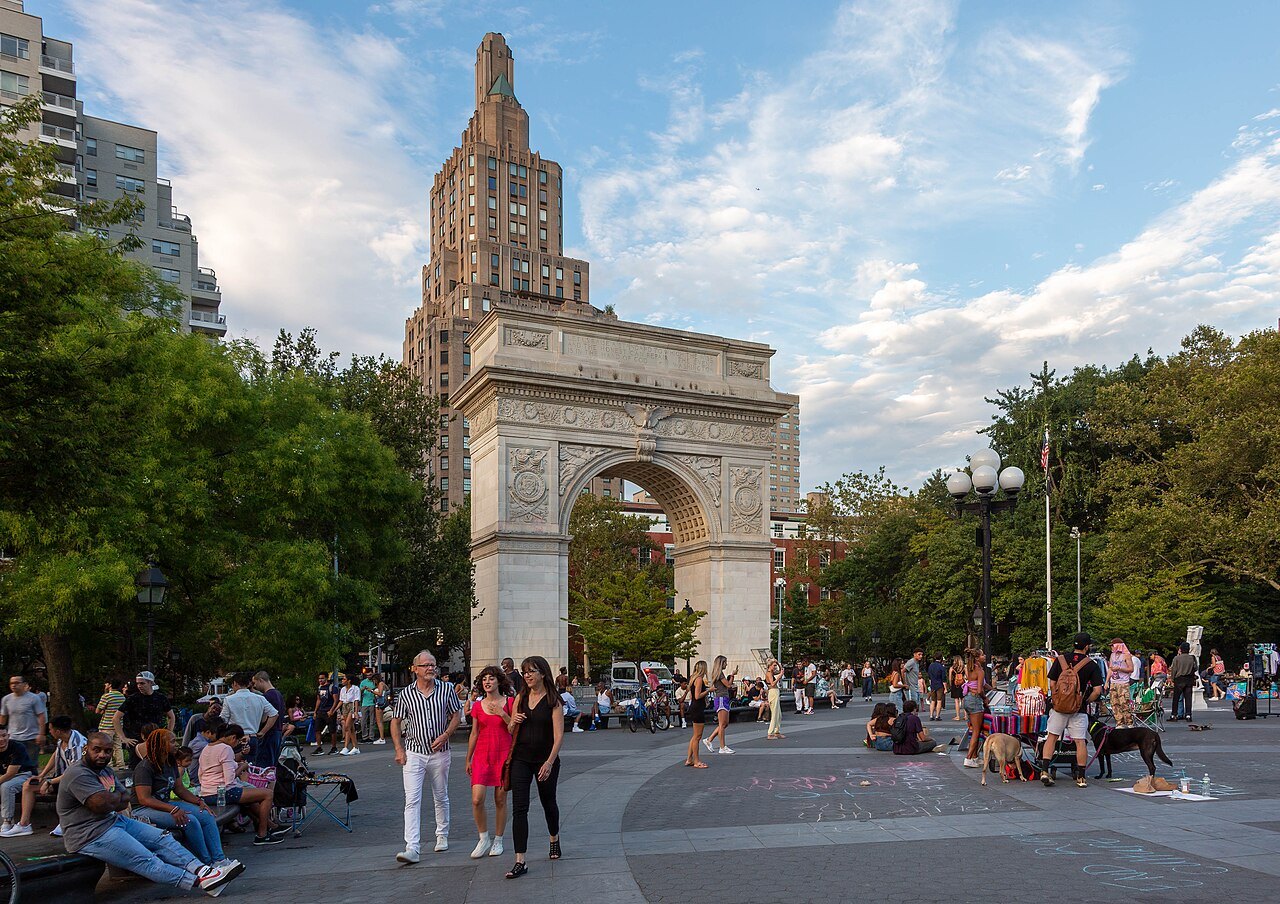
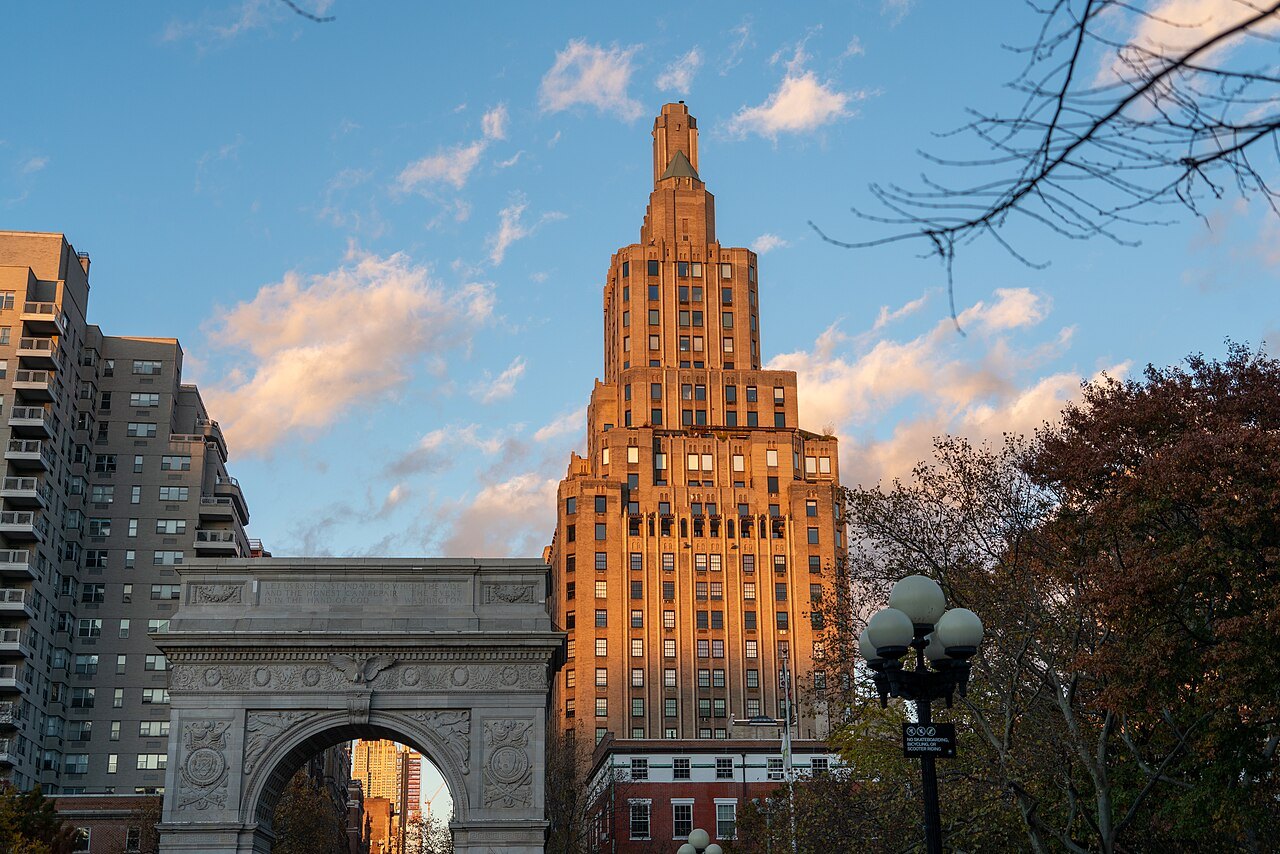
- 1Washington Square ArchStanford White's marble triumphal arch of 1892, 77 feet high, closing the southern end of Fifth Avenue.
- 2The fountainThe round fountain in the middle of the square, the park's meeting point and stage.
- 3The chess cornerA playing area in the southwest of the park where the tables are rarely empty.
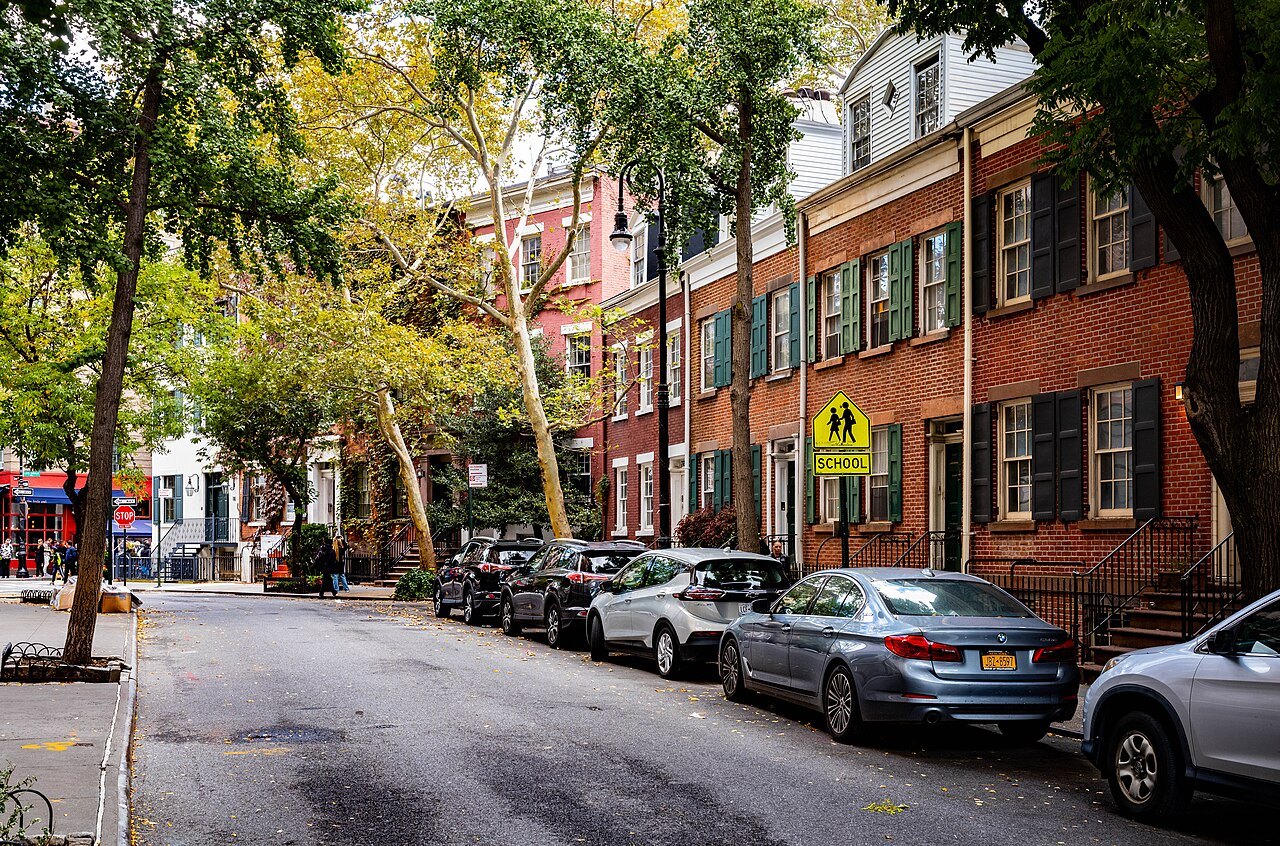
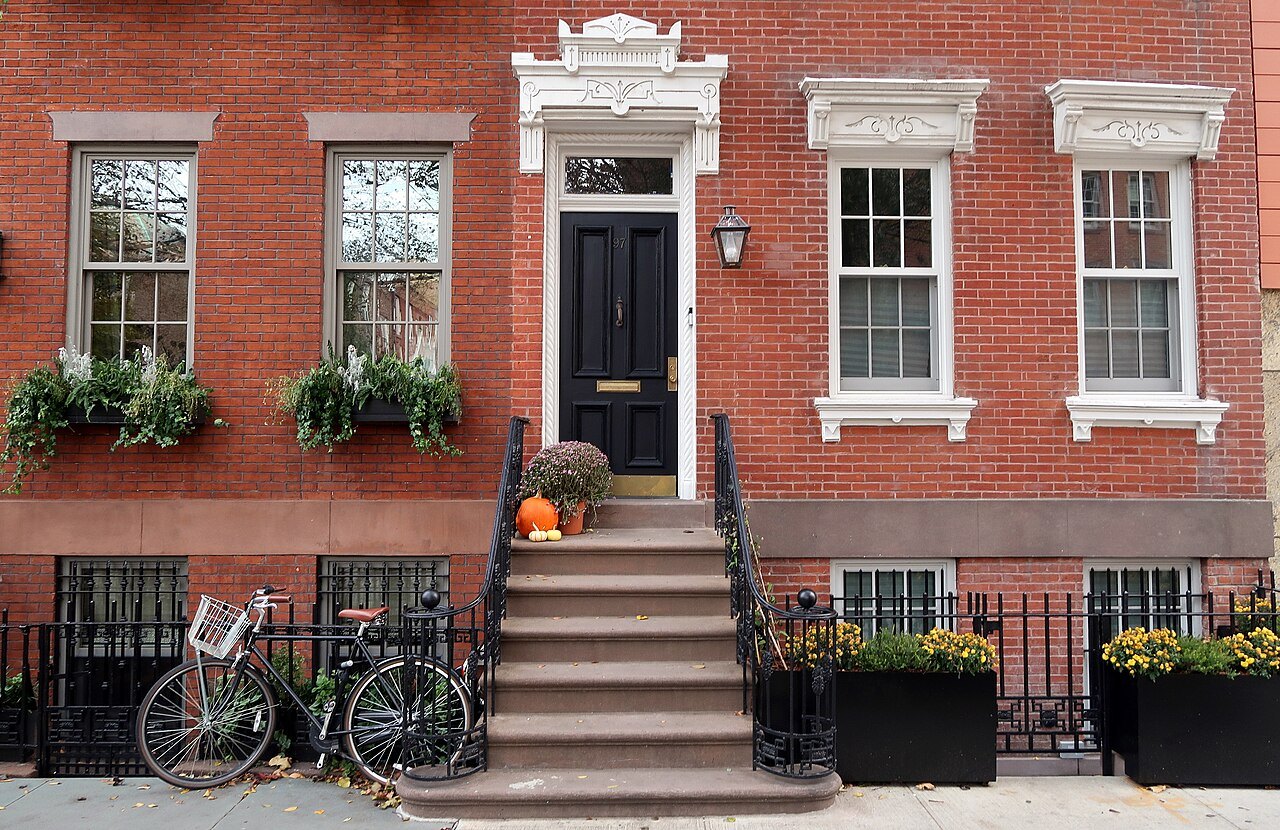
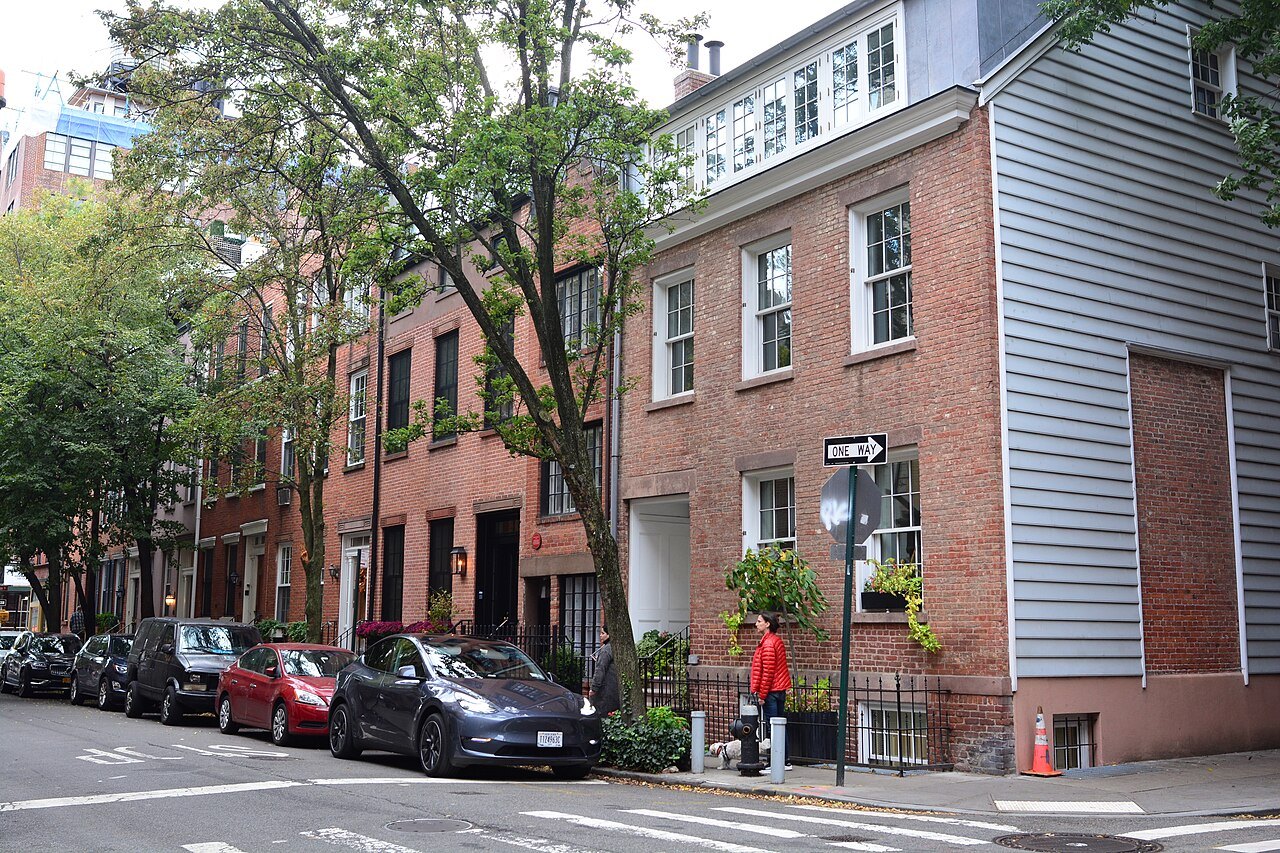
- 4The historic districtMore than fifty blocks of brick townhouses up to 14th Street, protected as a landmark district.
- 5StonewallThe Christopher Street bar where the uprising of 1969 began, now within a national monument.
The sight in full02
Reading the place
Why it matters
Washington Square is a park of nine and three-quarter acres where Fifth Avenue begins, and Greenwich Village is the neighborhood around it. For more than a century the Village has been one of New York's great addresses for people who did not fit elsewhere: in the twentieth century it was called the capital of American bohemia, it was the East Coast birthplace of the Beat Generation and the counterculture of the 1960s, and it was the cradle of the modern movement for gay and lesbian rights.
It is also a different city on the map. Greenwich was a rural hamlet north of the colonial town, and its lanes were already there when the planners of 1811 drew their grid over the rest of the island. So the Village keeps its own irregular streets. Some formerly named streets were later numbered, but they still do not follow the pattern, which is why West 4th Street turns north here and crosses West 10th, 11th and 12th Streets, and why even New Yorkers get lost.
The square's past
The square was not always a park. In 1797 the city bought the fields here for a potter's field, a public burial ground away from the town, where most of those who died in the yellow fever epidemics of the early nineteenth century were buried, and the remains of more than twenty thousand people still lie under the lawns and paths. In 1826 it became the Washington Military Parade Ground, where volunteer militia companies trained, and in 1849 and 1850 it was laid out as the first park on the site.
The fine red-brick houses along Washington Square North were built as the park became fashionable, and the neighborhood's rich and its artists lived side by side. In the 1850s the Tenth Street Studio Building, a few blocks north, drew painters from across the country; Winslow Homer kept a studio there, as did Frederic Church and Albert Bierstadt of the Hudson River School.
The arch
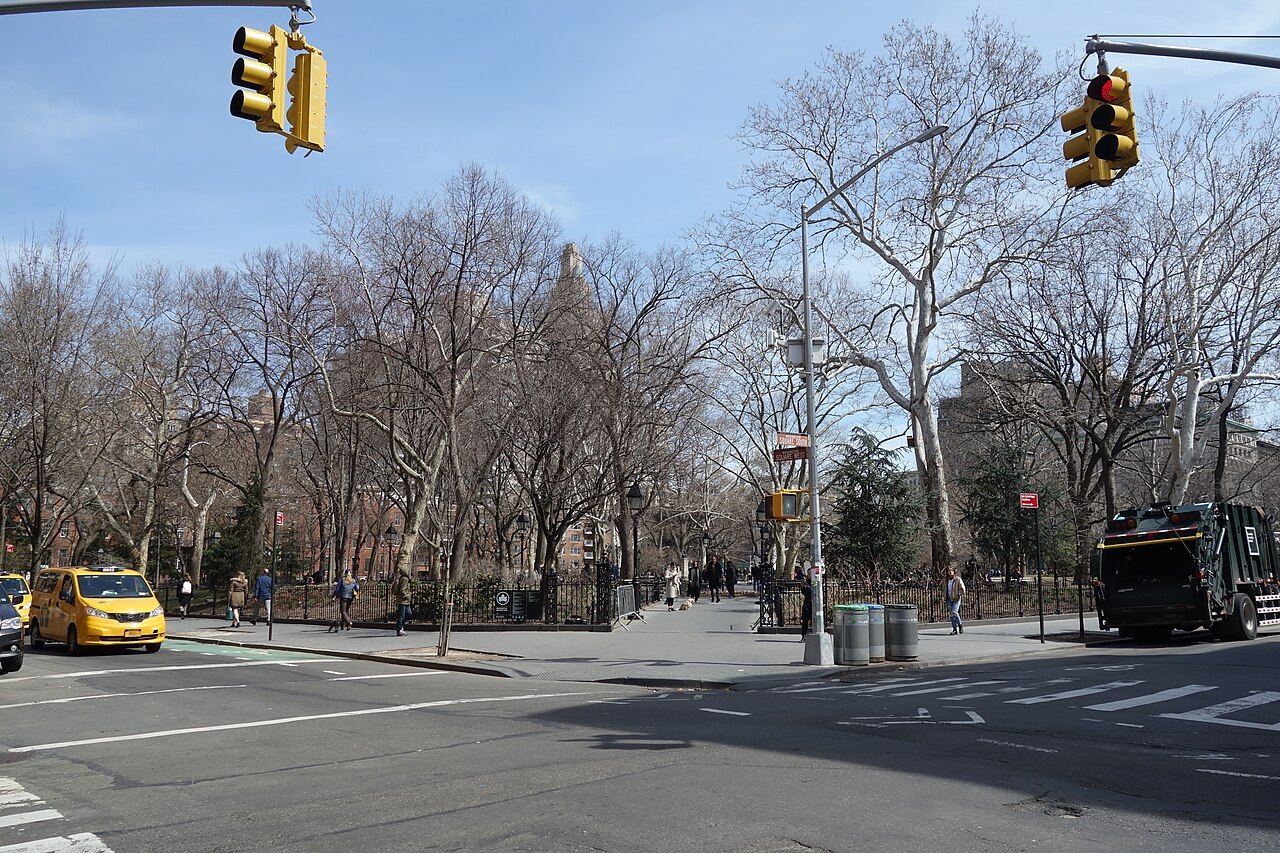
The arch at the north end of the park is the Village's landmark. In 1889, for the centennial of George Washington's inauguration, a local businessman, William Rhinelander Stewart, put up a temporary arch of plaster and wood over Fifth Avenue. It was so popular that the city commissioned a permanent one. Stanford White designed it after the Roman triumphal arches, it was built of white Tuckahoe marble, and it was finished in 1892, 77 feet high. The two statues on its north face show Washington at war and Washington at peace.
Stand under it and look north, and Fifth Avenue runs straight away from you toward Midtown, with the Empire State Building on the skyline; this is the point where the street grid of Manhattan, in effect, begins.
Saving the park
For much of the twentieth century buses and cars drove straight through Washington Square, around the fountain and under the arch. In 1952 Robert Moses, then in charge of the city's parks, finalized plans to extend Fifth Avenue as a road through the park. Local residents fought him, and the campaign is often credited to the urbanist Jane Jacobs.
Jacobs herself praised Shirley Hayes and the Washington Square Park Committee, who argued for closing the park to all cars while refusing to widen the streets around it. After a public hearing in 1958 the park was closed to traffic on a trial basis, and it has been free of cars ever since. It was one of the first times New Yorkers beat Moses, and it changed how the city thought about its streets.
What you actually see
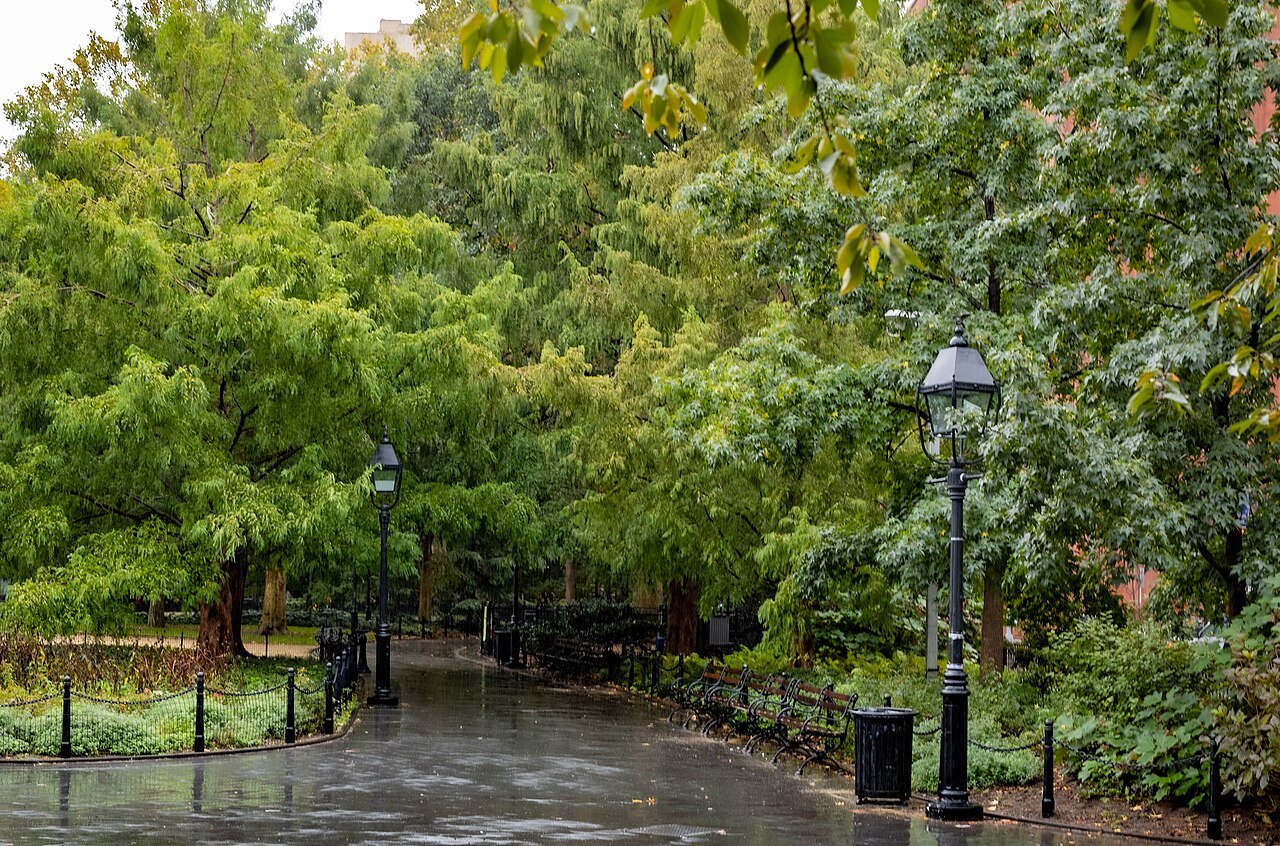
The park is a stage. Around the fountain there are musicians, students from the university that surrounds it, performers and a steady crowd simply sitting on the fountain's rim. In the southwest corner the chess and Scrabble tables are almost always busy. There are playgrounds, gardens, statues of Washington, the Italian patriot Giuseppe Garibaldi and the engineer Alexander Lyman Holley, and two dog runs.
West of the square, the historic district takes over: more than fifty blocks, up to 14th Street, of Greek Revival and Federal-style brick townhouses with stoops, iron railings and trees. Grove Street, Commerce Street, where the Cherry Lane Theatre opened in 1924, and Bleecker Street reward a slow walk, and there is no better part of the city for simply getting lost.
On Christopher Street, the Stonewall Inn is where a police raid in June 1969 set off the riots that started the modern gay rights movement. The bar and the small Christopher Park across the street became the Stonewall National Monument in 2016, the first national monument dedicated to LGBTQ history, and a visitor center for it opened in 2024.
How to visit
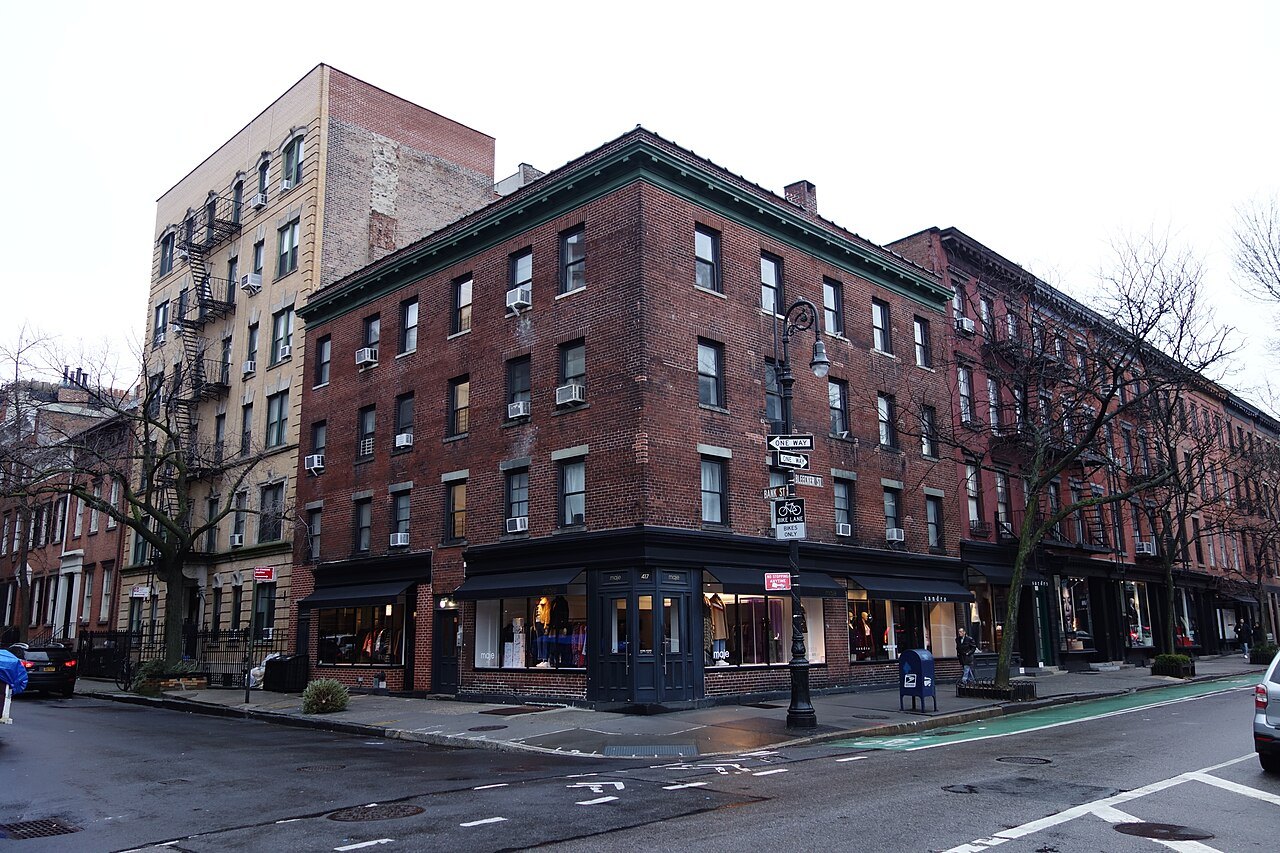
The park and the streets are free and always open to walk. Give the square half an hour and the side streets to the west at least an hour more. The Village is also one of the best parts of the city for an evening out, with small theaters such as the Cherry Lane and many restaurants, and it was here, in 1961, that folk singers marched through the arch to defend their right to play in the park.
Several subway lines stop at West 4th Street, a block from the park. Where to stay covers the Village as a base, and the grid explains why the streets here behave as they do.
Nearby
Walk north up Fifth Avenue to the Flatiron Building and Madison Square, or west to the southern end of the High Line in the Meatpacking District. Chinatown and the Lower East Side lie to the southeast.
Where to go next03
Nearby
- Nearby · Fifth Ave · Broadway · E 23 StThe Flatiron Building and Madison SquareA 22-story wedge of 1902 standing on the triangle where Broadway crosses Fifth Avenue, and across the street a park that once held the Statue of Liberty's arm and gave its name to Madison Square Garden.Read the page →
- Nearby · Gansevoort St → W 34 StThe High LineA freight railroad of 1934 that runs through the West Side at third-floor height, turned into a park of wild planting and lookouts, a mile and a half long, with a new island park at one end and a climbable sculpture at the other.Read the page →
- Nearby · Mott St · Canal StChinatown and the Lower East SideThe densest neighborhoods of old immigrant New York: Chinatown's crooked streets around Mott and Doyers, a park on the site of the Five Points slum, and the tenements of Orchard Street where a museum rebuilt the apartments.Read the page →