Home · Where to Stay
Where to stay01
Seven neighborhoods
- MidtownFirst visits, short stays, theater and the big sightsThe business district between roughly 34th and 59th Streets: Times Square, Rockefeller Center, Grand Central and Penn Station, and the island's tallest hotels. Everything is close; nothing is quiet.
- Upper West SideFamilies, longer stays, Central Park and Lincoln CenterResidential streets between Central Park and the Hudson from 59th to 110th Street, with Lincoln Center at the south end and the American Museum of Natural History at the center.
- Upper East SideMuseum-goers and a calm, polished baseThe old Silk Stocking District between Fifth Avenue and the East River from 59th to 96th Street, with Museum Mile along the park.
- Greenwich VillageWalkers, food and evenings outLow brick houses, crooked streets and Washington Square, with the West Village's cafés toward the Hudson.
- SoHo and TribecaShopping, galleries and a stylish baseCast-iron loft buildings south of Houston Street, turned from warehouses into studios, galleries and shops.
- Lower East SideHistory, delis and nightlifeThe old immigrant quarter between the Bowery and the East River, now full of bars and restaurants among the tenements.
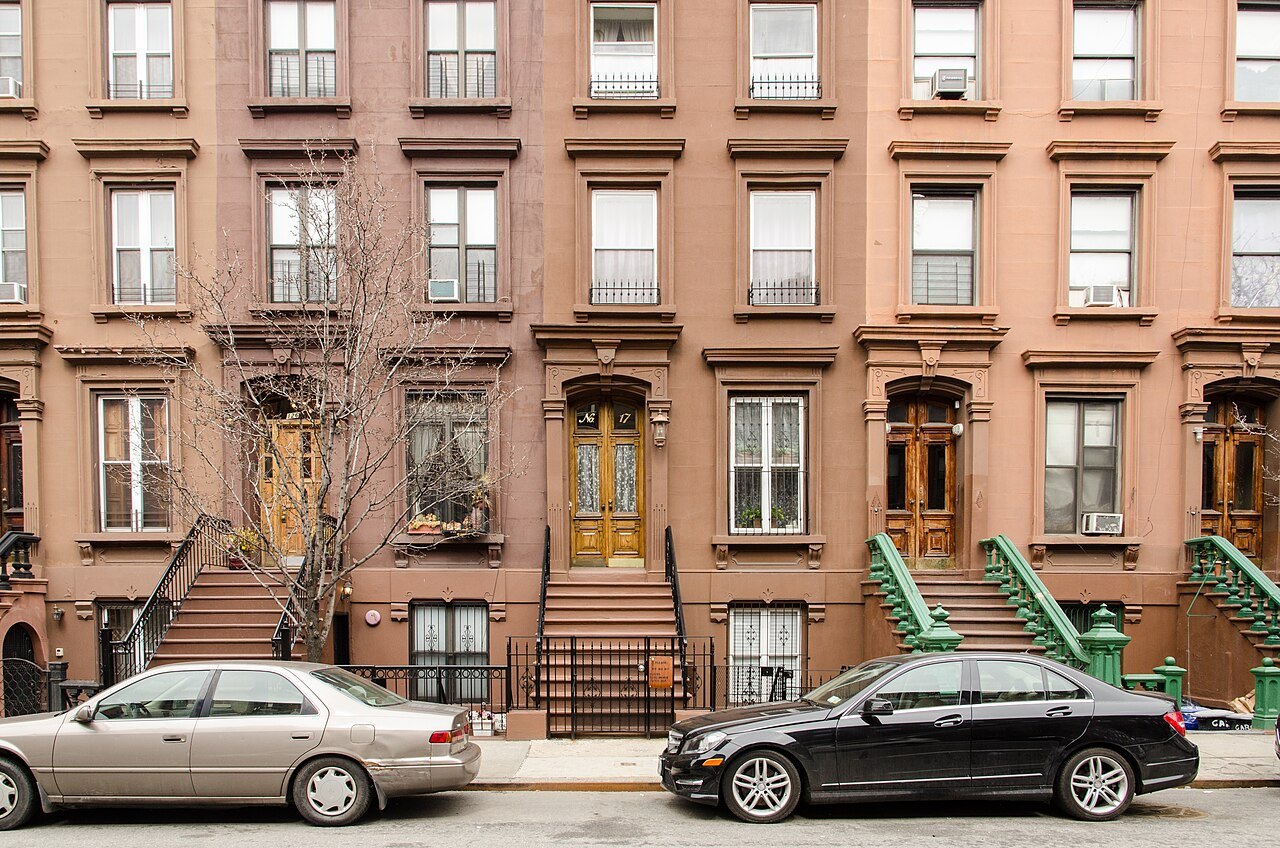
- HarlemMusic, history and a neighborhood feelUpper Manhattan north of Central Park, the center of the Harlem Renaissance, with the Apollo Theater on 125th Street.
In full02
Where to Stay
Choosing a base
Manhattan's neighborhoods have no official boundaries. Some are named for their place on the map, such as the Upper East Side; some for the people who settled them, such as Little Italy; some are abbreviations invented by planners and real estate agents, such as SoHo, for South of Houston, and Tribeca, for the Triangle Below Canal. Each has its own character, and where you stay will shape your trip more than almost any other choice.
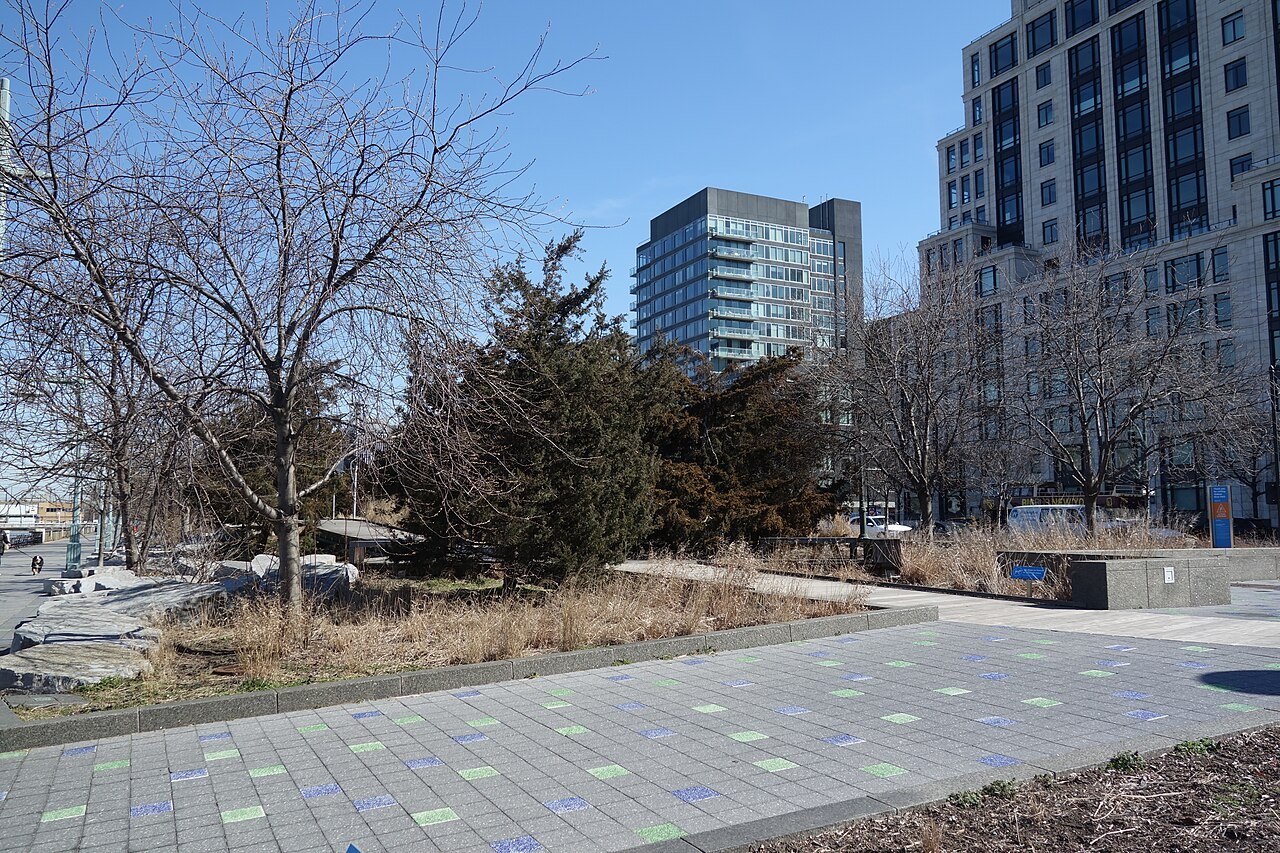
The good news is that the subway makes almost every neighborhood convenient. The real choice is between being in the middle of everything, in Midtown, and living for a few days like a New Yorker in one of the residential quarters. The map on this page shows where each one lies; the grid explains the street numbers.
Midtown
Midtown is the center of Manhattan and the largest business district in the world, with the Empire State Building, the Chrysler Building, Grand Central, Rockefeller Center, Times Square and the Theater District all within its borders. It also has most of the island's hotels, including its tallest, and the two great railroad stations, so for a first visit or a short stay it is the obvious choice: nearly every sight on this site is a short walk or a subway ride away.
The price is noise and crowds. Midtown is busiest in daytime and around the theaters in the evening, and it empties of residents at night. If you stay here, choose a side street rather than an avenue, and plan to eat in the neighborhoods.
The Upper West Side and the Upper East Side
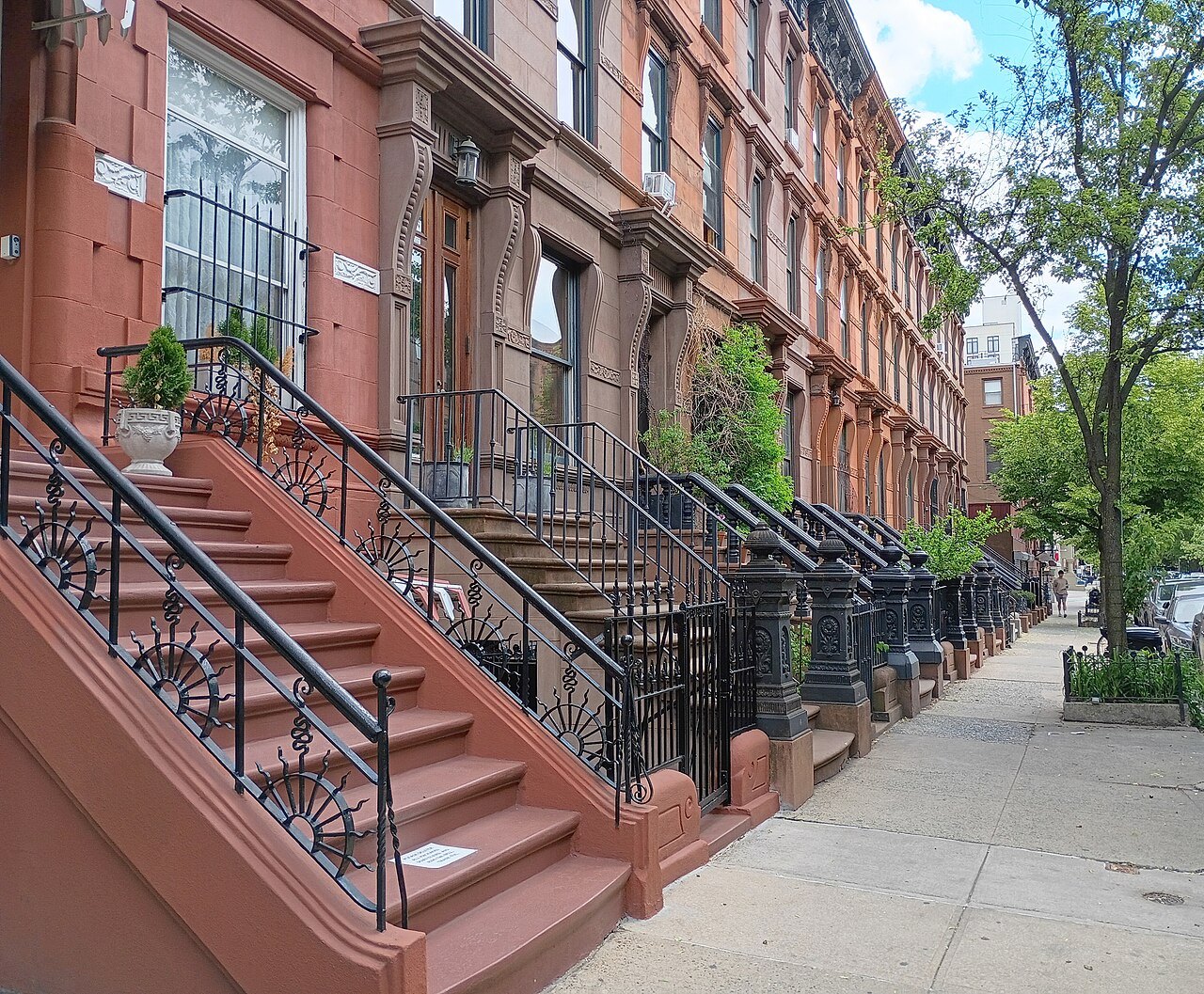
On either side of Central Park, north of 59th Street, lie the two great residential districts of Manhattan. The Upper West Side, between the park and the Hudson River up to 110th Street, is one of the island's cultural centers, with Lincoln Center for the Performing Arts at its south end, the American Museum of Natural History near its center and Columbia University just to the north. Its streets are lined with apartment houses and brownstones, and Riverside Park runs along the river. The streets west of Amsterdam Avenue were once known as the Bloomingdale District, after the old road that became Broadway. It suits families and anyone staying a week or more.
The Upper East Side, between Fifth Avenue and the East River up to 96th Street, was once called the Silk Stocking District and has long been the wealthiest neighborhood in the city; Andrew Carnegie and Henry Clay Frick built mansions here. Its great attraction for a visitor is Museum Mile, the string of museums along Fifth Avenue facing the park, among them the Met and the Guggenheim. Within it lie smaller neighborhoods with their own names, among them Lenox Hill, Carnegie Hill and Yorkville. It is calm, polished and a little formal.
The Village, SoHo and Tribeca
Below 14th Street the grid gives way to older, more crooked streets, and the island feels like a different city. Greenwich Village, and the West Village toward the Hudson, is a place of low brick houses, tree-lined streets and small restaurants, long associated with artists and bohemians, and one of the most pleasant places in the city simply to walk. It suits anyone who wants evenings out close to the hotel door.
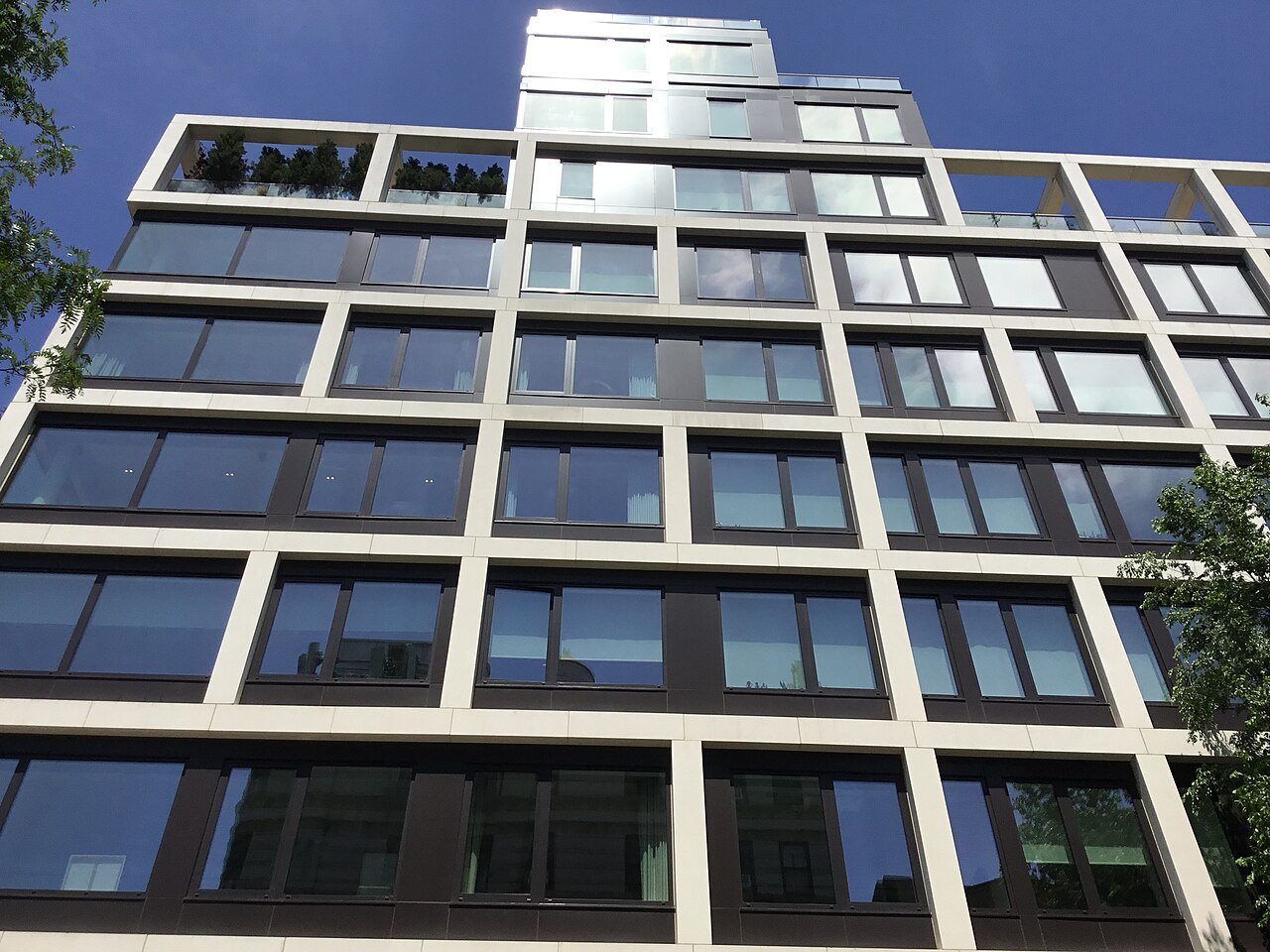
SoHo takes its name from South of Houston Street, coined in 1962 by the planner Chester Rapkin, and it is famous for its cast-iron buildings: its historic district covers twenty-six blocks and about five hundred buildings, many with cast-iron facades. Artists moved into its empty manufacturing lofts in the 1960s, drawn by their tall ceilings and many windows, galleries followed, and now it is one of the city's great shopping districts. Tribeca, to the southwest, followed the same path from warehouses to artists to celebrities, and it is home to the Tribeca Festival, founded after September 11 to bring life back downtown.
The Lower East Side
The Lower East Side, between the Bowery and the East River below Houston Street, was where most of the immigrants who came to New York in the late nineteenth and early twentieth centuries first lived, crowded into tenements. That history is still visible in its buildings, in the Tenement Museum on Orchard Street and in Katz's Delicatessen on Houston Street.
Since the mid-2000s it has changed so quickly that in 2008 the National Trust for Historic Preservation put it on its list of America's most endangered places. Restaurants, bars and galleries opened around Broome and Orchard Streets, and it now has one of the densest concentrations of bars in Manhattan; the four blocks between Allen, Houston, Delancey and Essex Streets are nicknamed Hell Square for their late-night crowds. It suits younger travelers and anyone who wants to be out late; it is close to Chinatown and the bridges to Brooklyn.
Harlem
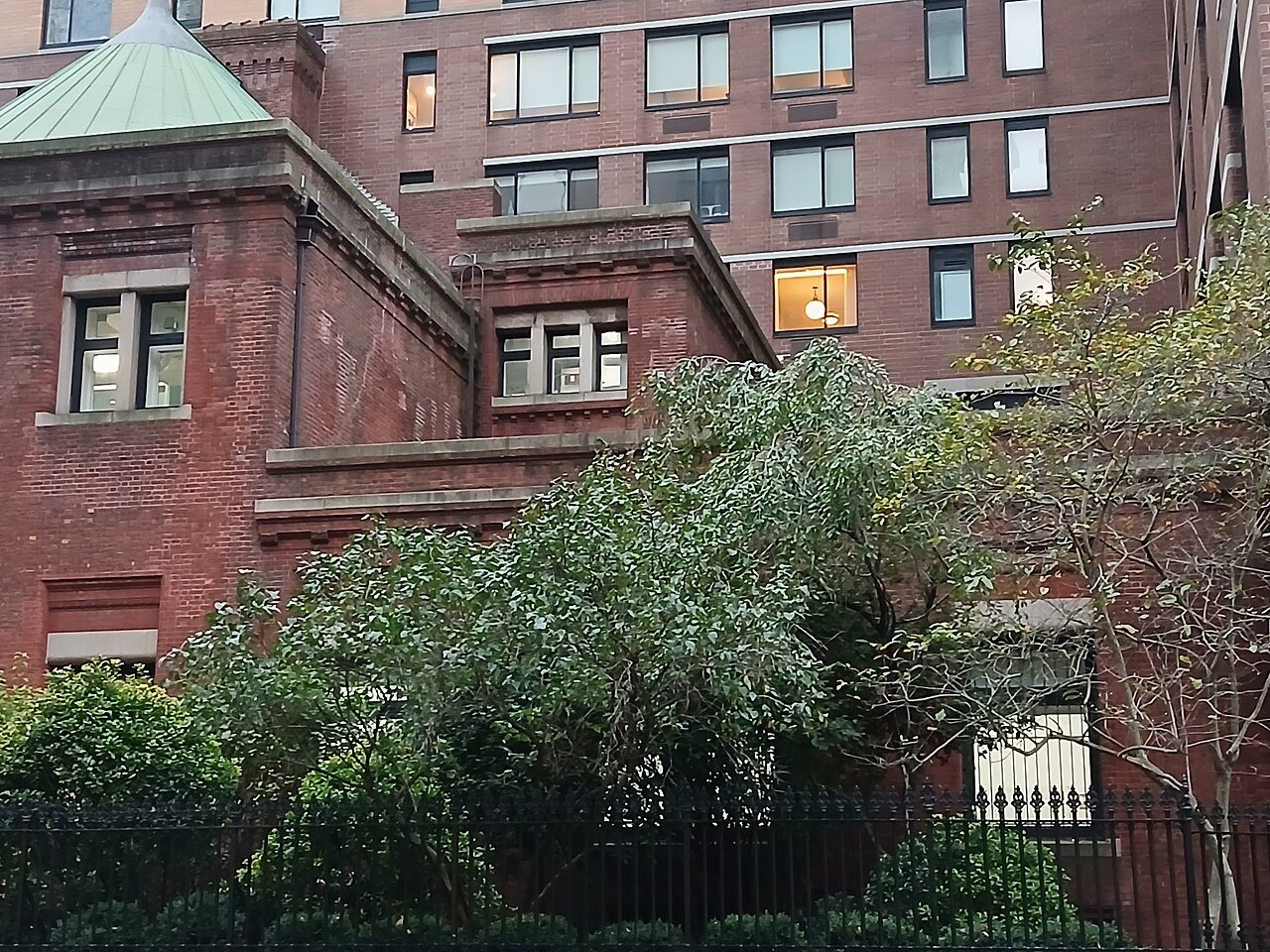
Harlem, north of Central Park, began as a Dutch village named after the city of Haarlem and became, in the early twentieth century, the capital of African American culture in the country. In the 1920s and 1930s it was the center of the Harlem Renaissance, and the Apollo Theater, which opened on 125th Street in 1934, is still its most famous stage.
It is farther from the sights of Midtown, but well connected by subway, and it offers a neighborhood feel that the busier districts cannot, and a history that runs through every block. It was mostly Jewish and Italian in the late nineteenth century; African Americans arrived in large numbers during the Great Migration of the early twentieth century; and after decades of hardship following the Depression and the loss of industry, the neighborhood has been changing again since the turn of the century. It suits repeat visitors and anyone curious about the city beyond the postcard.
Booking
Hotels in Manhattan are expensive and often small, and prices rise sharply in the busiest seasons, above all in December; when to come explains the calendar. Book early for the holidays, and compare the whole cost of a stay, since Midtown hotels save on travel and the residential districts give you more space for the money.
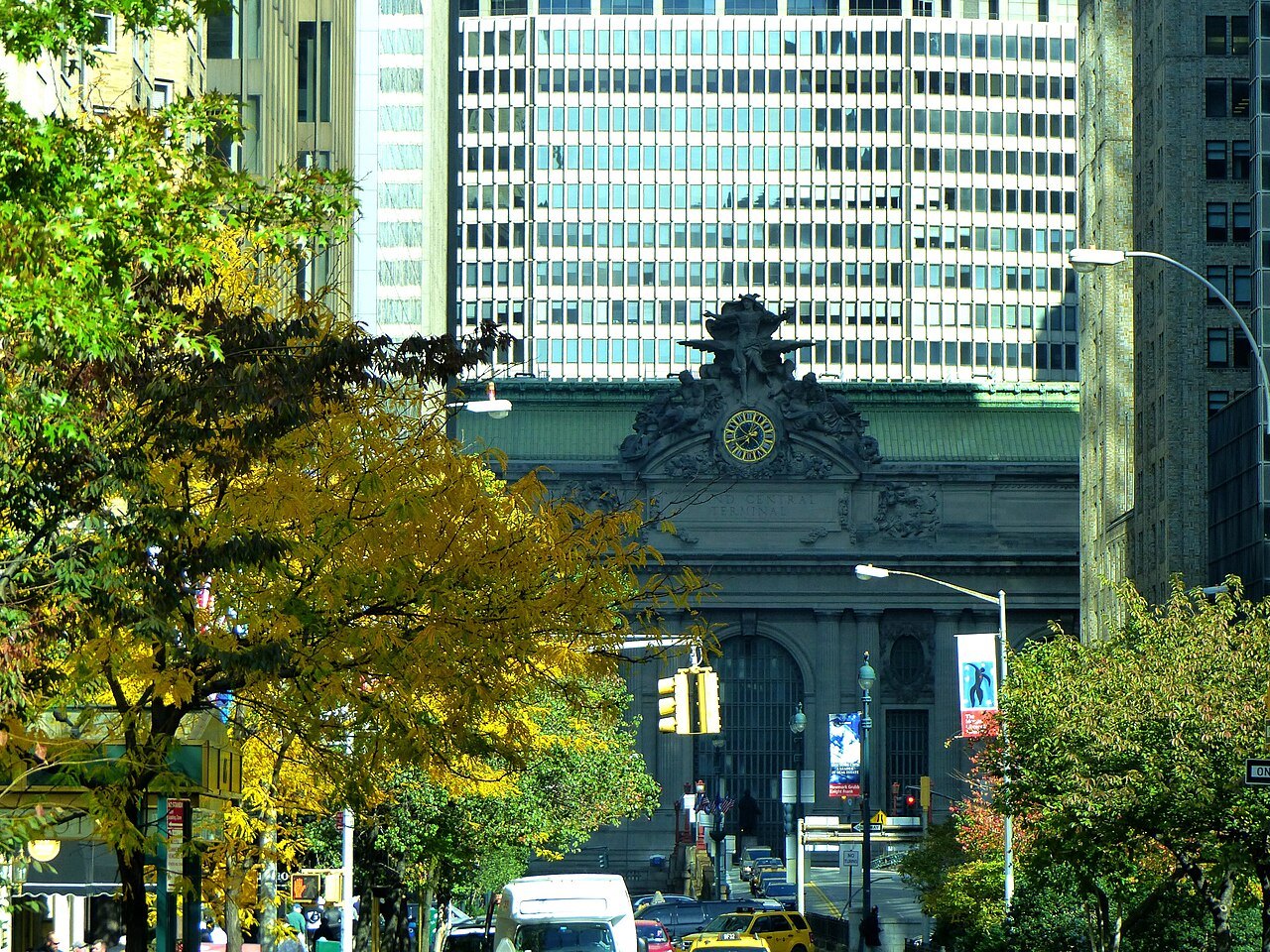
Whichever you choose, check the nearest subway station before you book: a hotel a block from an express stop is worth more than one with a better view. Getting around explains the lines.
Some links on this page are affiliate links. If you book through one we may earn a commission, at no extra cost to you. It does not affect what is recommended here, and no sight page on this site carries one.
If your room is not ready when you arrive:
Seen on the way03
More photographs
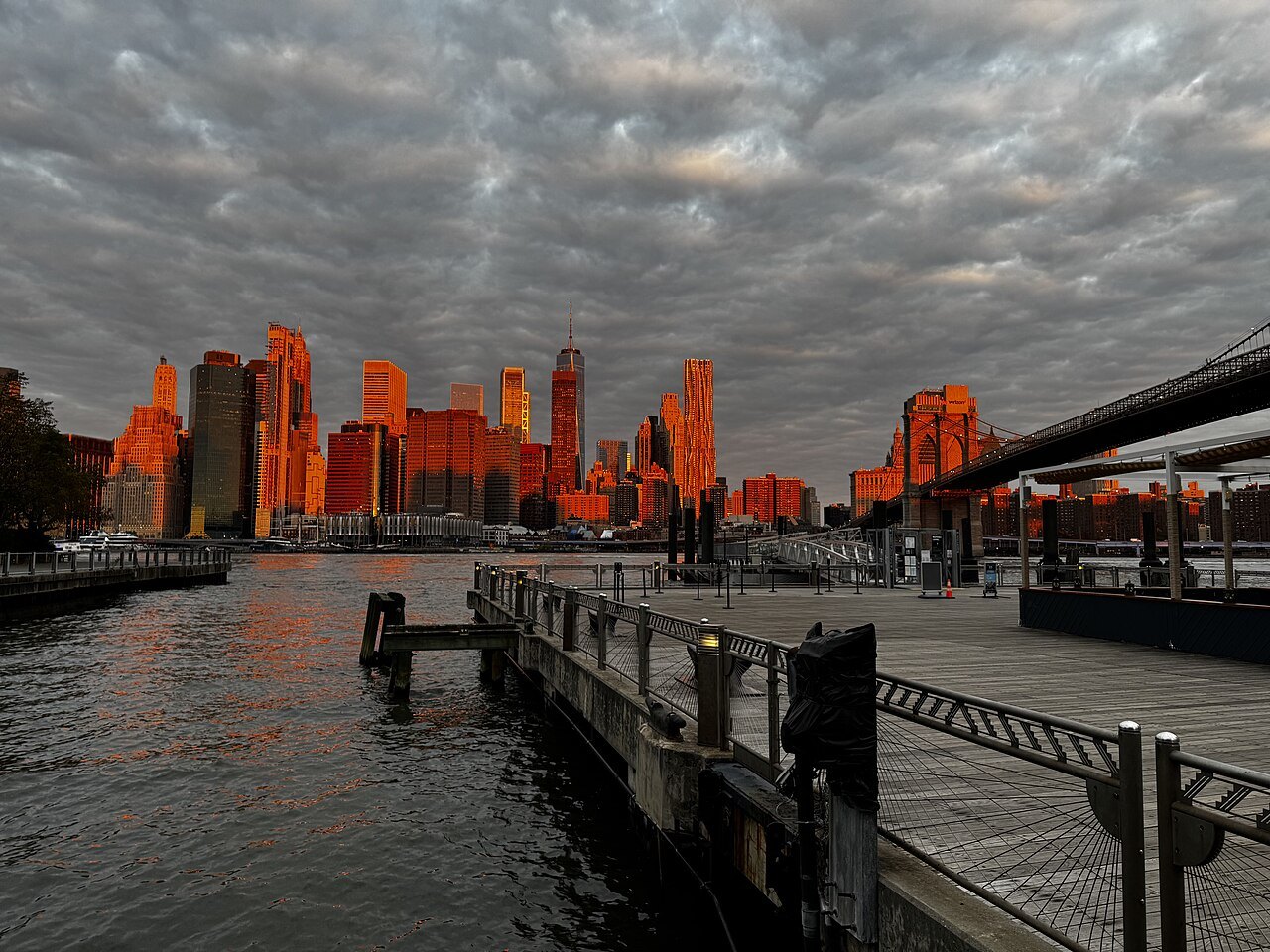
Lower Manhattan's towers lit orange at sunset from the Fulton Ferry LandingDemetri Andriani, Wikimedia Commons, CC BY-SA 4.0 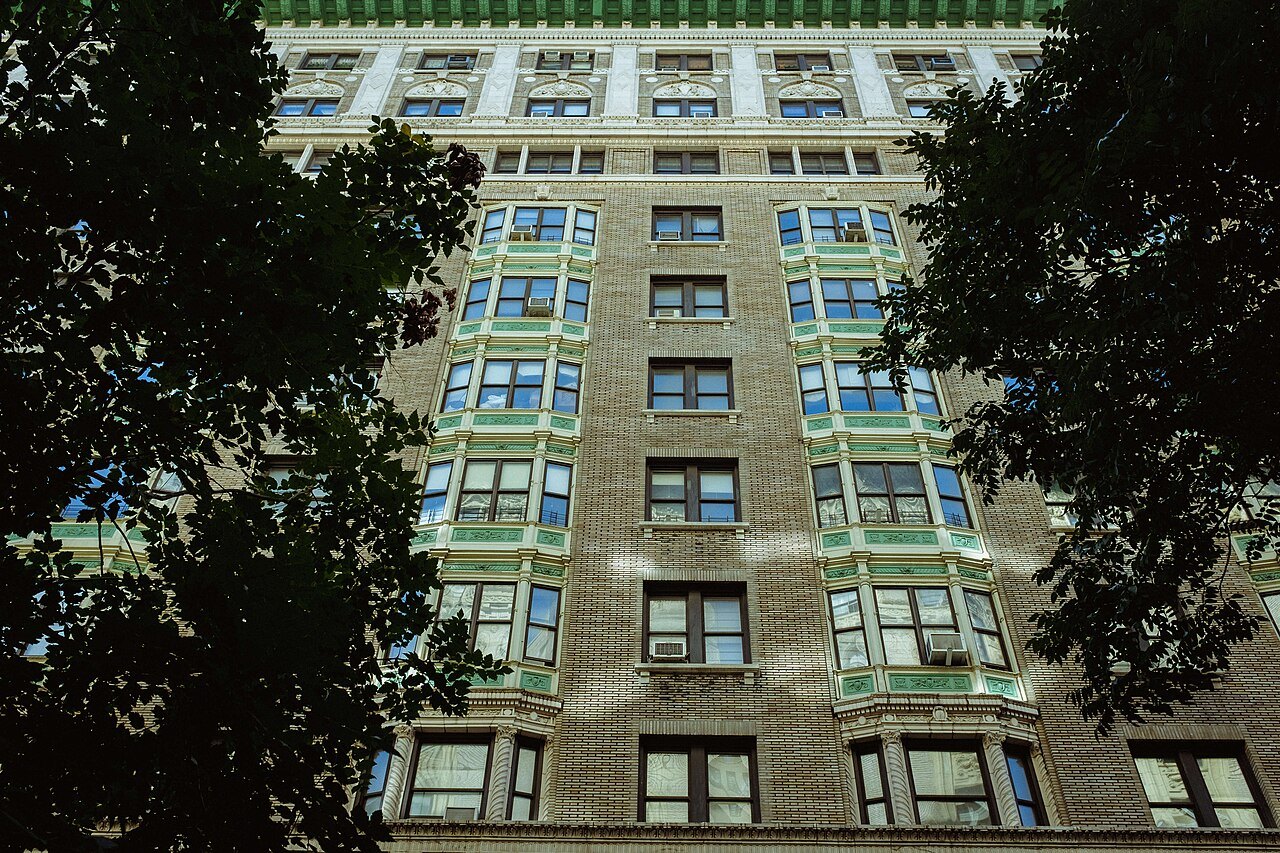
An Upper West Side apartment house with green bay windows, seen through treesErwin Verbruggen from Amsterdam, The Netherlands, Wikimedia Commons, CC BY-SA 2.0 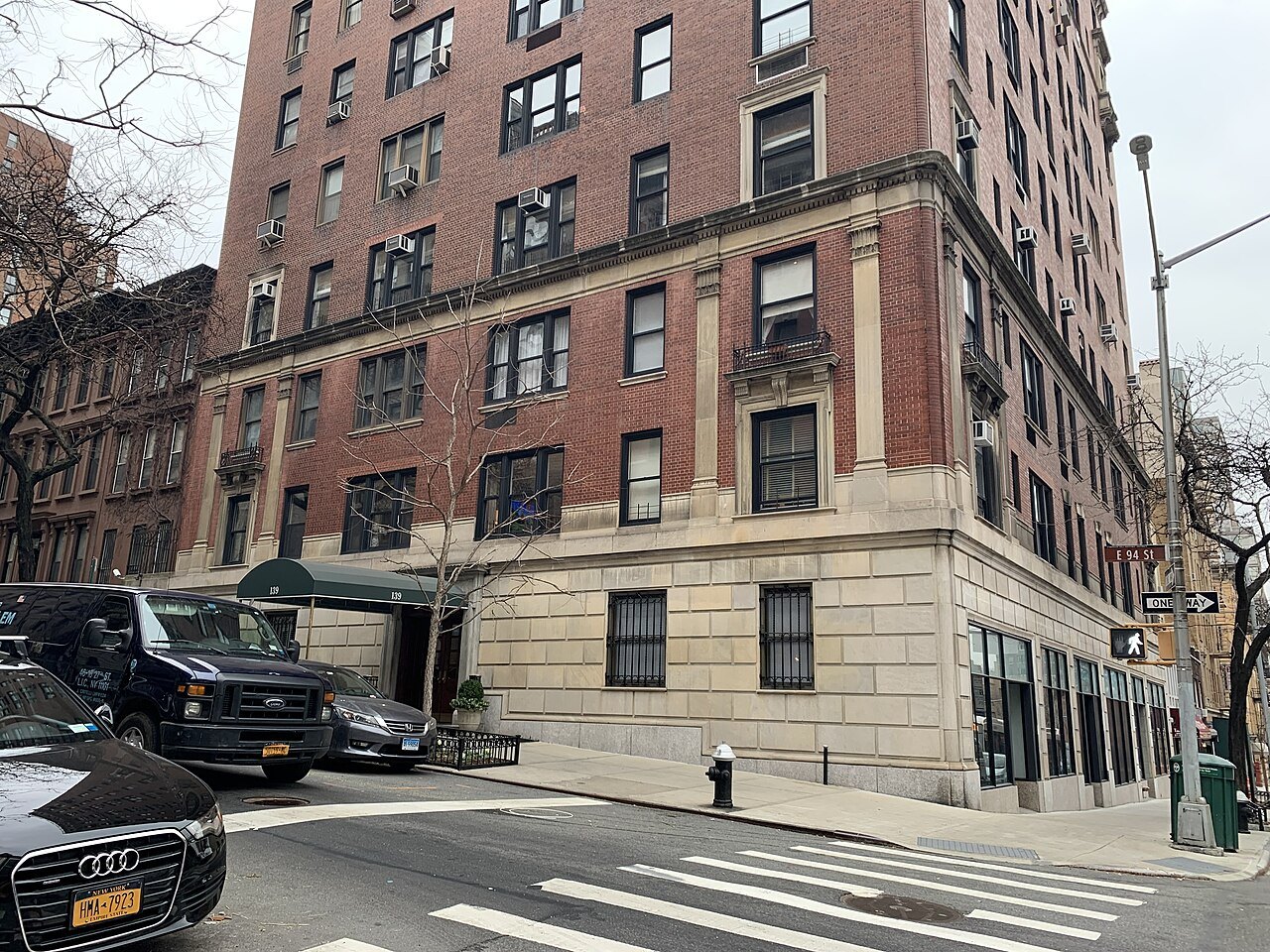
A brick apartment house on the corner of East 94th Street and Lexington AvenueDeansfa, Wikimedia Commons, CC BY-SA 4.0