Home · Sights · The Chrysler Building
What you are looking at01
The Chrysler Building
Lexington Ave · E 42 St
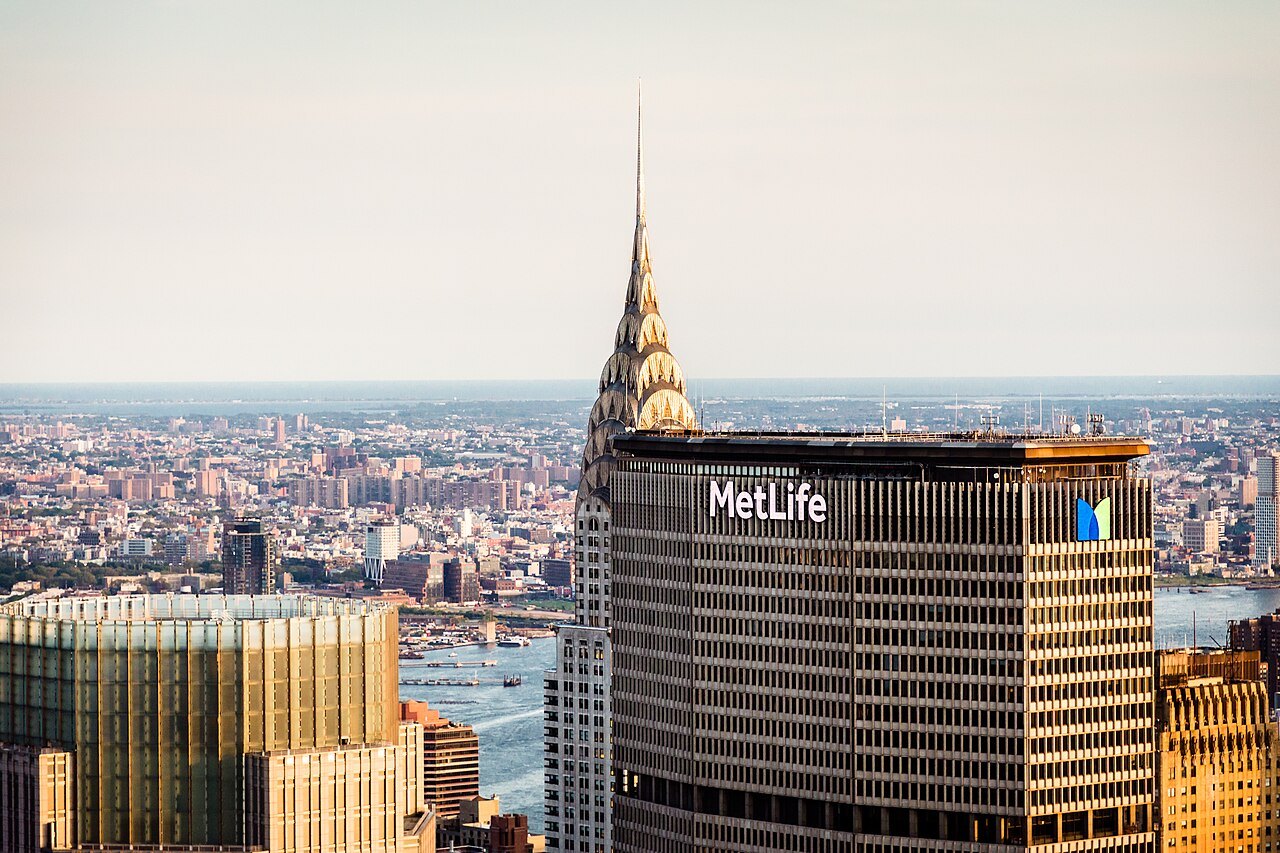
- 1The crownArches of stainless steel stepped in a sunburst, pierced with triangular windows like the spokes of a wheel.
- 2The needleThe spire assembled inside the building and raised through the roof in October 1929.
- 3The eaglesSteel eagle heads leaning out from the corners of the 61st floor, high over Lexington Avenue.
- 4The hood ornamentsWinged radiator caps at the corners of the 31st floor, above a frieze of hubcaps and fenders.
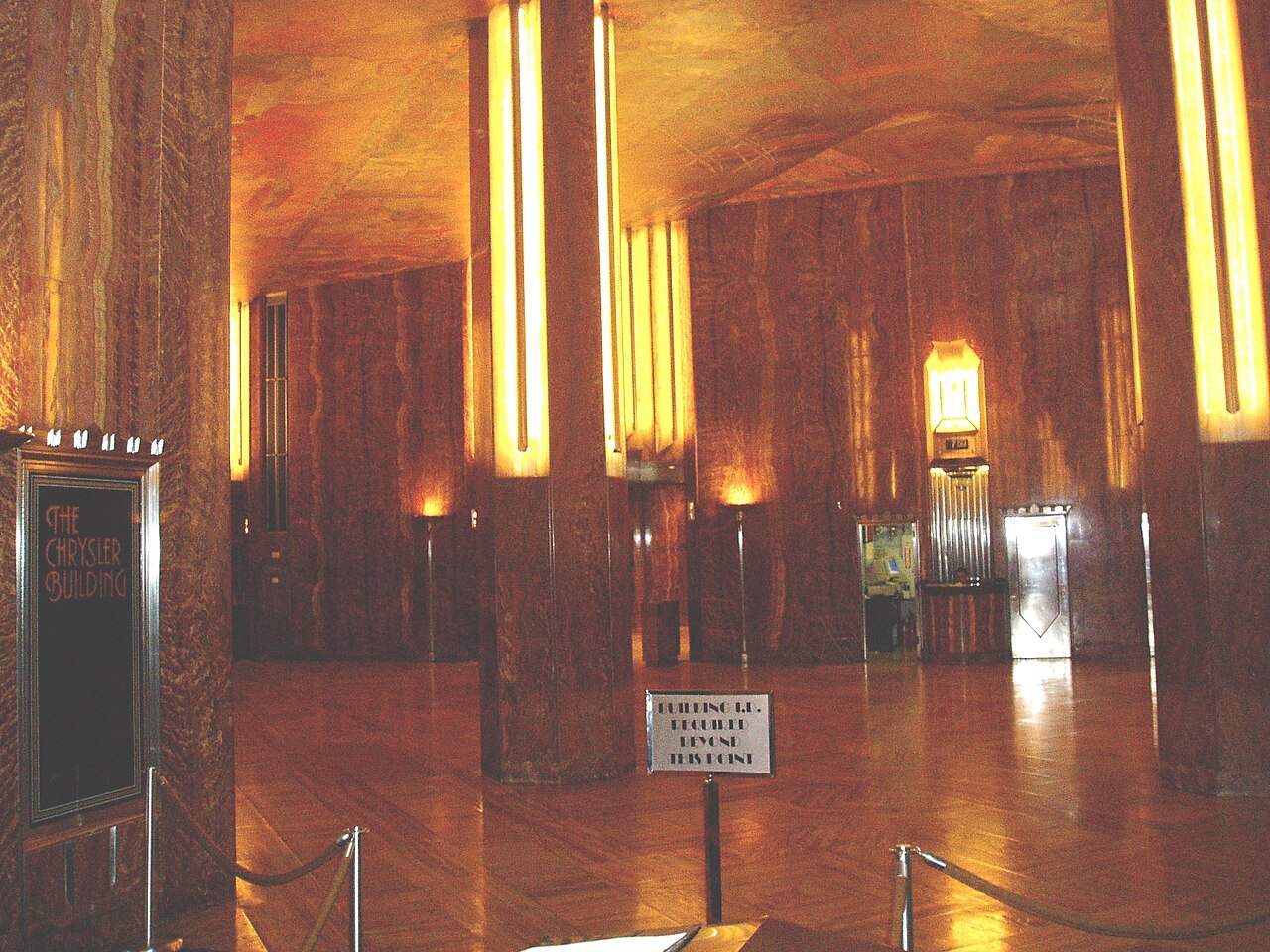
- 5The lobbyA triangular Art Deco hall of marble and steel, under a ceiling mural of transport and human endeavor.
The sight in full02
Reading the place
Why it matters
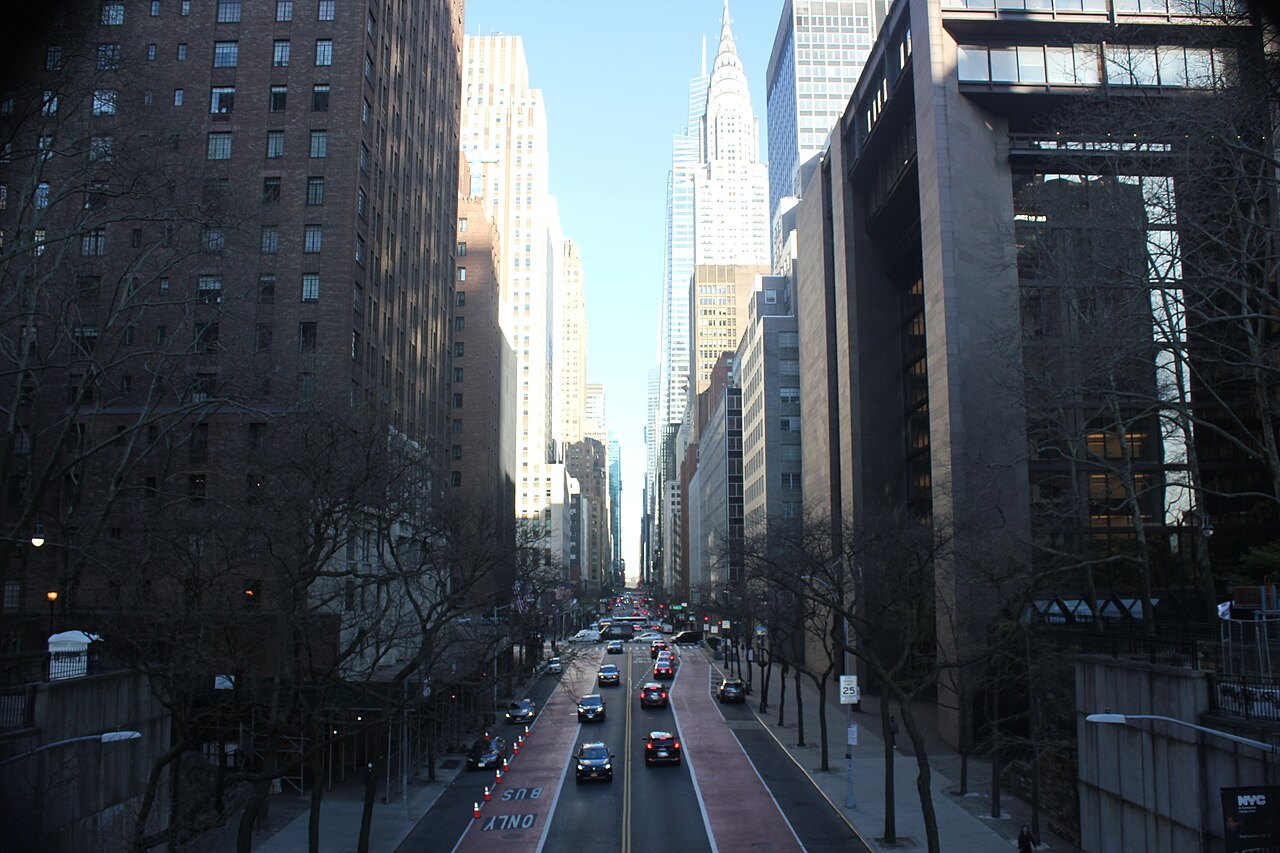
The Chrysler Building stands at the corner of 42nd Street and Lexington Avenue, one block east of Grand Central, and its crown is one of the few shapes on the skyline that everyone can name. It is one of forty-one buildings in Manhattan with a ZIP code of its own. It is 1,046 feet tall, the tallest brick building with a steel frame in the world, and when it was finished in 1930 it was the world's first supertall building and the tallest building of any kind, a title it held for eleven months before the Empire State Building overtook it.
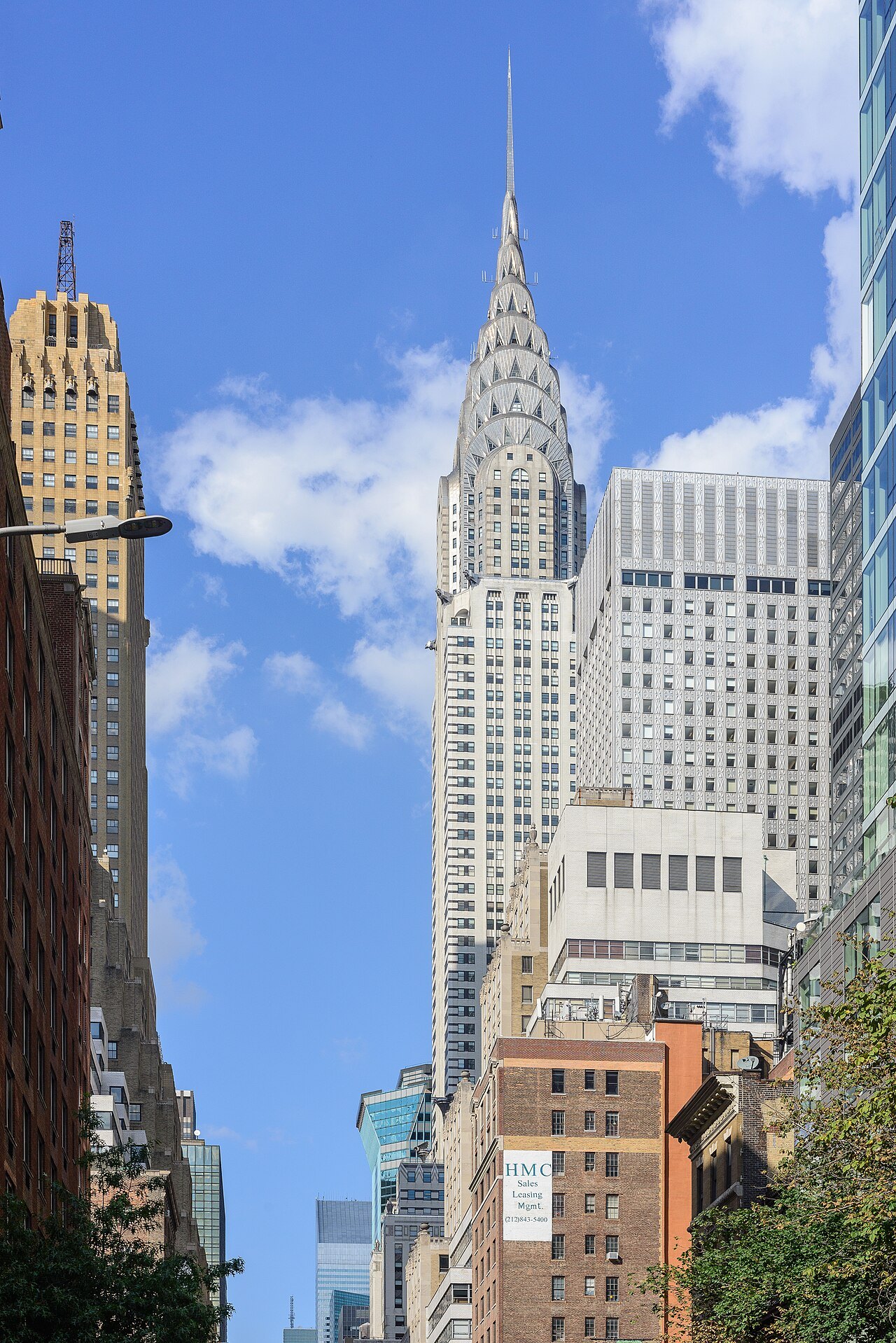
It was designed by the architect William Van Alen in the Art Deco style and named for Walter Chrysler, the head of the Chrysler Corporation, who paid for it himself as an investment for his children. It was never the company's headquarters, which stayed in Detroit. What sets it apart is its top: a crown of stainless steel that catches the sun by day and glows at night, visible from almost anywhere in Midtown.
The race for the sky
The Chrysler was built in the middle of a contest. Three towers were racing to be the tallest in the world: the Chrysler, the Empire State Building, and 40 Wall Street downtown, whose architect, H. Craig Severance, had been Van Alen's partner. The two had complemented each other, Van Alen the imaginative designer and Severance the shrewd businessman, until their partnership dissolved acrimoniously, with lawsuits over the firm's clients and money that lasted more than a year. Van Alen's answer was a trick. He had a spire of stainless steel, the needle, assembled secretly inside the frame of the building, so that Severance would not know how tall the Chrysler would finally be.
On October 23, 1929, a week after the Chrysler passed the height of the Woolworth Building and one day before the Wall Street Crash, the spire was assembled, and within ninety minutes its pieces were raised through the top of the building and riveted in place, lifting the tower to 1,046 feet. It was the tallest building in the world, overtaking 40 Wall Street at a stroke, until the Empire State Building opened in 1931.
What you actually see
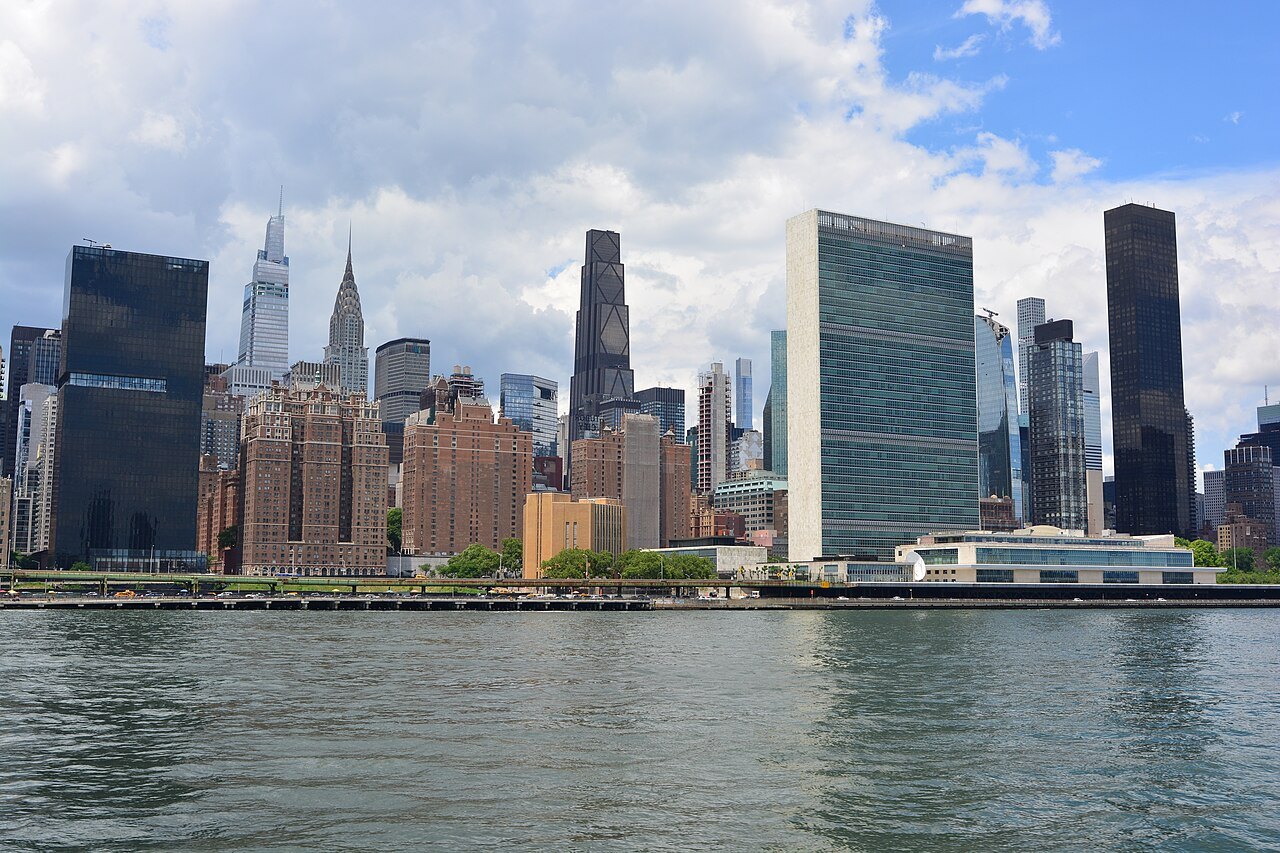
The crown and spire are clad in Nirosta, a bright stainless steel developed by Krupp in Germany; the Chrysler was the first American project to use it, and stainless steel producers used the building to judge how durable the metal was in architecture. The crown rises in a series of arches that step up and narrow like a sunburst, ribbed and riveted, each pierced by triangular windows, and the effect is often compared to the spokes of a wheel. At night the triangles are outlined in light.
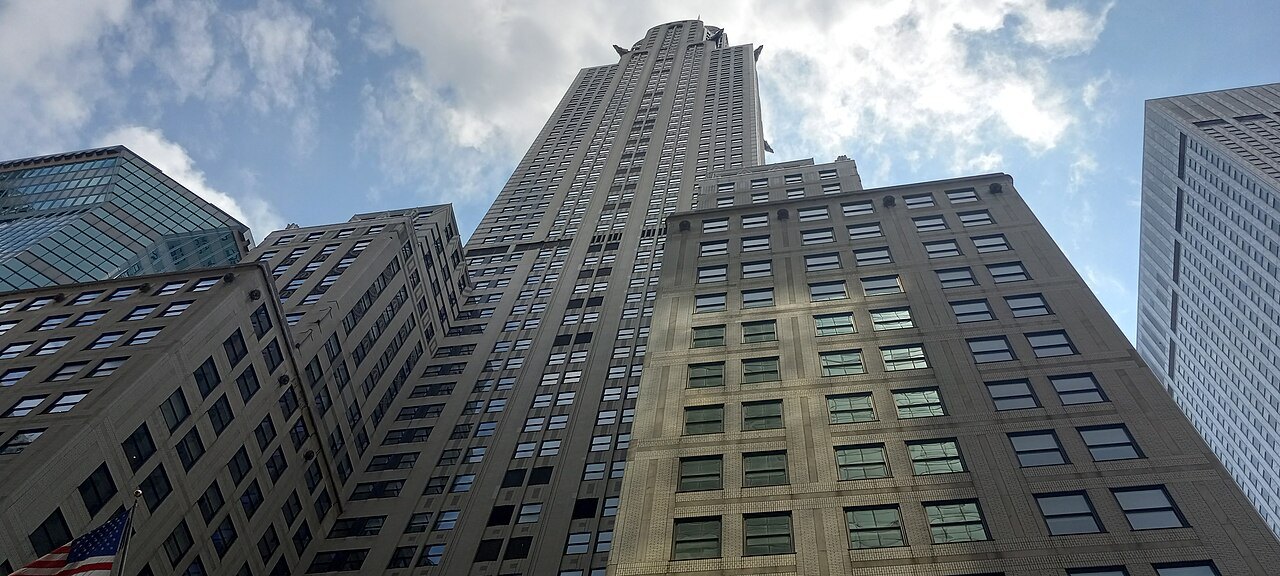
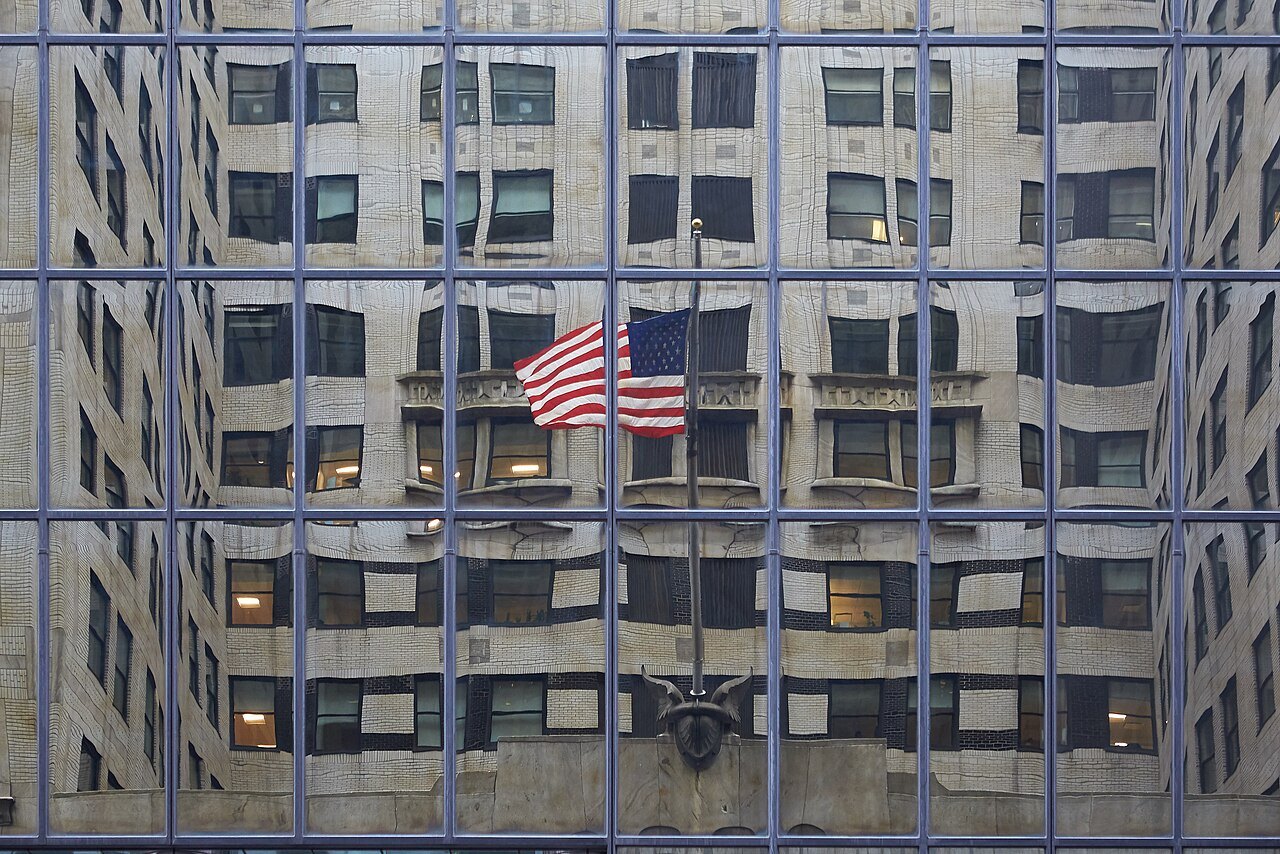
Lower down, the ornament is taken from Chrysler's cars. At the corners of the 31st floor are enormous winged radiator caps, modeled on the hood ornaments of the 1929 Chrysler and shaped like the winged helmet of Mercury, above a frieze of hubcaps and fenders. At the 61st floor, as a nod to the national bird, steel eagle heads lean out from the corners over the street like the gargoyles of a Gothic cathedral. About fifty metal ornaments project from the corners on five floors in all.
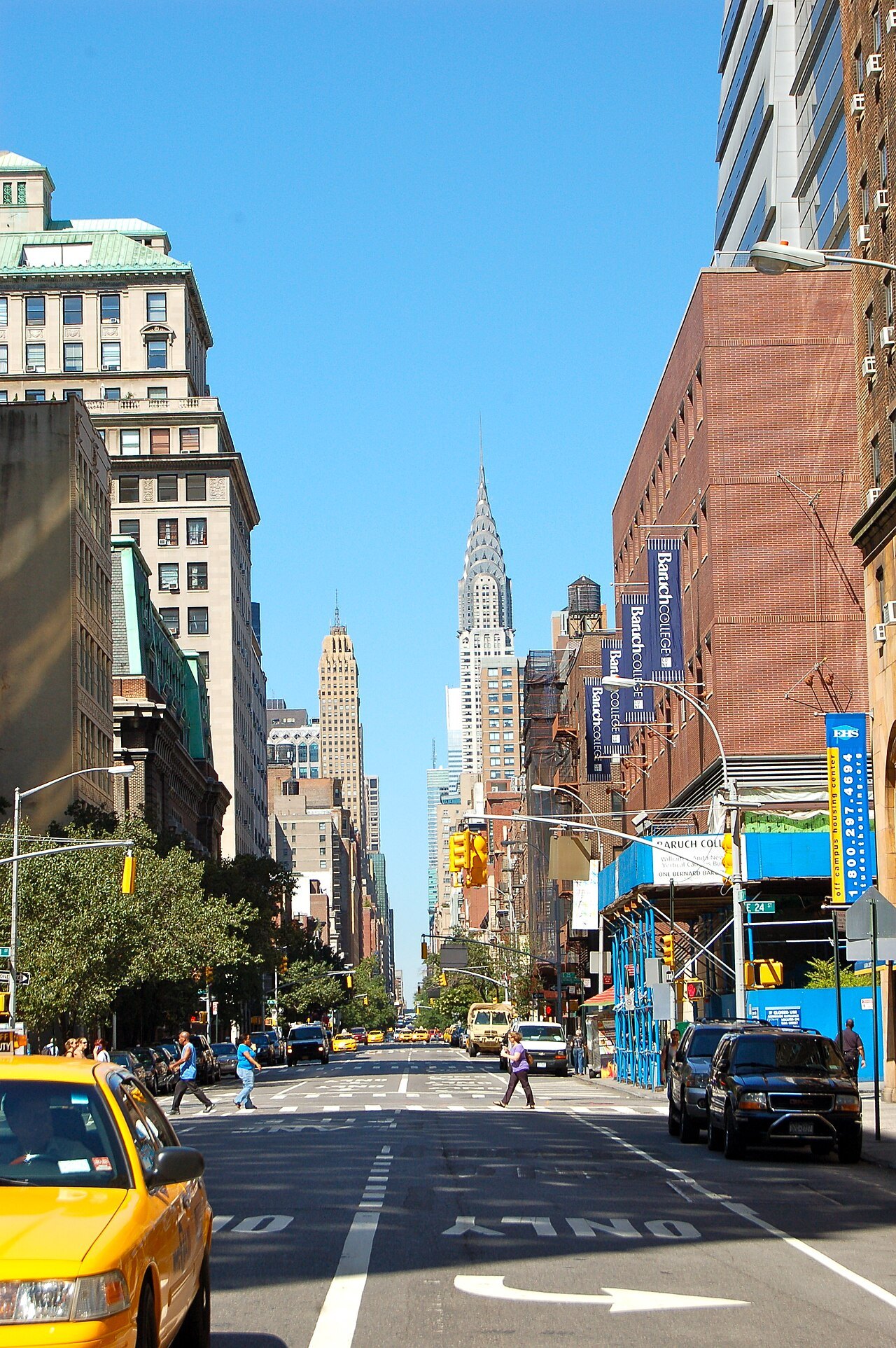
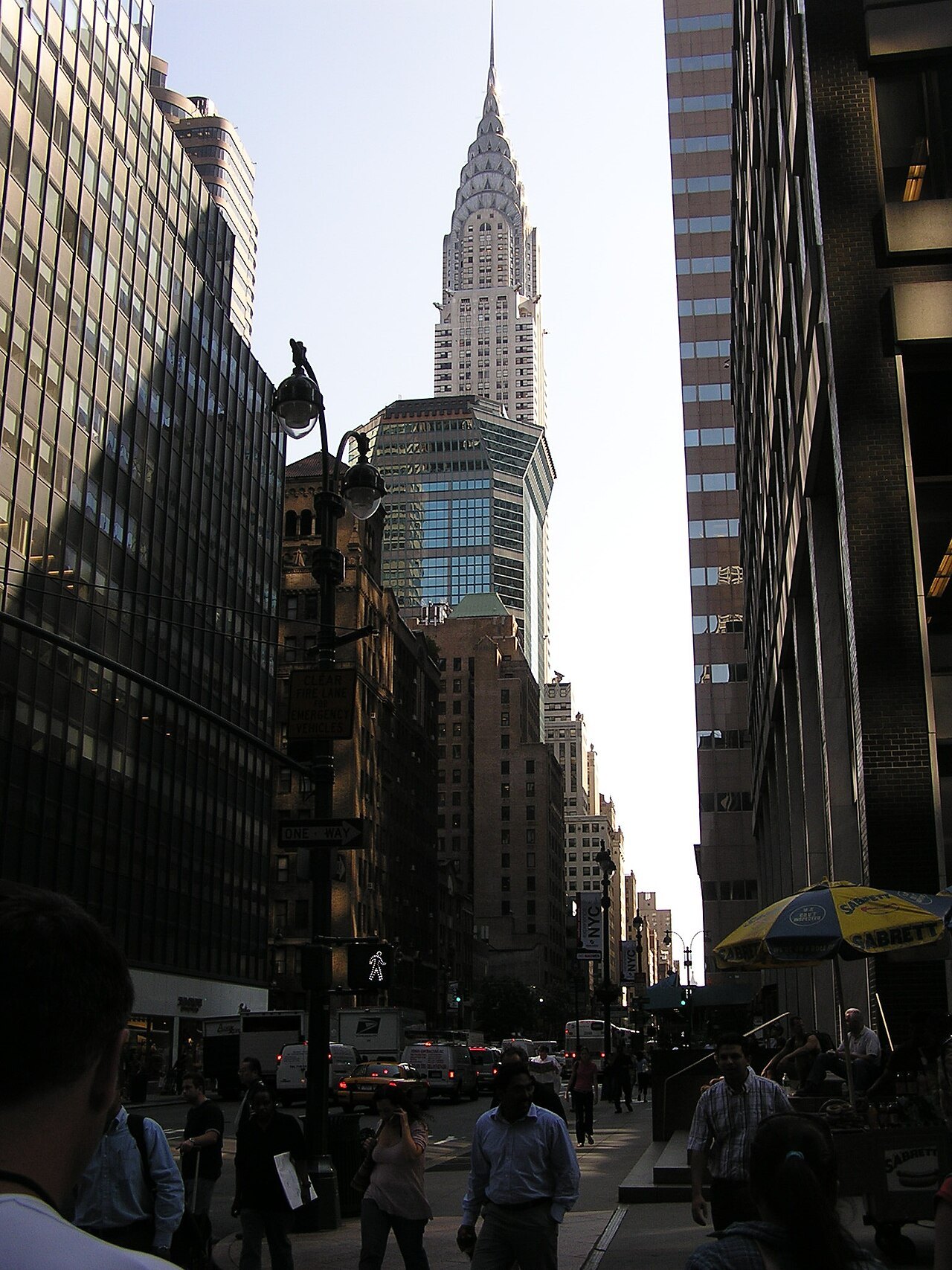
The best view from the street is from 42nd Street a block or two west, beside Grand Central, or from the corner of Lexington Avenue and 44th Street. From higher up, the decks of Summit One Vanderbilt and the Top of the Rock look straight across at the crown.
The lobby
The lobby is triangular, with entrances on Lexington Avenue, 42nd Street and 43rd Street, and it is one of the great Art Deco rooms of the city. Its walls are marble, bands of yellow Siena travertine mark the paths across the floor, and the doors and storefronts are framed in the same steel as the crown. The ceiling carries a mural 110 feet by 67 feet, Transport and Human Endeavor, designed by Edward Trumbull, which was cleaned and restored in 1999.
Van Alen first planned four large columns in the lobby; Chrysler had them removed because they made the room look cramped. The elevator doors and cabs are works of wood marquetry, each cab with its own combination of veneers, and the critic Vincent Curcio called them among the most beautiful small enclosed spaces in New York. Lighting in the lobby is dim, which makes the stone and metal glow.
How to visit
There is no observation deck. The building had one, called Celestial, on the 71st floor from its opening until 1945, and the floors above it are mostly landings for the stairs up into the spire. By the 2000s the lobby was the only part of the building visitors could enter, and access to it depends on the building's owners; if the doors stand open, step inside, keep your voice down and let the office workers through.
The outside is always free to look at. Several subway lines stop at Grand Central–42nd Street, a block away, and the Chrysler is the first stop on the walk along 42nd Street described on the homepage. The views suggests the best decks for seeing the crown from above.
Nearby
Grand Central Terminal is a block west. Walk on along 42nd Street to the New York Public Library and Bryant Park, or north up Fifth Avenue to Rockefeller Center.
Where to go next03
Nearby
- Nearby · Park Ave · E 42 StGrand Central TerminalA Beaux-Arts railroad terminal of 1913 whose Main Concourse is one of the great rooms of the city: a painted sky overhead, a brass clock above the information booth, and still, every day, commuters running for the train.Read the page →
- Nearby · Fifth Ave · E 41 StThe New York Public Library and Bryant ParkThe marble library of 1911 on the site of the old Croton Reservoir, guarded by two stone lions a mayor named Patience and Fortitude, with a reading room nearly three hundred feet long and a green park at its back door.Read the page →
- Nearby · Fifth Ave · W 48–51 StRockefeller Center and St. Patrick's CathedralThe Art Deco city within the city that the Rockefellers built in the Depression, from Prometheus over the skating rink to the Top of the Rock, and across Fifth Avenue the white Gothic cathedral of 1879.Read the page →