What you are looking at01
The Met Cloisters
Fort Tryon Park
- 1The Cuxa CloisterThe museum's centerpiece, from a Benedictine abbey founded in 878 on Mount Canigou in the Pyrenees.
- 2The Unicorn TapestriesHangings designed in Paris and woven in the Low Countries around 1495 to 1505.
- 3The Fuentidueña ApseA Romanesque half-domed apse from a church in Segovia, the largest room in the museum.
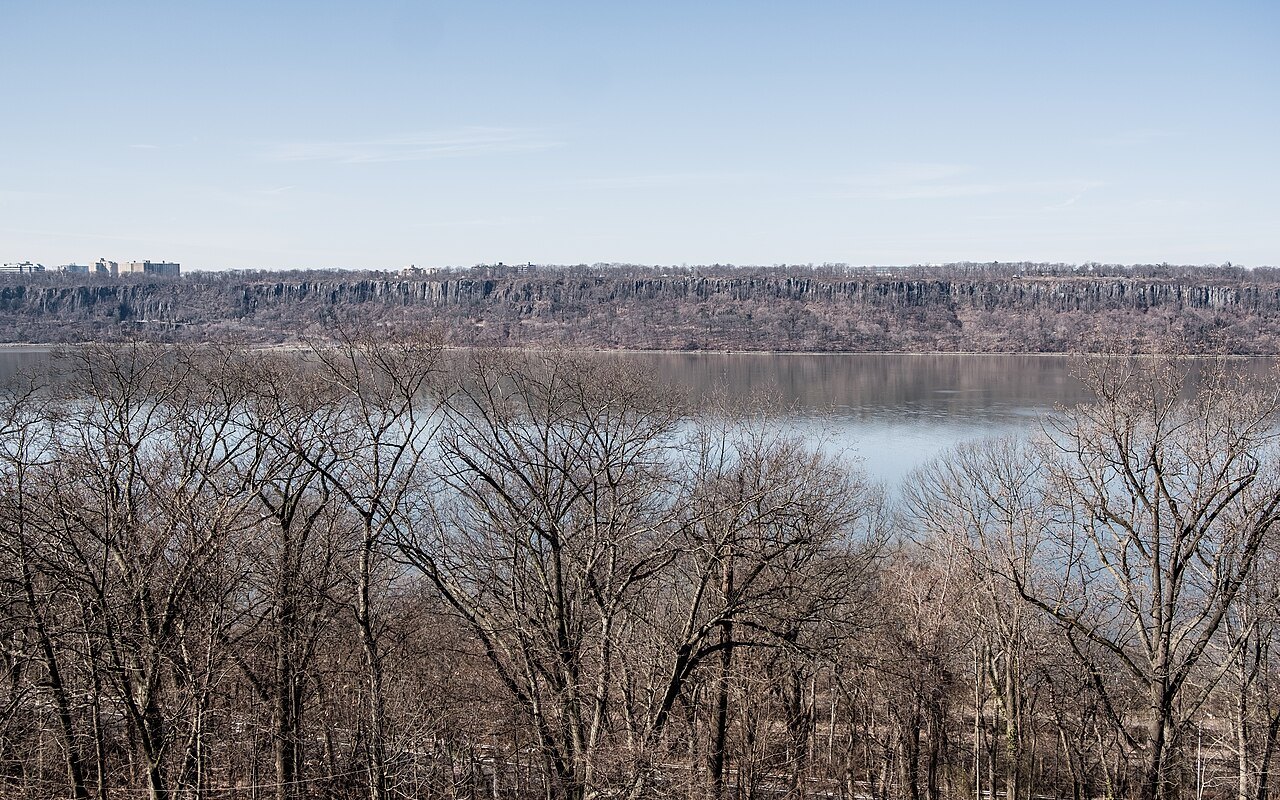
- 4The Bonnefont CloisterA medieval garden with raised beds and a wellhead, looking out over the Hudson River.
- 5The Gothic ChapelA ground-floor chapel built to show the museum's stained glass and tomb sculpture.
- 6The Belles HeuresThe Limbourg Brothers' book of hours, one of the finest illuminated manuscripts to survive.
The sight in full02
Reading the place
Why it matters
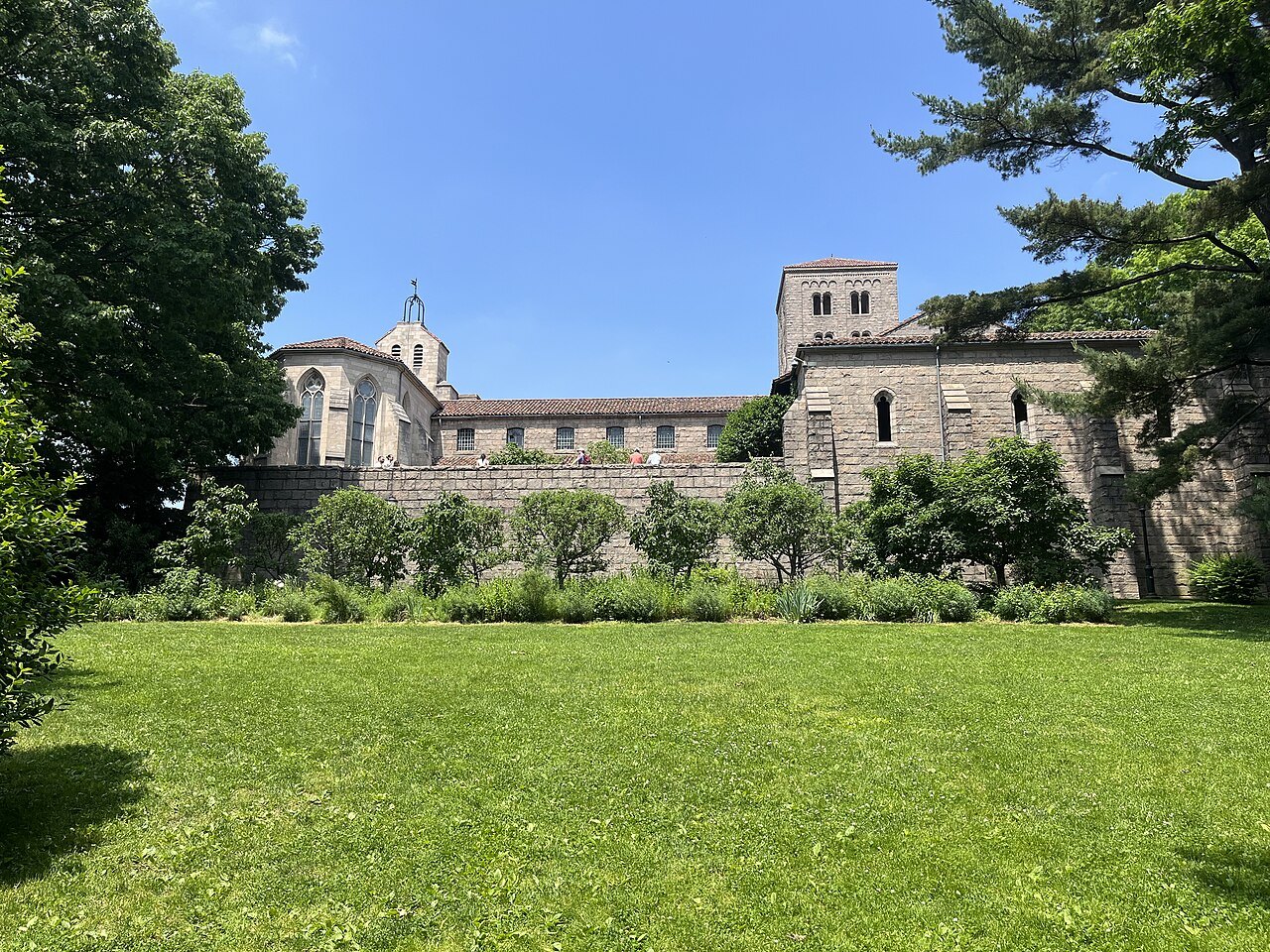
The Cloisters, which the Metropolitan Museum of Art now calls the Met Cloisters, is the Met's second home, a museum of European medieval art and architecture on a steep hill in Fort Tryon Park, between Washington Heights and Inwood at the northern end of Manhattan. It concentrates on the Romanesque and Gothic periods and holds about 5,000 works, all European and mostly from the twelfth to the fifteenth centuries.
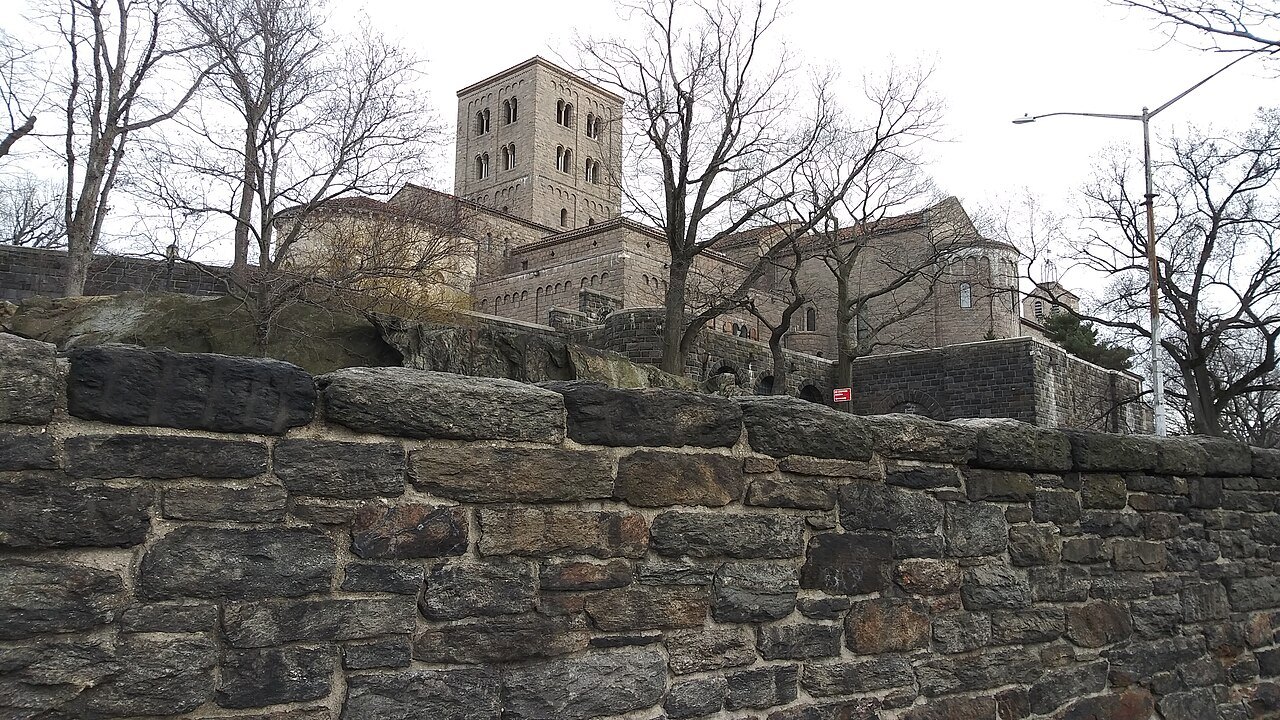
What makes it unlike any other museum in the city is that the art is shown in rooms built from medieval buildings themselves. Its heart is four cloisters, the Cuxa, Saint-Guilhem, Bonnefont and Trie, taken apart in France, shipped across the Atlantic and rebuilt here, with chapels and galleries around them. Capitals, doorways, windows and stained glass are set into the walls rather than into cases, and the effect, as it was described when it opened, is of a collection shown informally in a picturesque setting. It is one of the quietest and most beautiful places in New York, and one of the least crowded of its great museums.
How it came to be
The collection began with George Grey Barnard, an American sculptor who lived in France in the early twentieth century and, short of money, began dealing in medieval objects. He was drawn to the abbeys and churches of the monastic orders, whose stones had often been carried off and reused by local people after centuries of war and revolution, and he bought whole architectural pieces from farmers. He claimed to have found one knight's tomb effigy lying face down as a bridge over a stream. By 1914 he had opened a gallery of his finds in Manhattan.
In 1925, in one of his recurring money troubles, Barnard sold the collection to John D. Rockefeller Jr., who gave it to the Met. Rockefeller bought the hilltop site in 1930, gave it to the museum in 1931, and hired Frederick Law Olmsted Jr., son of one of the designers of Central Park, and the Olmsted Brothers to lay out Fort Tryon Park around it. The architect Charles Collens designed the building and its gardens, drawing on pieces in Barnard's collection, and the stones of five monasteries were reassembled into one whole. The Cloisters opened on May 10, 1938. Rockefeller also bought and preserved the clifftops across the river in 1933, to preserve that land from development.
What you actually see
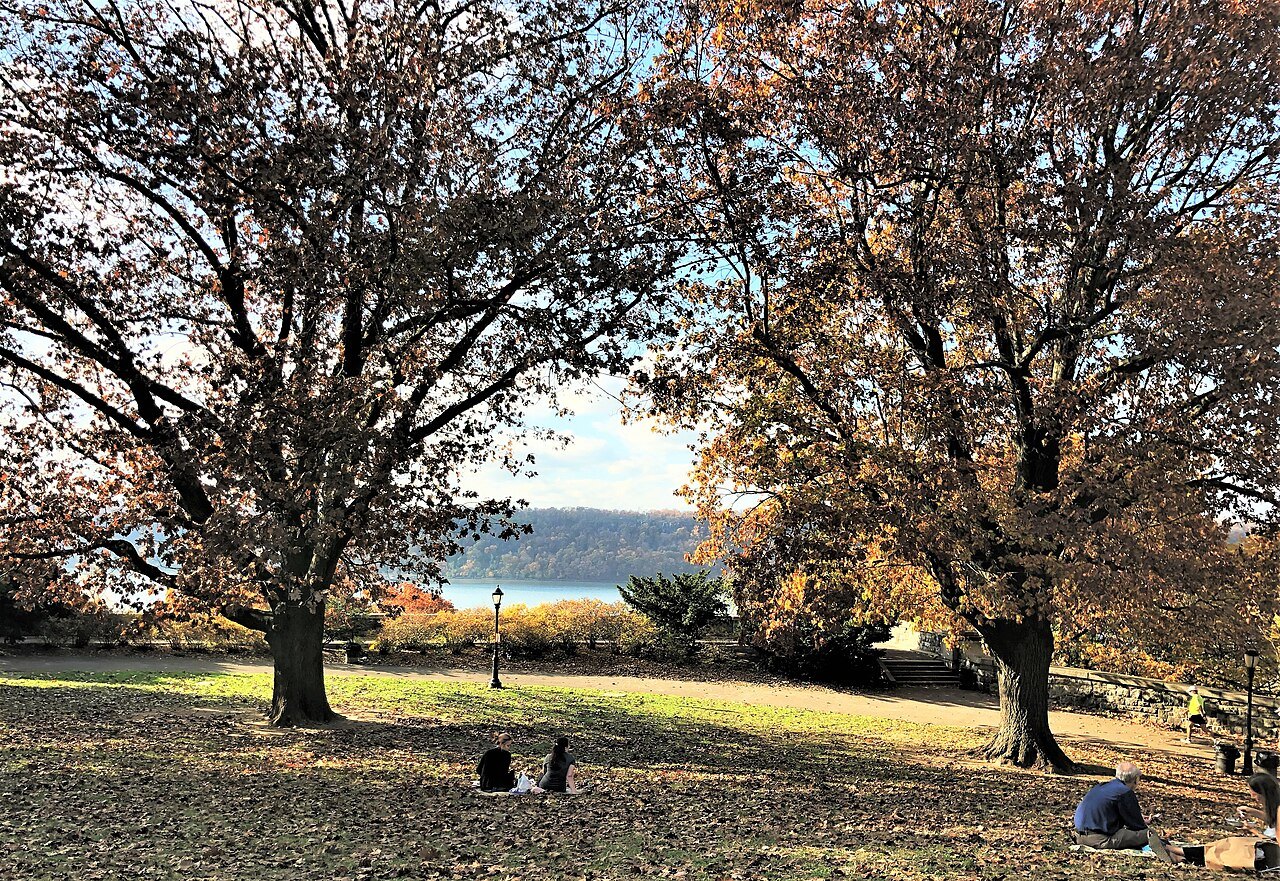
The museum sits on two levels. On the south side of the main level is the Cuxa Cloister, the centerpiece of the whole building, from the Benedictine abbey of Sant Miquel de Cuixà on Mount Canigou in the Pyrenees of northern Catalonia, founded in 878. Walk its arcades around the garden and you are as close to the inside of a working Romanesque monastery as you can come on this side of the Atlantic.
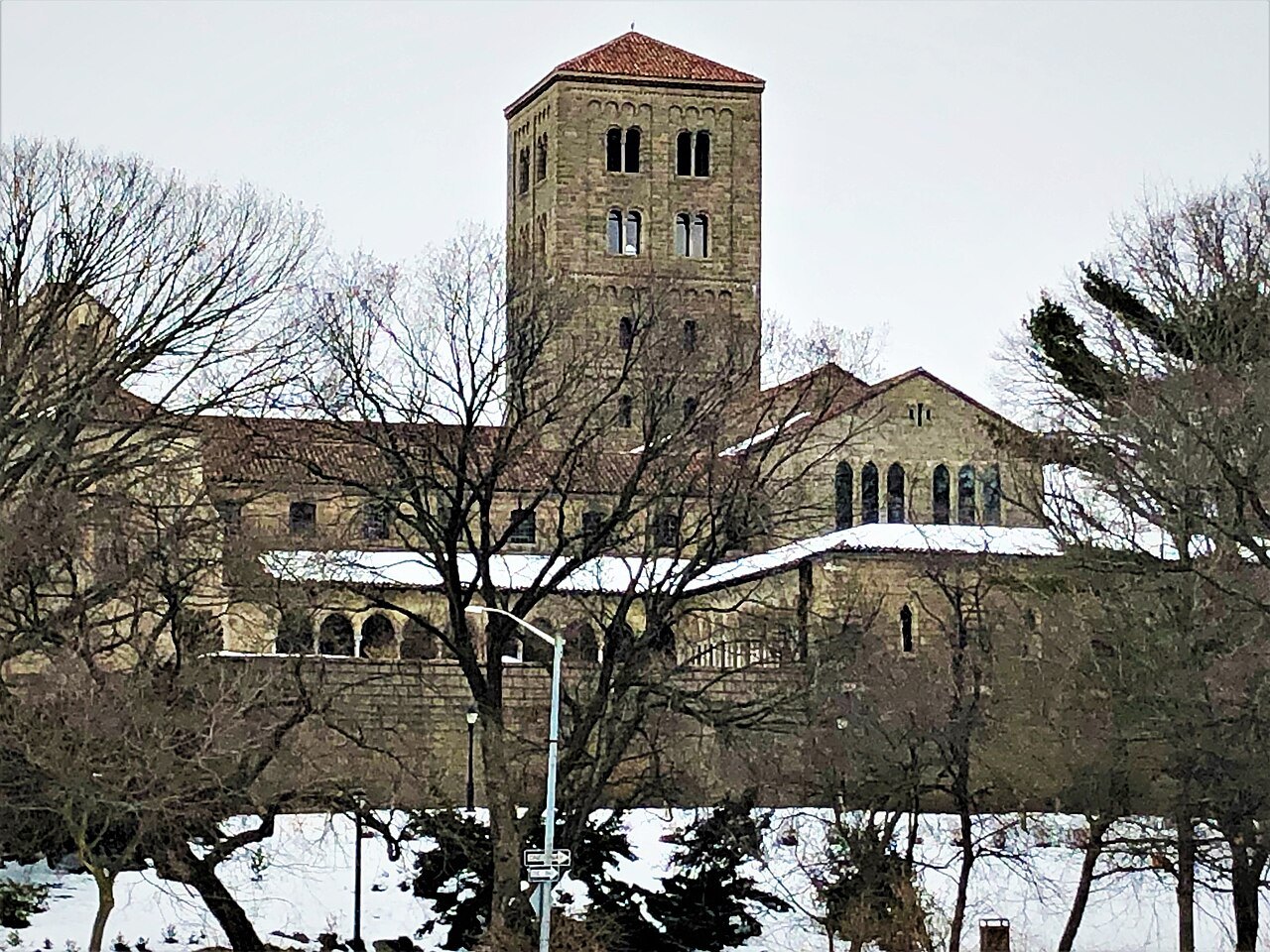
The largest room is the Fuentidueña Chapel, entered through a broad oak door flanked by carvings of leaping animals. Its centerpiece is the Fuentidueña Apse, a semicircular Romanesque recess built around 1175 to 1200 for a church at Fuentidueña in Segovia, with a barrel vault ending in a half-dome and a crucifix of the twelfth century hanging within it.
The Unicorn Tapestries have a room of their own, entered through an early sixteenth-century door carved with unicorns. The large, brilliantly colored hangings were designed in Paris and woven in Brussels or Liège around 1495 to 1505; Rockefeller bought the set in 1922, and at one point in their long history the French army used them to cover potatoes against frost. Nearby hang the Mérode Altarpiece, an Early Netherlandish altarpiece of the Annunciation in three panels from the workshop of Robert Campin, and the Belles Heures of the Limbourg Brothers, one of the most richly decorated books of hours in existence.
The gardens
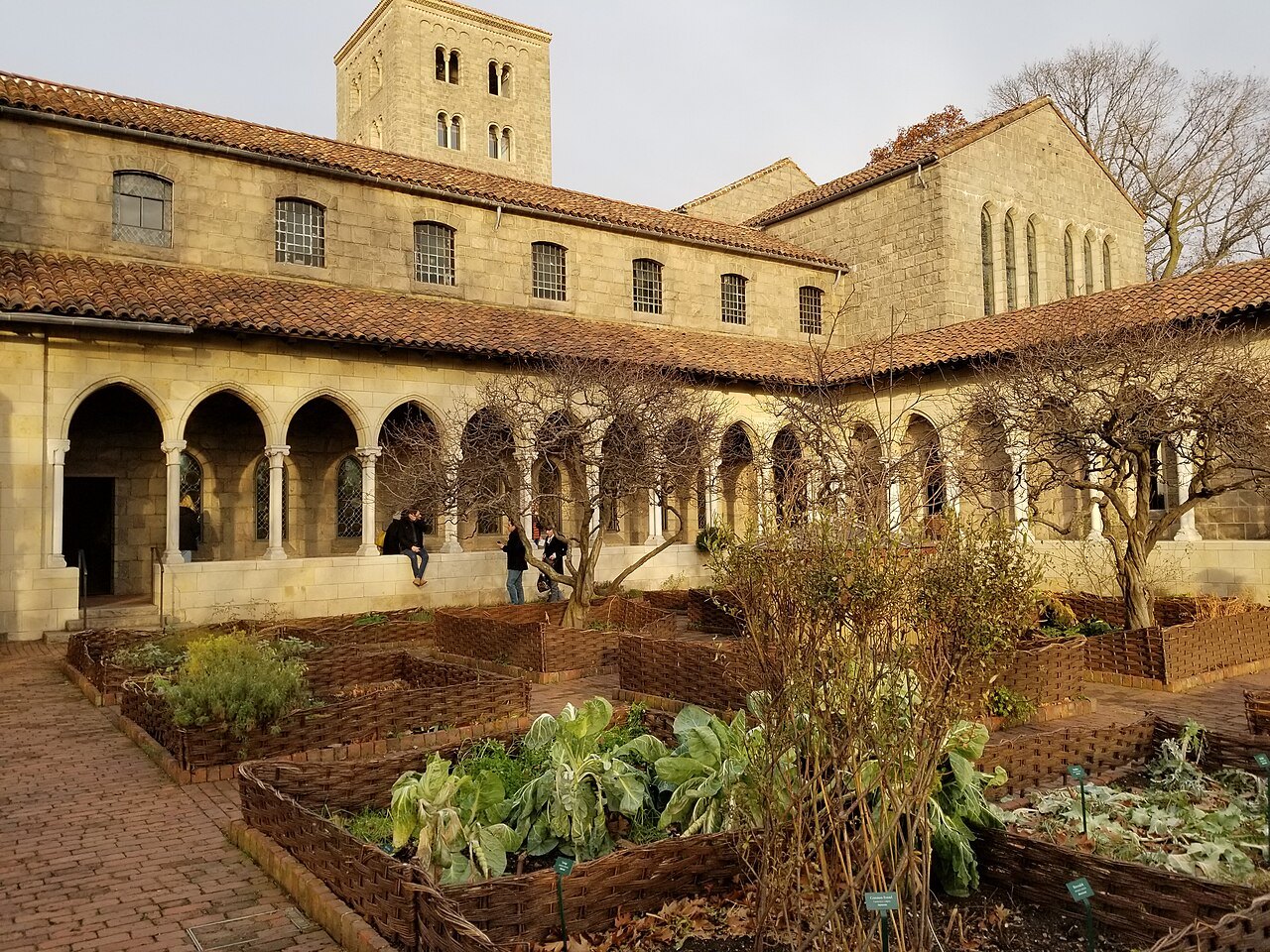
On the upper level, the Bonnefont Cloister, mostly from a Cistercian abbey of the late twelfth century southwest of Toulouse, surrounds a garden laid out with features of the medieval period: raised flower beds, wattle fences, a medlar tree of the kind that grows in the Unicorn Tapestries, and a wellhead that stood at Bonnefont in the twelfth century. From its terrace you look out over the Hudson River to the cliffs of the Palisades.
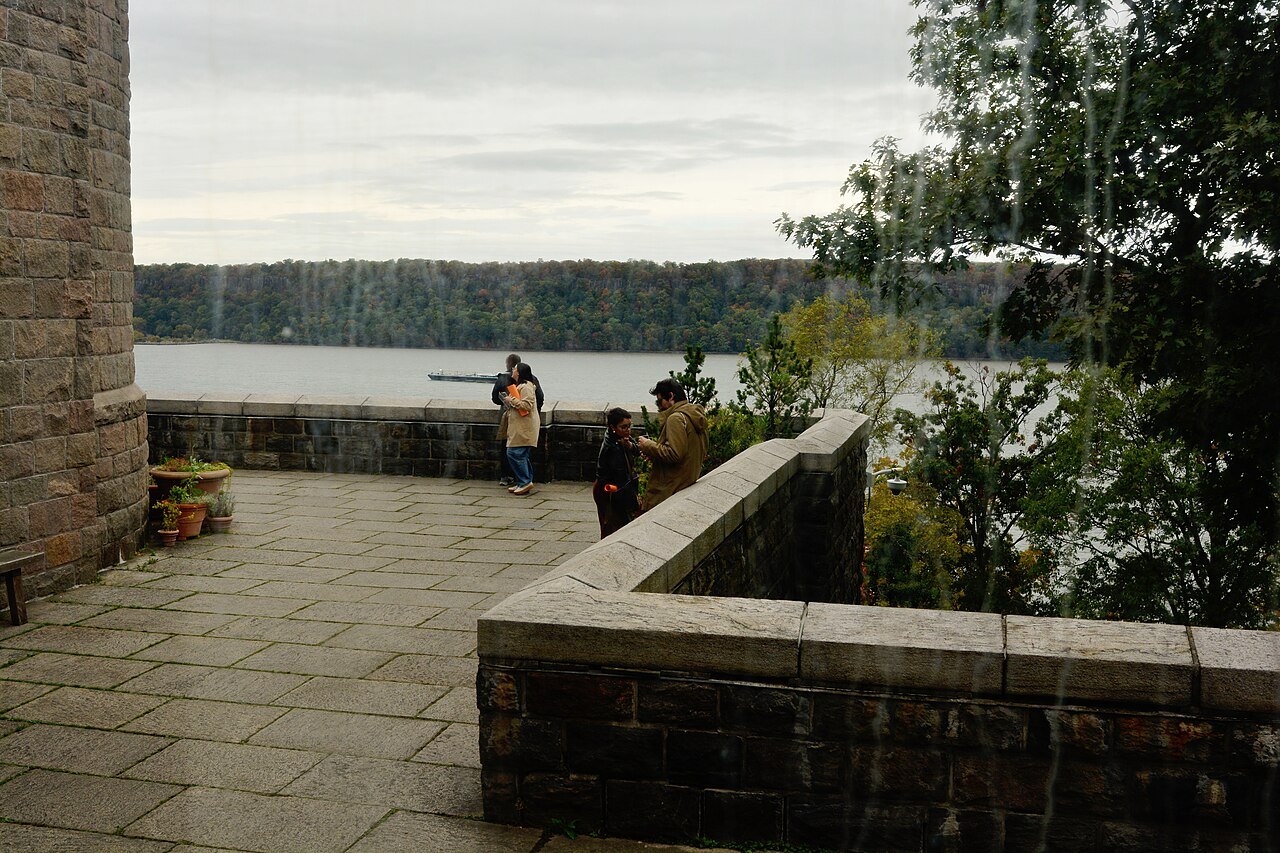
The Saint-Guilhem and Trie cloisters, both given modern roofs, shelter carved capitals from the Benedictine monastery of Saint-Guilhem-le-Désert and elsewhere. On the ground level the Gothic Chapel was built to show the museum's stained glass, some three hundred panels mostly from the thirteenth to the early sixteenth centuries, and its tomb effigies.
How to visit
The Cloisters is part of the Met, and the same ticket covers both: every ticket includes same-day entry to the museum on Fifth Avenue as well, so you can see both in one long day. New York State residents and students from New York, New Jersey and Connecticut pay what they wish, and advance tickets are not required; check the museum's site for days and hours before you make the trip. The approach to the main entrance is cobbled and there are about sixty stairs up to the admissions desk, so visitors who need step-free access can ask for the free shuttle near the main entrance.
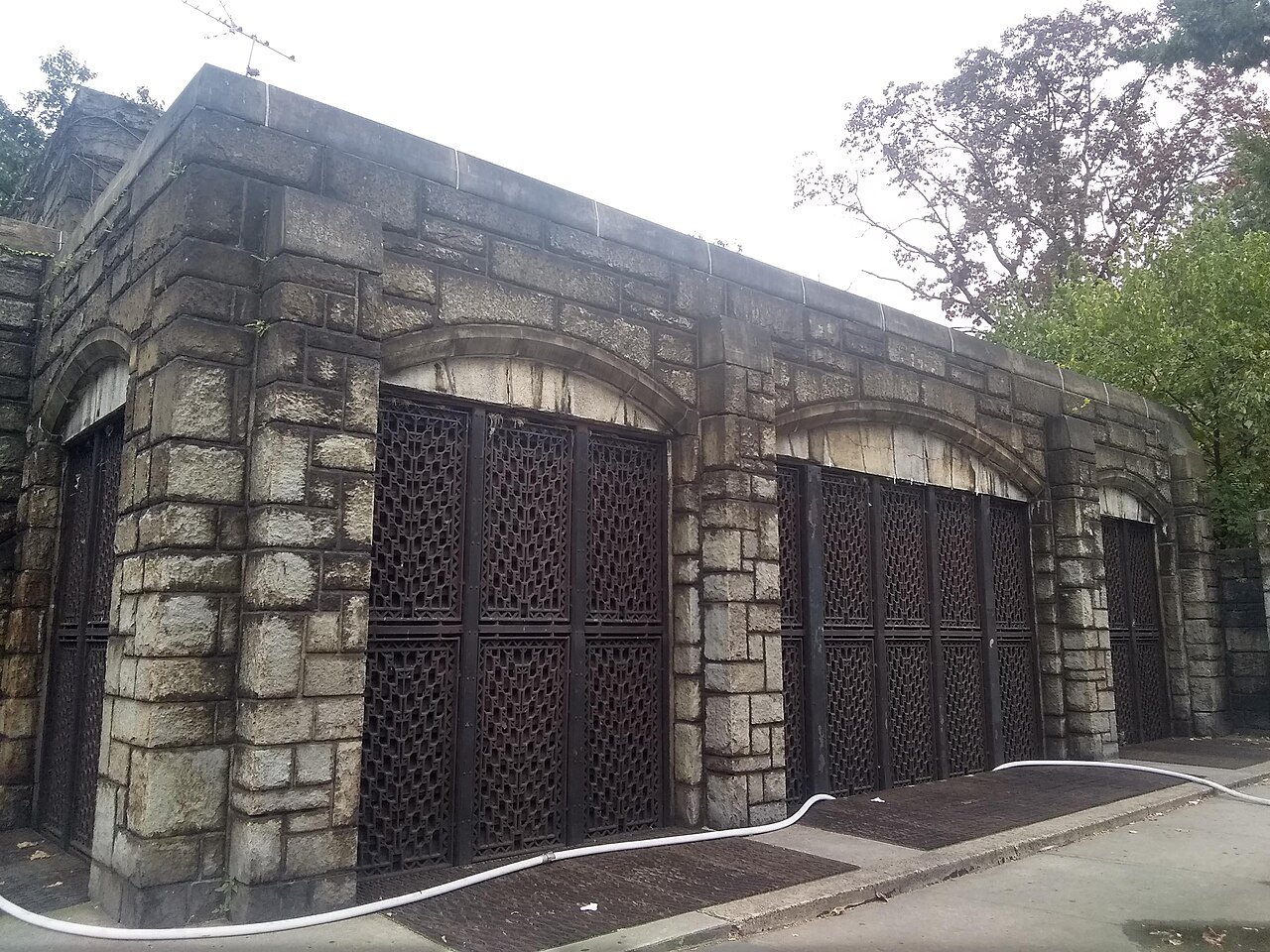
It is a long subway ride north from Midtown to the edge of Fort Tryon Park, followed by a walk uphill through the park itself, which is worth the effort in any season. Getting around covers the route.
Nearby
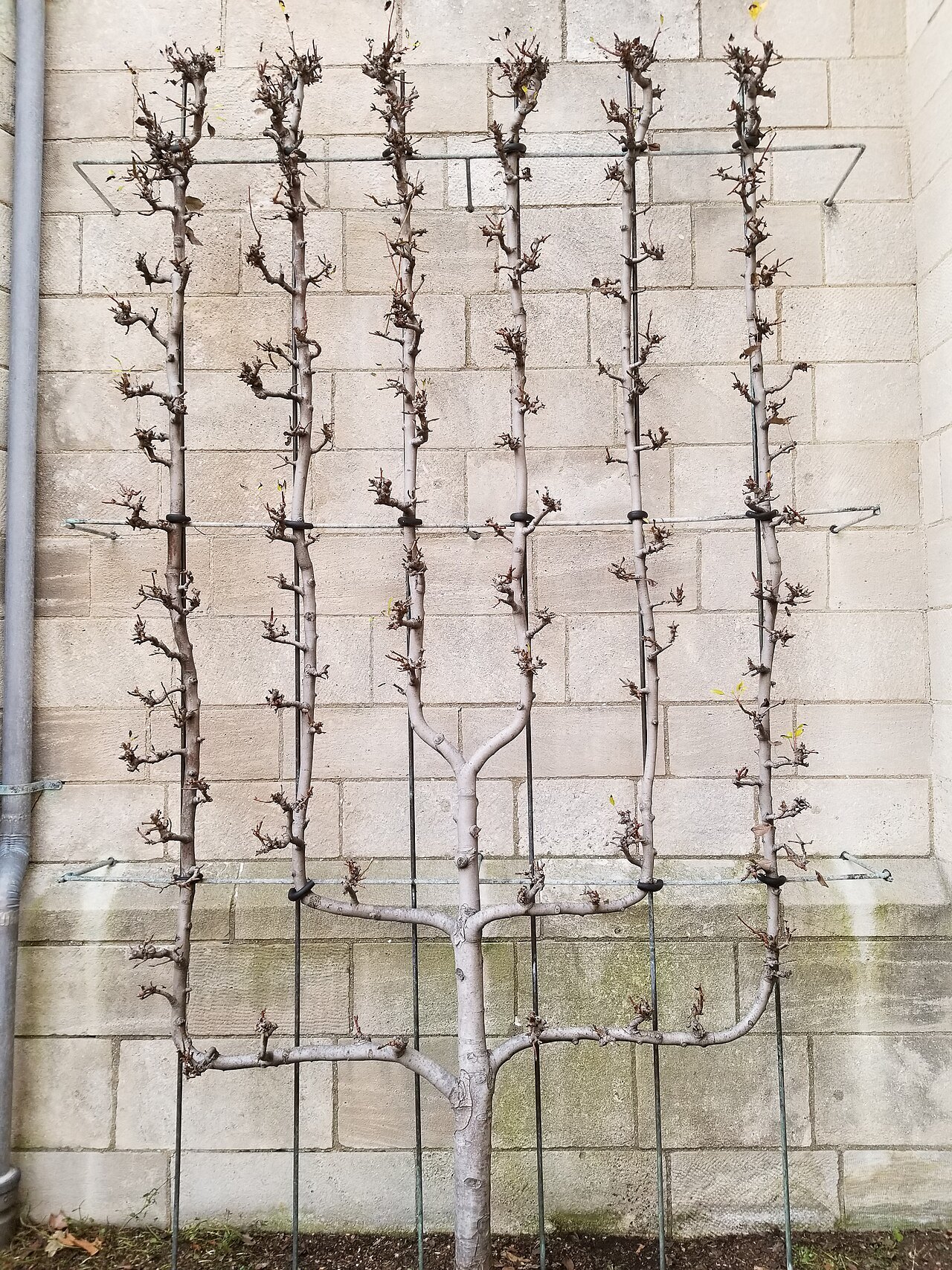
Fort Tryon Park and its gardens surround the museum. Back downtown, the Met's main building stands on the edge of Central Park: see the Metropolitan Museum of Art.
Where to go next03
Nearby
- Nearby · 1000 Fifth AveThe Metropolitan Museum of ArtThe largest art museum in the Americas, almost a quarter of a mile long on the edge of Central Park: an Egyptian temple under glass, a Ming garden court, knights on horseback and five thousand years of painting under one roof.Read the page →
- Nearby · 59 St → 110 StCentral ParkThe 843 acres the grid left open: a landscape built by hand in the 1850s and 1860s to look like nature, with a lake, a terrace, a castle on a rock, and fifty blocks of lawns and woods between the towers.Read the page →
- Nearby · Fifth Ave · E 88–89 StThe GuggenheimFrank Lloyd Wright's white spiral on Museum Mile, finished in 1959 after fifteen years of drawings and quarrels: a ramp that winds six stories up around an open rotunda under a skylight, with the art hung along the curve.Read the page →