Home · Sights · The Brooklyn Bridge
What you are looking at01
The Brooklyn Bridge
Park Row · City Hall
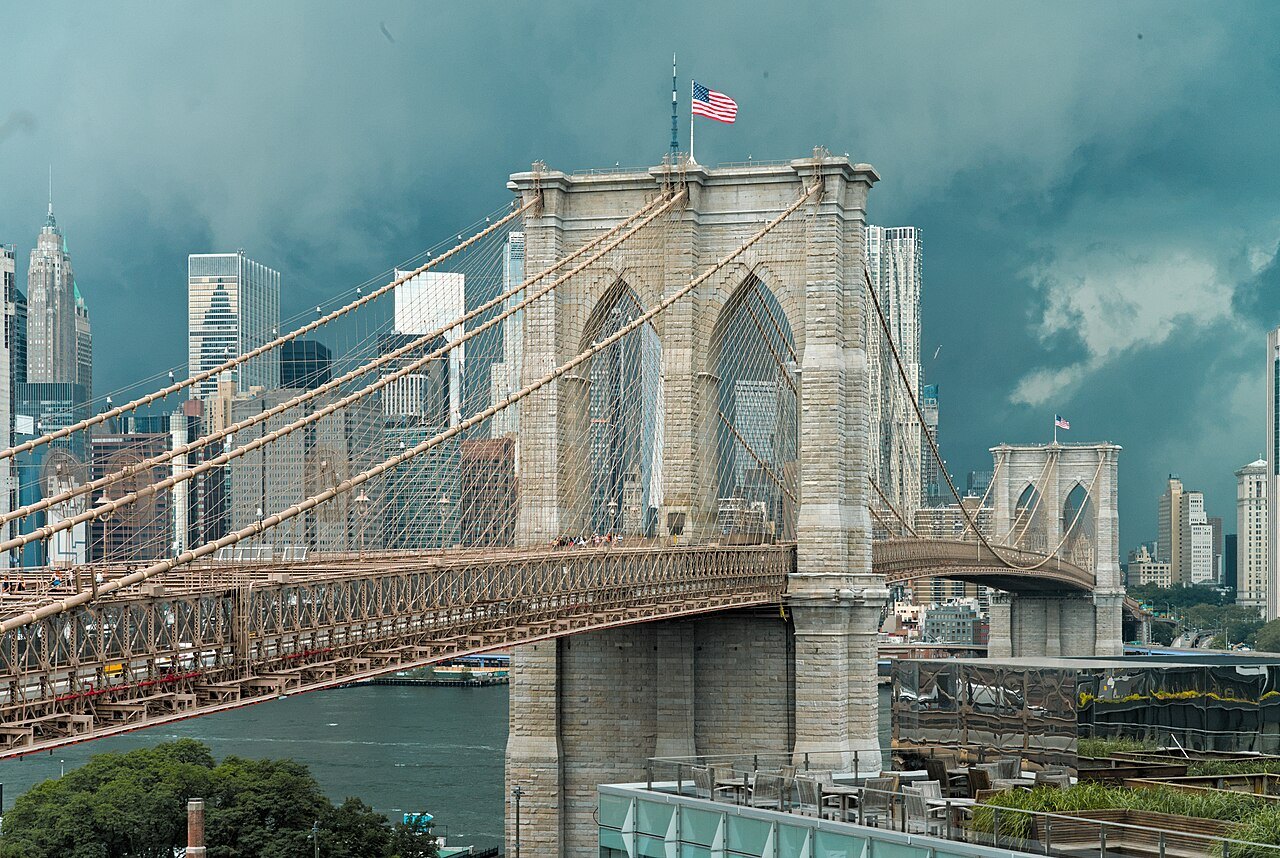
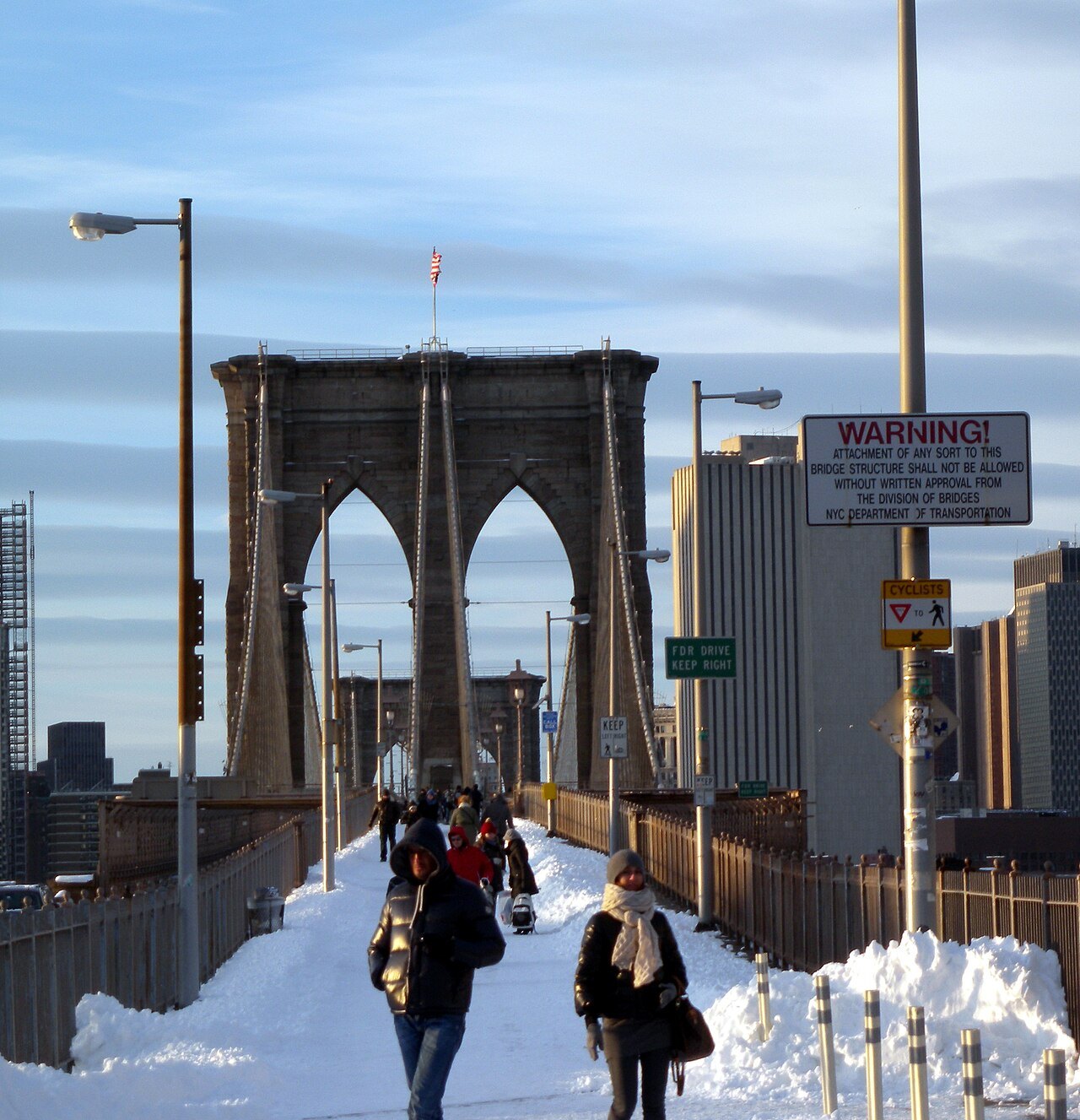
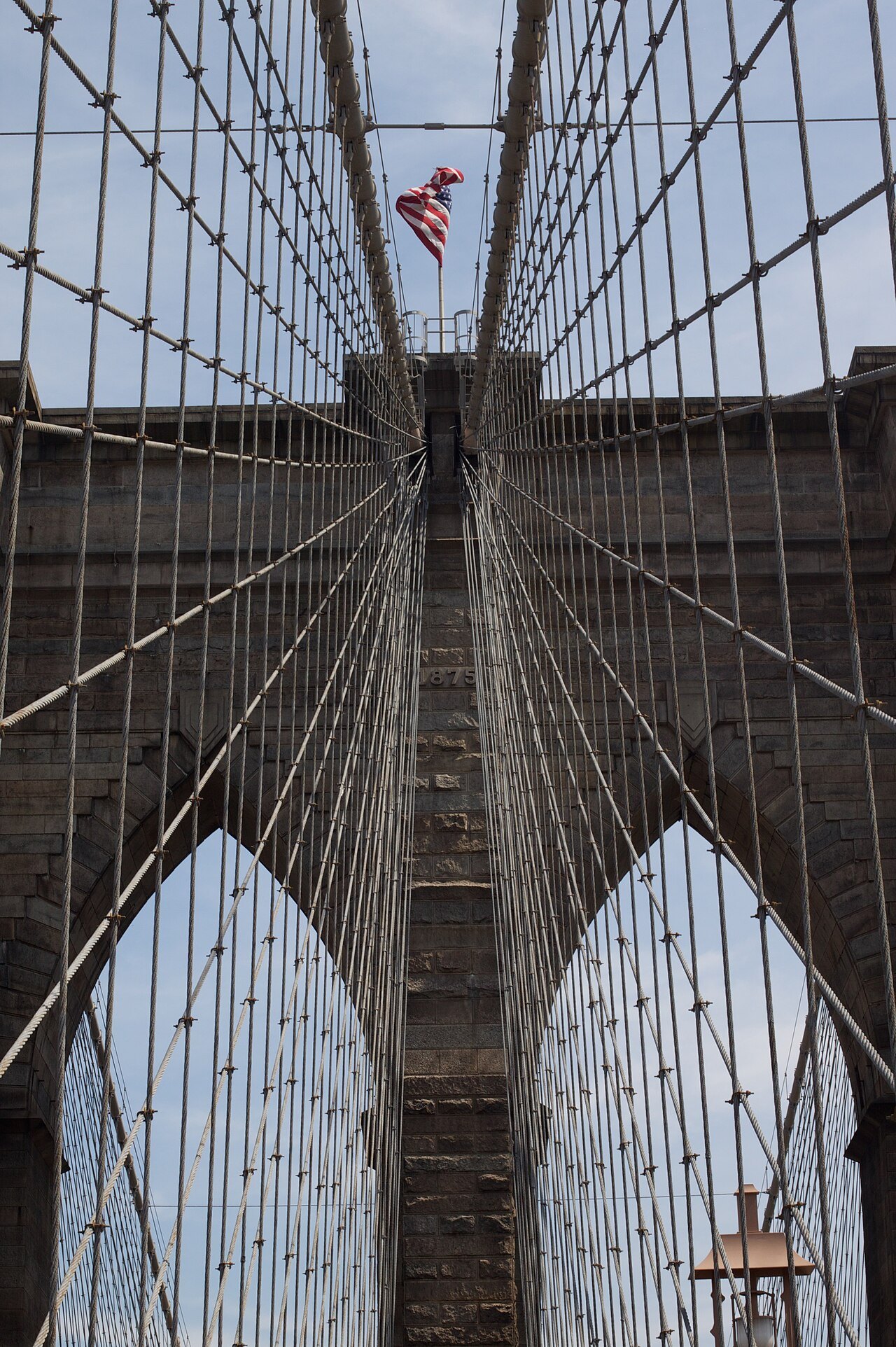
- 1The towersTwo towers of limestone and granite, 278 feet tall, each pierced by a pair of pointed Gothic arches.
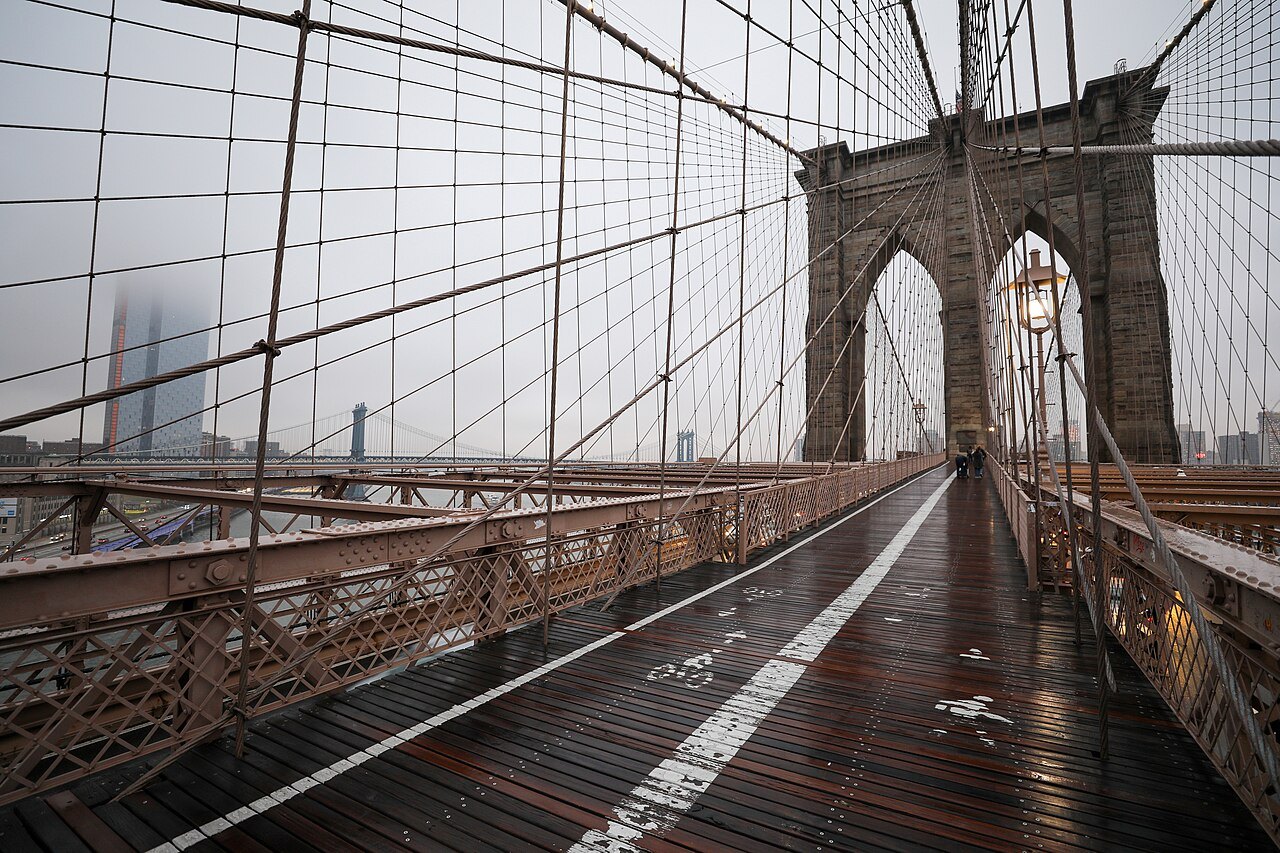
- 2The cablesFour main cables and some four hundred diagonal stays, the pattern you see from the walkway.
- 3The promenadeA pedestrian walkway raised above the roadways, the only place in the city to walk between the cables.
- 4The main spanAbout 1,595 feet between the towers, the longest suspension span in the world when it opened.
- 5The view backLower Manhattan's towers behind you on the way to Brooklyn, and ahead of you on the way back.
The sight in full02
Reading the place
Why it matters
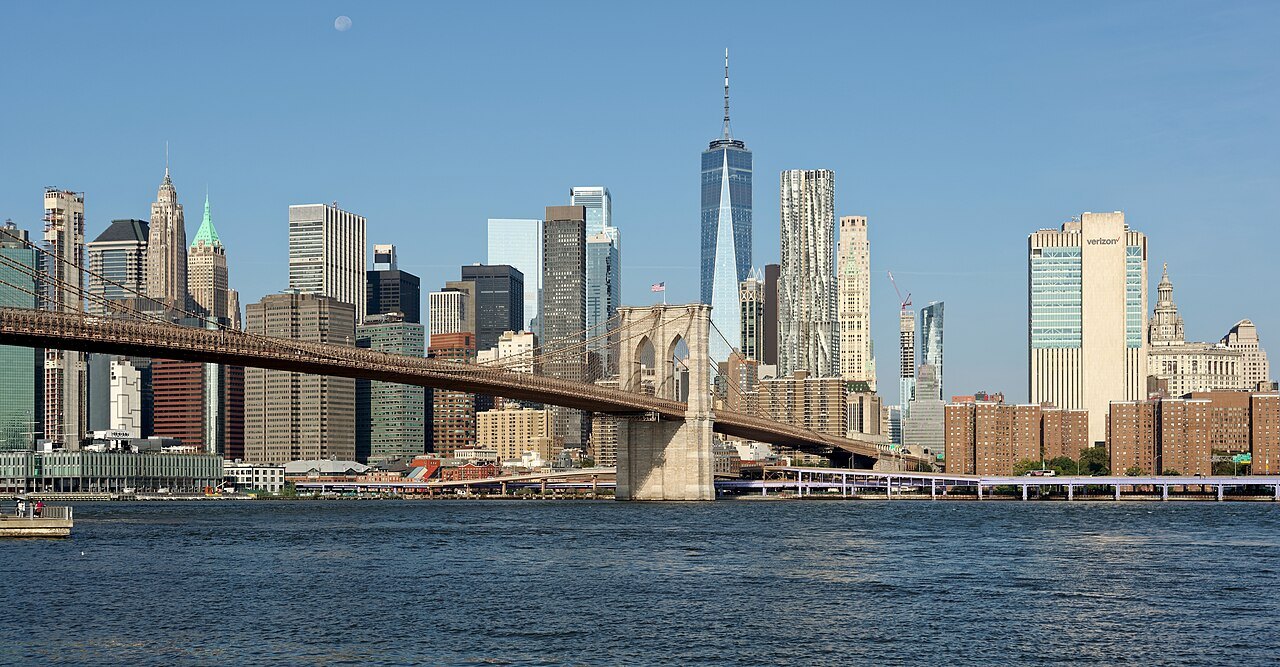
The Brooklyn Bridge crosses the East River from the foot of Park Row, beside City Hall in Manhattan, to Brooklyn. When it opened on May 24, 1883, it was the first fixed crossing of the river, and with a main span of about 1,595 feet between its towers it was the longest suspension bridge in the world. Until then, the only way between the two cities, as they were at the time, was by ferry.
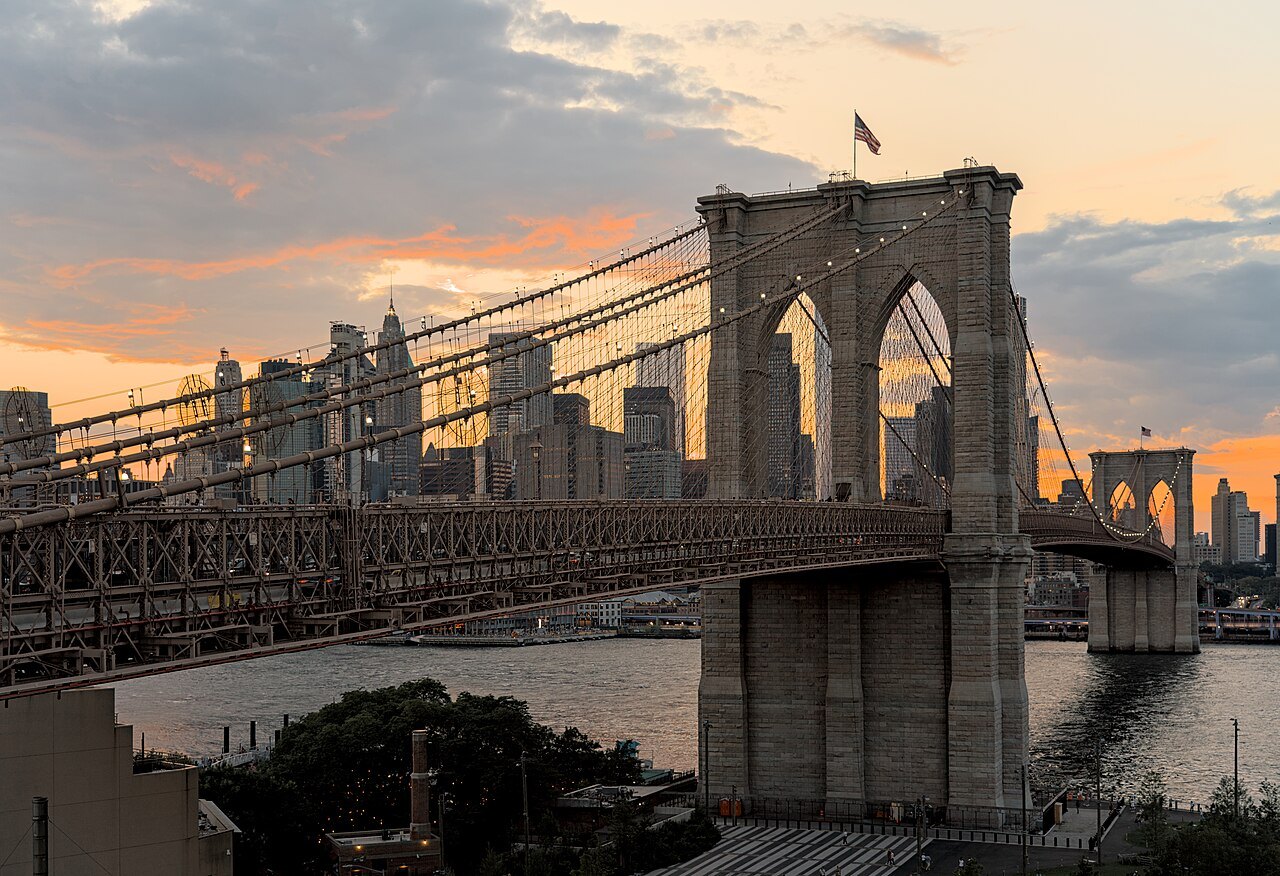
The bridge is a National Historic Landmark and a National Historic Civil Engineering Landmark. It is also one of the few great bridges designed to be walked. Between the two roadways, raised above them, runs a pedestrian promenade, and walking over it is one of the best things to do in New York: an hour's slow walk above the water, among the cables, with the whole of Lower Manhattan's skyline behind you or in front of you.
The Roeblings
The bridge was designed by John A. Roebling, a German-born engineer who had already built a suspension bridge over the Ohio River. He never saw it built. In June 1869, while he was surveying the site, a ferry pinned his foot against a piling; after his crushed toes were amputated he developed tetanus, and he died the following month. His son, Washington Roebling, became chief engineer.
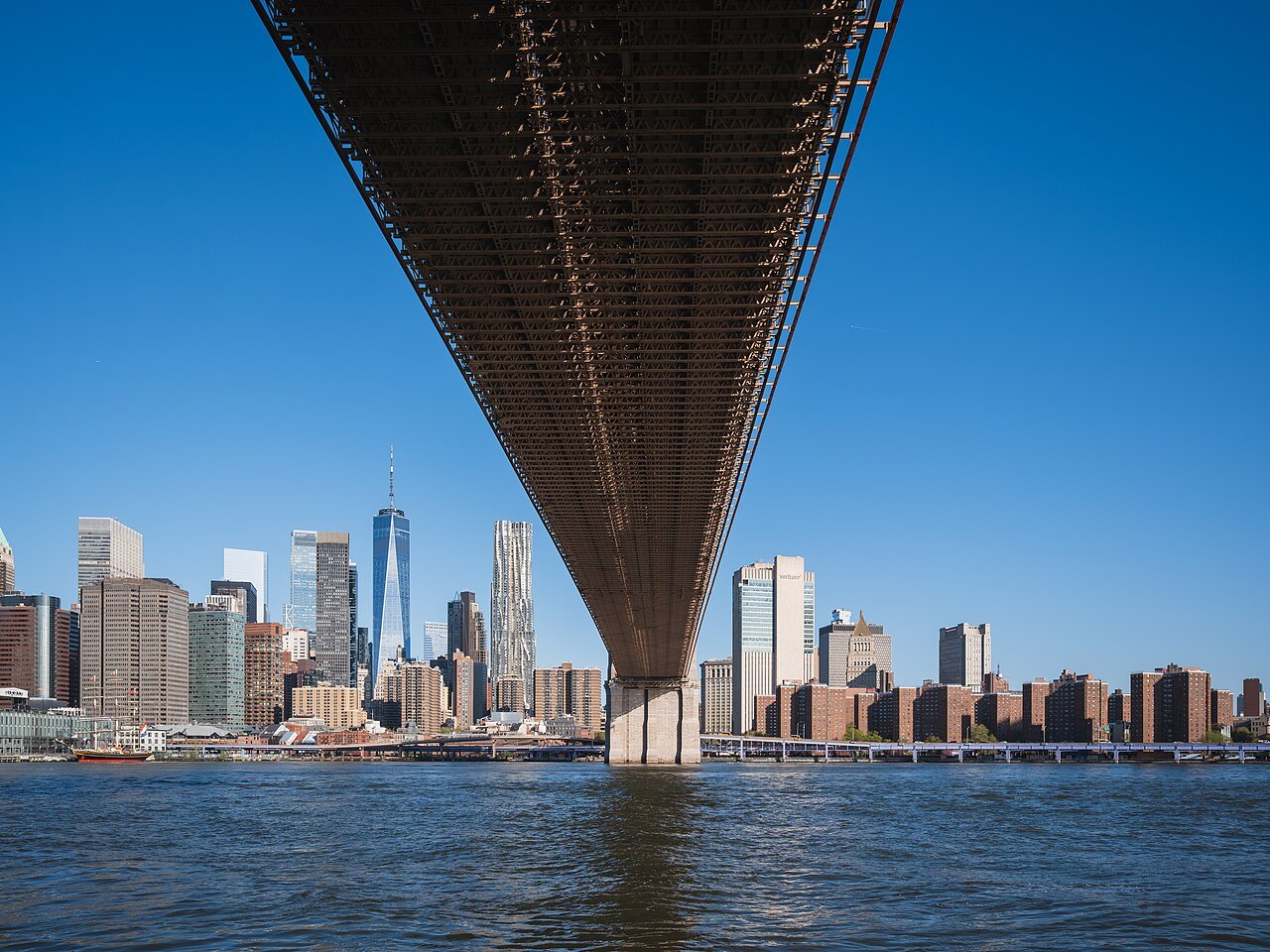
The towers stand on caissons, huge upturned boxes of yellow pine sunk into the riverbed, inside which men dug out the mud under compressed air. Many of them came up with what the project's doctor first named caisson disease, now known as decompression sickness, or the bends, and some died of it. Washington Roebling was himself paralyzed by it early in the work. Unable to go to the site, he directed the rest of the construction from his apartment, famously watching it through a telescope from his bedroom.
His wife, the engineer Emily Warren Roebling, assisted him through the long years of work, and when the bridge was finished it was she who, officially, was the first person to cross it.
What you actually see
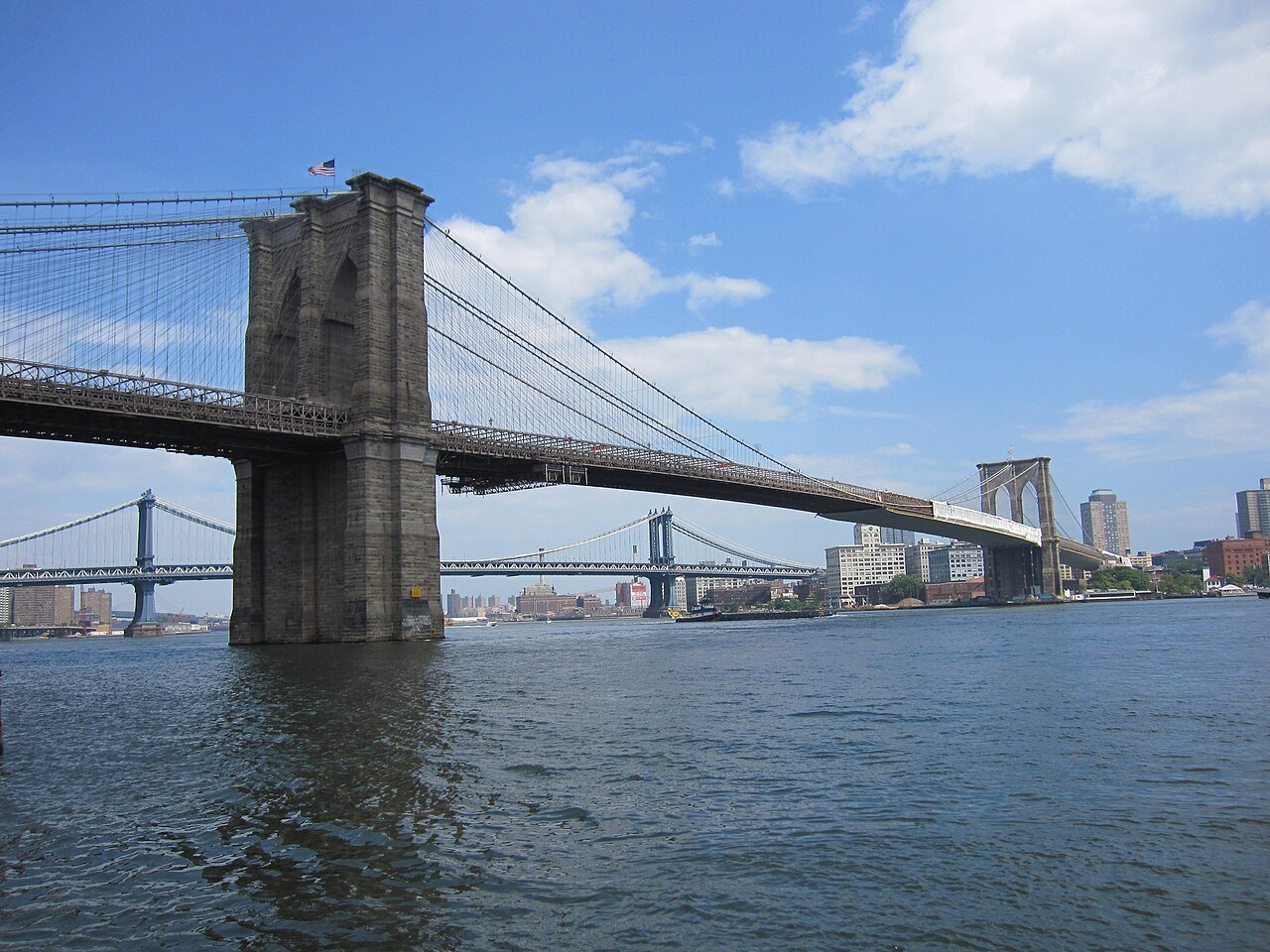
From the Manhattan end the walkway climbs gently toward the first tower. The towers are the bridge's signature: built of limestone, granite and cement, they rise 278 feet, and each is pierced by a pair of tall pointed arches in the Gothic Revival style, through which the roadways run. The granite was quarried on an island in Maine and brought down by schooner.
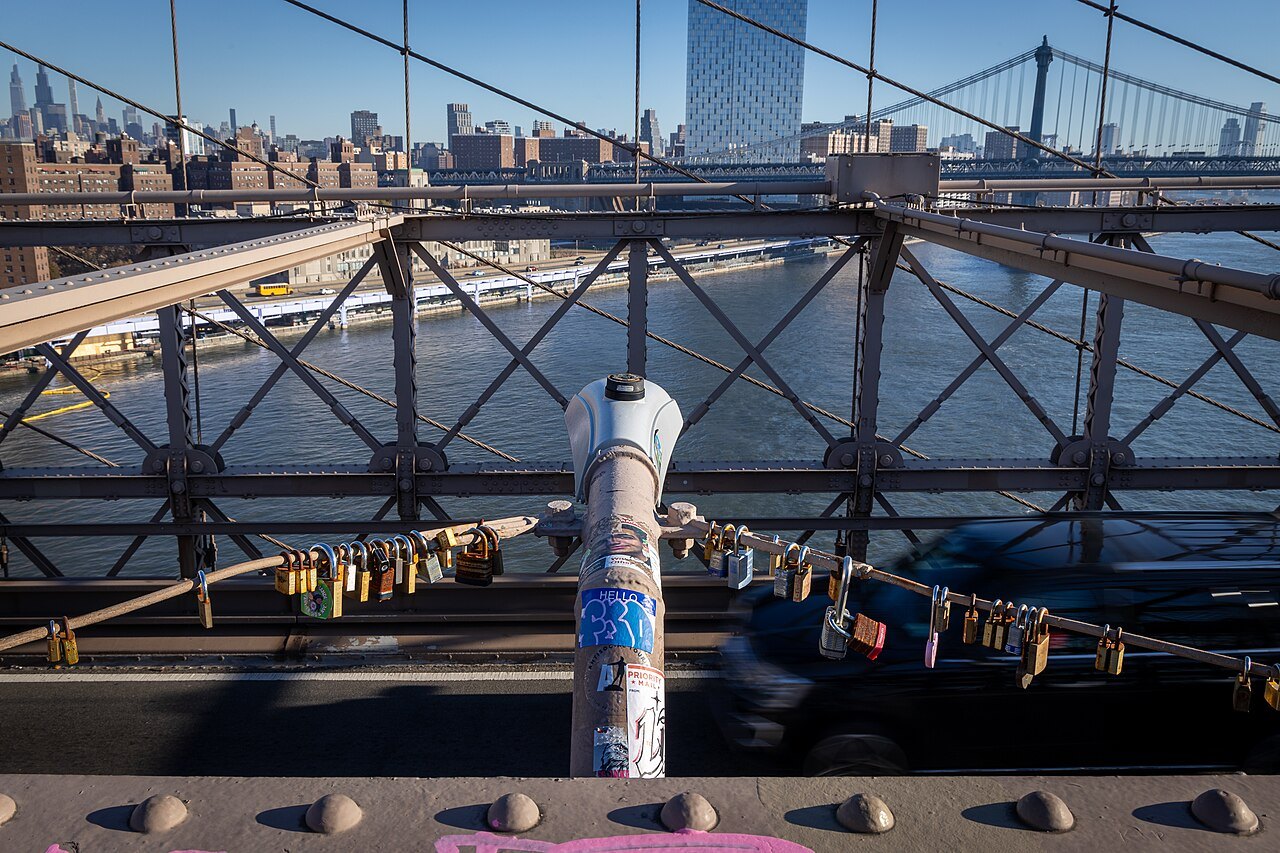
Around the towers the walkway widens into a balcony that overhangs the roads below, and this is where people stop. Look up and you see the web that makes the bridge's picture: four main cables sweeping down from the tops of the towers, vertical suspenders hanging from them, and some four hundred diagonal stays radiating out from the towers themselves. Look back and Lower Manhattan's towers fill the view, with One World Trade Center standing above them all.
The walkway runs about eighteen feet above the traffic, so you hear the cars under your feet rather than beside you. The far end comes down in Brooklyn, near the neighborhood called DUMBO and the waterfront parks.
Opening week
The opening in 1883 was one of the great public days of nineteenth-century New York, but the bridge's first week also brought its worst day. On May 30, six days after the opening, a woman fell on a stairway at the Brooklyn approach, the crowd panicked, and at least twelve people were crushed to death in the stampede.
Doubts about whether the bridge was safe lasted into the following year, when the showman P. T. Barnum led a parade of twenty-one elephants across it, headed by his famous Jumbo. It was a stunt for his circus, and it was also a demonstration that the bridge would hold. The public needed little persuading: the cable railway across the bridge carried three million people in its first six months and nine million in 1884, before the elevated railroads of Brooklyn were linked to it and the numbers doubled again.
How to walk it
The walkway costs nothing to use. On the Manhattan side it begins at Park Row, across from City Hall Park, near several subway stations. Measured between the curbs at Park Row and Sands Street in Brooklyn, the bridge and its approaches run 6,016 feet, a little more than a mile, and most people walk from Manhattan to Brooklyn, which puts the skyline behind them, or take the subway out and walk back toward it, which puts it ahead of them the whole way.
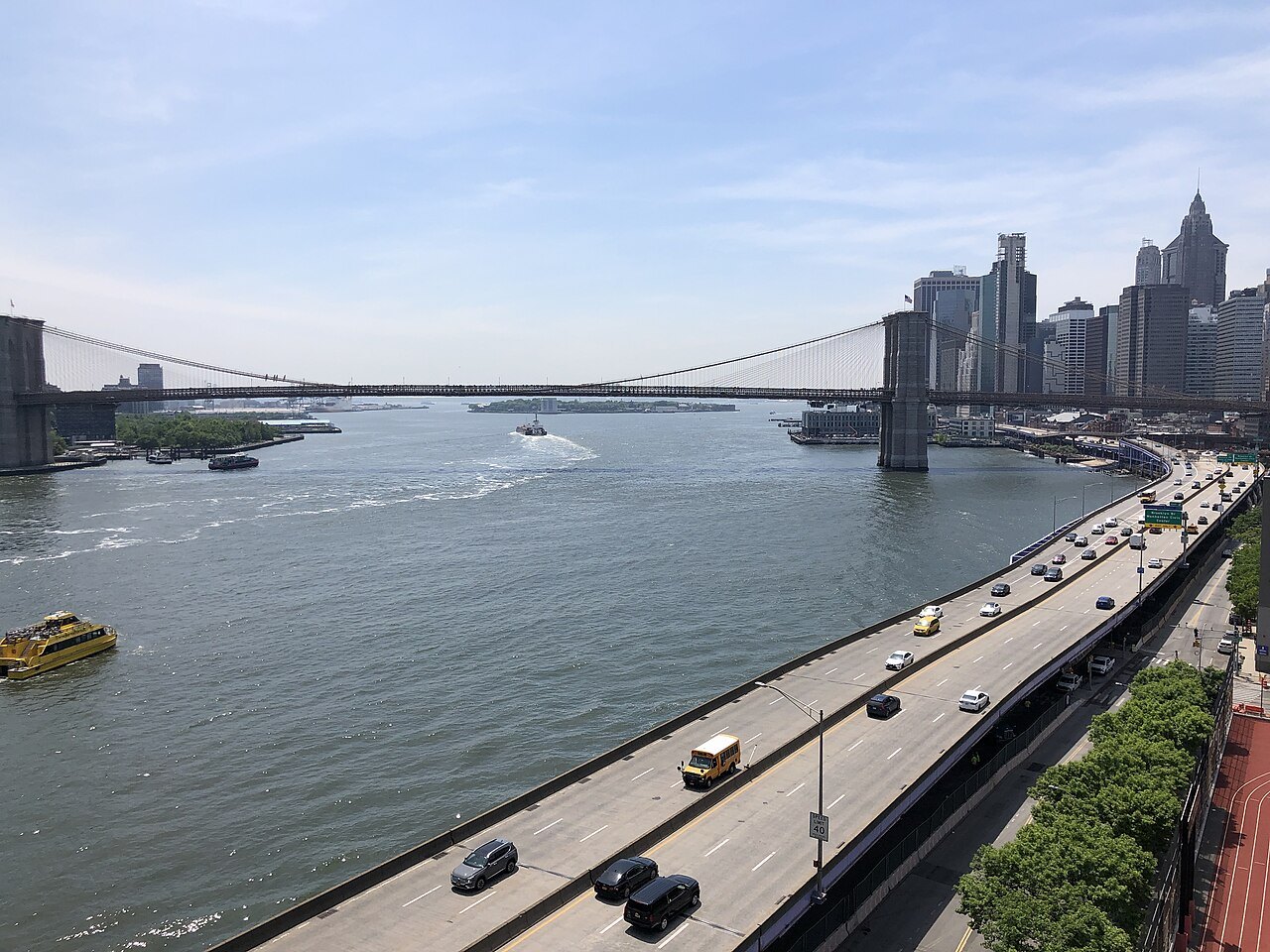
The promenade is narrow and gets crowded in the middle of the day and on fine weekends. Cyclists once shared it with walkers; since 2021 a protected two-way bike path has run on the Manhattan-bound roadway instead, leaving the promenade to people on foot. Keep to the side when you stop for photographs, and bring a layer: the wind on the river is stronger than it is in the streets.
Only passenger vehicles, walkers and cyclists are allowed on the bridge, and weight limits keep heavy vehicles off it. Getting around explains the subway lines at each end, and day trips covers what to do once you are across.
Nearby
At the Manhattan end, City Hall Park and St. Paul's Chapel are a few steps away, and the 9/11 Memorial and Wall Street are a short walk south and west. Chinatown and the Lower East Side begin just to the north.
Where to go next03
Nearby
- Nearby · Broadway · Wall StWall Street and Trinity ChurchA street named for a Dutch wall of 1653, where Washington took his oath at Federal Hall, the Stock Exchange fills a temple front on Broad Street, and a Gothic church closes the view at Broadway.Read the page →
- Nearby · West St · Vesey StThe 9/11 Memorial and One World Trade CenterTwo square pools set in the footprints of the Twin Towers, their parapets inscribed with the names of the dead, beside a museum seventy feet below ground and the tallest building in the Western Hemisphere.Read the page →
- Nearby · Mott St · Canal StChinatown and the Lower East SideThe densest neighborhoods of old immigrant New York: Chinatown's crooked streets around Mott and Doyers, a park on the site of the Five Points slum, and the tenements of Orchard Street where a museum rebuilt the apartments.Read the page →