Home · Sights · The Statue of Liberty and Ellis Island
What you are looking at01
The Statue of Liberty and Ellis Island
New York Harbor
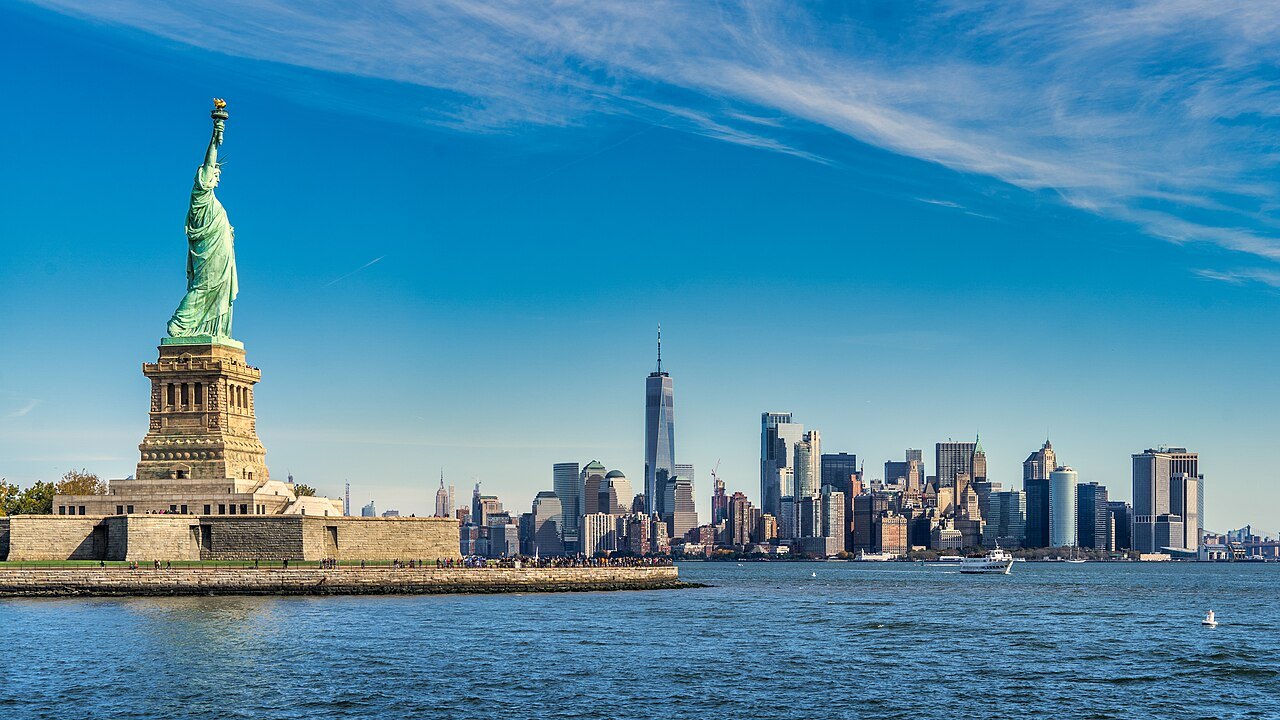
- 1The statueCopper sheets beaten over an iron frame by Gustave Eiffel, turned green by more than a century of salt air.
- 2The pedestalRichard Morris Hunt's granite pedestal, built inside the star-shaped walls of the old Fort Wood.
- 3The crownA climb of at least 162 steps up a narrow spiral stair, with limited tickets sold far in advance.
- 4The Statue of Liberty MuseumFree to every ferry passenger on Liberty Island, with the original torch of 1886 inside.
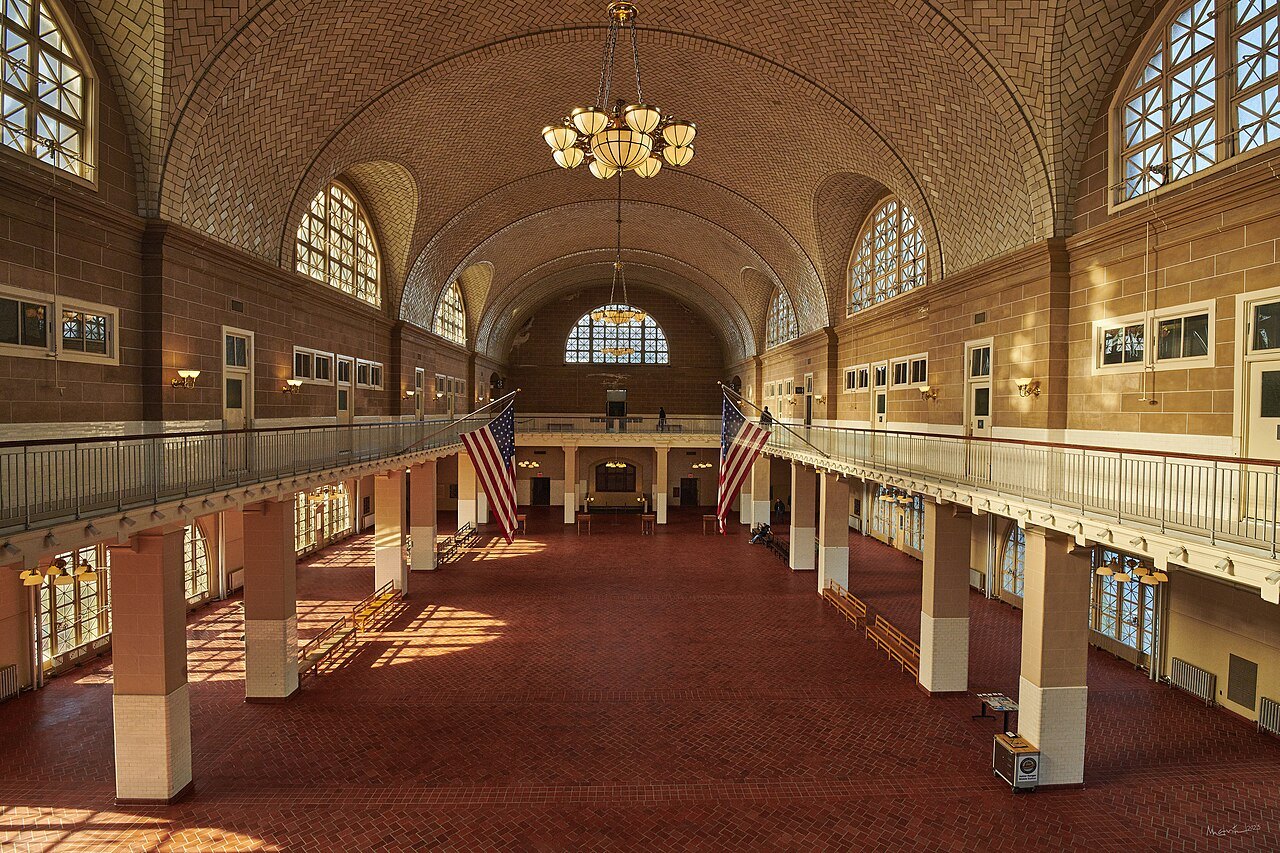
- 5The Great Hall on Ellis IslandThe registry room where arriving immigrants waited for inspection, now the heart of the immigration museum.
- 6The view backLower Manhattan from the water, the one angle on the island's tip that no street can give you.
The sight in full02
Reading the place
Why it matters
The Statue of Liberty stands on Liberty Island in New York Harbor, south and west of the tip of Manhattan, and it was placed there because every ship bound for New York had to sail past it. The French sculptor Frédéric Auguste Bartholdi picked the island, then called Bedloe's Island, for exactly that reason. She was a gift from the people of France to the people of the United States, and she was dedicated on October 28, 1886, with President Grover Cleveland presiding and the city's first ticker-tape parade on Broadway.
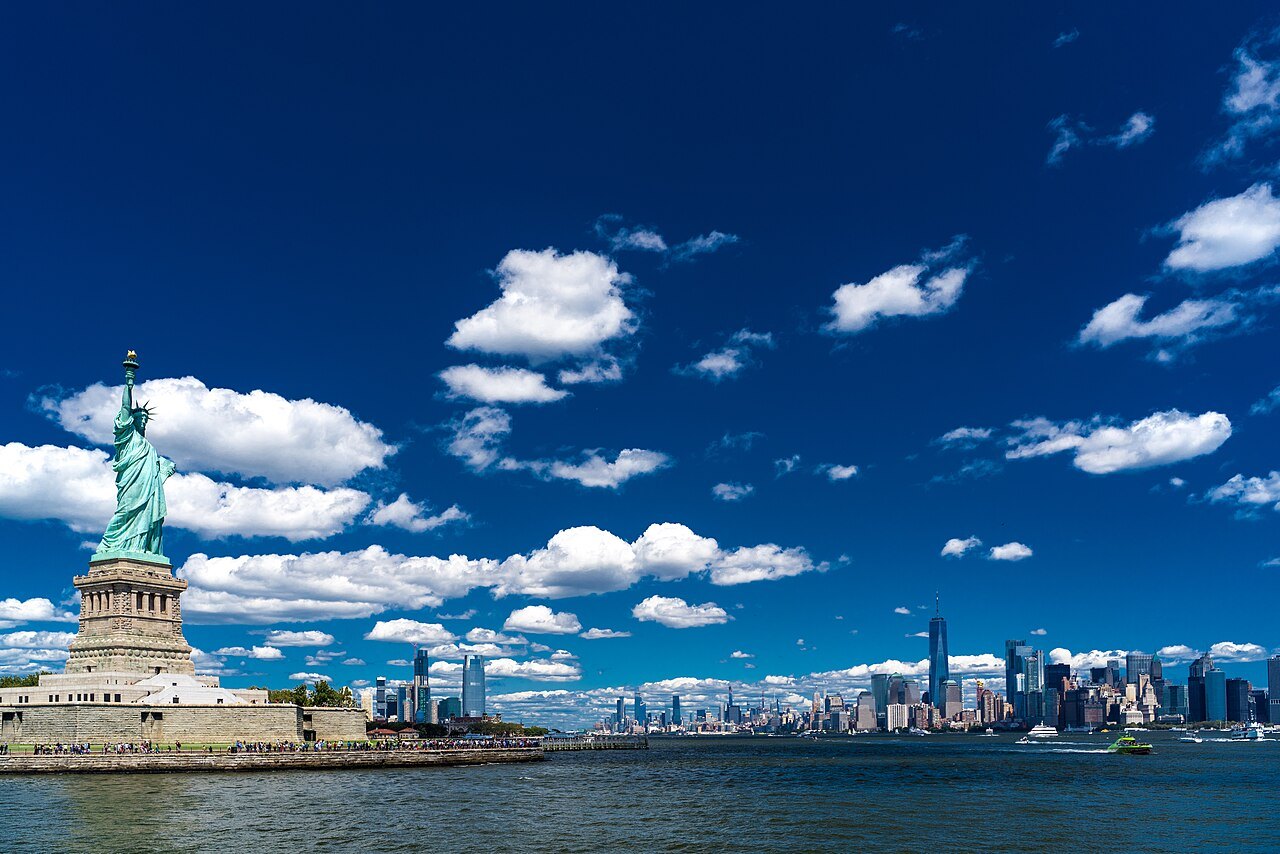
Just to the north lies Ellis Island, where the federal government inspected new arrivals from 1892 to 1954. About twelve million people passed through it, and one estimate holds that two-fifths of Americans may be descended from them. The two islands are one national monument, you reach them on the same boat, and one ticket covers both museums. A visit is a half-day at least, and a whole day if you want to do both islands properly.
How she was built
Bartholdi wanted a statue just over 151 feet tall, twice the height of the largest copper figures he had seen in Europe. He chose copper over bronze or stone because it was cheaper, lighter and easier to ship. The skin was made by repoussé: thin sheets heated and then beaten into shape with wooden hammers. Inside, an iron framework designed by Gustave Eiffel carries the load, so the copper hangs from the frame like a cloak rather than standing on its own.
The statue was built in France, taken apart, shipped across the Atlantic in crates and reassembled on its pedestal. She holds a torch in her right hand and, in her left, a tablet inscribed JULY IV MDCCLXXVI, the date of the Declaration of Independence. At her feet lies a broken chain and shackle, which commemorates the abolition of slavery after the Civil War and is easy to miss from the ground. Bartholdi first showed the torch-bearing arm at the Centennial Exposition in Philadelphia in 1876, and it then stood in Madison Square Park in Manhattan until 1882 to raise money.
What you actually see
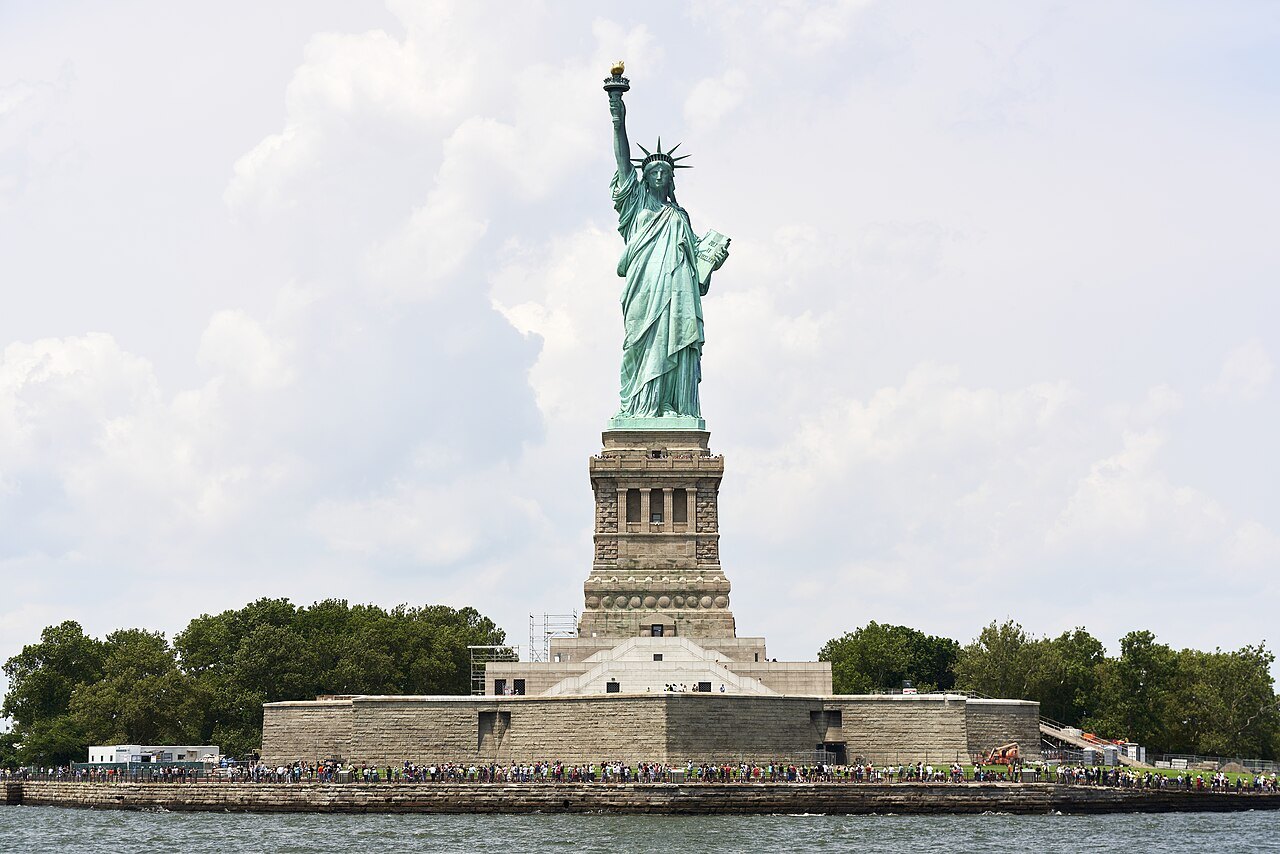
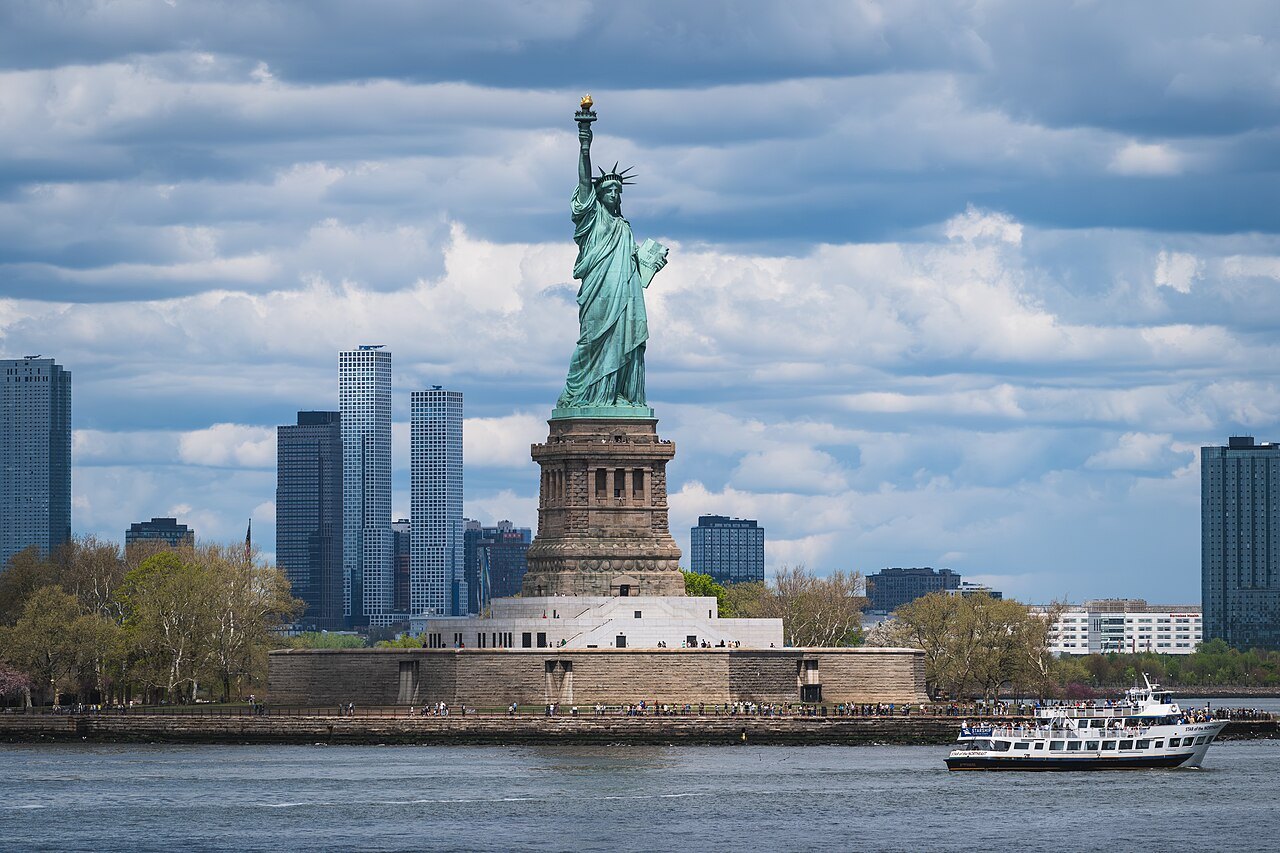
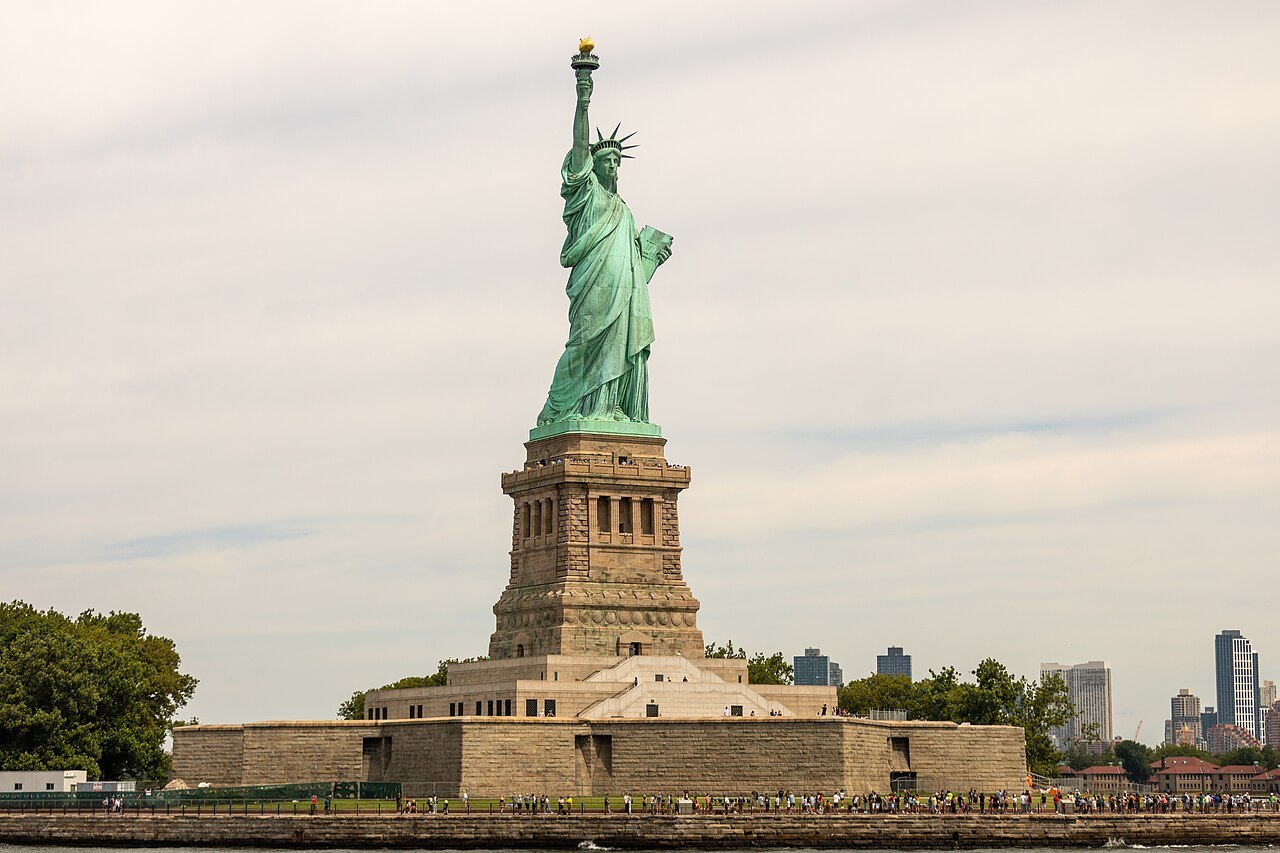
From the ferry the statue grows slowly out of the harbor, and the first clear sight of her, green against the sky, is the moment most people remember. On the island a path runs all the way around the base, so you can see her from every side, and the lawns face straight across the water to the towers of Lower Manhattan.
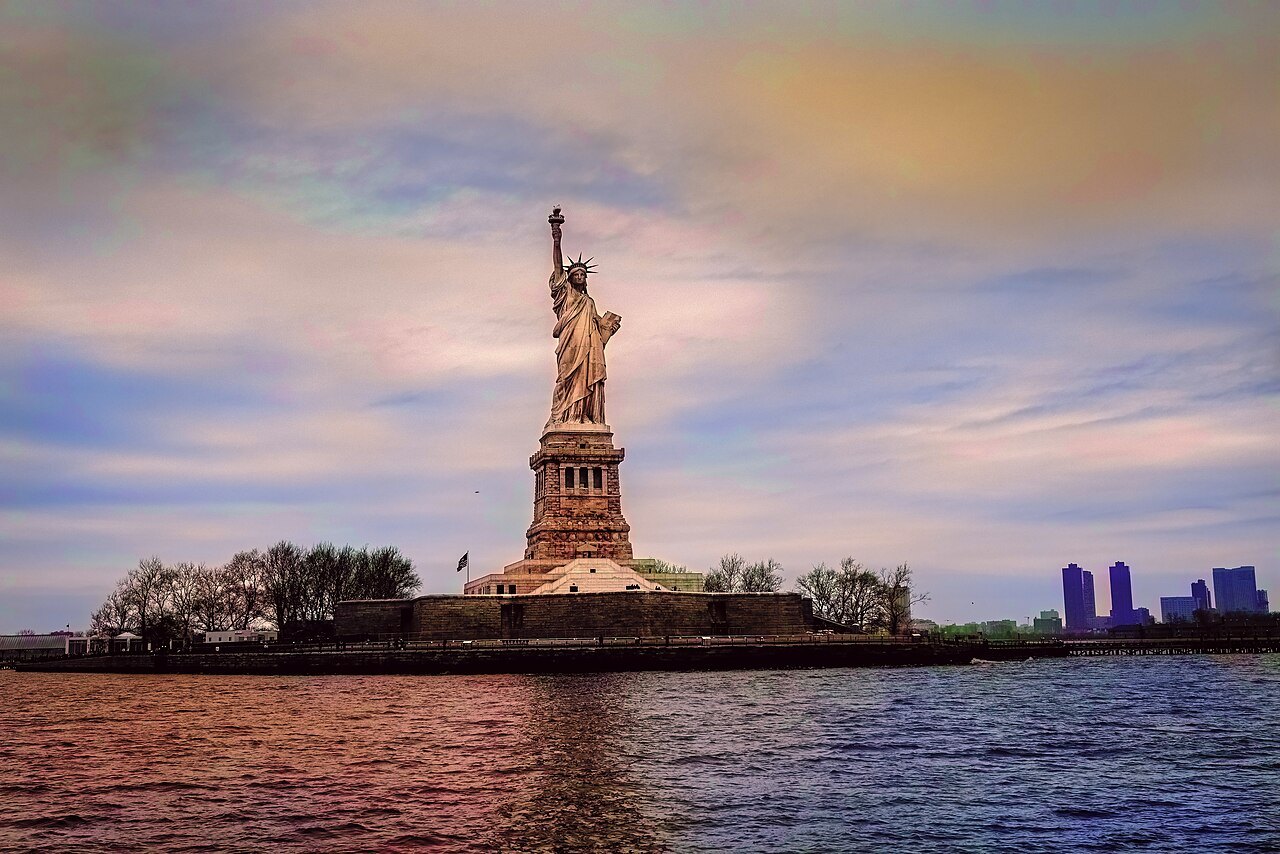
The pedestal was designed by the architect Richard Morris Hunt. It is a squat granite pyramid with classical doorways and some details taken from Aztec architecture, and it rises from inside the walls of Fort Wood, an army fort built between 1807 and 1811 in the shape of an eleven-point star. A pedestal ticket takes you to the observation balcony at the top, where the harbor opens in every direction.
The crown is a harder climb. The National Park Service says anyone going up must be able to manage at least 162 steps on a confined spiral staircase, the same effort as climbing a twenty-story building, and on the way you see Eiffel's iron frame from the inside. The views from the crown windows are tightly framed slices of the harbor, Manhattan and Brooklyn. The torch itself has been closed to the public since 1916.
Back on the ground, the Statue of Liberty Museum is free to everyone on the island. It tells the story of how the statue was conceived and built, and its last gallery holds the original torch of 1886, which was taken down and replaced in 1986.
Ellis Island
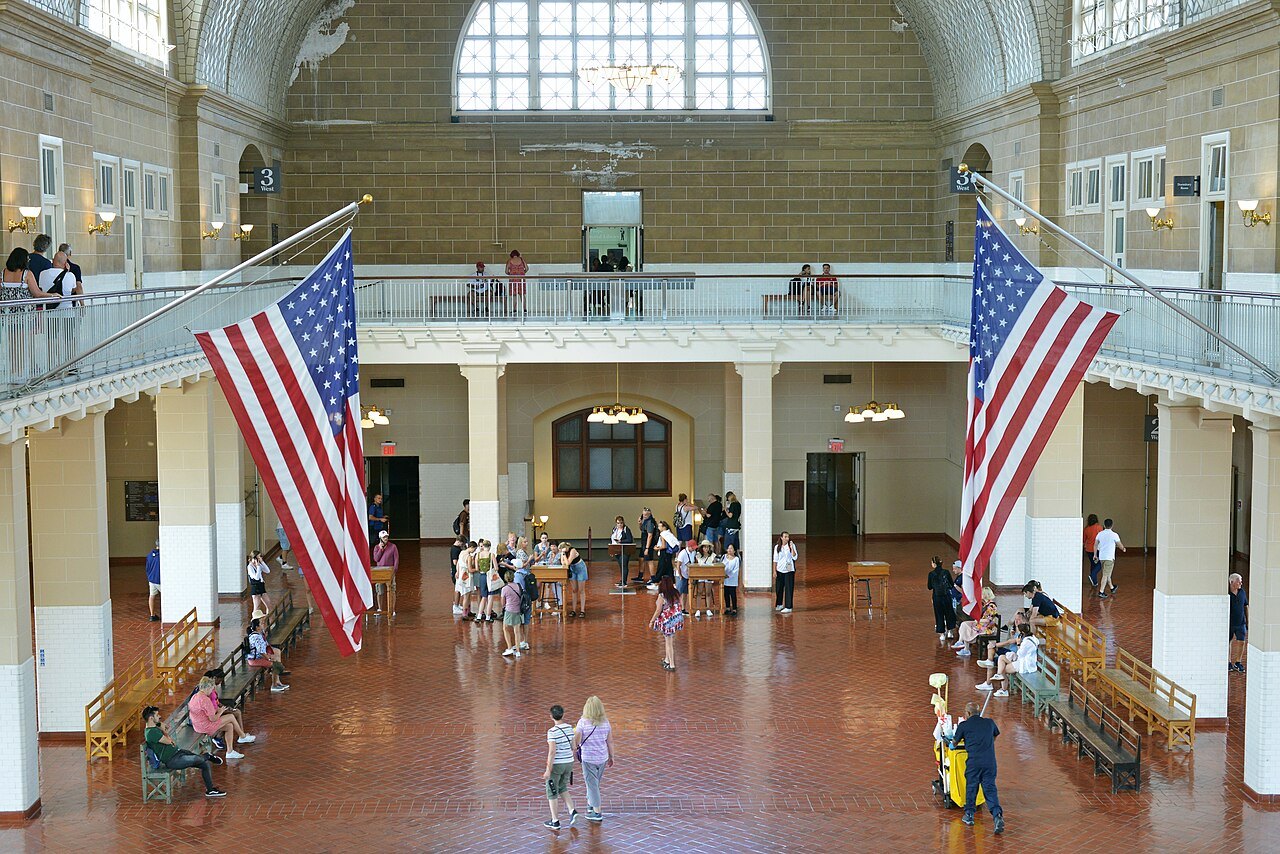
The ferry calls at Ellis Island after Liberty Island, and the immigration station is the other half of the visit. The main building of 1900 was restored and opened as a museum in 1990. Its center is the Great Hall, the registry room on the second floor, where arriving passengers waited in lines to be questioned and examined. Downstairs and in the side galleries the museum follows the journey in order: the baggage room, the medical and legal inspections, and the rooms where people could be detained or turned back.
The north side of the island is the museum. The south side holds the old immigrant hospital, which the National Park Service opens only on guided tours. Most of Ellis Island is legally in New Jersey; only the original natural island at its northern end is part of New York, a boundary the Supreme Court settled in 1998.
How to visit
There is only one way to either island: the ferries of Statue City Cruises, the only ticket seller authorized by the National Park Service. From Manhattan they leave from Battery Park at the southern tip of the island, and there is a second departure from Liberty State Park in New Jersey. Every ferry ticket includes both museums. Everyone goes through airport-style security before boarding, so allow time for the line.
Pedestal and crown access are limited for safety reasons, and the Park Service says to buy them well in advance; crown tickets in particular sell out long before the day. If they are gone, the general ticket still gives you both islands and both museums. To see both islands in one day, the Park Service recommends taking an early ferry. Booking ahead explains how the reservations work, and getting around covers the subway to the Battery.
If you only want to see the statue and not land, the free Staten Island Ferry passes it on its way across the harbor, and on a clear day the view from the deck is a fine second best.
Myths and names
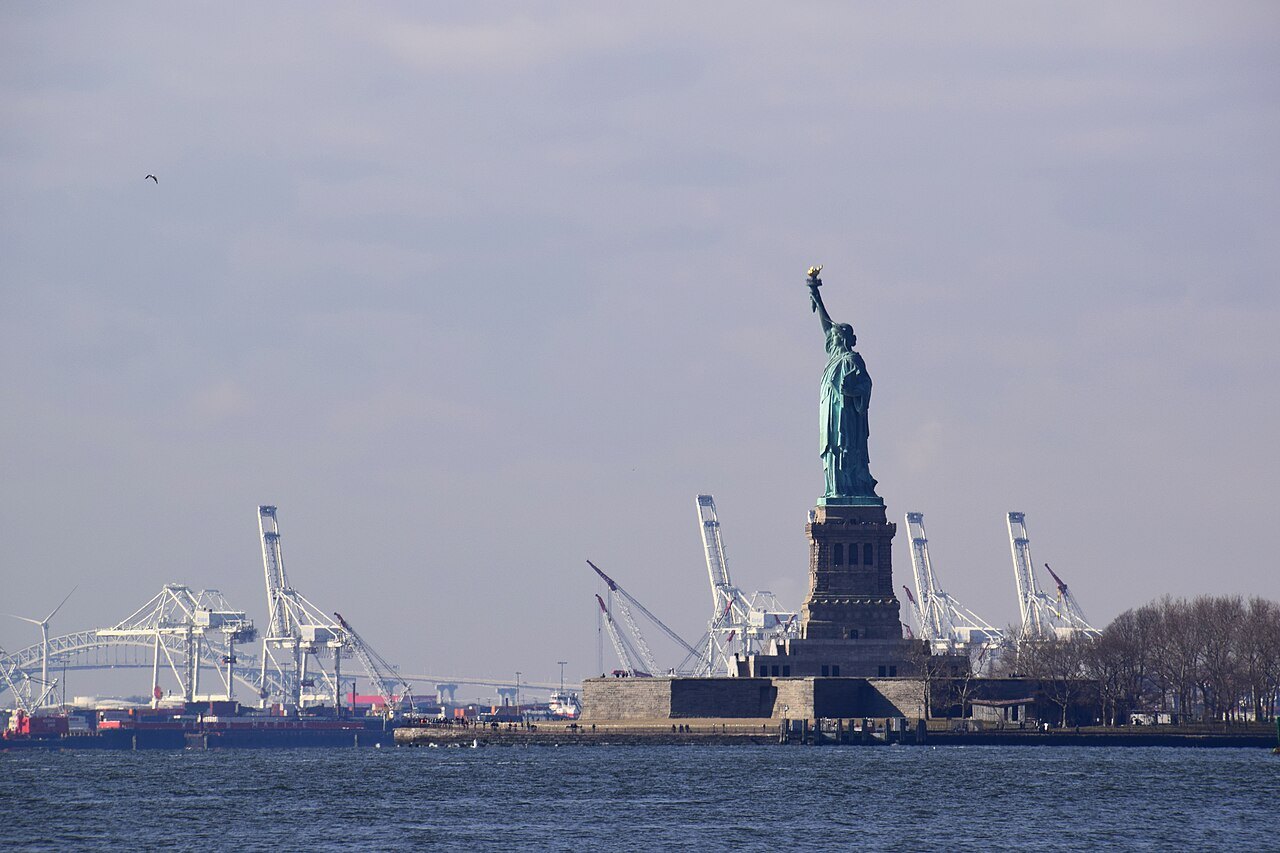
The seven rays of the crown are often said to stand for the seven seas or the seven continents. Research has not confirmed any such meaning. The name on the plans was Liberty Enlightening the World, and the torch was chosen, in Bartholdi's words, to show progress rather than violence.
The statue was not always green. When she was built the copper was reddish-brown and shiny; within twenty years it had oxidized to green, a layer of verdigris that protects the metal, and when Congress first treated the patina as corrosion the Army engineers concluded it was doing no harm. Nor was Ellis Island where immigrants' surnames were changed: the officials used the names on the steamship companies' manifests, and the name changes families made came later, usually after they had settled.
Nearby
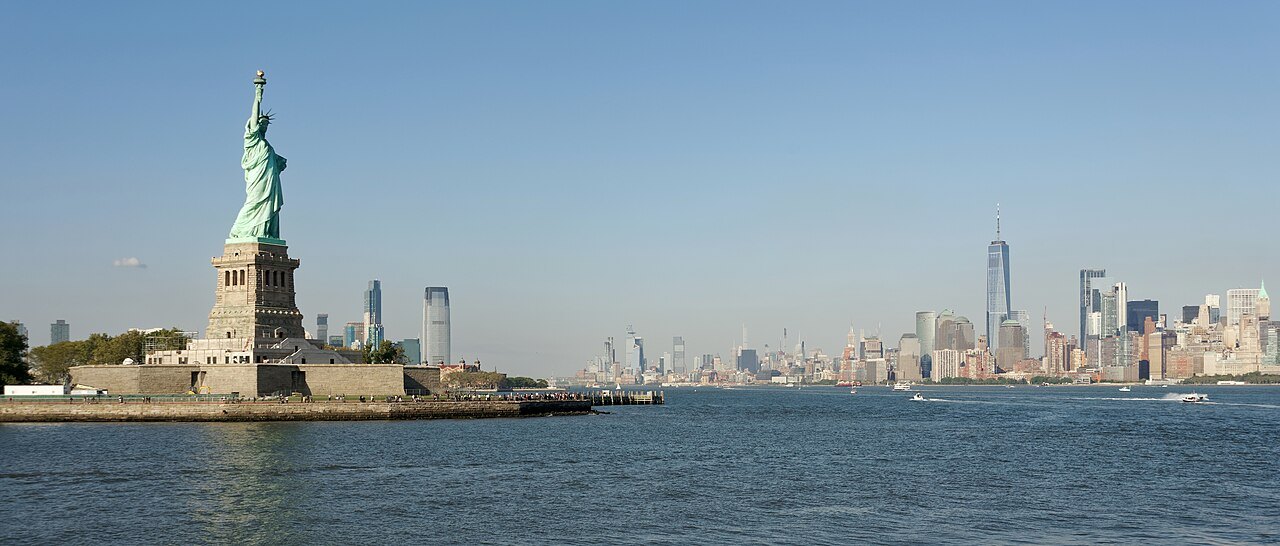
The ferry lands you back at the Battery, a short walk from Wall Street and Trinity Church and from the 9/11 Memorial. From the harbor you also see the Brooklyn Bridge spanning the East River to the north.
Where to go next03
Nearby
- Nearby · Broadway · Wall StWall Street and Trinity ChurchA street named for a Dutch wall of 1653, where Washington took his oath at Federal Hall, the Stock Exchange fills a temple front on Broad Street, and a Gothic church closes the view at Broadway.Read the page →
- Nearby · West St · Vesey StThe 9/11 Memorial and One World Trade CenterTwo square pools set in the footprints of the Twin Towers, their parapets inscribed with the names of the dead, beside a museum seventy feet below ground and the tallest building in the Western Hemisphere.Read the page →
- Nearby · Park Row · City HallThe Brooklyn BridgeThe bridge of 1883 that first tied Manhattan to Brooklyn: two granite towers pierced by Gothic arches, a web of steel cables, and a wooden promenade raised above the traffic for anyone who wants to walk across.Read the page →