TRACES OF THE DUTCH TOWN01
What is left of Dutch New Amsterdam in Lower Manhattan?
What survives of New Amsterdam along Wall Street, from a vanished wall to a park that outlived the fort beside it.
The answer in full02
Read on
New Amsterdam's Wall
Long before the numbered avenues of the modern grid, the southern tip of Manhattan was New Amsterdam, a Dutch trading town. Wall Street takes its name directly from a defensive wall that ran along its route, called Het Cingel, or the Belt, in Dutch. The wall marked the settlement's northern edge from 1653 to 1699, when the growing town outgrew it and it was taken down.
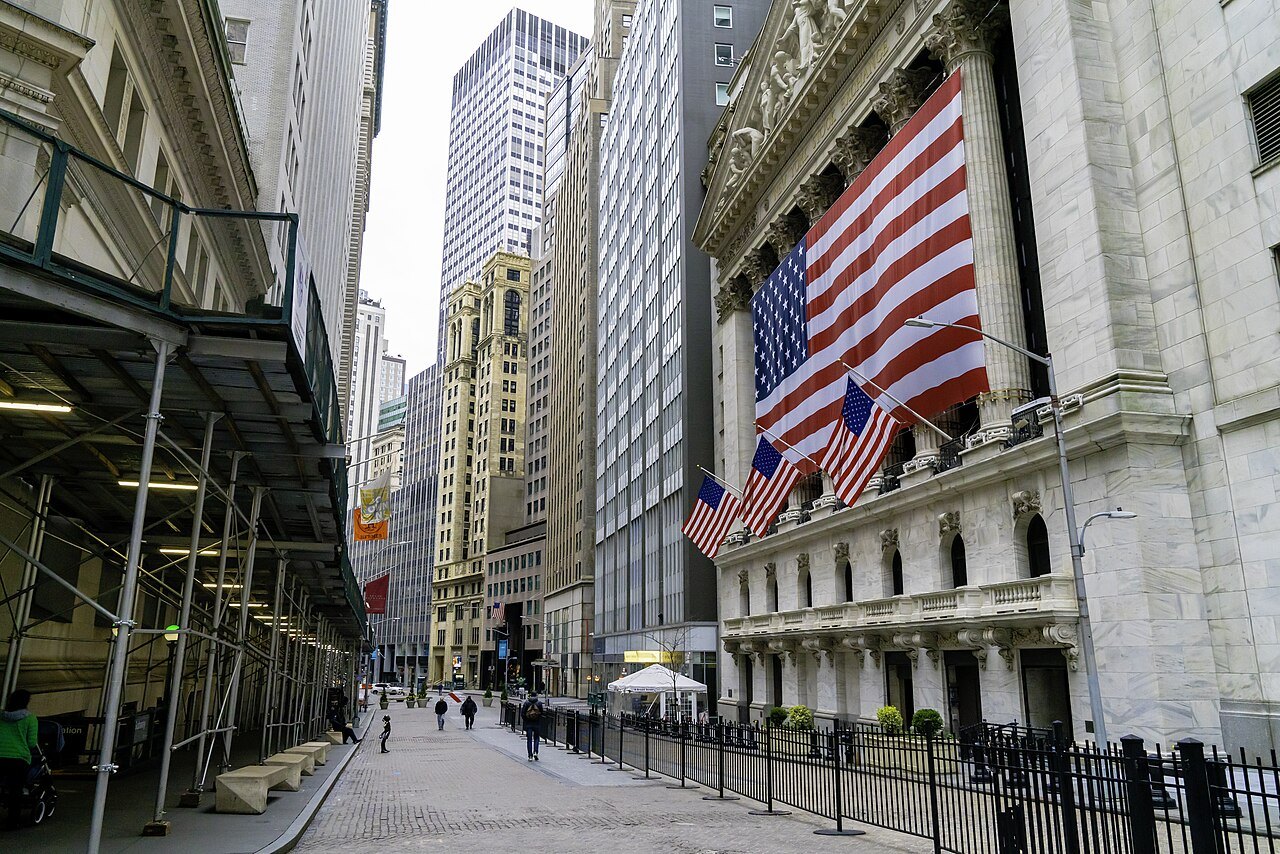
After the English took the town in 1664, the tax rolls still called the street the Belt or the City Wall, and the English name Wall Street stuck. The wall itself is long gone; nothing of its timber or earth survives above ground. What remains is the street's course and its name, still narrow and slightly bent, unlike the straight avenues laid out after it.
Because Wall Street predates the 1811 grid by more than a century, it does not run neatly north to south like the numbered streets uptown. Visitors used to Manhattan's later plan sometimes find this stretch confusing; the grid page explains where the numbered plan begins and why the old lower streets look so different.
Trinity Church at the Head of the Street
Wall Street runs west from the East River to Broadway, and at its head stands Trinity Church, the building your eye follows the whole length of the street. The present church, the third on this site, was designed by Richard Upjohn in the Gothic Revival style and built from 1839 to 1846. Its spire, topped with a gilded cross, once dominated the Lower Manhattan skyline.
That spire was the tallest structure in the United States until 1869 and the tallest in New York until 1890, a fact worth remembering as the surrounding towers now dwarf it. Trinity's church land goes back further still: Columbia University began here as King's College in 1754, before it ever had a campus of its own.
Around the building lies Trinity Churchyard, one of three burial grounds the parish still maintains. Alexander Hamilton is buried here beside his wife Elizabeth Schuyler Hamilton and her sister Angelica Schuyler Church, along with the steamboat builder Robert Fulton and the treasury secretary Albert Gallatin, a quiet corner of eighteenth and early nineteenth century New York.
Federal Hall, Built Where the Republic Began
Halfway along Wall Street, facing the head of Broad Street, a Greek temple sits on a flight of steps. This is Federal Hall National Memorial, completed in 1842 as the New York Custom House and later used as a federal subtreasury until 1925. Its front is a colonnade of Doric columns, and inside is a domed rotunda, now run by the National Park Service.
The building that stood here before it, torn down in 1812, was the first capitol of the United States under the Constitution. The First Congress met there, and George Washington took his oath of office as the first president on its second-floor balcony on April 30, 1789, an event the current building's name still commemorates.
The bronze statue of Washington on the steps, by John Quincy Adams Ward, marks roughly the spot where he stood. Exhibits inside can be seen in about half an hour; the building is not always open to visitors, so check the National Park Service's posted hours before planning a stop, though the steps and statue are visible from the street at any time.
Bowling Green and the Dutch Fort
Two blocks down Broadway from Trinity, at the southern end of the district, lies Bowling Green, the oldest public park in the city. It was laid out beside the Dutch fort that once guarded the harbor, and made into a formal park by the British in 1733, decades after New Amsterdam itself had become New York.
Bowling Green still keeps its original eighteenth-century cast-iron fence, one of the few pieces of colonial-era streetscape left standing in the district. The fort it once stood beside is gone, but the park's shape and its long use as public ground are a direct line back to the earliest years of the settlement.
At the top of the green stands the bronze Charging Bull, made by the Italian artist Arturo Di Modica after the 1987 stock market crash. He installed it outside the Stock Exchange without permission in December 1989; police removed it the same day, and it went up at Bowling Green six days later, at first on a temporary permit, and has stayed ever since.
The Exchange and the Streets Around It
Across from Federal Hall, the New York Stock Exchange fills the corner of Wall and Broad Streets. Its famous facade faces Broad Street, a colonnade of six columns under a sculpted pediment by John Quincy Adams Ward and Paul Wayland Bartlett, showing figures of commerce and industry. George B. Post designed the building, completed in 1903.
The trading floor was built with little room for visitors, and the Exchange remains a working building rather than a museum; the flag-draped facade is what most visitors come to see. Walking down Broad Street brings you past the heavy bank buildings of the early twentieth century, built generations after the Dutch town but still following streets the Dutch first laid out.
The whole district reads best on foot, looking up, because the old streets are narrow enough that the towers seem to lean in overhead. That narrowness, more than any single building, is the clearest surviving trace of a town planned for foot and cart traffic rather than automobiles or a numbered grid.
How to Visit
Nothing of the Dutch wall itself is visible, and no marker along Wall Street shows exactly where it stood. What survives is the street's bent, narrow course, its name, the churchyard around Trinity, Federal Hall's site and statue, and Bowling Green with its colonial fence, laid out beside a fort that has otherwise disappeared entirely.
The easiest way to see all of it is to start at Trinity Church on Broadway, walk down Wall Street past Federal Hall and the Exchange, turn down Broad Street, and come back along Broadway to Bowling Green and the bull. It is a short walk, and an hour allows time to look into Trinity and Federal Hall along the way.
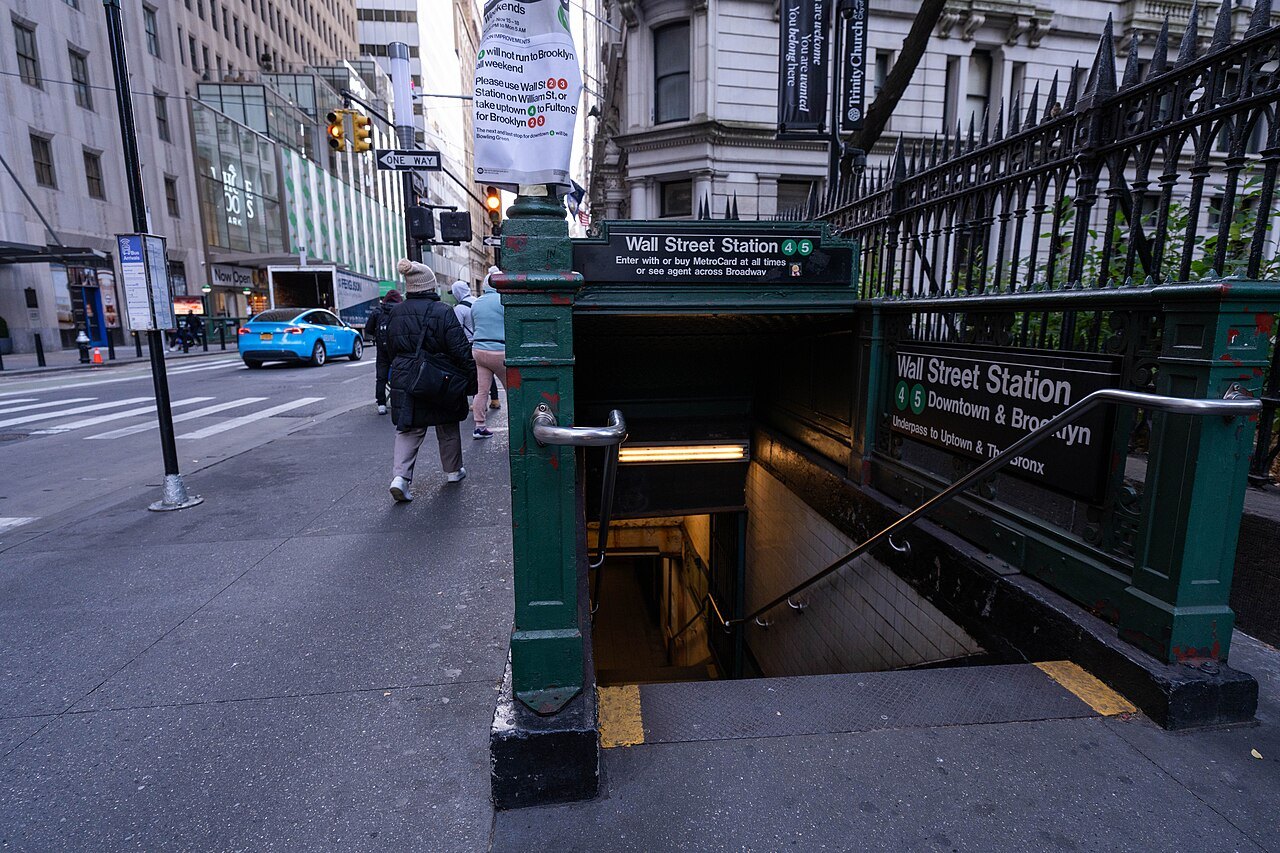
The crowd at the bull can be thick at midday, and the district is quieter on weekends when office workers are gone. Several subway lines stop under Wall Street and Broadway; the getting around page explains them, and it is worth checking the MTA for any service changes before you set out.
Nearby
From Bowling Green it is a short walk to the Battery, where ferries leave for the Statue of Liberty and Ellis Island; check the operator for schedules and current ticket rules before planning a visit.
North along Broadway stands St. Paul's Chapel, the oldest surviving church building in Manhattan, built between 1764 and 1766, and beyond it the site now covered by the World Trade Center memorial and museum.
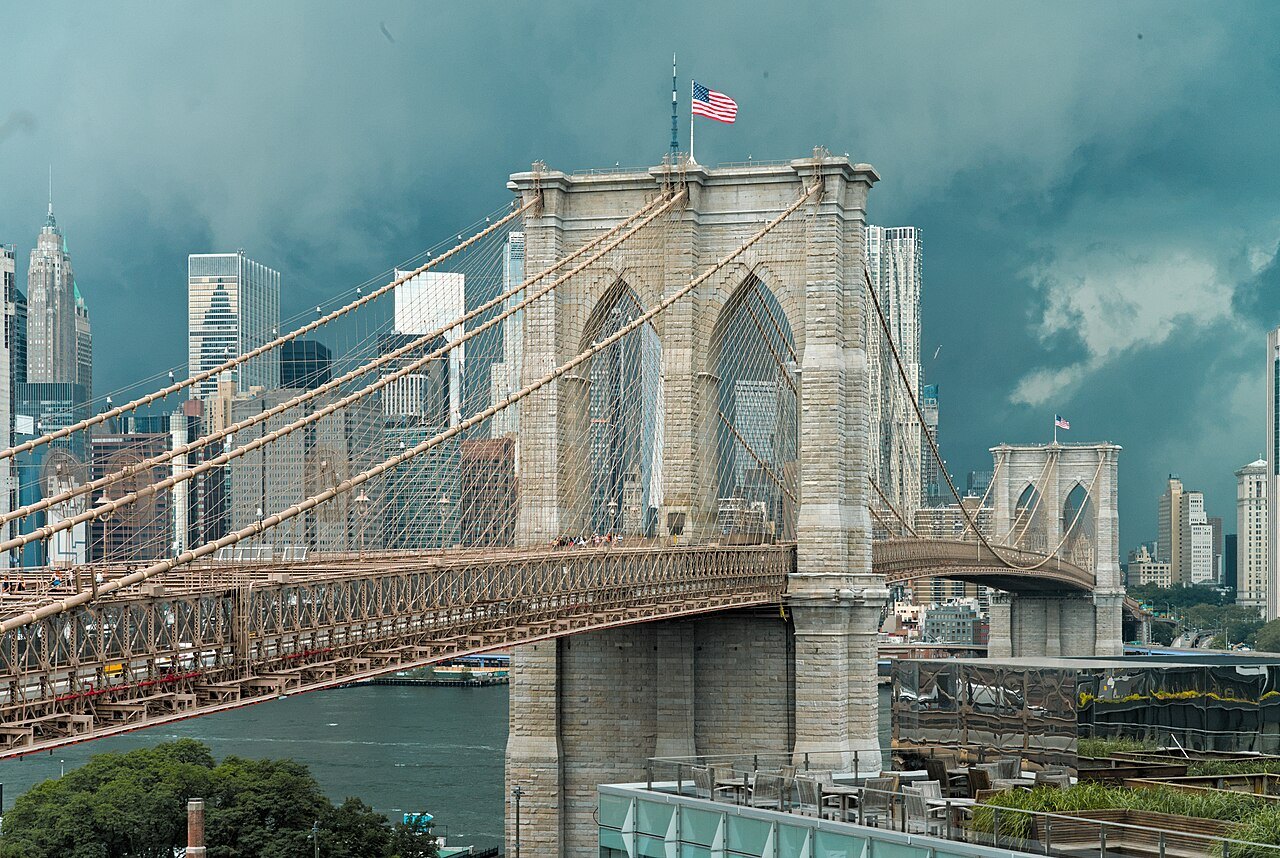
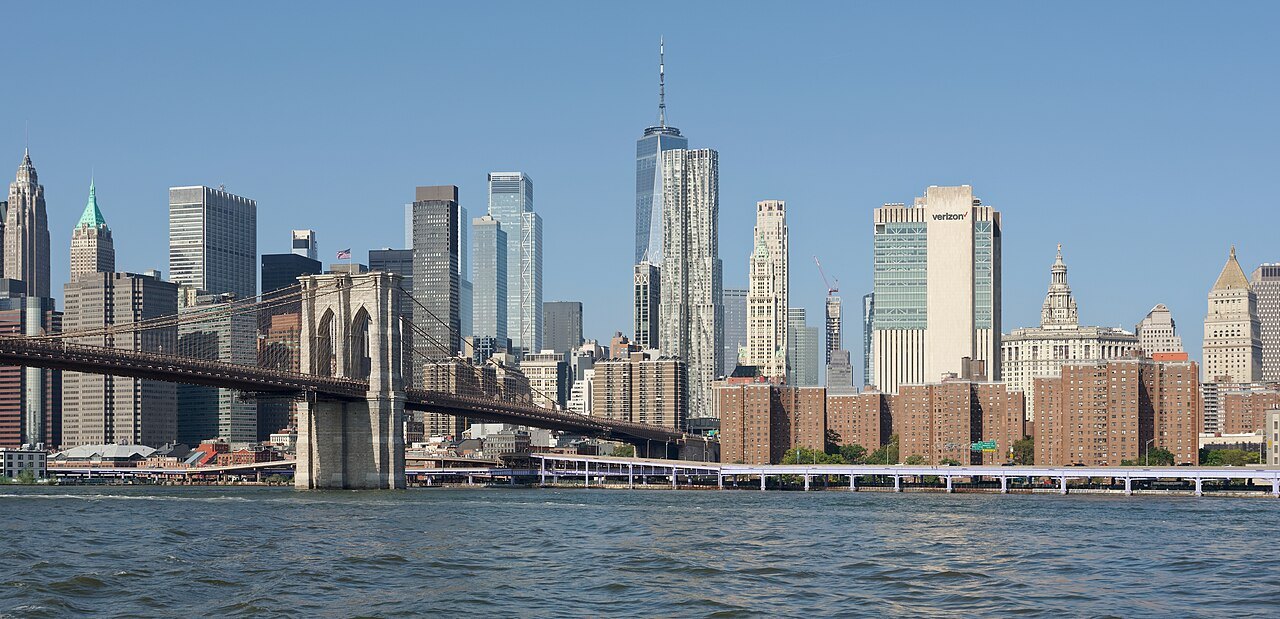
East of City Hall, the walkway across the Brooklyn Bridge begins, an easy extension of a walk through the old Dutch and colonial streets into one of the city's best-known later landmarks.
Read next03
More from the journal
- Getting AroundHow does the New York subway work for visitors?The subway runs all night, takes a tap of your bank card or phone, and reaches nearly everything on this site. How the lines are named, which platform to choose, the difference between local and express, how the fare cap works, and what changes at night and on weekends.Read the piece →
- The Statue of Liberty and Ellis IslandHow do you visit the Statue of Liberty and Ellis Island?Every visitor travels on the same ferry, sold by one company. Which of the three tickets you need, why the crown sells out, how security works, how long to allow, and how to fit Ellis Island into the same day.Read the piece →
- The Brooklyn BridgeCan you walk across the Brooklyn Bridge?Yes, on a raised promenade between the roadways that is now for people on foot alone. Which way to walk, where to start and finish, how long it takes, when it is least crowded, and what to do in Brooklyn at the far end.Read the piece →