UPTOWN AND DOWNTOWN, LOCAL AND EXPRESS, TAP AND GO01
How does the New York subway work for visitors?
The subway runs all night, takes a tap of your bank card or phone, and reaches nearly everything on this site. How the lines are named, which platform to choose, the difference between local and express, how the fare cap works, and what changes at night and on weekends.
The answer in full02
Read on
The short answer
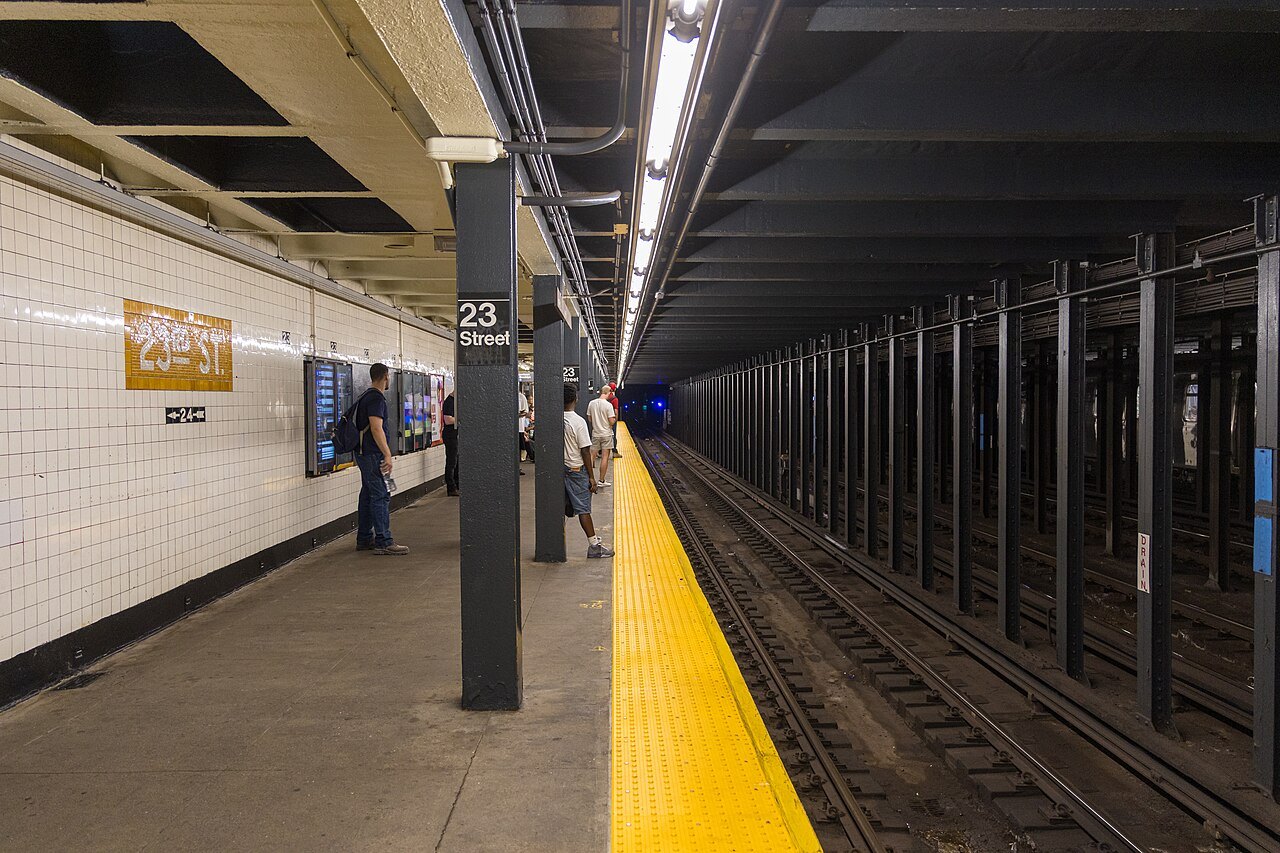
The New York City Subway is the fastest way around Manhattan, and it is simpler than it looks. Tap a contactless bank card or a phone on the reader at the turnstile, go down to the platform marked with the direction you want, Uptown or Downtown, and check that the train is the right letter or number and that it is local or express as you need. You do not tap out. The system runs twenty-four hours a day, and nearly every station is served around the clock.
Almost everything a visitor wants to see in Manhattan is within a short walk of a station. The rest of this article explains the details that confuse newcomers.
Some links on this page are affiliate links. If you book through one we may earn a commission, at no extra cost to you. It does not affect what is recommended here, and no sight page on this site carries one.
Somewhere to leave a suitcase between check-out and a late flight.
A very old, very large system
The subway opened on October 27, 1904, which makes it one of the oldest in the world, and it has more stations than any other: 472, if stations joined by transfers are counted separately. It is also the busiest rapid transit system in the Western Hemisphere. Twenty-two of its twenty-five routes pass through Manhattan, most of them underground, while large parts of the system in the other boroughs run on elevated tracks.
Its size comes from its history. It was built by three separate companies, the IRT, the BMT and the IND, which the city brought together in 1940. They still shape it: the old IRT lines, with narrower tunnels and shorter platforms, form one division, whose routes are numbered, and the BMT and IND form the other, whose routes are lettered. That is why New Yorkers talk about the 6 train and the A train, and why the cars on a numbered line look smaller.
Reading the lines
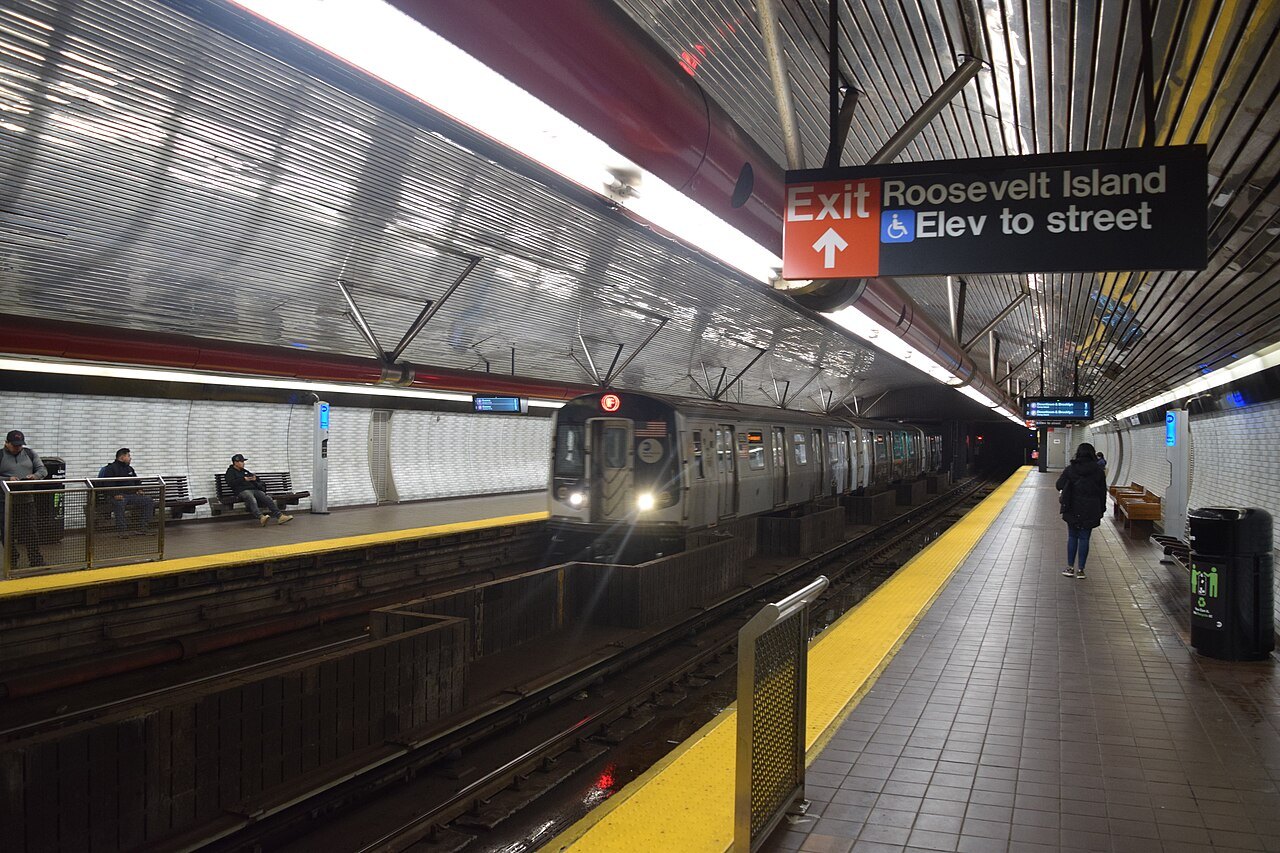
Each route is known by its letter or number, shown on the front and side of every train. Routes are also colored on the map by the trunk line they use in Manhattan, so the lines along Lexington Avenue are all one color and those along Eighth Avenue another, but New Yorkers almost never use the colors: say the A, not the blue line.
The map itself is a diagram rather than a street map, based on a design by Massimo Vignelli from 1972, with black dots for stations and the routes drawn as colored lines. Most visitors today use a transit app on their phone as well, but it is worth looking at the posted map in the station, since it shows the transfers between lines.
Uptown or downtown
The first question on any platform is direction. In Manhattan, trains run uptown, which means north, or downtown, which means south, and platforms and entrances are marked accordingly. At many stations the uptown and downtown platforms have separate entrances on opposite sides of the street, with no way to cross inside, so read the sign above the stairs before you tap in; tapping in at the wrong entrance usually means paying a second fare to get to the right platform.
On the crosstown lines, such as the shuttle between Times Square and Grand Central, the direction is simply east or west.
Local or express
Many lines have four tracks. The two outer tracks carry local trains, which stop at every station, and the two inner tracks carry express trains, which stop only at the major ones. Express and local trains often share the same platform at the big stations, so at a stop such as Times Square or Grand Central you can change from one to the other by crossing the platform.
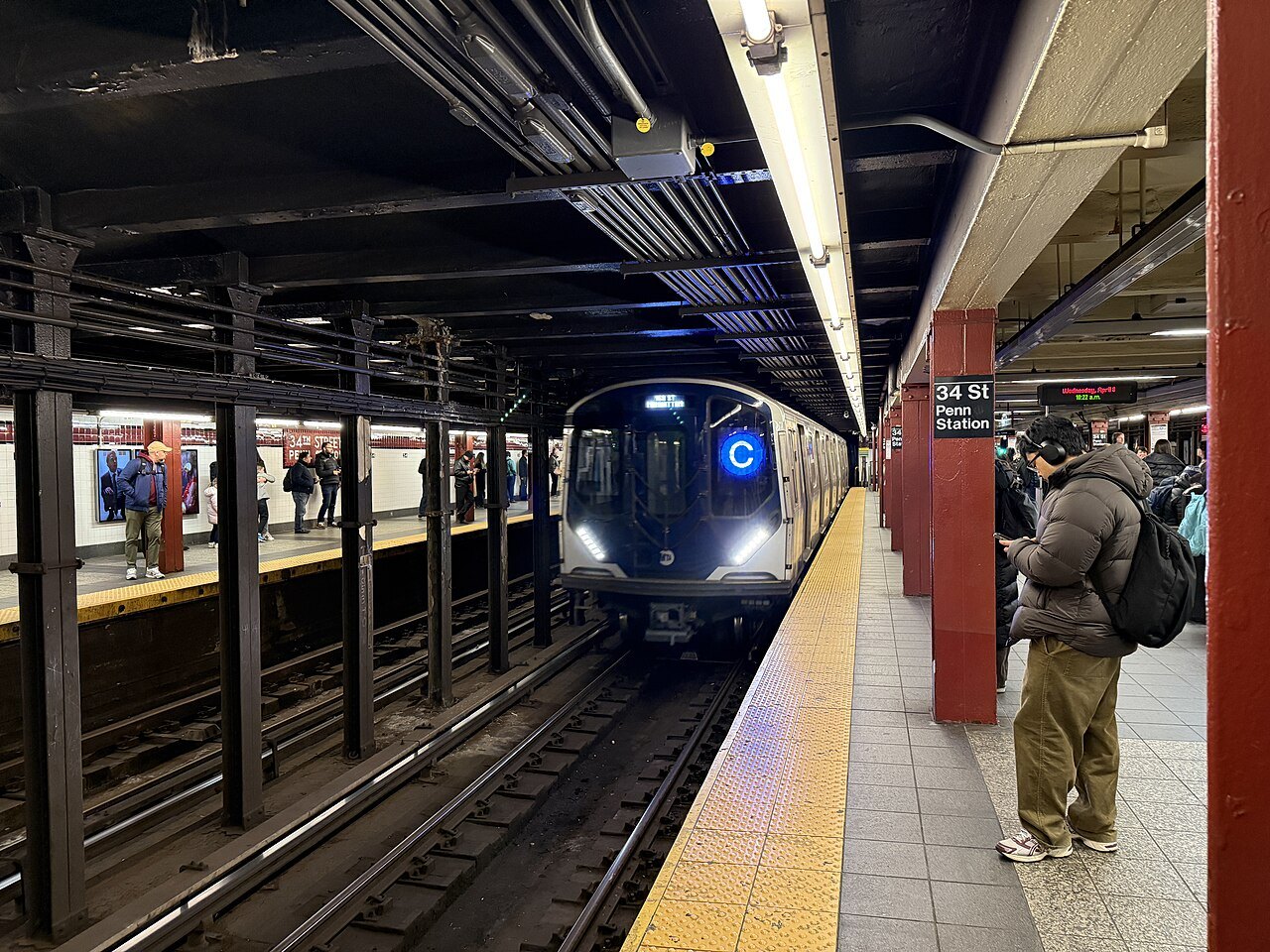
Check before you board. If your stop is a small one, take the local; if the express skips it, you will be carried several stations past it. The station signs and maps show which trains stop where, with local stops and express stops marked differently.
Paying the fare
Nearly all fares are now paid with OMNY, the tap-to-pay system whose rollout began in 2019 and was completed across the subway and buses a few years later. Tap a contactless bank card, a phone or watch with a payment app, or an OMNY card on the reader at the turnstile as you enter. You pay the same fare however far you ride, and you do not tap again when you leave.
Since February 2022, OMNY has capped what you pay: once you have tapped the same card or phone for a set number of rides within seven days, the rest of that week's rides are free. That makes it unnecessary to buy a weekly pass in advance, but it only works if each person uses their own card or phone. When several people share one card, only one tap within any fifteen-minute period counts toward the cap. The same tap pays for buses and the Roosevelt Island Tramway, with a free transfer between subway and bus.
Nights and weekends
Because the system never closes, the tracks have to be maintained while the trains keep running, and that means service changes. Late at night some routes stop running, run as a shorter shuttle, or make every stop instead of running express. On weekends, planned work often reroutes or suspends parts of lines.
The transit authority posts notices of planned changes in the stations and on the trains, and on its website and apps. Read the posters on the platform before you travel on a weekend, and listen to the announcements on the train, which are made by the conductor, who rides in the middle of the train while the operator drives from the front.
A few habits that help
Let passengers off before you board, as the step-aside signs tested on the busiest platforms remind riders, and move into the car rather than stopping at the doors. Keep your bag in front of you in crowded cars, and take off a backpack before you squeeze in. Stand to the right on escalators.
Many stations were built long before accessibility laws and have no elevators, so anyone with a stroller, a wheelchair or heavy luggage should check a station's accessibility before relying on it. Getting around covers the buses, ferries and taxis, and the grid explains how to find your way once you are back on the street.
Read next03
More from the journal
- Getting HereHow do you get from JFK Airport to Manhattan?There is no direct train from JFK to Manhattan, but there are three good ways in: AirTrain to Jamaica and the Long Island Rail Road, AirTrain to the subway, or a taxi at a flat rate. How each one works, what it involves with luggage, and how to choose.Read the piece →
- The Statue of Liberty and Ellis IslandHow do you visit the Statue of Liberty and Ellis Island?Every visitor travels on the same ferry, sold by one company. Which of the three tickets you need, why the crown sells out, how security works, how long to allow, and how to fit Ellis Island into the same day.Read the piece →
- The Brooklyn BridgeCan you walk across the Brooklyn Bridge?Yes, on a raised promenade between the roadways that is now for people on foot alone. Which way to walk, where to start and finish, how long it takes, when it is least crowded, and what to do in Brooklyn at the far end.Read the piece →