AIRTRAIN AND RAIL, THE SUBWAY, OR A YELLOW CAB01
How do you get from JFK Airport to Manhattan?
There is no direct train from JFK to Manhattan, but there are three good ways in: AirTrain to Jamaica and the Long Island Rail Road, AirTrain to the subway, or a taxi at a flat rate. How each one works, what it involves with luggage, and how to choose.
The answer in full02
Read on
The short answer
John F. Kennedy International Airport is in Queens, about 16 miles southeast of Midtown, and no train runs directly from its terminals into Manhattan. The quickest reliable way is AirTrain JFK to Jamaica station, then a Long Island Rail Road train to Penn Station or Grand Central. The cheapest is AirTrain to Jamaica or Howard Beach and then the subway. The simplest, if you have heavy bags or are traveling as a group, is a yellow taxi, which charges a flat rate between JFK and Manhattan.
All three work at any time of day. Which is best depends on how much luggage you have, where you are staying, and whether you arrive in the rush hour.
Some links on this page are affiliate links. If you book through one we may earn a commission, at no extra cost to you. It does not affect what is recommended here, and no sight page on this site carries one.
A transfer booked ahead, and somewhere to leave bags before check-in.
The airport
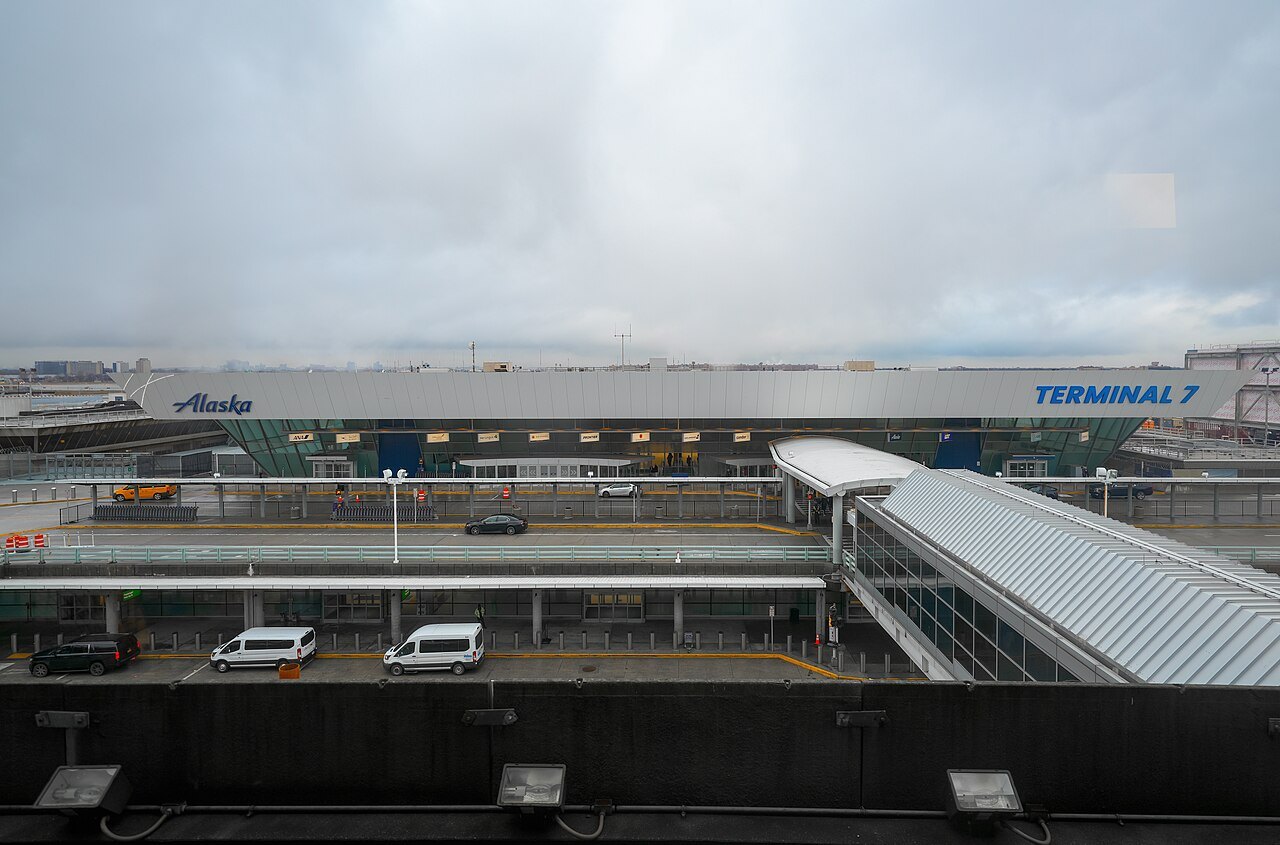
JFK is the primary international airport of the New York area and the busiest of the city's three, with nearly a hundred airlines flying to every inhabited continent. It opened in 1948 as New York International Airport, known as Idlewild, and was renamed for President Kennedy after his assassination in 1963. It lies on the shore of Jamaica Bay, with several passenger terminals arranged around a central area, and it is a hub for American Airlines, Delta and JetBlue.
Wherever you land, the first step on the rail routes is the same: follow the signs to AirTrain.
AirTrain JFK
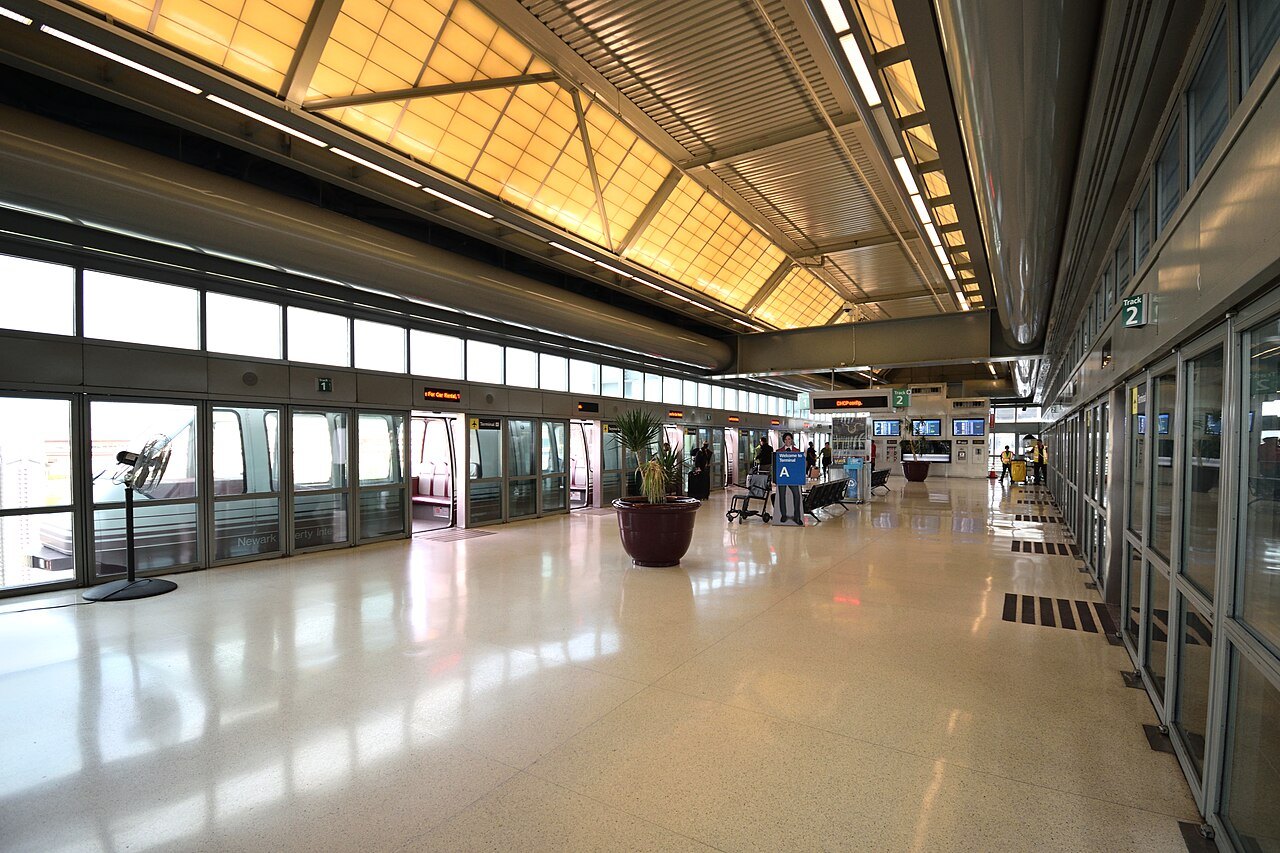
AirTrain JFK is a driverless elevated train, 8.1 miles long, that opened in 2003. It runs twenty-four hours a day, every day, on three lines that loop around the terminals and branch out to two stations outside the airport: Jamaica, in Queens, for the Long Island Rail Road and the subway, and Howard Beach, for the subway.
Riding it between the terminals is free, and so is riding to the long-term parking at Lefferts Boulevard and to Federal Circle, where shuttle buses leave for hotels and car rental companies. You pay a fare only when you enter or leave the system at Jamaica or Howard Beach, and there is no free transfer from AirTrain to the subway, the railroad or the buses. The trip from the terminals to either station takes about eight minutes, and the cars have room for luggage, though they fill up when several flights land at once.
By Long Island Rail Road
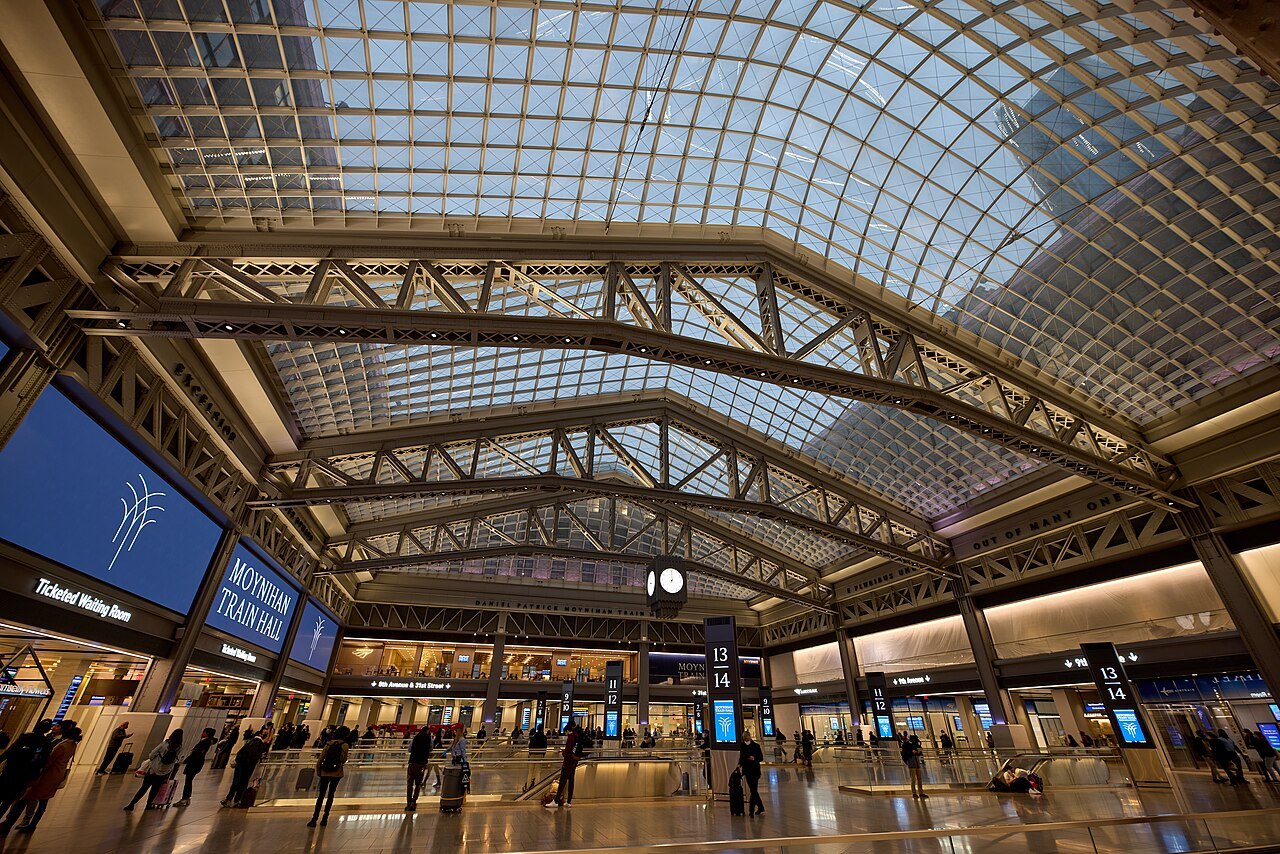
At Jamaica, AirTrain arrives beside the railroad station where Long Island Rail Road trains stop on their way into Manhattan. Buy a railroad ticket for the ride into the city and take any westbound train to Penn Station, on the West Side of Midtown, or to Grand Central Madison, the railroad's newer concourse beneath Grand Central Terminal on the East Side.
This is the fastest way in by public transit, and when AirTrain was planned the Port Authority estimated that the journey from JFK to Penn Station this way would take about an hour, half what it had before. It is the best choice if you are staying in Midtown, near either station.
By subway
The cheapest way into the city is AirTrain plus the subway. From Jamaica station, subway trains run through Queens into Midtown Manhattan; from Howard Beach, the A train runs through Brooklyn into Lower Manhattan and up the West Side. Pay with the same tap of a bank card or phone that you will use all week; AirTrain's fare is separate, paid as you leave its station.
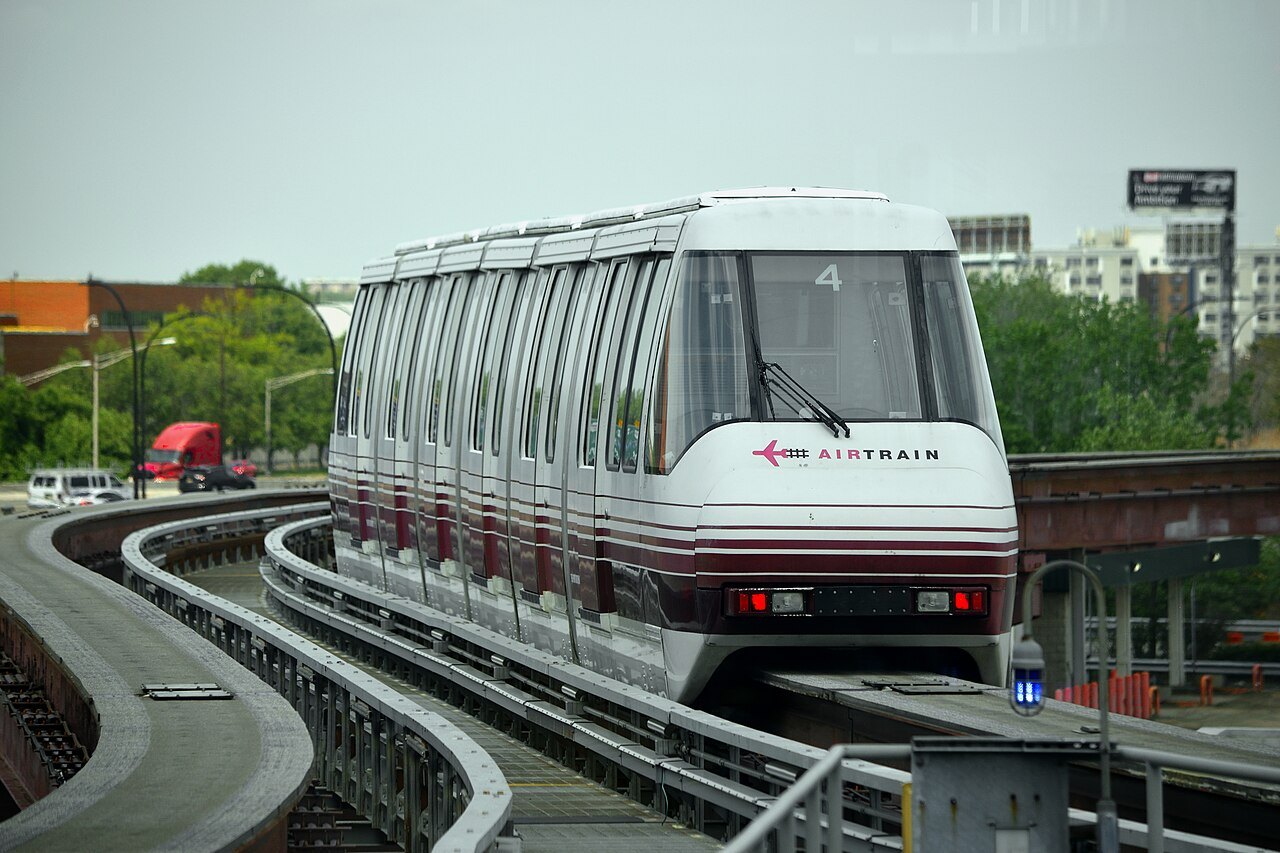
The subway takes longer than the railroad, stops often, and can be crowded in the rush hour, and many stations have stairs rather than elevators, so it is a better choice for travelers with light bags. It does reach neighborhoods the railroad does not, such as Lower Manhattan and the Upper West Side, often without a change. Getting around explains how to ride it.
By taxi
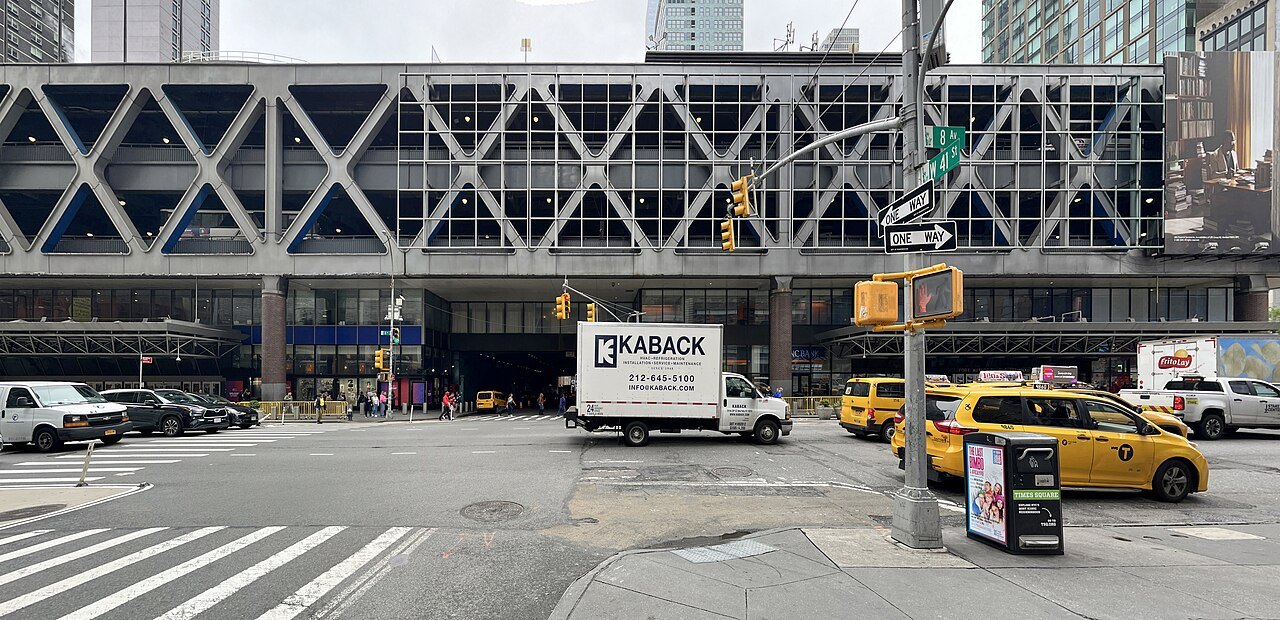
Yellow taxis wait at every terminal. By city rule, every trip by yellow cab between Manhattan and JFK is charged a flat rate rather than by the meter, plus tolls and tip, which makes the cost predictable whatever the traffic. The drive is about fifteen miles by road, and in light traffic a taxi can make it in around forty-five minutes; in the rush hour it can take much longer.
Take a yellow cab from the official taxi line, not one of the drivers who approach passengers inside the terminals. The apple-green boro taxis cannot pick up at the airports. Ride-hailing apps also serve JFK, with their own pickup areas and their own prices.
Why there is no direct train
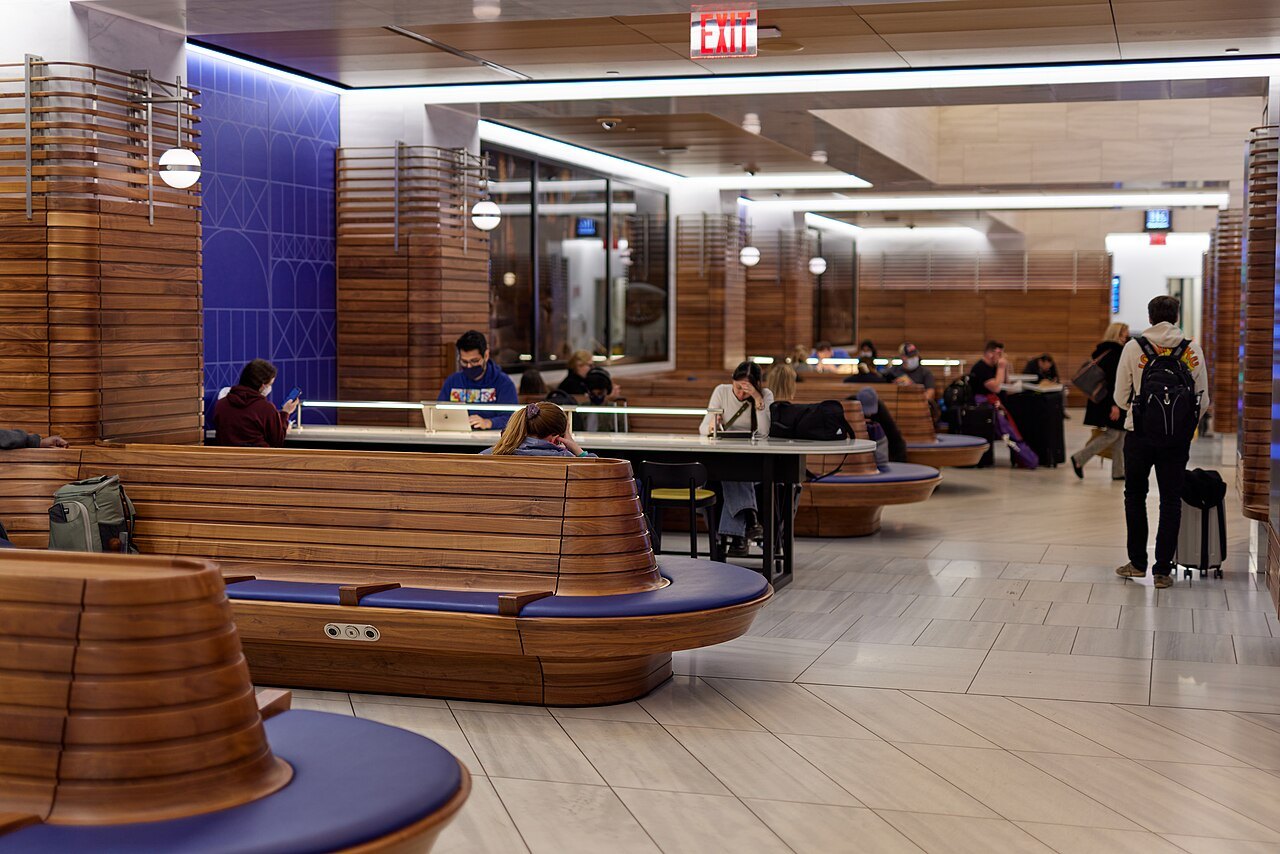
A rail link from JFK to Manhattan has been proposed since the 1940s, when planners suggested running a line down the median of the Van Wyck Expressway to Midtown. None of the plans was built for lack of money. From 1978 the transit authority ran the JFK Express, a premium-fare subway service from Midtown to Howard Beach, where shuttle buses carried riders on to the terminals; it was never popular.
The Port Authority finally built AirTrain in the 1990s and 2000s as a people mover inside Queens rather than a direct line, judging a connection to Penn Station or Grand Central too expensive and complicated. It opened on December 17, 2003, after many delays, riding free on its first day, and it has carried more passengers than forecast ever since. An extension to Manhattan was proposed after it opened but never built, which is why every rail trip from JFK still involves a change.
Choosing
If you are traveling light and staying near Penn Station or Grand Central, take AirTrain to Jamaica and the Long Island Rail Road: it is fast and immune to traffic. If you are on a budget and staying near a subway line, take AirTrain and the subway. If you are a family or a group, have heavy bags, or arrive late at night, a yellow cab at the flat rate is often worth it, since one fare covers everyone.
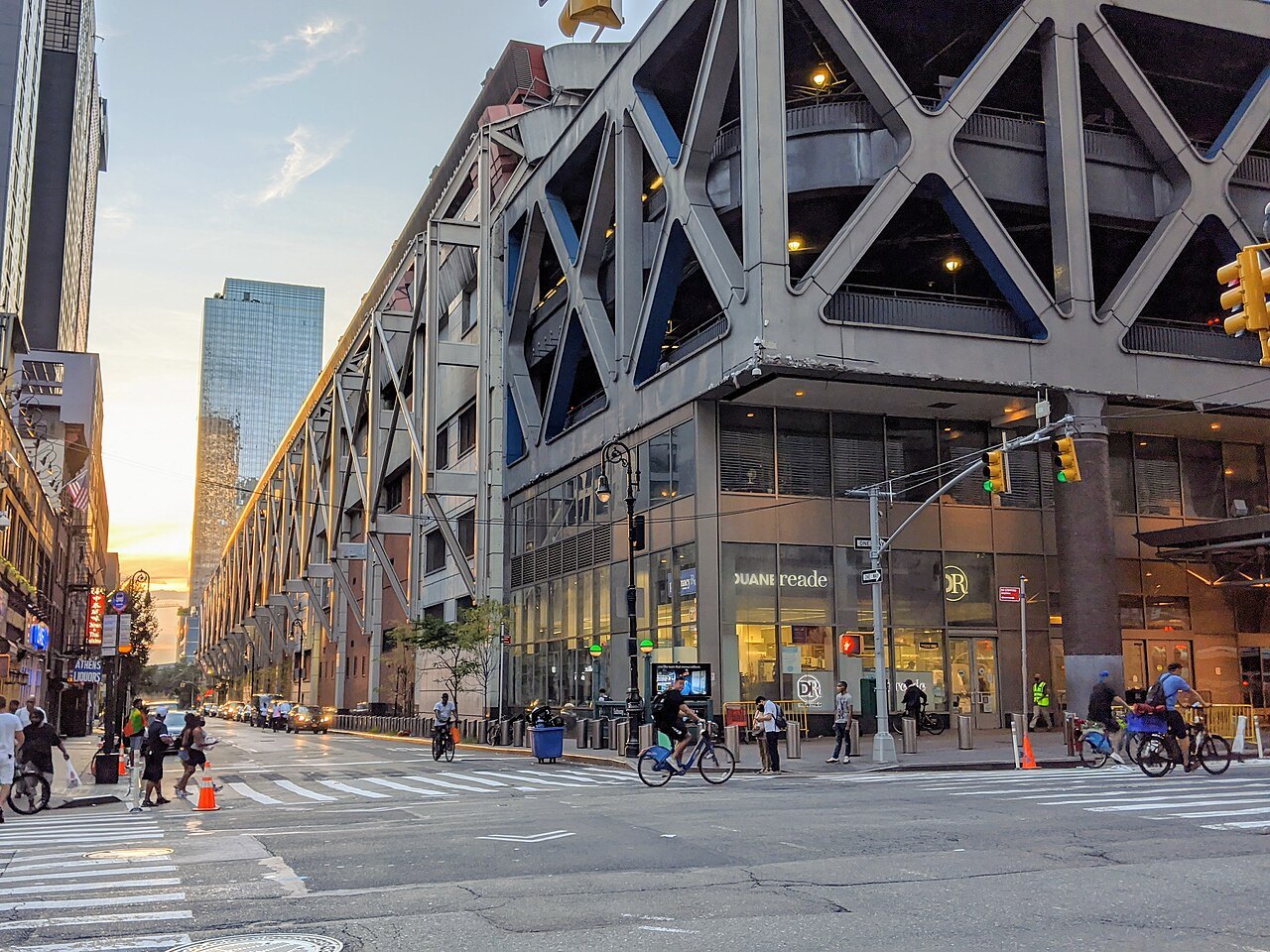
Whatever you choose, have a working bank card or phone ready to tap, know the name of the nearest subway station to your hotel, and check the cross street of your address before you land. Getting here covers LaGuardia, Newark and the railroad stations as well.
Read next03
More from the journal
- Getting AroundHow does the New York subway work for visitors?The subway runs all night, takes a tap of your bank card or phone, and reaches nearly everything on this site. How the lines are named, which platform to choose, the difference between local and express, how the fare cap works, and what changes at night and on weekends.Read the piece →
- The Statue of Liberty and Ellis IslandHow do you visit the Statue of Liberty and Ellis Island?Every visitor travels on the same ferry, sold by one company. Which of the three tickets you need, why the crown sells out, how security works, how long to allow, and how to fit Ellis Island into the same day.Read the piece →
- The Brooklyn BridgeCan you walk across the Brooklyn Bridge?Yes, on a raised promenade between the roadways that is now for people on foot alone. Which way to walk, where to start and finish, how long it takes, when it is least crowded, and what to do in Brooklyn at the far end.Read the piece →