THE WHITE HALL BESIDE THE MEMORIAL01
What is inside the Oculus at the World Trade Center?
What fills the Oculus: a white-ribbed station hall, PATH and subway entrances, and a mall beside the 9/11 memorial pools.
The answer in full02
Read on
Wings Over the Plaza
East of the memorial pools, a white structure of interlocking ribs rises out of the plaza, often described as a pair of wings lifting off the ground, or as the skeleton of a great bird. This is the Oculus, the main station house of the World Trade Center Transportation Hub, and the work of the Spanish architect Santiago Calatrava. It opened on March 3, 2016, the last of the site's major buildings to be finished, after the memorial, the museum and One World Trade Center.
The structure stands between the memorial plaza and the surrounding streets of Lower Manhattan, its ribs curving upward to meet at a central spine. In clear weather the spine can be drawn back to open the hall to the sky, a detail Calatrava built into the design from the start. From outside, the building reads as a single gesture rather than a conventional station entrance, and it is visible for several blocks around, a feature unusual among the buildings on the rebuilt site.
Beneath the ribs is a vast interior hall of white stone and steel, lit by the long skylight that runs the length of the roof. The scale is deliberate: the Oculus was built to carry heavy crowds of commuters and visitors through one shared space, rather than hide the crossing underground. Its size alone sets it apart from any other transit building in Manhattan, let alone from Lower Manhattan's older subway stations.
A Station Built for Trains
Despite its scale, the Oculus is first a working station. Beneath its vault are the entrances to the PATH trains that run under the Hudson River to New Jersey, along with entrances to many of the subway lines that stop under the World Trade Center site. Commuters and visitors share the same hall on their way down to the platforms, much as commuters have done at other major transit hubs across the city.
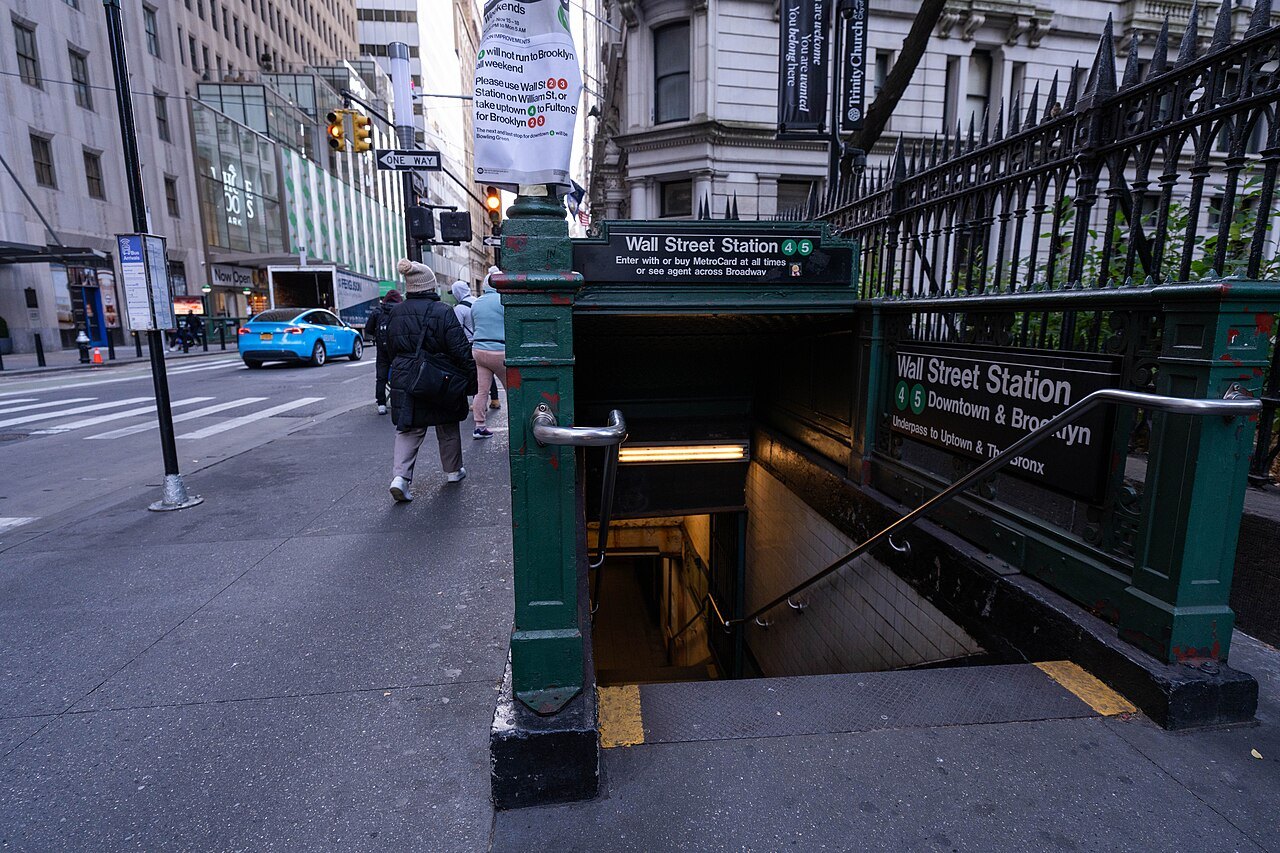
Several subway lines stop under the site, which makes the Oculus one of the easiest landmarks in Lower Manhattan to arrange to meet someone at, whether before a visit to the memorial or on the way to another part of the city. For the mechanics of which lines serve which platforms, see Getting Around.
Because the Oculus stands directly on the plaza, a visitor arriving by PATH or subway can walk up from the platforms into the main hall and continue straight out onto the memorial plaza without retracing steps through city streets. That makes it a natural starting point for a first visit to the site.
The Mall Beneath the Nave
The lower floors of the Oculus hold a shopping mall, and the two underground floors beneath the main hall carry part of the Westfield World Trade Center mall. These retail levels sit below the main station concourse, separate from the great hall itself that visitors first enter from the plaza.
Visitors moving between the memorial plaza, the PATH platforms and the subway pass close to these retail levels without necessarily entering them, since the architecture keeps the upper hall largely free of shopfronts. The mall occupies its own floors below the main concourse rather than spilling into the great white room overhead, which stays open for passage and for pausing to look up at the ribs before continuing on.
Anyone planning to combine a stop at the mall with a visit to the memorial pools or the museum should allow separate time for each, since the two experiences occupy different parts of the same building and are not reached by the same route once a visitor is inside the hall.
Walking Through the Nave
Even for a visitor with no train to catch and no shopping to do, the Oculus is worth walking through for the space alone. The hall has been compared to a great white nave, filled with daylight from the long skylight above, and its scale is unlike anything else built on the site, with few transit stations anywhere in the city sharing it.
Walking the length of the hall and looking up at the curve of the ribs is itself a reason to step inside, whether or not a visitor is catching a train or stopping at the mall. The space connects the memorial plaza to the surrounding streets, so it is easy to fold into a route on foot without planning a separate trip.
Because the hall sits at the center of a working transit hub, it carries the ordinary business of commuting alongside visitors who stop to look up at the architecture, and both uses were part of Calatrava's design from the outset. The result is a public room that functions as a station, a corridor and a landmark all at once, an unusual combination for a working train station.
Finding Your Way
The memorial plaza itself is free to enter and can be reached from any side, so a visitor does not need to pass through the Oculus to reach the pools. But because several subway lines and the PATH both stop beneath the site, many visitors arrive through the station rather than from the street, since the connections lie below ground.
Anything beyond the memorial plaza that requires a ticket, including the museum and the One World Observatory, should be checked and booked with the relevant operator in advance; see Booking Ahead for how that works across the site. The Oculus itself does not require a ticket to walk through, whether a visitor is catching a train or simply stopping to look at the hall.
For getting to the site in the first place, whether from elsewhere in Manhattan or from further afield, it helps to know in advance which subway and PATH connections bring most visitors through the Oculus, and how to plan a route back out again once the visit to the memorial is over.
Nearby
St. Paul's Chapel, which stood unharmed across the street during the attacks of 2001, is a short walk east on Broadway from the Oculus, and Wall Street, with Trinity Church beside it, lies just a little further south along Broadway. Both are easy to combine with a stop at the memorial on the same walk through this part of Lower Manhattan.
The Statue of Liberty ferries leave from the Battery, reached along the Hudson River promenade a short walk south of the site. Details of tickets and of visiting both Liberty Island and Ellis Island are covered on the Statue of Liberty page, which is worth reading before heading down there.
The southern end of the High Line is a subway ride north of the World Trade Center, making it straightforward to pair a morning at the memorial with an afternoon walk on the elevated park, or to split the two across separate days using the same subway lines that stop at the Oculus.
Read next03
More from the journal
- Getting AroundHow does the New York subway work for visitors?The subway runs all night, takes a tap of your bank card or phone, and reaches nearly everything on this site. How the lines are named, which platform to choose, the difference between local and express, how the fare cap works, and what changes at night and on weekends.Read the piece →
- The 9/11 Memorial and One World Trade CenterWhat is the Survivor Tree at the 9/11 Memorial?A Callery pear that lived through the attacks still grows in the 9/11 Memorial plaza, among the oaks.Read the piece →
- Wall Street and Trinity ChurchWho is buried in the churchyard of Trinity Church?A guide to Trinity Churchyard, the burial ground beside Wall Street holding Alexander Hamilton, Robert Fulton and Albert Gallatin.Read the piece →