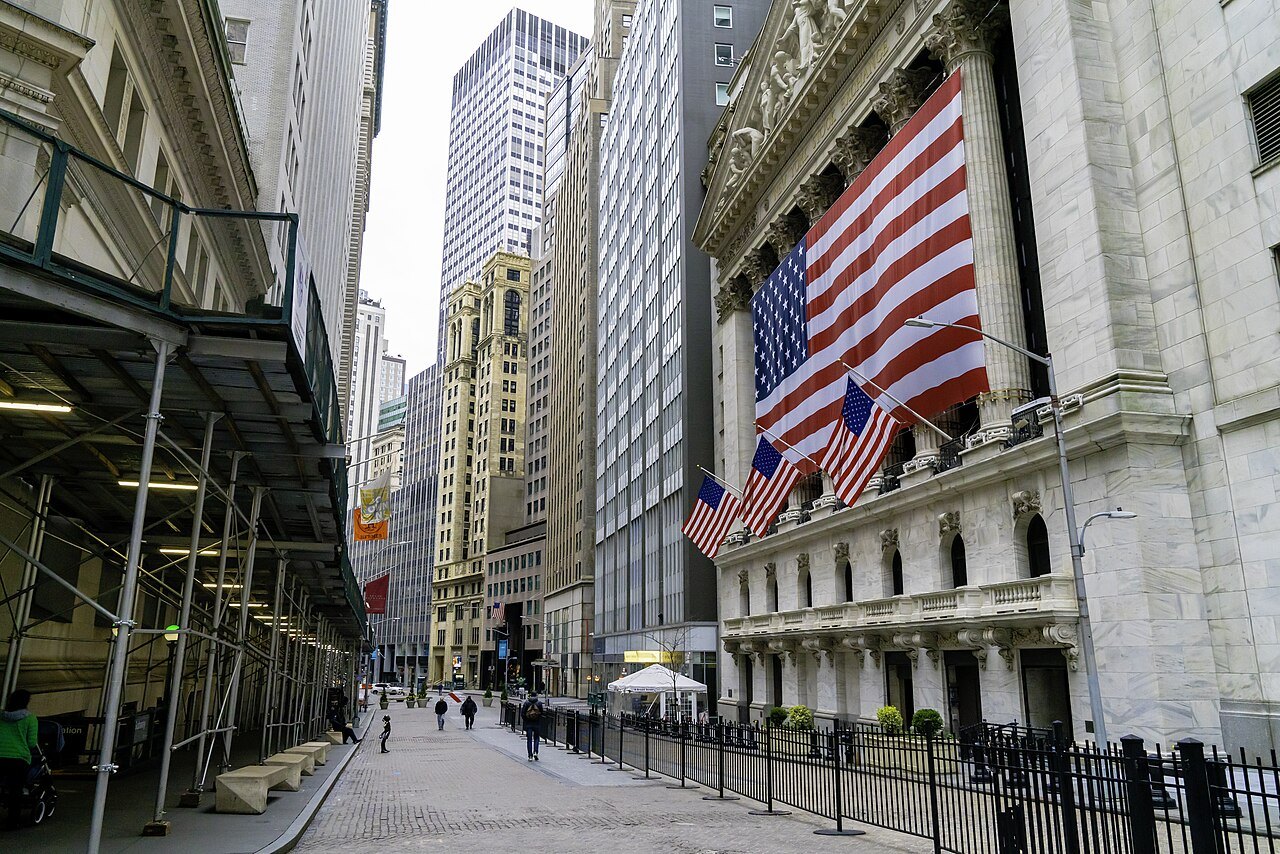
GRAVES BESIDE WALL STREET01
Who is buried in the churchyard of Trinity Church?
A guide to Trinity Churchyard, the burial ground beside Wall Street holding Alexander Hamilton, Robert Fulton and Albert Gallatin.
The answer in full02
Read on
A Churchyard at the Head of Wall Street
Wall Street runs only eight blocks, from Broadway down to the East River, and a walk along it leads the eye west toward a single building at its head: Trinity Church. The present church, the third to stand on this ground, was designed by Richard Upjohn in the Gothic Revival style and built between 1839 and 1846. Its spire, topped by a gilded cross, once dominated the skyline of Lower Manhattan.
That spire was the tallest structure in the United States until 1869 and the tallest in New York City until 1890, a reminder of how low the surrounding streets once stood before the age of the skyscraper. Today it is dwarfed by the towers of the Financial District, but it still closes the view down Wall Street from the river end.
Around the church lies Trinity Churchyard, one of three burial grounds the parish maintains. It surrounds the present nineteenth-century building but holds graves that are considerably older, and it counts among its markers some of the best-known names in the city's early history, worn now by centuries of weather and city air.
Alexander Hamilton and His Family
Alexander Hamilton, the first secretary of the treasury, is buried in Trinity Churchyard. His grave lies within sight of the financial district he did much to build, a short walk from the Stock Exchange and Federal Hall, along the same street whose name has come to stand for American finance.
Buried beside him are his wife, Elizabeth Schuyler Hamilton, and her sister, Angelica Schuyler Church. The three graves are set close together within the churchyard, among the memorials that line the paths around the church on the Broadway side of Wall Street, not far from where the street itself begins its run toward the East River.
Hamilton's monument is larger than many of the surrounding headstones, and it stands apart within the churchyard's rows, close to the corner of Wall Street and Broadway, near the point where the street itself begins its short run toward the river, marking the western end of the walk described on the Wall Street page.
Other Names in the Stones
Robert Fulton, the engineer who built the first commercially successful steamboat, is buried in Trinity Churchyard as well, along with Albert Gallatin, who served as secretary of the treasury after Hamilton. Their graves lie among the same paths as Hamilton's, part of a churchyard that reads like a roll call of the early republic's finance and engineering.
The churchyard's connections extend beyond its burials. Columbia University began its life on land belonging to Trinity Church, chartered in 1754 as King's College, before it later moved further north on Manhattan. The parish's role in the city's civic and educational life reached well past the walls of its own building.
Many of the stones are worn by centuries of weather, and some inscriptions are difficult to make out from a distance. A visitor searching for a specific grave should ask at Trinity Church directly, since markers are spread across the grounds on both sides of the building and are not all signed.
The Church Behind the Graves
Trinity's history reaches back to the earliest years of the English city, and the ground it stands on is older still. Long before the present church existed, the Dutch called this street Het Cingel, the Belt, and a defensive wall ran along its line from 1653 to 1699, marking the northern edge of New Amsterdam.
After the English took the city in 1664, tax rolls referred to the street as the Belt or the City Wall, the name that stuck ever after. In the eighteenth century the street held a slave market and the city's first securities trading, and from 1703 New York's city hall stood nearby, in the building later known as Federal Hall.
Trinity Church's present building sits at the head of this old street, so a walk to the churchyard also takes in the layered history around it: the site of the old city wall, the ground where the earliest stock trades took place, and the site of the first seat of city government, all within a few blocks of the church.
St. Paul's Chapel, a Few Blocks North
Trinity Church also runs St. Paul's Chapel, a short walk north on Broadway. Built between 1764 and 1766, it is the oldest surviving church building in Manhattan, predating the present Trinity Church by more than seventy years. George Washington worshipped there during his time in New York, years before the present Trinity building went up.
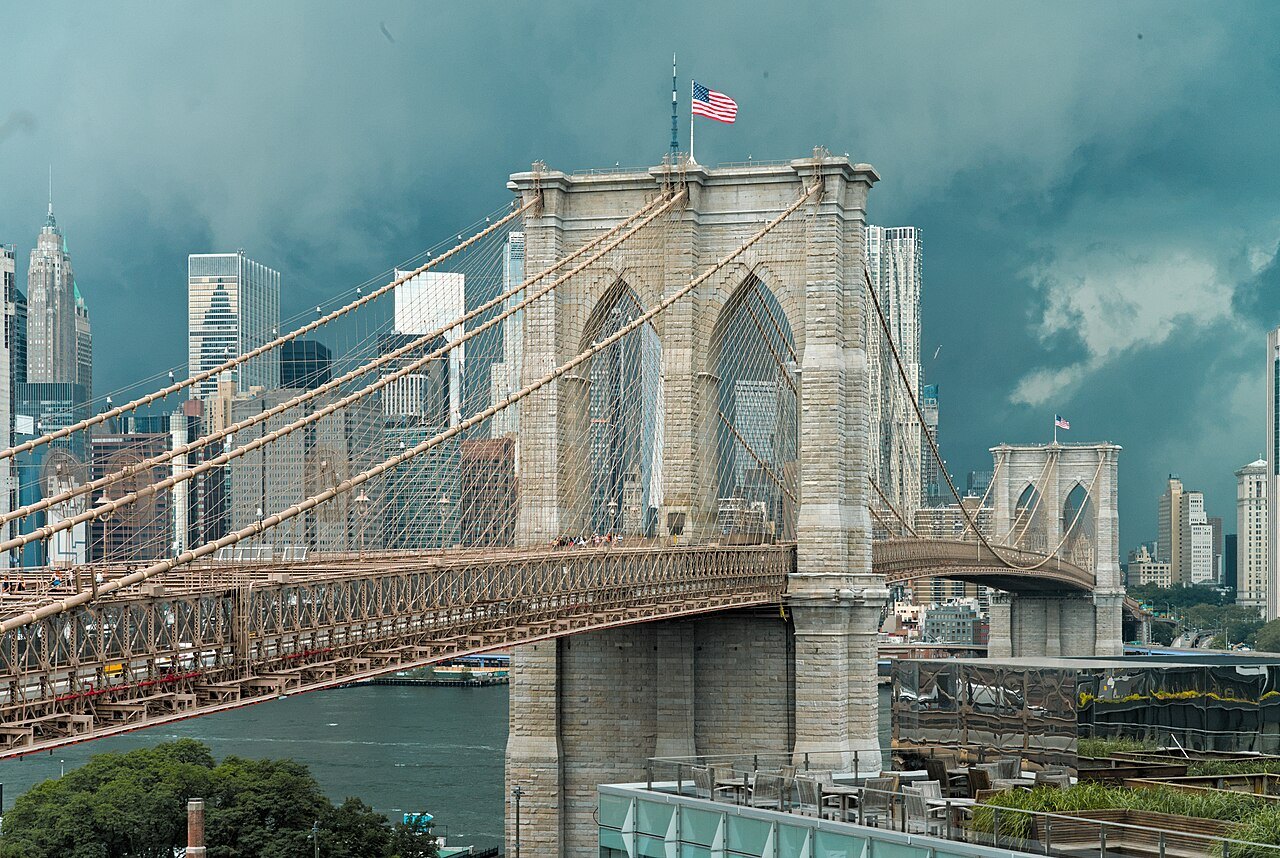
St. Paul's Chapel stood directly across the street from the World Trade Center site, and it survived the attacks of September 2001 unharmed while the buildings around it were destroyed. New Yorkers still call it the little chapel that stood, a name that ties it to the same parish as the churchyard on Wall Street.
The two buildings, Trinity Church and St. Paul's Chapel, form a pair at either end of a short stretch of Broadway, one holding the graves of the city's early statesmen and engineers, the other a survivor of a much later disaster. Together they bracket a walk through some of Lower Manhattan's oldest ground.
How to Visit
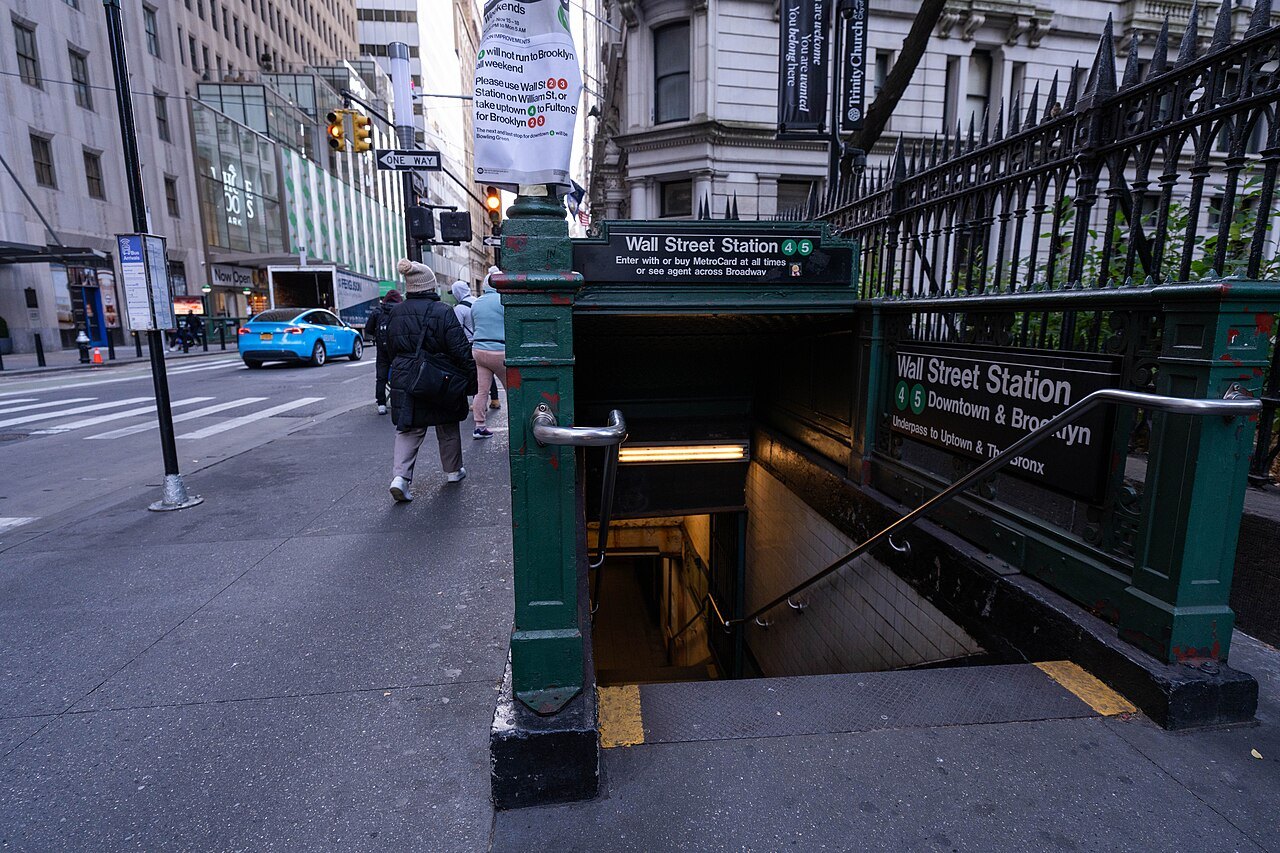
Trinity Churchyard sits at the corner of Broadway and Wall Street, at the western end of the walk described earlier, and it costs nothing to look into it from the street or to walk its paths. Visiting arrangements can change, so check current details directly with Trinity Church before planning a visit built around the churchyard alone.
The best approach is on foot, since the whole of Wall Street covers only a few blocks. From the churchyard, walk east down Wall Street past Federal Hall and the Stock Exchange, then turn down Broad Street and back to Bowling Green and the bronze bull, a walk that takes under an hour at an easy pace.
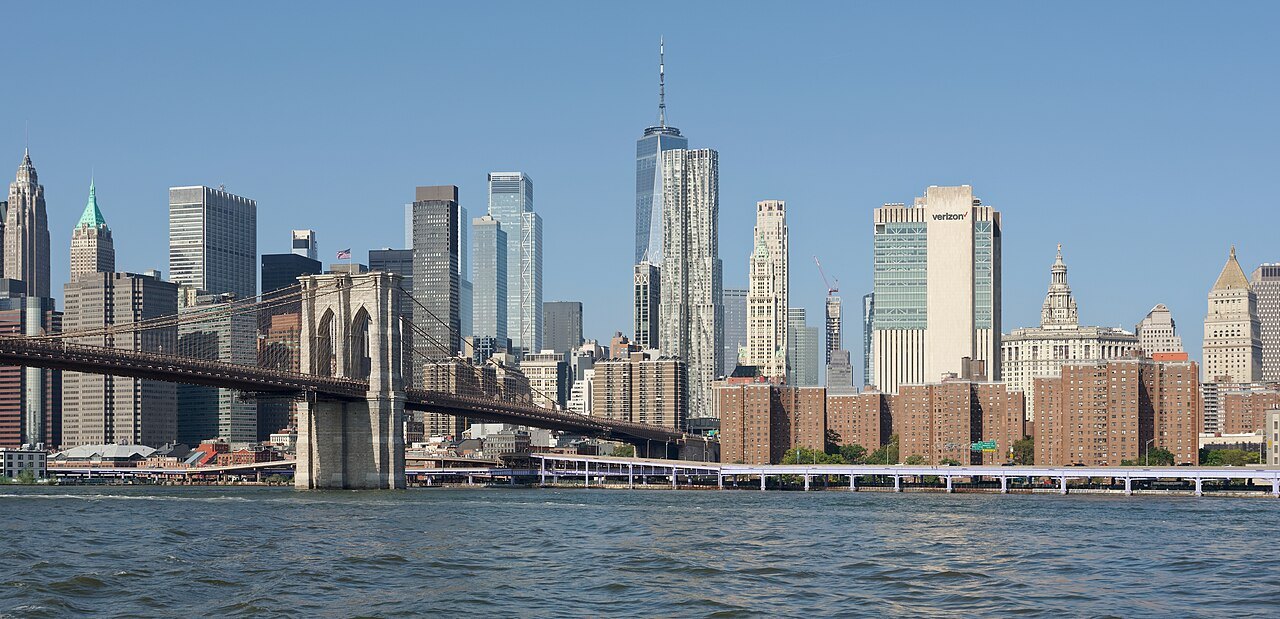
Several subway lines stop near Wall Street and Broadway; the getting around page explains which ones and how to reach them. Because this part of Manhattan predates the numbered street grid, a visitor should keep track of cross streets by name rather than number while walking between Trinity Church and Federal Hall.
The churchyard tends to be quieter than the crowds at the bull two blocks away, and it rewards slow walking rather than a quick pass-through. Weekends, when the Financial District's office workers are away, are generally calmer than weekdays, making it easier to read the older stones near the church's walls.
Nearby Sights
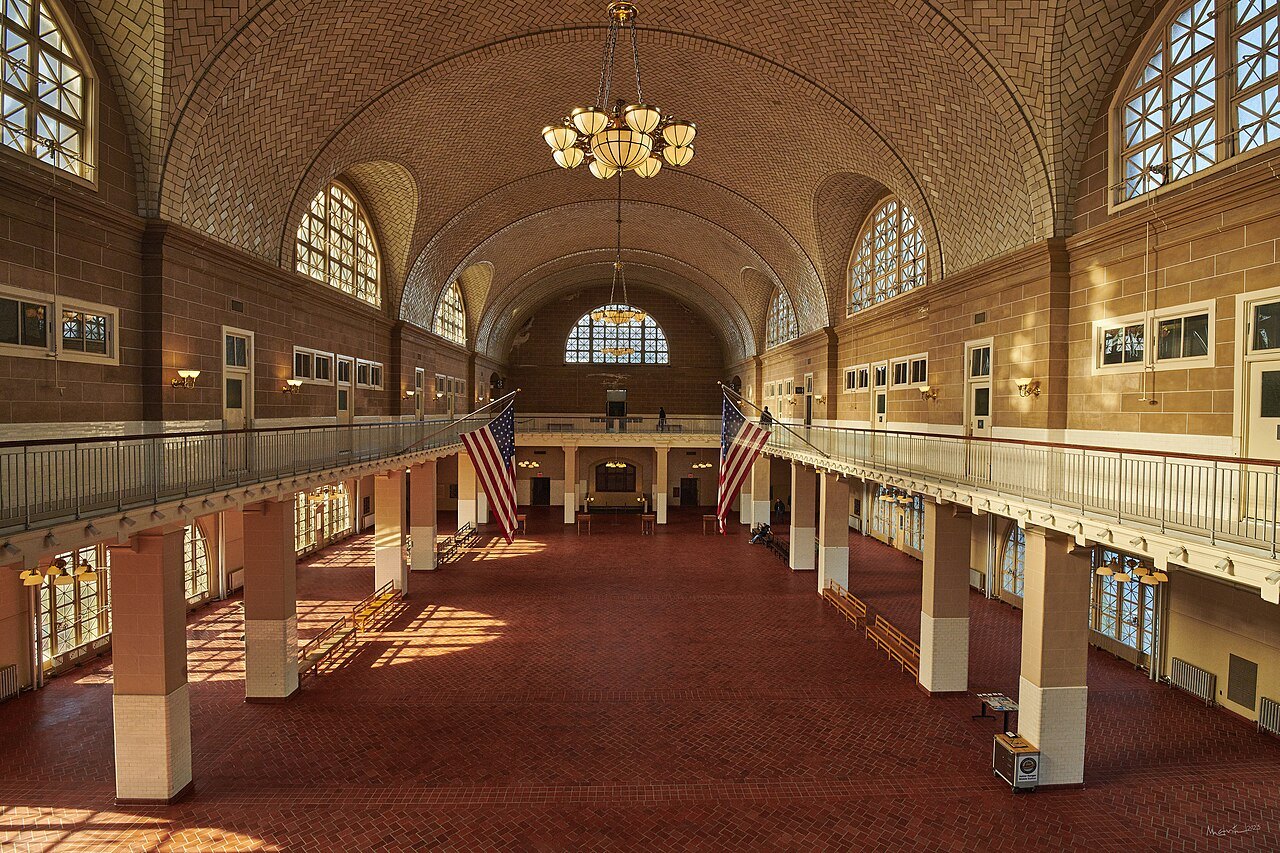
From Bowling Green, a short walk south of the churchyard, it is close to the Battery and the ferries that reach the Statue of Liberty and Ellis Island. A visitor planning to continue in that direction should check ferry details with the operator before setting out, since this article covers only the churchyard and the streets immediately around it.
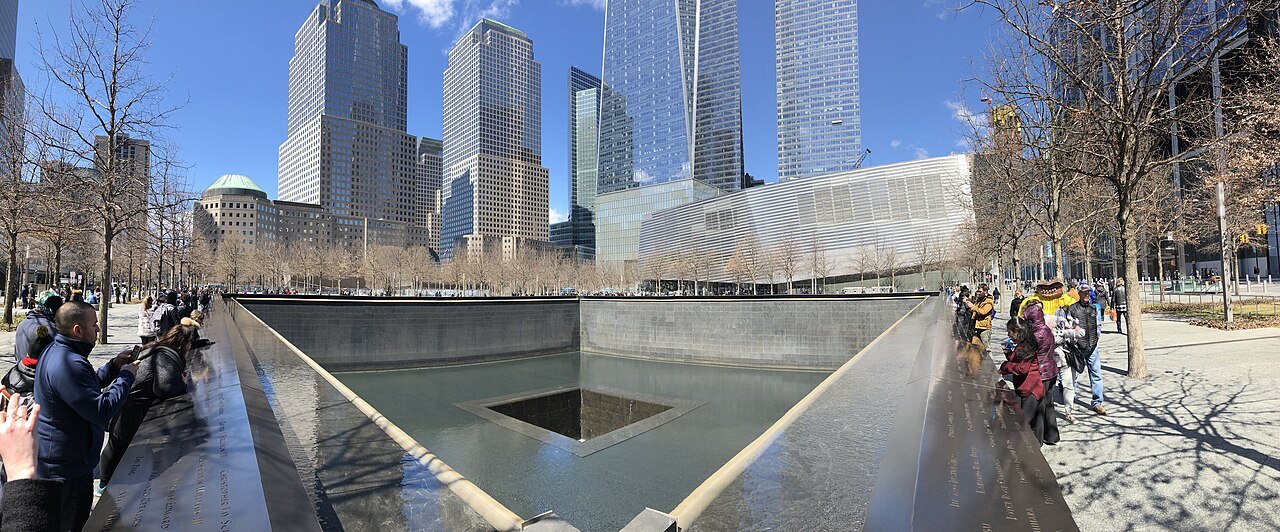
North along Broadway from Trinity, past St. Paul's Chapel, lies the site of the World Trade Center and the 9/11 Memorial. East of City Hall, the walkway onto the Brooklyn Bridge begins, a walk that many visitors combine with a stop at Trinity's churchyard earlier in the same day, since both sit within Lower Manhattan's older streets.
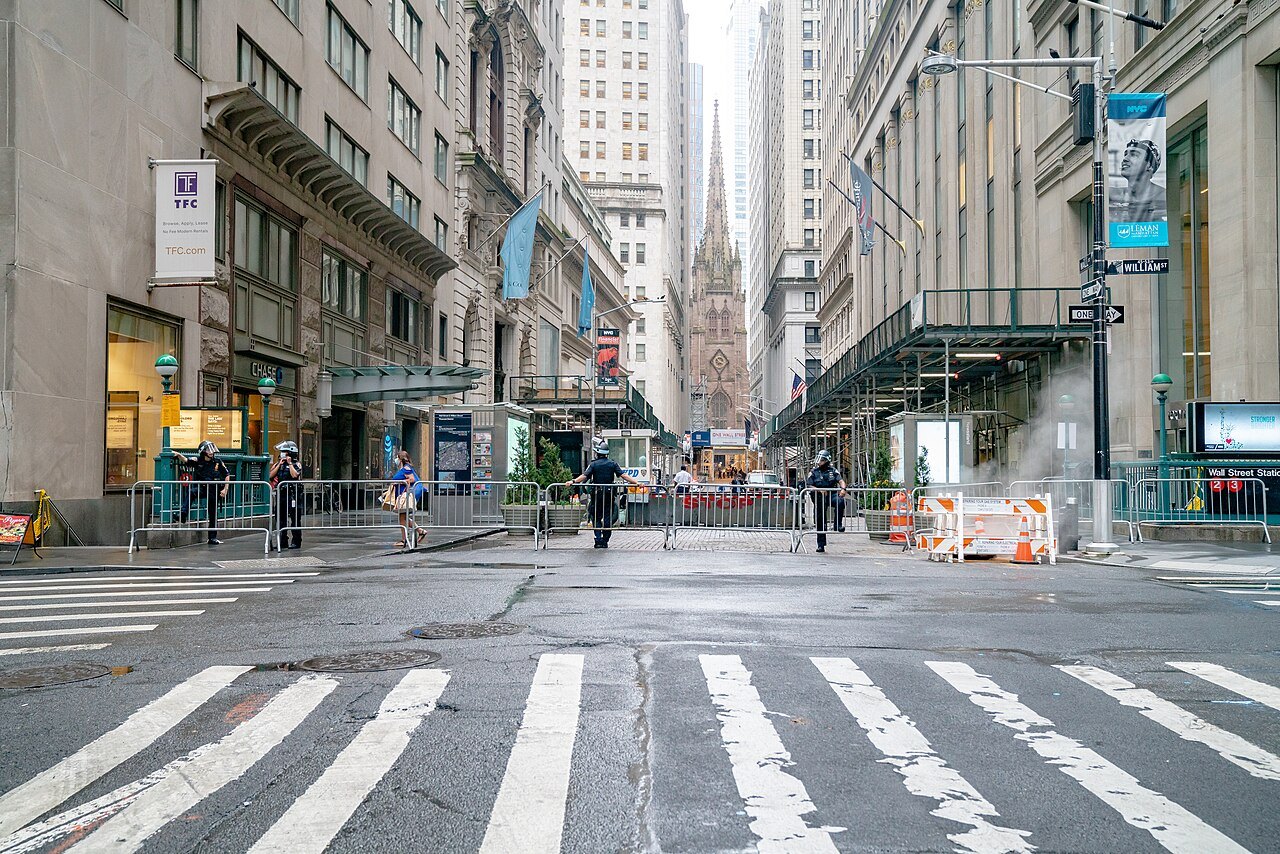
Each of these sights sits within an easy walk of the churchyard, and together they make Lower Manhattan one of the most compact parts of the city to explore on foot, with centuries of history layered into a few square blocks, from the old Dutch wall to the modern memorial that stands nearby.
Read next03
More from the journal
- Wall Street and Trinity ChurchWhat is left of Dutch New Amsterdam in Lower Manhattan?What survives of New Amsterdam along Wall Street, from a vanished wall to a park that outlived the fort beside it.Read the piece →
- The Statue of Liberty and Ellis IslandHow do you visit the Statue of Liberty and Ellis Island?Every visitor travels on the same ferry, sold by one company. Which of the three tickets you need, why the crown sells out, how security works, how long to allow, and how to fit Ellis Island into the same day.Read the piece →
- The Brooklyn BridgeCan you walk across the Brooklyn Bridge?Yes, on a raised promenade between the roadways that is now for people on foot alone. Which way to walk, where to start and finish, how long it takes, when it is least crowded, and what to do in Brooklyn at the far end.Read the piece →