A SPIRAL ON FIFTH AVENUE01
Why did Frank Lloyd Wright design the Guggenheim as a spiral?
The story behind Frank Lloyd Wright's spiral museum on Fifth Avenue, and why it still divides opinion.
The answer in full02
Read on
A monument against the grid
The Solomon R. Guggenheim Museum sits at 1071 Fifth Avenue, between 88th and 89th Streets, on the stretch of Fifth Avenue known as Museum Mile. Among the stone and brick apartment houses of the Upper East Side, its smooth pale curves look like something that arrived from elsewhere. That contrast is not an accident. Frank Lloyd Wright wanted a building that owed nothing to its neighbors, and nothing to the rectangular grid of Manhattan streets around it.
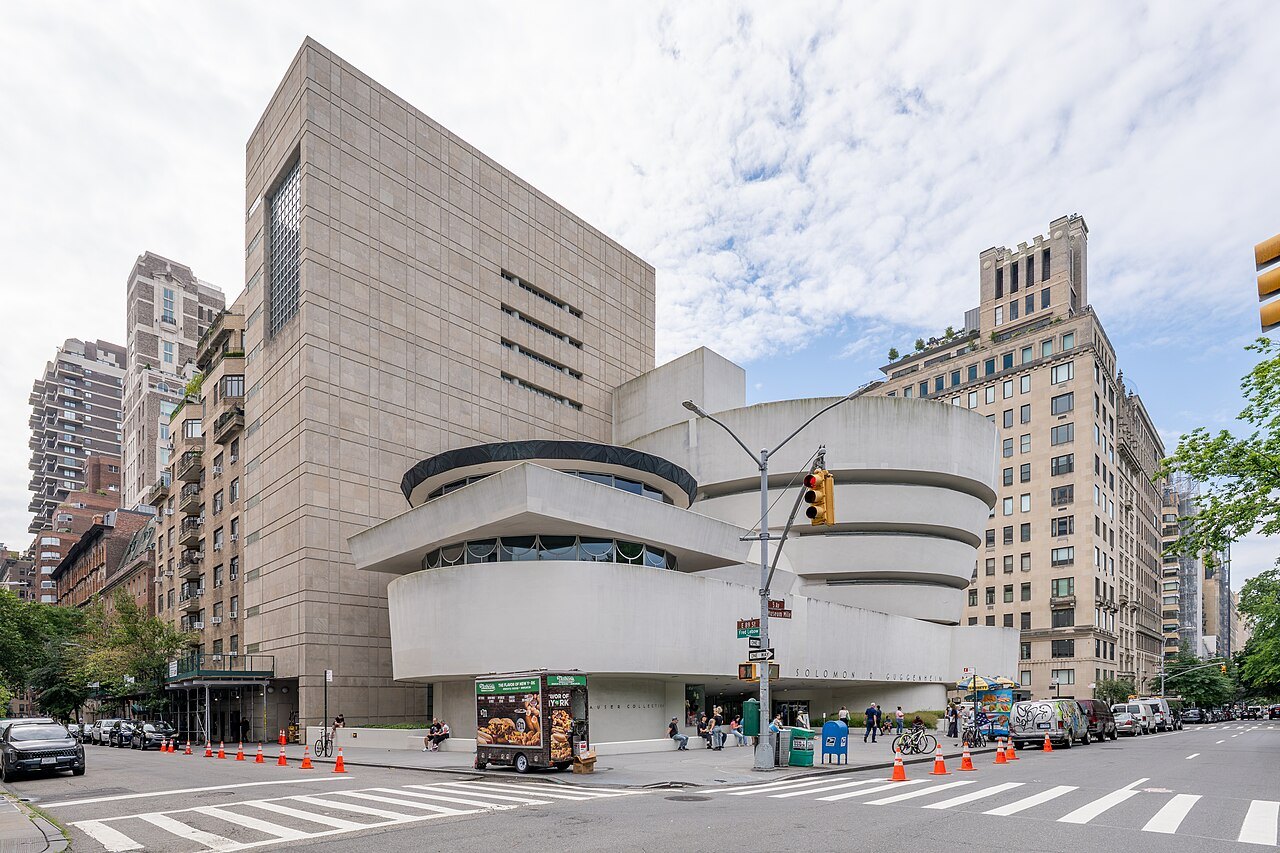
Wright was already in his seventies when he took the commission, and the Guggenheim turned out to be the only museum he ever designed and his last major work. Completed in 1959, it has become one of the defining buildings of twentieth-century architecture. In 2019 UNESCO added it to the World Heritage List, grouped with seven other Wright buildings under the title The Twentieth-Century Architecture of Frank Lloyd Wright.
From Old Masters to the avant-garde
The building exists because of a change of heart. Solomon R. Guggenheim, heir to a mining fortune, began as a collector of Old Masters. In 1926 he met the artist Hilla von Rebay, who introduced him to the European avant-garde and to what she called non-objective art, abstraction stripped of recognizable subject matter. He changed direction entirely, buying the work of Wassily Kandinsky and his contemporaries instead.
At first the collection hung in Guggenheim's apartment at the Plaza Hotel. In 1939 his foundation opened the Museum of Non-Objective Painting on East 54th Street in Midtown, with Rebay as director. It was a start, but Rebay wanted something grander: in 1943 she and Guggenheim wrote to Wright asking him to design a permanent home, a building she described as a temple of spirit.
Fifteen years to a finished building
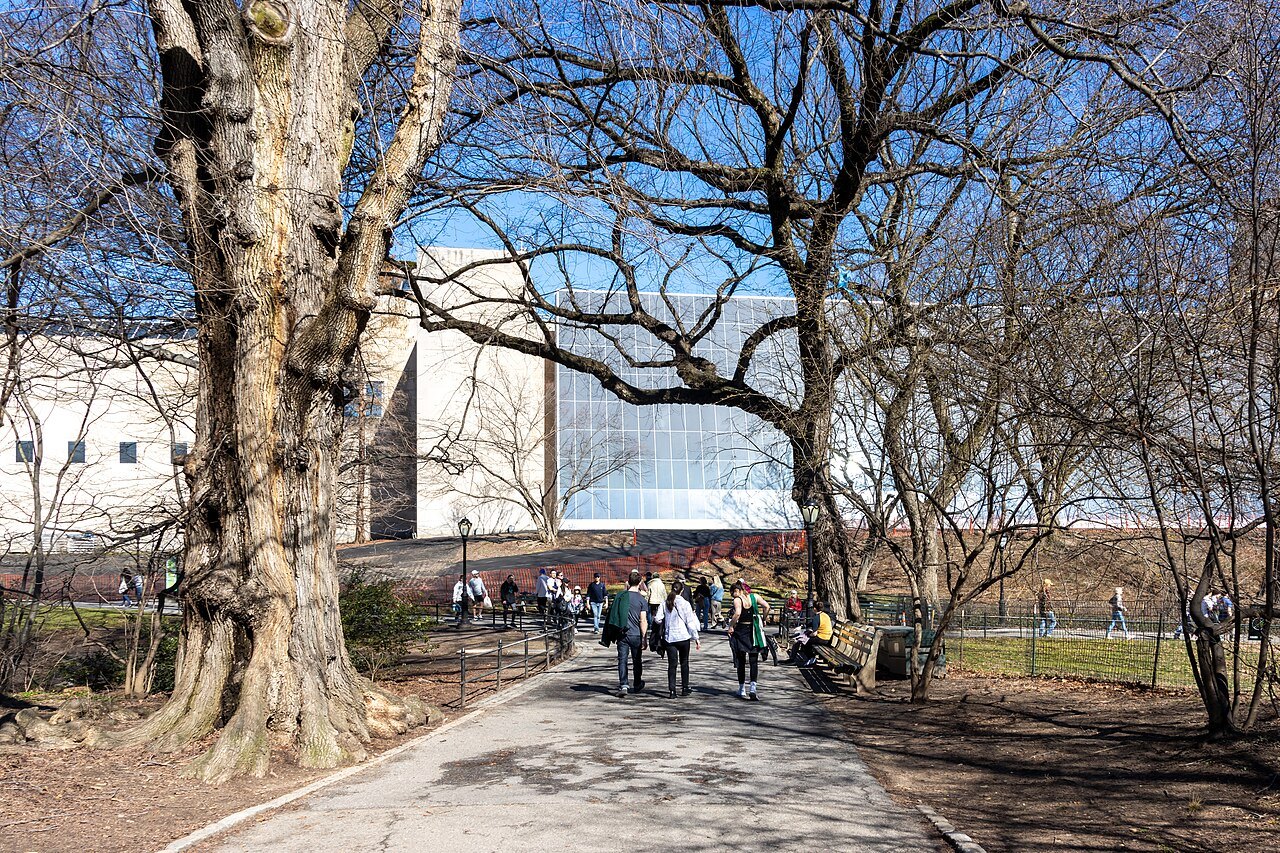
Rebay had assumed Wright, by then in his seventies, must already be dead; Guggenheim's wife knew otherwise. In 1944 the foundation bought the Fifth Avenue site facing Central Park, whose greenery Guggenheim valued as relief from the city's noise and concrete. What followed was a fifteen-year struggle: more than seven hundred sketches, six full sets of working drawings, and a budget that doubled before construction finished.
Guggenheim died in 1949, three years after work on the design began in earnest, and the museum took his name in 1952. Rebay, who disagreed with the family's plans for the collection, resigned as director that same year, though she later left part of her own collection to the foundation. Wright himself died in April 1959, six months before the doors opened to the public he had spent a decade and a half designing for.
Why a spiral, and why inverted
Wright's early concept for the building was described as an inverted ziggurat, the opposite of the stepped pyramid-towers of ancient Mesopotamia, which narrow as they rise. His building does the reverse: a stack of curved concrete bands that widen as they climb toward the sky. The effect from Fifth Avenue is less a building with a facade than a single continuous form, closer to sculpture than to conventional architecture.
That form was not only an aesthetic choice. Wright wanted a single open interior that a visitor, or a wheelchair, could follow continuously from the bottom of the building to the top, without stairs breaking the route. A spiral ramp solved that problem in one gesture, while also creating a building whose outside and inside share the same curved logic, something very few museums had attempted before.
Inside the rotunda
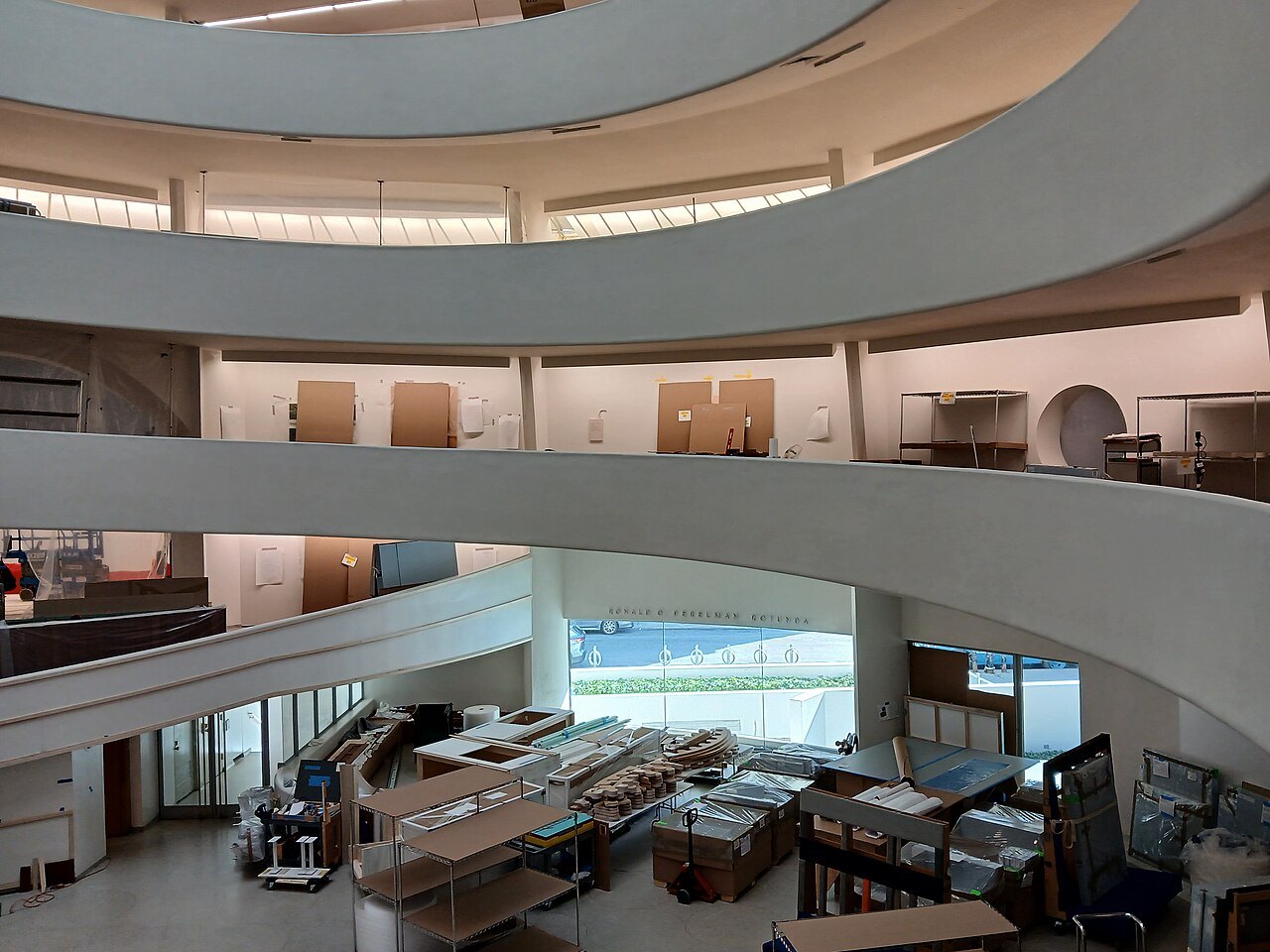
The main gallery is one open rotunda, lit from a skylight six stories above the floor. A helical ramp climbs the full height of the room, and exhibitions hang along its walls, so that walking the ramp means seeing art beside you while glimpsing, across the open center of the building, other visitors looking at other art on every level above and below. The usual way to see it is to take the elevator in the triangular service core to the top and walk back down the gentle slope.
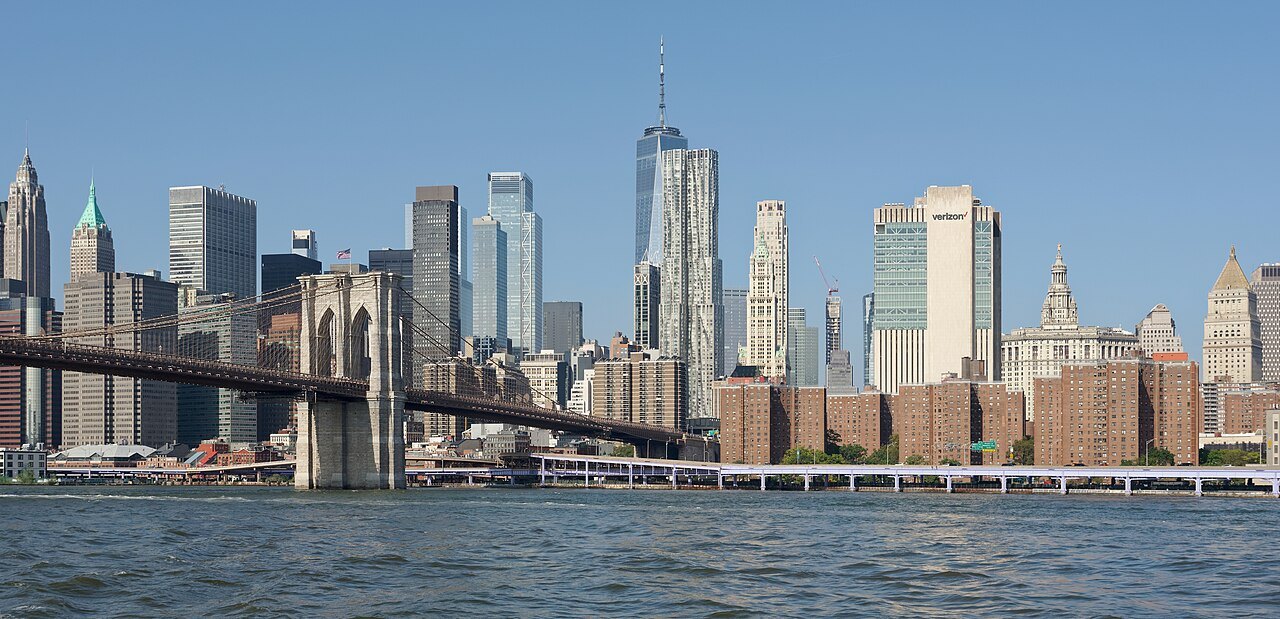
The tilted, curved walls caused arguments from the start about how to hang paintings on them. The museum's mid-century director, James Johnson Sweeney, painted the walls white and hung pictures from metal bars, against Wright's own wishes. Critics attacked the building on exactly these grounds when it opened, then came around; the architecture writer Paul Goldberger later argued it made it acceptable for architects to design intensely personal museums, so that nearly every museum built since owes it something.
The collection on view
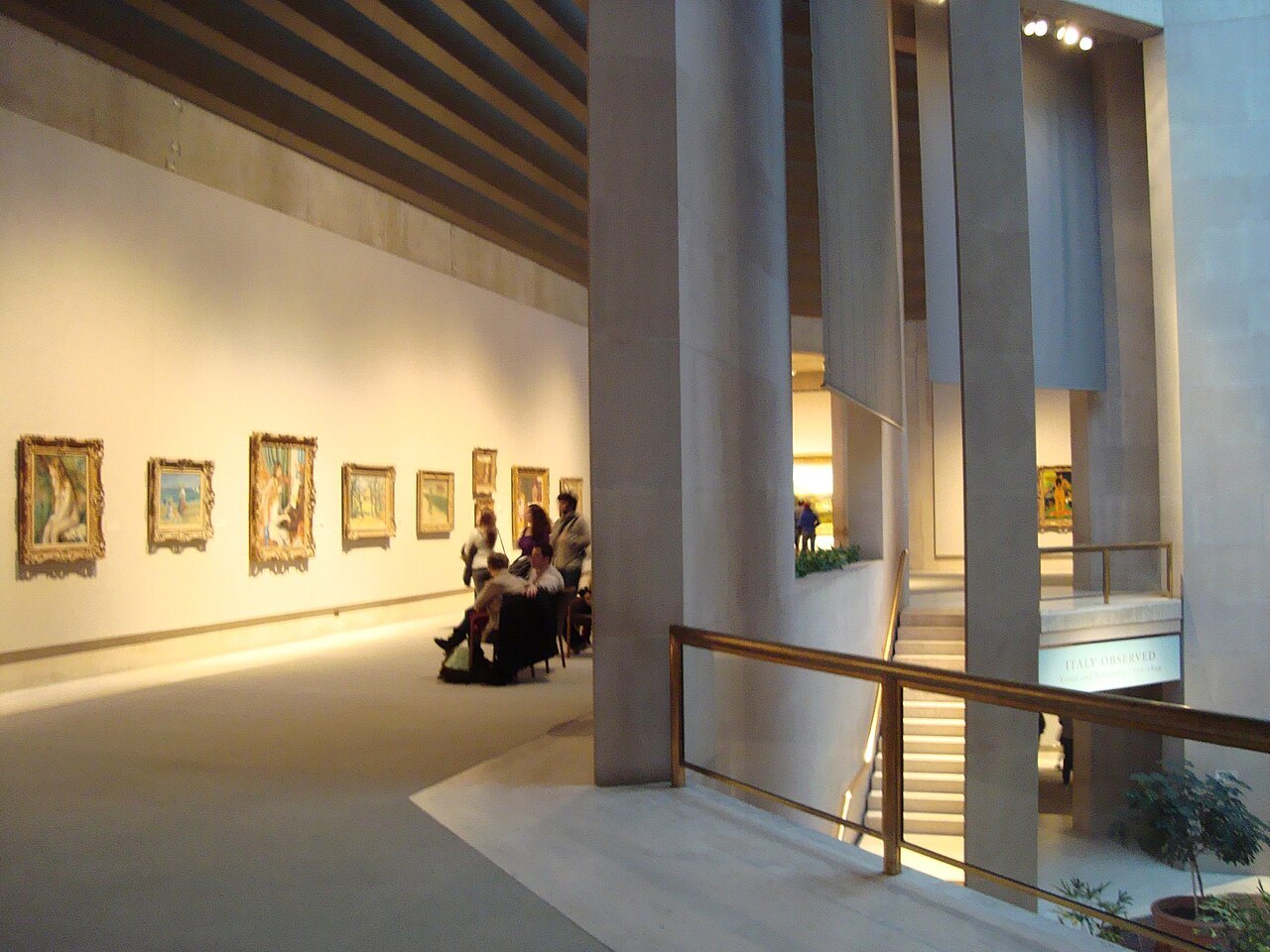
Beside the rotunda, in the smaller round structure Wright called the monitor, the Thannhauser Collection fills the top three floors with Impressionist, Post-Impressionist and modern French paintings, including work by Degas, Manet and Van Gogh. A ten-story annex behind the rotunda, added by the firm Gwathmey Siegel during a renovation carried out from 1990 to 1992, holds further galleries for changing exhibitions.
The founding collection reflects Rebay's own taste: Kandinsky, Piet Mondrian, Marc Chagall, Robert Delaunay, Fernand Léger, Amedeo Modigliani and Pablo Picasso, including Chagall's Green Violinist, Franz Marc's Yellow Cow and Picasso's The Accordionist. The full collection runs to roughly eight thousand works, shared with sister museums in Bilbao and Venice, so what actually hangs in New York shifts with the exhibition schedule.
Planning a visit
The engineers who built the concrete shell were confident it would never crack, and built it without expansion joints; they were wrong, and a renovation between 2005 and 2008 repaired the cracking and restored exterior details. In 2023 the museum drew close to eight hundred and sixty-one thousand visitors, a sign of how central the building remains to any walk up Museum Mile.
The museum keeps regular daily hours, with occasional early closings and closed days, so check its website before setting out. Admission is charged for adults, with children under twelve admitted free; see booking ahead for how reservations work, since the museum recommends booking online, though tickets are also sold at the door. A free visitor brochure maps current exhibitions, and a digital guide is available through the Bloomberg Connects app.
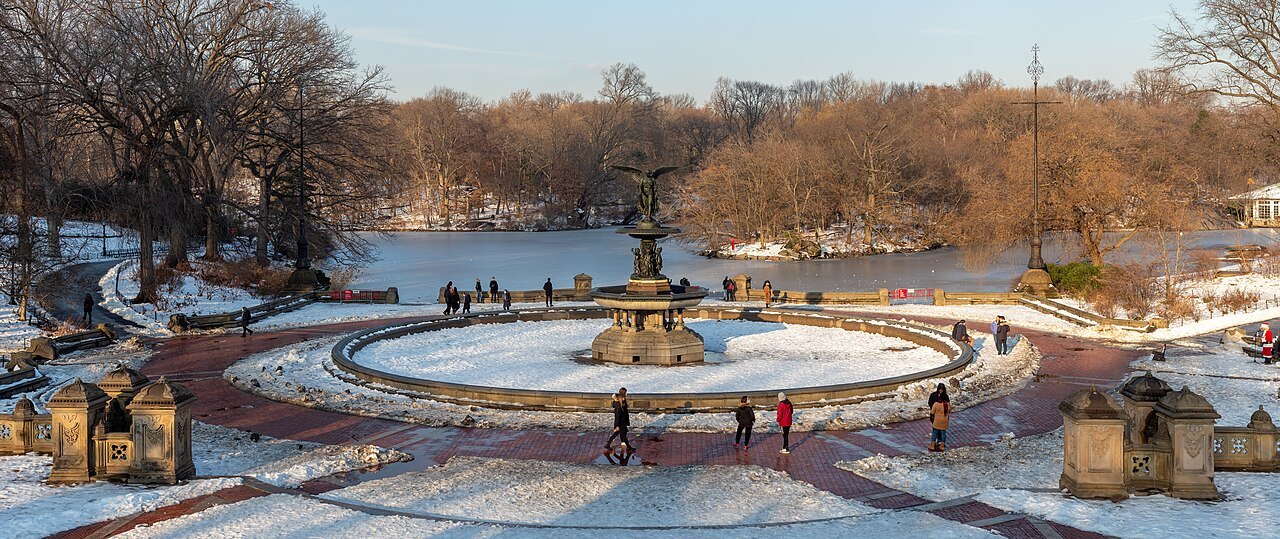
Several subway lines stop on Lexington Avenue, a few blocks east, and buses run up Madison and Fifth Avenues; see getting around for routes. Afterward, walk south along Museum Mile to the Met, or cross into Central Park at the Jacqueline Kennedy Onassis Reservoir.
Read next03
More from the journal
- The Metropolitan Museum of ArtHow did the Temple of Dendur come to New York?How a two-thousand-year-old Egyptian temple came to stand beside a reflecting pool inside the Met.Read the piece →
- The Metropolitan Museum of ArtHow do you see the Met in a single day?A practical plan for seeing the Met's vast collection in a single day, department by department.Read the piece →
- The Flatiron Building and Madison SquareWhy is the Flatiron Building shaped like a wedge?Why Broadway's diagonal cut across the grid left a wedge of land at 23rd Street, and how the Flatiron Building filled it.Read the piece →