NAMES ON THE STEPS01
Where did the library lions Patience and Fortitude get their names?
How two marble lions outside the New York Public Library became Patience and Fortitude.
The answer in full02
Read on
Two lions, two names
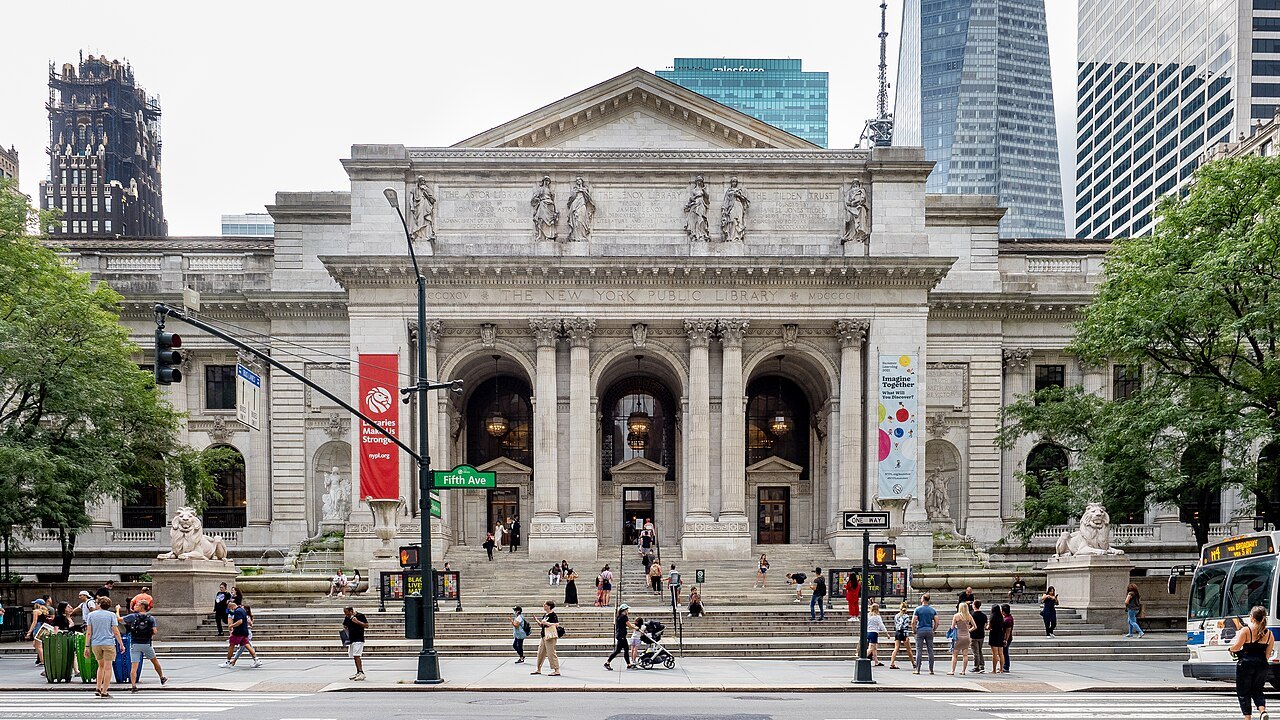
Two marble lions lie on either side of the library steps on Fifth Avenue, carved by the Piccirilli Brothers to a design by Edward Clark Potter. They have become the building's emblem, recognized even by visitors who know nothing else about the library itself, and they are often the first thing anyone photographs on the way up the steps.
Their first names honored the founders of the collections inside: Leo Astor and Leo Lenox, after the Astor and Lenox libraries that were merged to create the institution. Those names lasted for decades, long before the lions became known by the pair everyone now uses, and many older guidebooks still refer to them that way.
In the 1930s Mayor Fiorello La Guardia renamed them Patience and Fortitude, the two qualities he felt New Yorkers would need to get through the Great Depression. Patience sits on the south side, to the left as visitors face the steps, while Fortitude lies on the north side, to the right.
A long-standing legend holds that the lions flank the steps so that readers may pass between them on the way in, a line still repeated by guides and printed on plaques around the building. Whatever its origin, the story has stuck, and the lions remain the single most photographed detail of the entire building.
A library built on a reservoir
The ground beneath the library was once the Croton Reservoir, a walled tank of water that supplied the city through the nineteenth century. Remnants of its walls survive inside the building today, a detail easy to miss but worth asking about on a visit, since little else above ground hints at what once stood here.
In 1897 the state allowed the site to be used for a public library, and that same year a young firm, Carrère and Hastings, won the competition to design it. Few at the time could have guessed how closely the firm's building would come to define the look of the whole stretch of Fifth Avenue around it.
In 1898 workers began digging through the reservoir's walls, twenty-five feet thick in places, to make way for the new foundations. The building that rose above them opened on 23 May 1911, after more than a decade of planning and construction on one of the most prominent sites in the city.
The library was formed by merging the Astor and Lenox collections with money from Samuel Tilden. Its first director, John Shaw Billings, sketched the plan at its heart: a vast reading room atop seven floors of stacks, served by a fast delivery system for books. John Carrère died just before the opening, and in March 1911 about two thousand people filed past his coffin in the rotunda.
Inside the building
Above the three arched entrances stand allegorical figures by Paul Wayland Bartlett, flanking carved plaques dedicated to the Astor, Lenox and Tilden foundations that created the library. Visitors who pause on the steps before going in can pick out the names of all three founders cut into the stone above the doors.
Inside the bronze doors is Astor Hall, finished entirely in white marble, with busts of John Carrère and Thomas Hastings set at the foot of its two staircases. Which architect contributed more to the overall design is still disputed among historians of the building, and the library itself makes no claim either way.
Upstairs, galleries and exhibition rooms line the corridors, and since late 2021 the Polonsky Exhibition has displayed some of the most valuable objects in the library's collections. It is a free stop and a good way to see pieces from the research library's holdings without needing a reader's card or ticket of any kind.
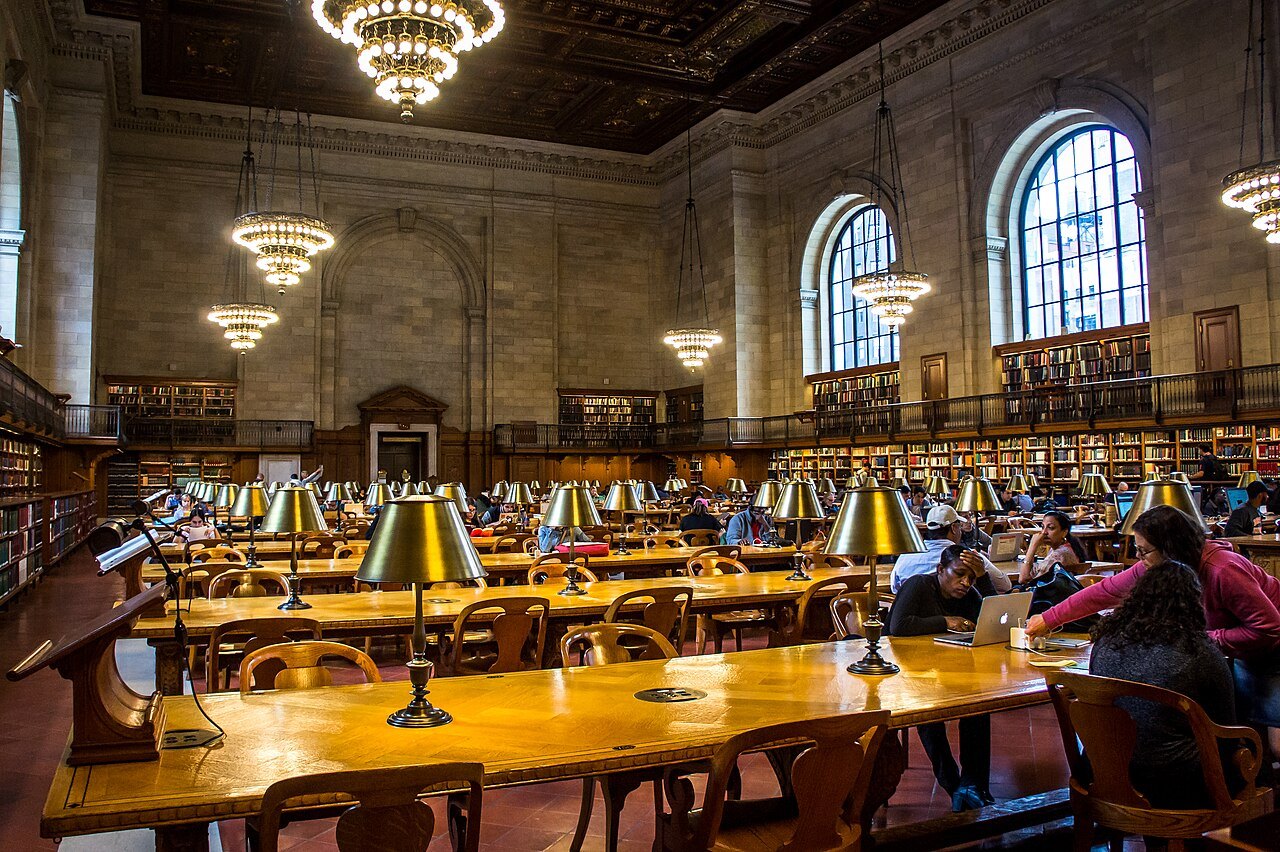
The high point of the building is the Rose Main Reading Room on the top floor: 297 feet long and 78 feet wide, under a ceiling 52 feet high, hung with bronze chandeliers and lined with long tables where readers still work. In 2014 a plaster rosette fell from the ceiling, closing the room while it was reinforced with steel cables; it reopened in October 2016. The Map Division, with its carved woodwork, was restored in 2005. It remains a working space, so visitors should keep their voices down.
Bryant Park behind the library
Behind the building, stretching west to Sixth Avenue, Bryant Park covers about ten acres of lawns and shaded walks. It was called Reservoir Square until 1884, when it was renamed for the abolitionist and newspaper editor William Cullen Bryant, a name the park has carried ever since.
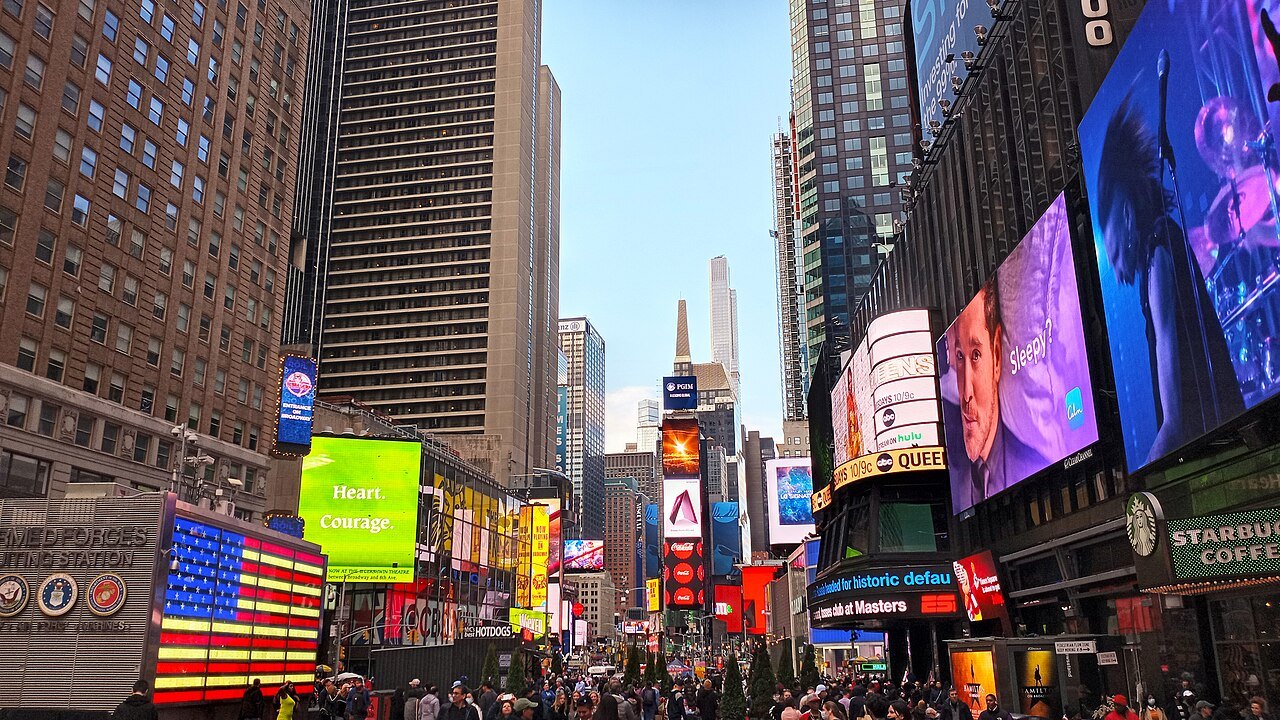
After a long decline the park was restored between 1988 and 1992 by the landscape architects Hanna/Olin. The lawn on its western half sits directly on top of an underground structure built to hold part of the library's own book stacks, out of sight of anyone walking above.
Around the lawn run shaded paths and a carousel. Carrère and Hastings once planned an arcade with a flower market along the Sixth Avenue side, a design that was never built. In winter the park hosts a Winter Village with an ice rink and a market of small shops.
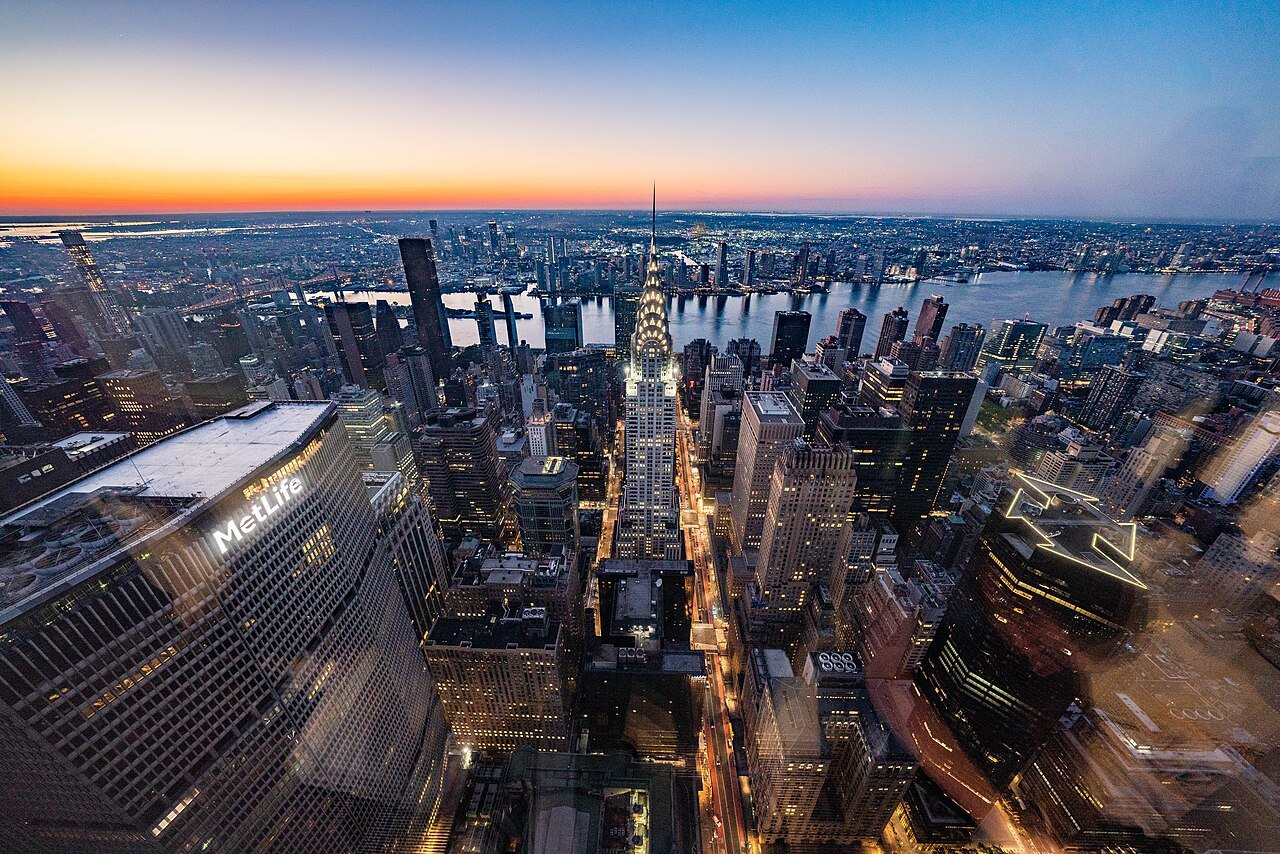
The park is an easy place to rest on a walk along 42nd Street, and the view from the lawn across the surrounding towers, with the Chrysler Building's crown to the east, is one of the better outlooks in Midtown. The Chrysler Building is worth the short detour east along the same street.
How to visit
The library and the park are both free to enter, and the steps and the lions can be seen at any hour from the sidewalk. The building keeps its own opening hours, which change, so visitors should check the library's own site before planning a visit to the reading rooms or exhibitions.
No tickets are required for general entry to the building, though guided tours and some exhibitions may have their own arrangements; anyone planning around a particular gallery or tour should check directly with the library for current details before arriving.
The subway stops at 42nd Street–Bryant Park and Fifth Avenue sit on corners of the park, making the library an easy stop on a longer walk through Midtown. Getting around covers the subway lines serving this stretch of the city for anyone planning the rest of the day.
Nearby
Walking east along 42nd Street leads toward Grand Central and on to the Chrysler Building, a short and flat stretch of sidewalk from the library's own steps. Walking west along the same street leads instead toward Times Square, through one of the busiest blocks in Midtown.
A few blocks north up Fifth Avenue sits Rockefeller Center, another easy addition to a day built around the library and its park. The distance between all three is short enough to cover on foot without needing the subway.
Bryant Park itself, directly behind the library, is the simplest place to pause between any of these stops, with benches, shaded paths and a view back toward the library's own marble facade before moving on.
Read next03
More from the journal
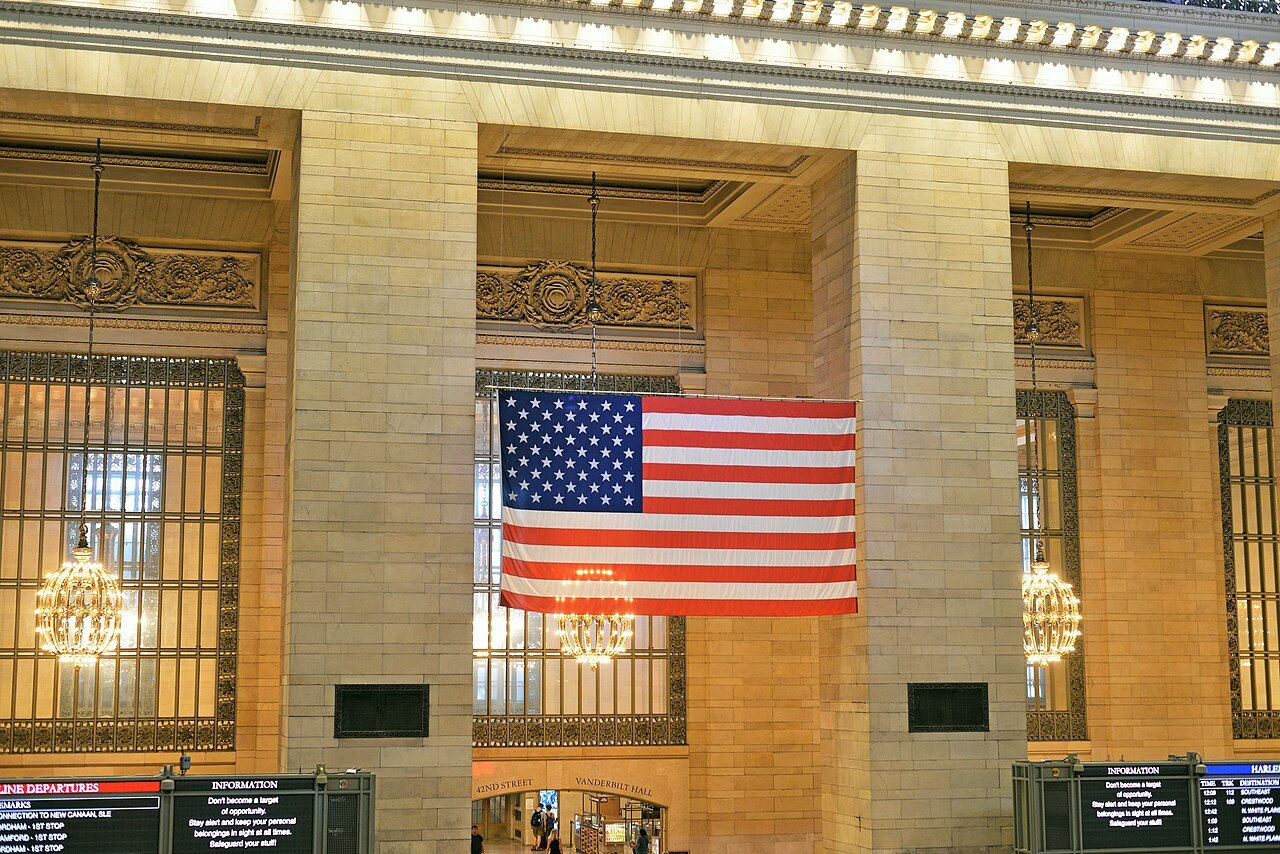
- Grand Central TerminalWhy is Grand Central's ceiling painted backward?The ceiling's mirrored zodiac, the clock's opal myth, and the campaign that saved Grand Central from demolition.Read the piece →
- The Chrysler BuildingHow did the Chrysler Building win the race to be tallest?The story of the secret spire that made the Chrysler Building the world's tallest skyscraper, if only briefly, in 1930.Read the piece →
- The Brooklyn BridgeCan you walk across the Brooklyn Bridge?Yes, on a raised promenade between the roadways that is now for people on foot alone. Which way to walk, where to start and finish, how long it takes, when it is least crowded, and what to do in Brooklyn at the far end.Read the piece →