HOW THE ROCKEFELLER TREE BEGAN01
How did the Christmas tree at Rockefeller Center begin?
The story behind Rockefeller Center's famous Christmas tree, lit above the plaza every December since 1933.
The answer in full02
Read on
Why it matters
Each December a towering spruce rises over the sunken plaza at Rockefeller Center, the most famous Christmas tree in the country. It stands at the heart of a complex of nineteen commercial buildings spread across twenty-two acres between 48th and 51st Streets, fourteen of them the original Art Deco towers that fill the blocks between Fifth and Sixth Avenues.
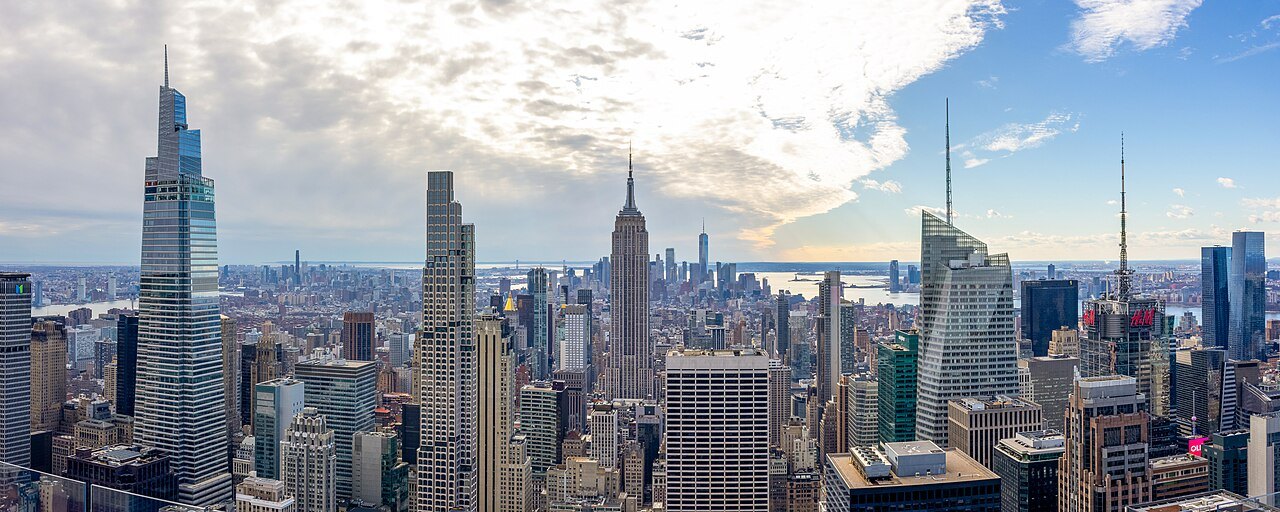
The whole complex was built by John D. Rockefeller Jr. on land leased from Columbia University. Work began in 1931, the first buildings opened in 1933, and the core was finished by 1939, all through the depths of the Great Depression. It is remembered as one of the greatest building projects of that era, and the site is now a National Historic Landmark.
The tree's own history runs alongside that story. It has stood above the plaza every December since 1933, the same year the center's first buildings opened their doors, making it almost as old as Rockefeller Center itself and as fixed a part of the plaza as the gilded statue that flies above it.
A project born in hard times
The site was first intended for a new home for the Metropolitan Opera, but after the stock market crash of 1929 the opera could not afford to move. Rockefeller pressed ahead with the project regardless, turning what might have been an opera house into a vast commercial complex built on his own resources and ambition, at a moment when few others in the city dared to build anything at all.
In 1930 he persuaded the Radio Corporation of America, along with its companies NBC and RKO, to take the western part of the site for a media complex. That deal gave the western half its enduring name, Radio City. The design team, known as the Associated Architects, was led by Raymond Hood.
Radio City Music Hall, on Sixth Avenue, opened on December 27, 1932, with an auditorium that was then the largest in the world and remains home to the Rockettes. The centerpiece, 30 Rockefeller Plaza, the former RCA Building, rises sixty-six stories to 850 feet, though its opening in 1933 was delayed by a scandal over a lobby mural that was covered up and destroyed.
The first tree
The fact that has outlasted every tenant and every renovation is simple: a giant Christmas tree has stood above the sunken plaza every December since 1933. It arrives each autumn, is set in place, strung with lights, and lit in a ceremony that has grown into one of the city's great seasonal events, drawing visitors from well beyond Midtown.
Visitors reach the plaza by entering from Fifth Avenue between 49th and 50th Streets and walking west along the Channel Gardens, a narrow promenade of flower beds and fountains running between two low buildings, La Maison Française and the British Empire Building. At the far end the ground falls away into the lower plaza.
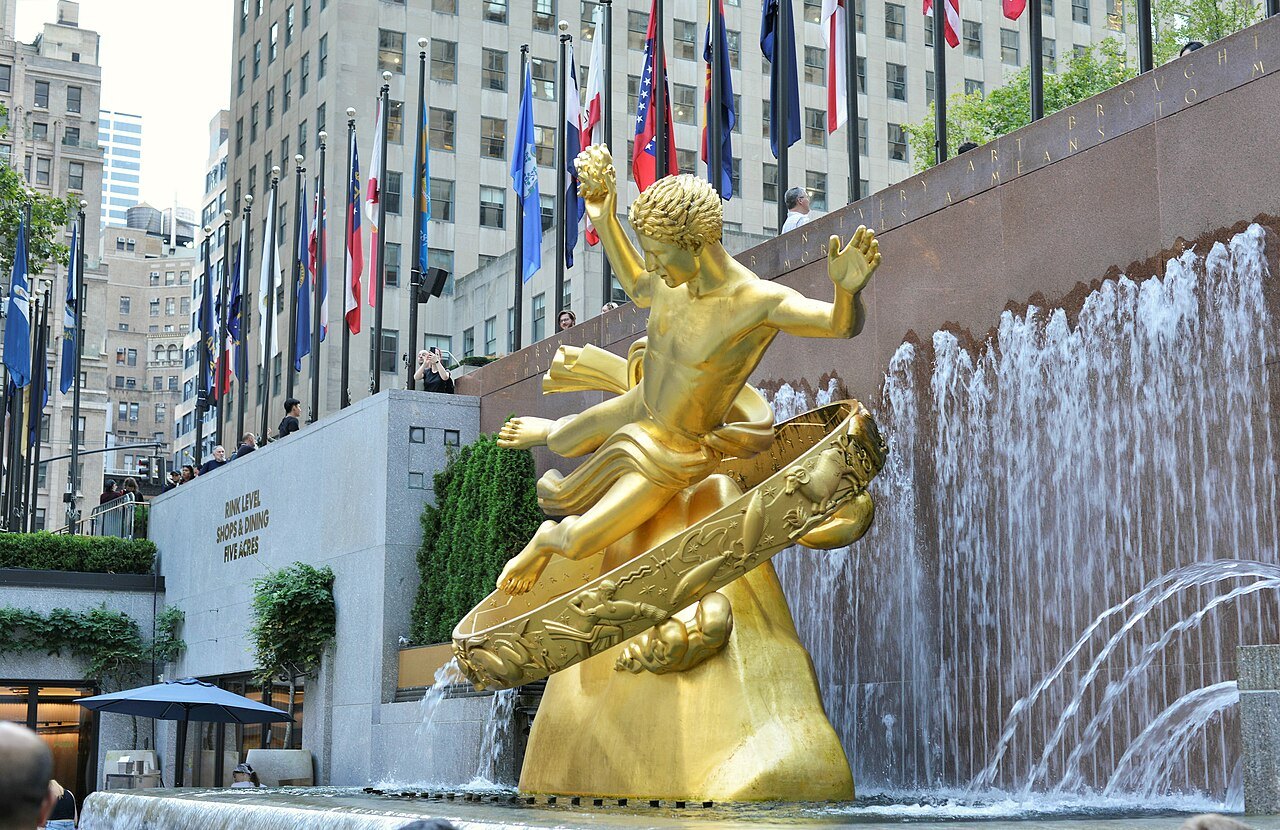
Flying over that plaza is Prometheus, Paul Manship's gilded bronze of 1934, showing the Titan bringing fire to mankind. The tree rises close by it each year, so that the two images of light and fire, one mythic and one seasonal, share the same small stretch of sunken stone.
Since 1936 the sunken plaza has doubled as an ice rink in winter, replacing shops that had never paid their way. The result is the scene most visitors picture when they think of Rockefeller Center: skaters circling below a lit tree and a gilded statue, framed by the Art Deco towers around them.
The tree today
The annual lighting of the tree draws large crowds to the plaza and the streets around it. The tree is lit for several weeks around the holiday season, with the exact schedule set by Rockefeller Center each year. For guidance on when the center is busiest and what else is happening in the city at that time of year, see when to come.
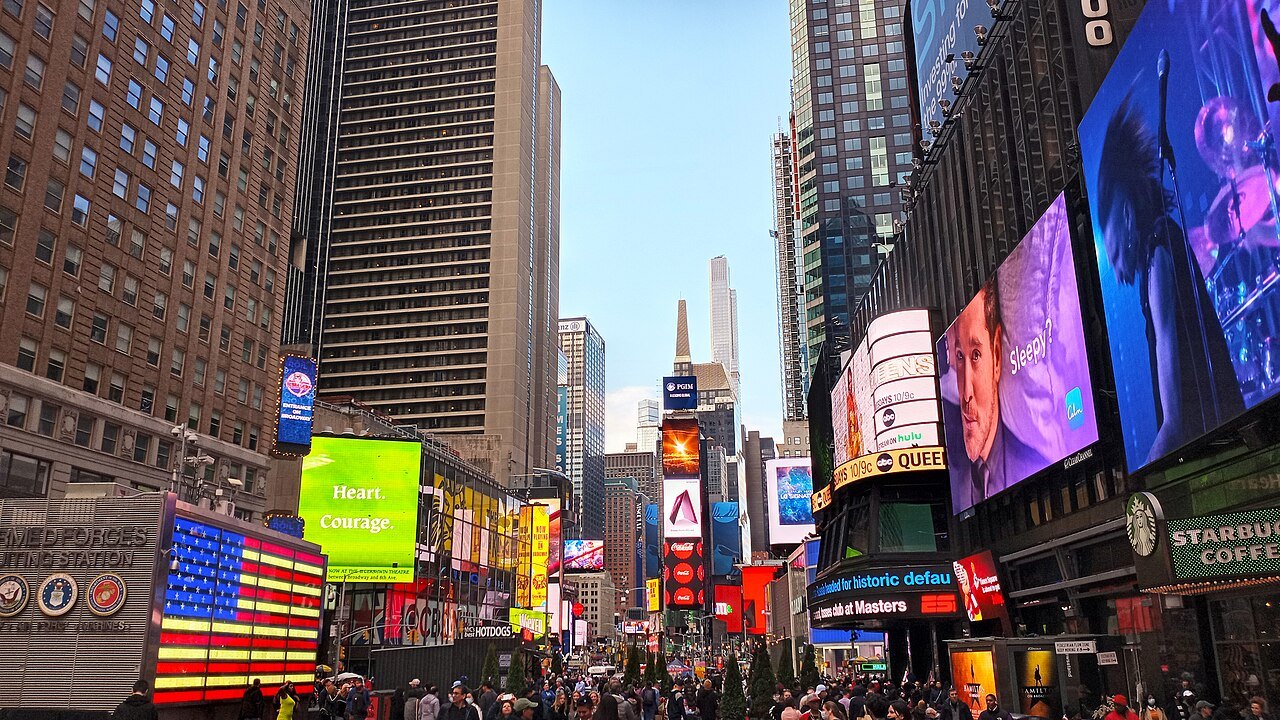
Because the date of the lighting ceremony and the tree's display dates can shift from one season to the next, visitors should check current arrangements directly with Rockefeller Center before planning a trip around it. The same applies to any related events staged on the plaza or at Radio City Music Hall nearby.
Expect the area around the plaza to be dense with people in the weeks either side of the lighting, particularly in the evenings, and plan extra time to move through the Channel Gardens, along the rink's edge and across the surrounding sidewalks, since foot traffic there can slow to a crawl.
What else stands here
Behind the tree rises 30 Rockefeller Plaza. Above its entrance Lee Lawrie carved Wisdom, A Voice from the Clouds, flanked by figures of Sound and Light, set beneath a cast-glass wall he also designed and a line from the Book of Isaiah: Wisdom and Knowledge shall be the stability of thy times.
Closer to Fifth Avenue, in the courtyard of the International Building, stands Lee Lawrie's bronze Atlas, made with Rene Paul Chambellan, carrying the vault of the heavens on his shoulders. Installed in 1937 and weighing seven tons, it is the largest sculpture anywhere in the complex, and it stands only a short walk from the tree itself.
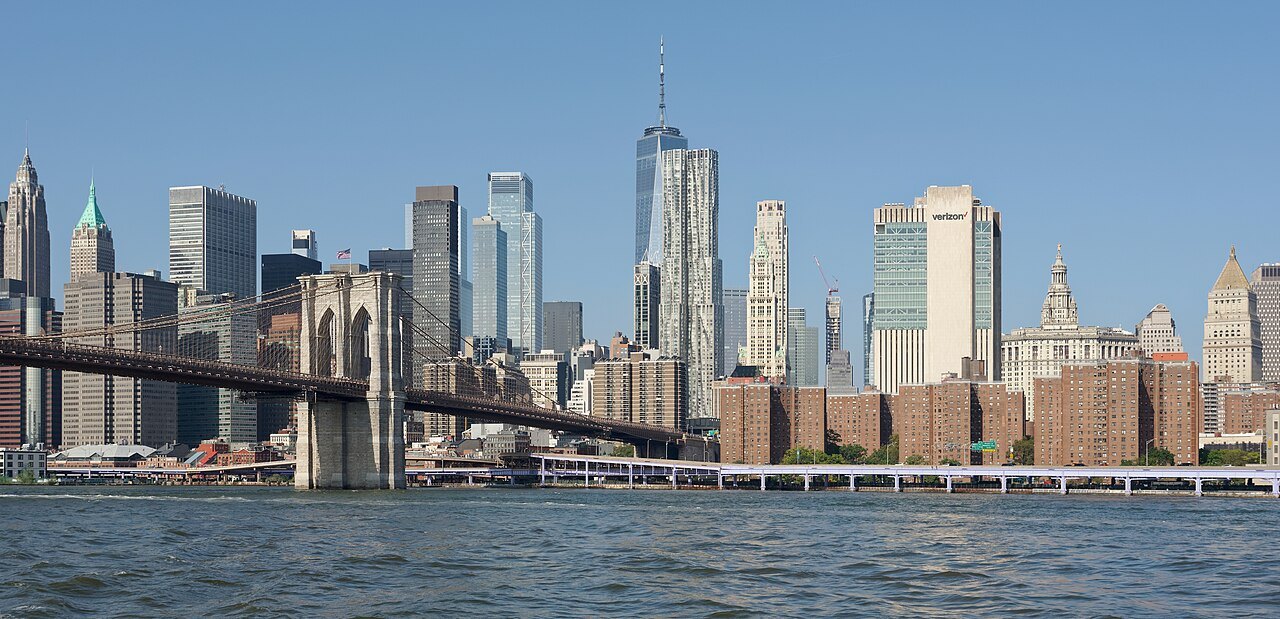
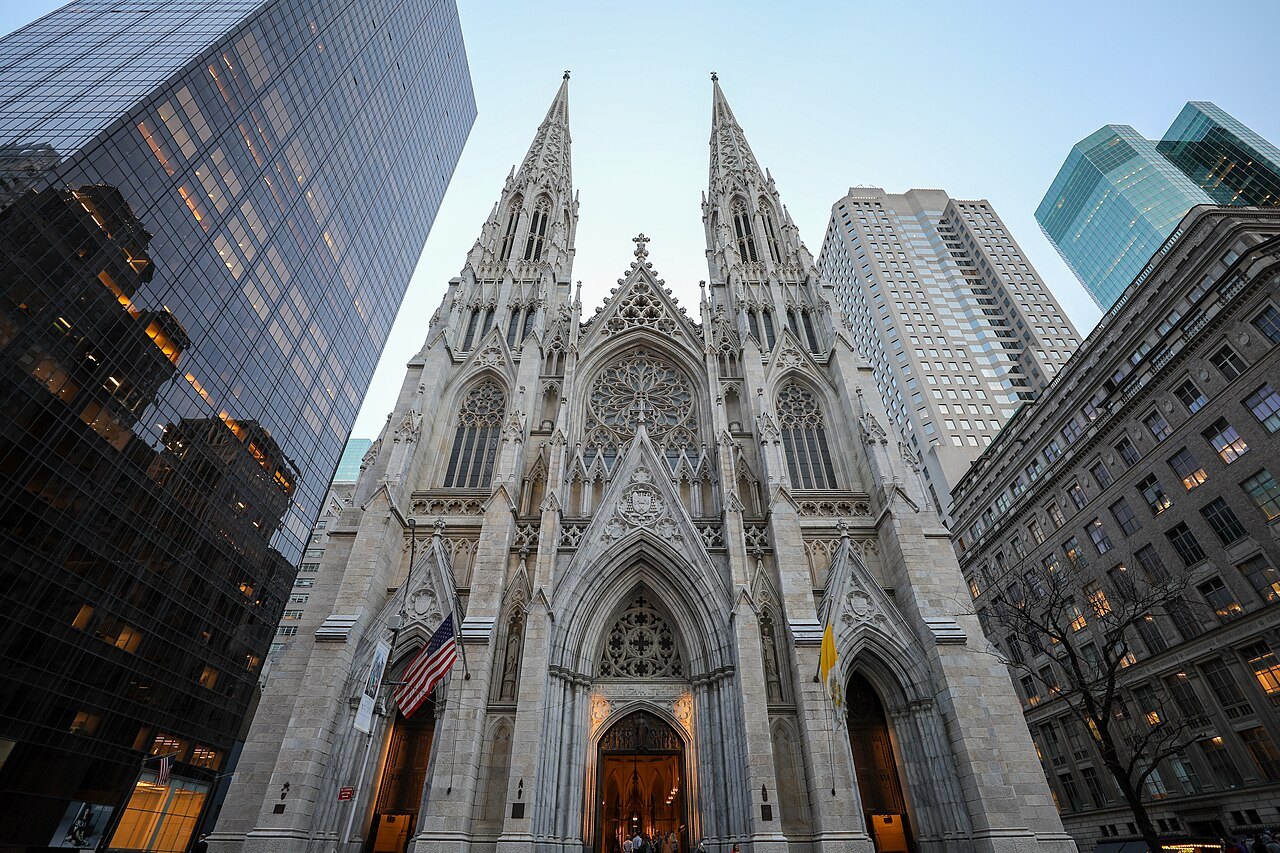
Directly across Fifth Avenue stands St. Patrick's Cathedral, the seat of the Catholic Archbishop of New York, designed by James Renwick Jr. in the Gothic Revival style and completed in 1878, with twin spires added in 1888. Together the cathedral and the plaza make one of the city's great urban set pieces.
How to visit
The plaza, the Channel Gardens and the building lobbies are free to walk through at any time of year, and St. Patrick's Cathedral across the street is free to enter, though it remains an active parish church, so visitors should move quietly if a service is underway when they arrive, since it is a working church as well as a landmark.
The observation deck at the top of 30 Rockefeller Plaza, Top of the Rock, is ticketed separately from the plaza itself, with its entrance on 50th Street. See booking ahead for how reservations work before visiting, especially around the holiday season when demand for both the deck and the tree is highest.
The nearest subway stop is 47th–50th Streets–Rockefeller Center on Sixth Avenue; see getting around for how the subway network connects to the rest of Manhattan. From the plaza, Fifth Avenue leads north to the corner of Central Park at 59th Street, south toward the New York Public Library, and west toward Times Square, each an easy walk from the plaza.
Read next03
More from the journal
- Times SquareHow did the New Year's Eve ball drop begin in Times Square?How a newspaper's tower gave Times Square its name and its famous New Year's Eve ball drop.Read the piece →
- The Empire State BuildingHow was the Empire State Building built in just over a year?How a Depression-era race among three towers raised the Empire State Building in just over a year.Read the piece →
- The Brooklyn BridgeCan you walk across the Brooklyn Bridge?Yes, on a raised promenade between the roadways that is now for people on foot alone. Which way to walk, where to start and finish, how long it takes, when it is least crowded, and what to do in Brooklyn at the far end.Read the piece →