ELLIS ISLAND: THE IMMIGRANT EXPERIENCE01
What was Ellis Island like for the immigrants who passed through it?
What arriving immigrants faced at Ellis Island, from the Great Hall to medical checks, detention and myths about names.
The answer in full02
Read on
A Gateway for Twelve Million
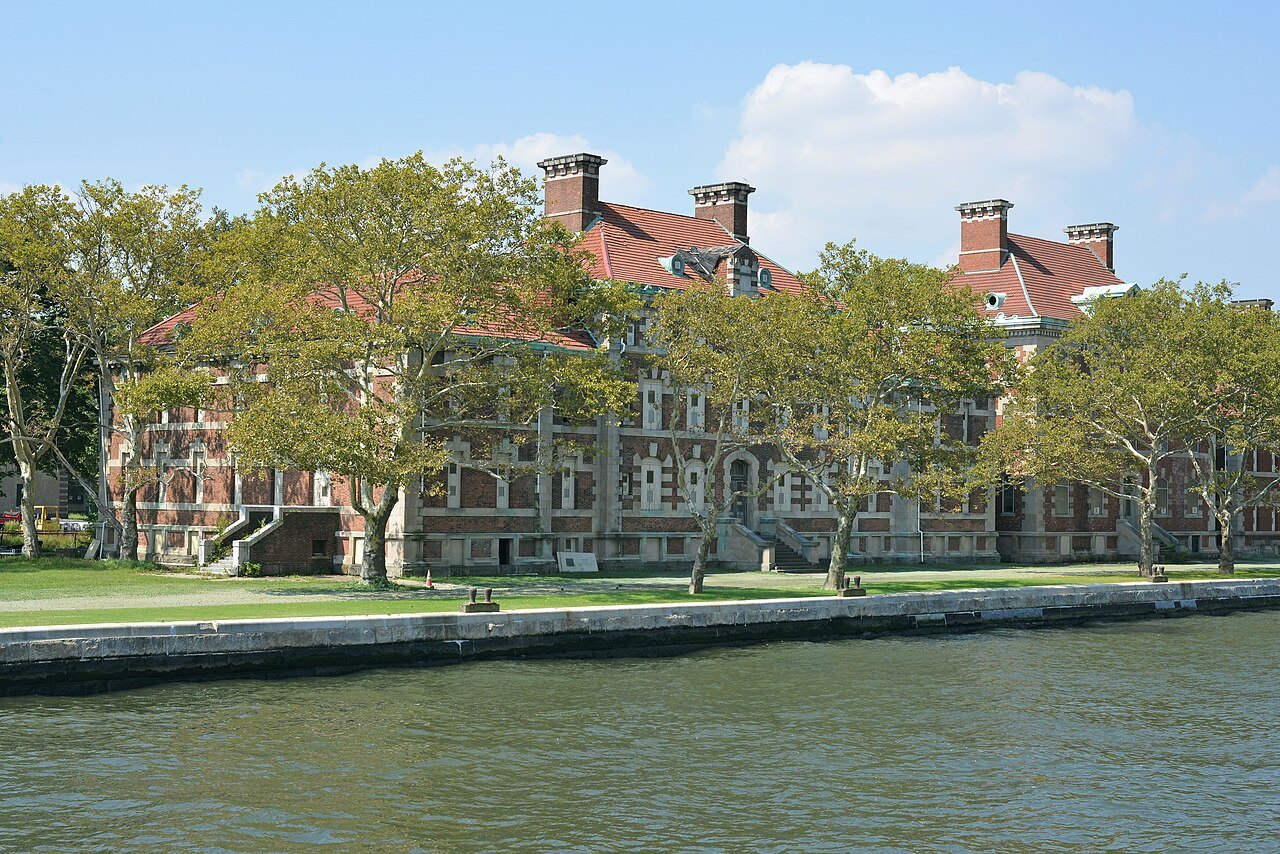
Ellis Island lies just north of Liberty Island in New York Harbor, and from 1892 to 1954 it was where the federal government inspected almost everyone who arrived by ship hoping to settle in the United States. About twelve million people passed through its halls, and one estimate holds that two out of five Americans today can trace an ancestor to this narrow strip of land.
The island and the Statue of Liberty form a single national monument, and one ferry service links them, with every ticket covering both museums. Boats normally call at Liberty Island first and reach Ellis Island afterward, so visitors see the statue before stepping into the immigration station that shaped so many family histories.
The building where most of this history unfolded dates from nineteen hundred. It was restored after decades of disuse and reopened as a museum in 1990, its galleries arranged to follow the sequence an arriving passenger would have experienced, from the dock to the final decision on whether to be admitted or sent back.
For many visitors, walking through the museum is a personal errand as much as a historical one, since they know or suspect that an ancestor once stood in this same building. The exhibits are built around that fact, mixing the larger history of immigration policy with individual objects and stories left behind by passengers who came through these halls.
Arrival and the Great Hall
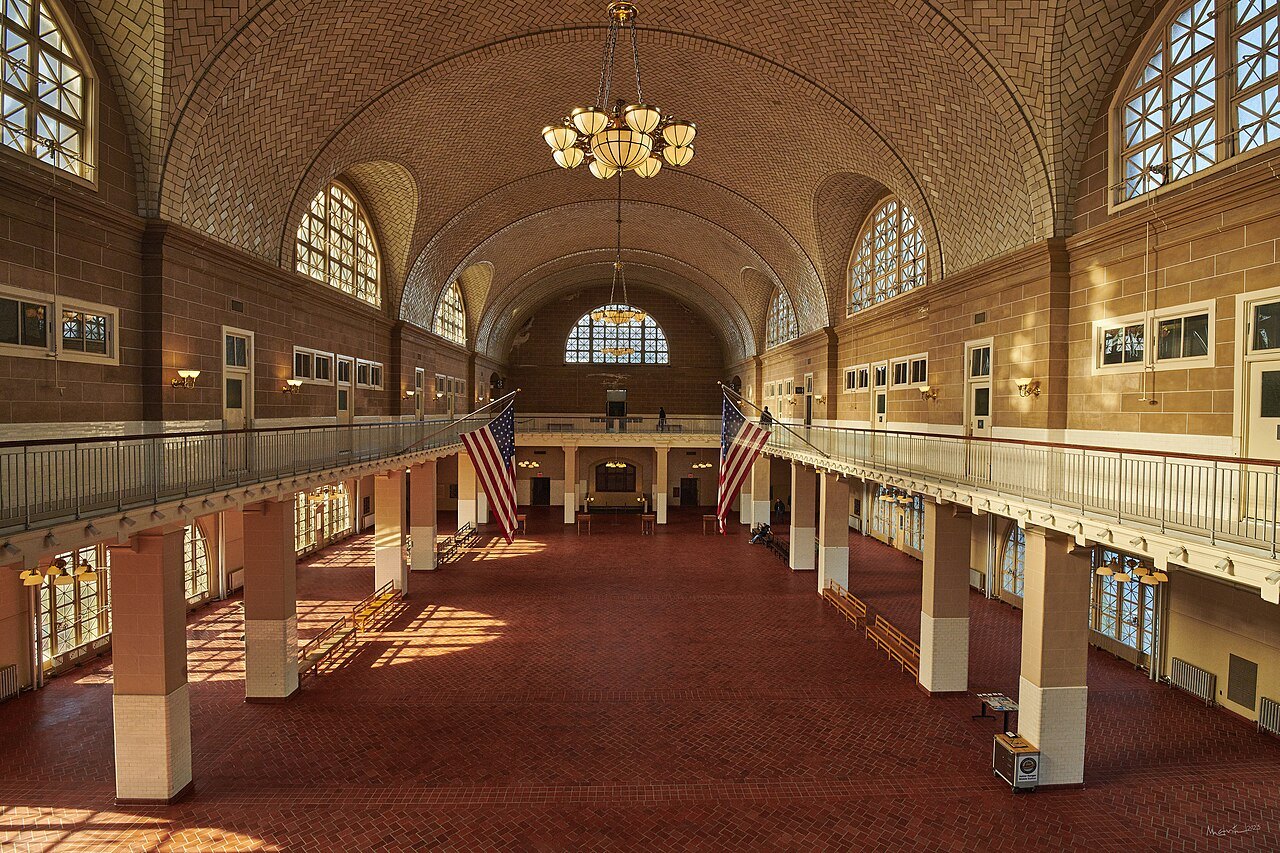
Passengers disembarking at Ellis Island first passed through the baggage room, where they set down whatever they had carried across the ocean before climbing to the second floor. There they entered the Great Hall, the registry room where lines of new arrivals waited, sometimes for hours, to be questioned and examined by federal officials.
The Great Hall was the emotional center of the whole process, since a family's future in the country could be decided there in a matter of minutes. The museum today preserves the room largely as it was, so visitors can stand in the same space and picture the crowds that once filled it.
Downstairs and in the side galleries, the museum sets out the rest of the journey in order: the medical inspections, the legal questioning, and the rooms where officials could hold someone back for further examination. Exhibits use photographs, objects and personal accounts to show what each stage of the process meant for the people going through it.
Inspection, Detention and the Immigrant Hospital
Officials at Ellis Island examined new arrivals for physical and mental health as well as their legal right to enter, and anyone who raised concern could be pulled aside for a longer look. Most people passed through in a matter of hours, but the museum's galleries make clear that the outcome was never guaranteed.
For those who failed an inspection, or whose papers raised a question, the island had rooms for detention while a decision was made, and in some cases people were turned back and sent home on the next available ship. The museum's ordered galleries walk visitors through this less remembered side of the story.
The island's south side holds the old immigrant hospital, which cared for new arrivals who needed treatment before they could be admitted or sent away. Visitors reach the south side, hospital included, only on guided tours: the nonprofit Save Ellis Island runs them as its Hard Hat Tour, and a visitor wanting to join one should check with that organization about how to book.
Myths, Names and Where the Island Sits
A persistent story holds that immigration officers at Ellis Island changed families' surnames, shortening or Anglicizing them on the spot. The record does not support this: officials worked from passenger manifests drawn up by the steamship companies before a ship ever reached New York, and they checked names against those lists rather than inventing new ones.
The name changes that did happen to immigrant families almost always came later, after they had settled into American life and chose, or were pushed, to adapt a name to their new surroundings. It is worth remembering in the Great Hall that the paperwork handled there was a checkpoint, not a place where an identity was rewritten.
Most of Ellis Island is legally part of New Jersey, not New York, a boundary the Supreme Court settled in 1998. Only the original natural island at its northern end, the ground the immigration station itself was built on, remains part of New York. The distinction rarely troubles a visitor, since one ferry and one ticket cover the whole site.
Getting to Both Islands
There is only one legitimate way to reach Ellis Island: the ferries run by Statue City Cruises, the sole operator authorized by the National Park Service. In Manhattan they leave from Battery Park at the southern tip of the island; a second departure point sits across the harbor at Liberty State Park in New Jersey.
Every ferry ticket includes admission to both the Statue of Liberty Museum and the Ellis Island immigration museum, and everyone boards after passing through airport-style security, so it is worth allowing extra time before the boat leaves. Details on how the ticketing and reservation system works are covered in booking ahead.
Anyone hoping to add pedestal or crown access at Liberty Island should check current availability directly with the operator, since the Park Service advises buying those tickets well ahead of a visit. To fit both islands into a single day, the Park Service recommends taking one of the earlier ferries; getting to Battery Park by subway is covered in getting around.
A visit to both islands is at least a half-day undertaking, and a full day if a visitor wants to see everything at an unhurried pace; the Great Hall and its surrounding galleries alone can occupy a long stretch of the schedule for anyone who stops to read the exhibits in full.
Back on Manhattan
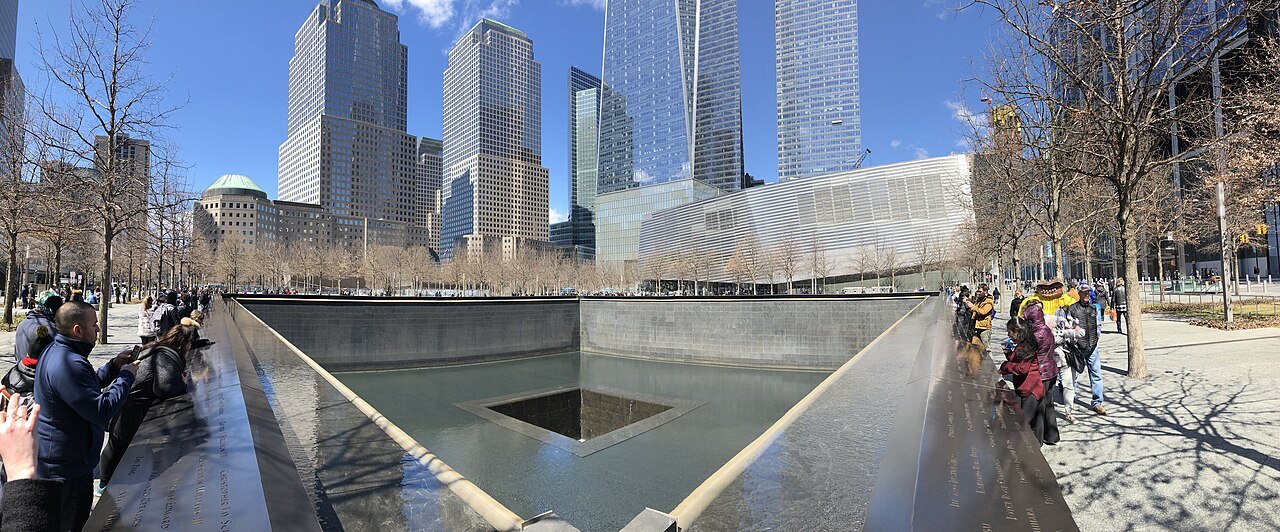
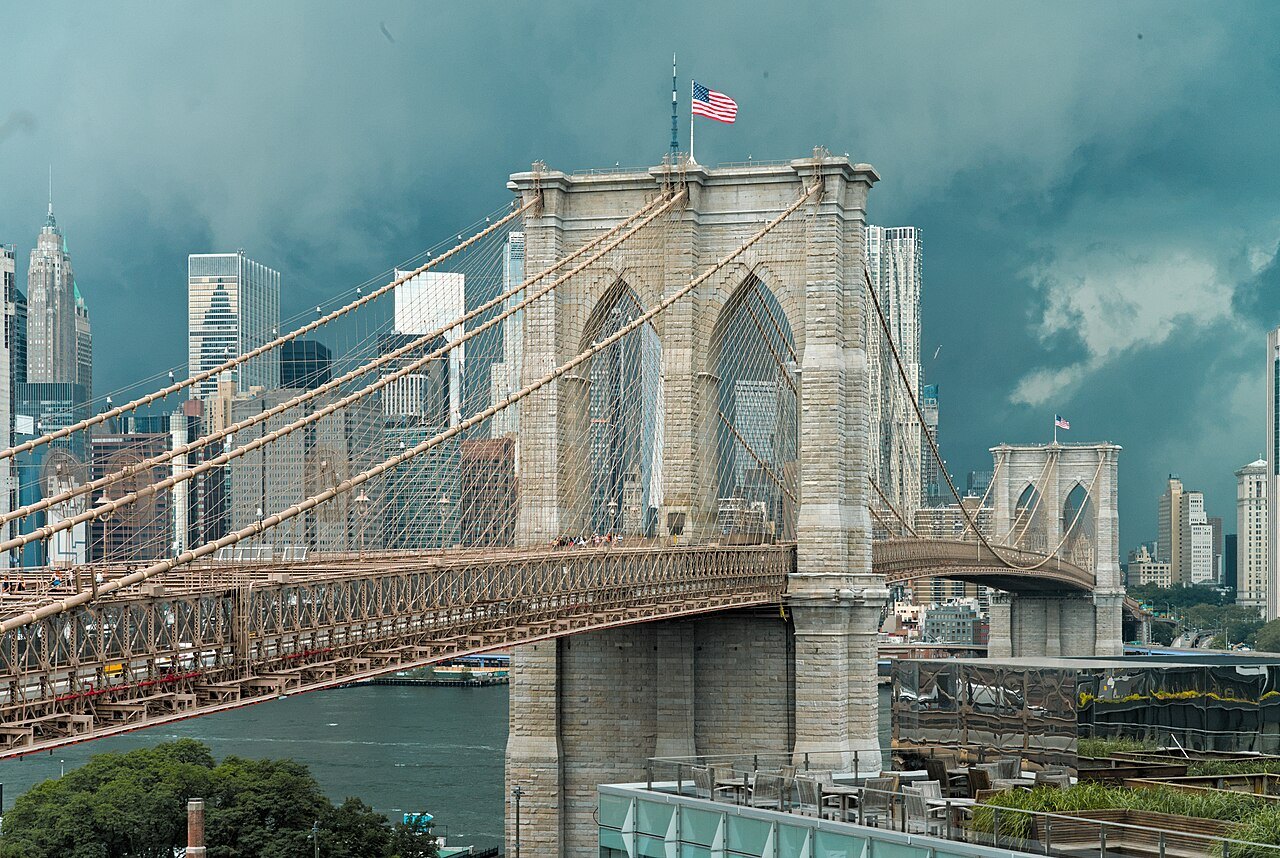
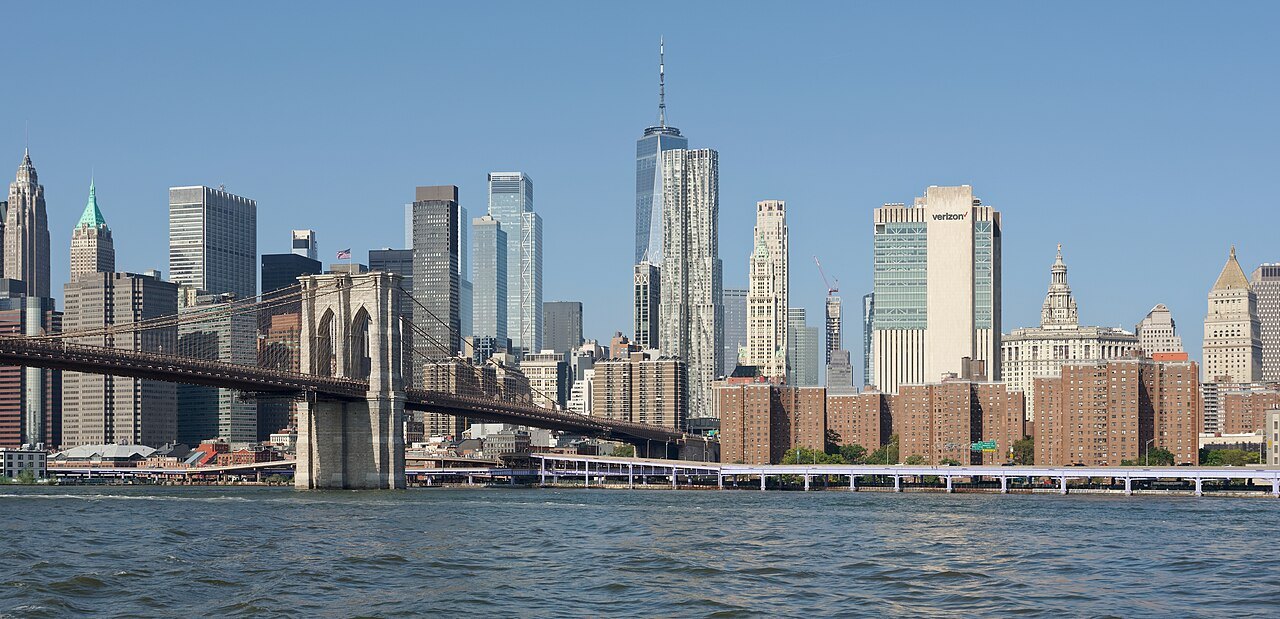
The ferry returns visitors to the Battery, at the southern tip of Manhattan, within walking distance of Wall Street, Trinity Church, and the 9/11 Memorial. From the boat itself, the Brooklyn Bridge is visible spanning the East River to the north, a reminder of how much of the city's history sits within a short walk of the harbor.
Visitors who cannot secure a ferry ticket, or who simply want a first look at the statue without landing on the islands, can ride the free Staten Island Ferry, which passes close to the statue on its way across the harbor. On a clear day the view from its deck is a fine second best.
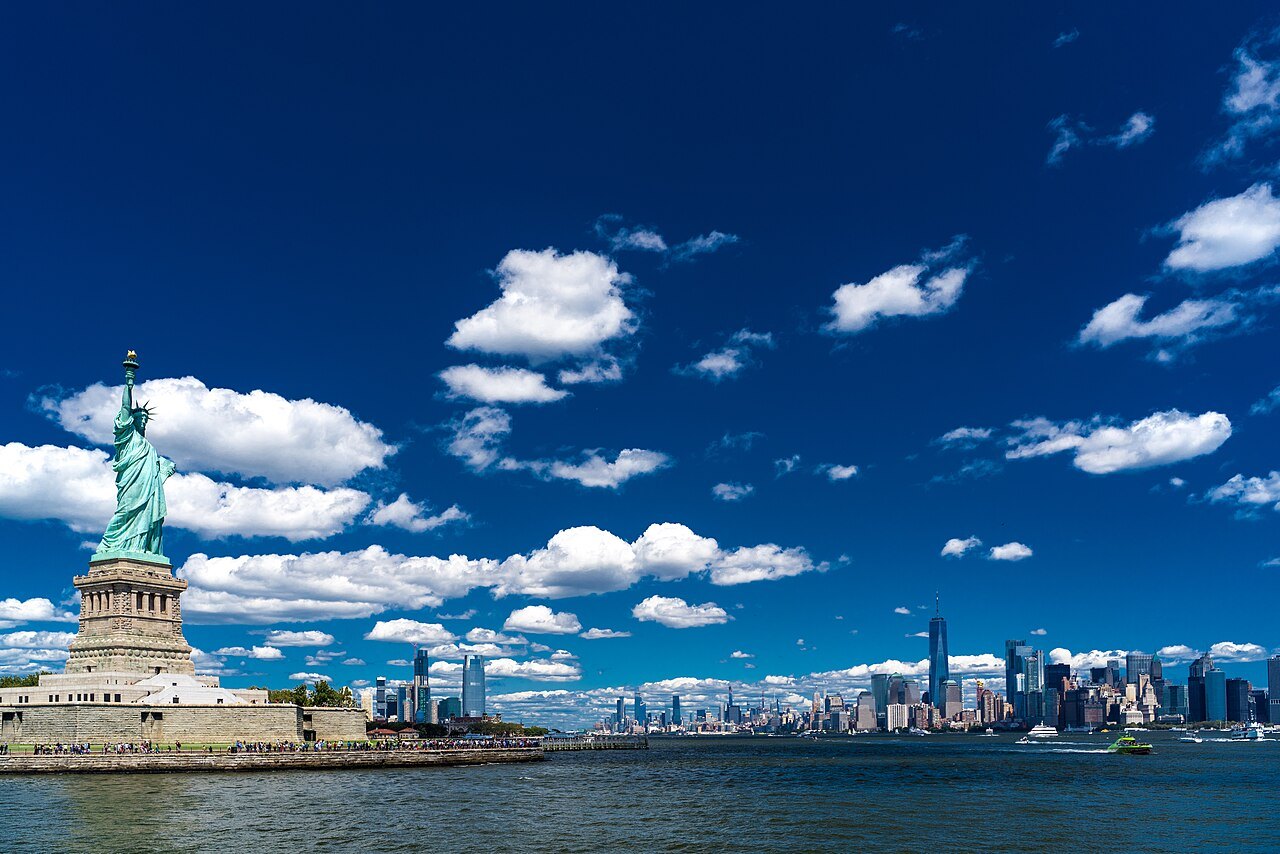
For a fuller account of the statue that shares the harbor with Ellis Island, including how the crown climb works and what the pedestal has to offer, see the main Statue of Liberty page, which sets out tickets, security and the museum in more detail before any visit is booked.
Read next03
More from the journal
- The Statue of Liberty and Ellis IslandHow do you visit the Statue of Liberty and Ellis Island?Every visitor travels on the same ferry, sold by one company. Which of the three tickets you need, why the crown sells out, how security works, how long to allow, and how to fit Ellis Island into the same day.Read the piece →
- Getting AroundHow does the New York subway work for visitors?The subway runs all night, takes a tap of your bank card or phone, and reaches nearly everything on this site. How the lines are named, which platform to choose, the difference between local and express, how the fare cap works, and what changes at night and on weekends.Read the piece →
- The Brooklyn BridgeCan you walk across the Brooklyn Bridge?Yes, on a raised promenade between the roadways that is now for people on foot alone. Which way to walk, where to start and finish, how long it takes, when it is least crowded, and what to do in Brooklyn at the far end.Read the piece →