THE SUNSET THAT LINES UP WITH THE GRID01
What is Manhattanhenge, and where should you watch it?
Four days a year the sun rises or sets exactly along Manhattan's cross streets, because the grid of 1811 is tilted 29 degrees. Why it happens, when, the difference between the half sun and the full sun, and which streets give the best view.
The answer in full02
Read on
The short answer
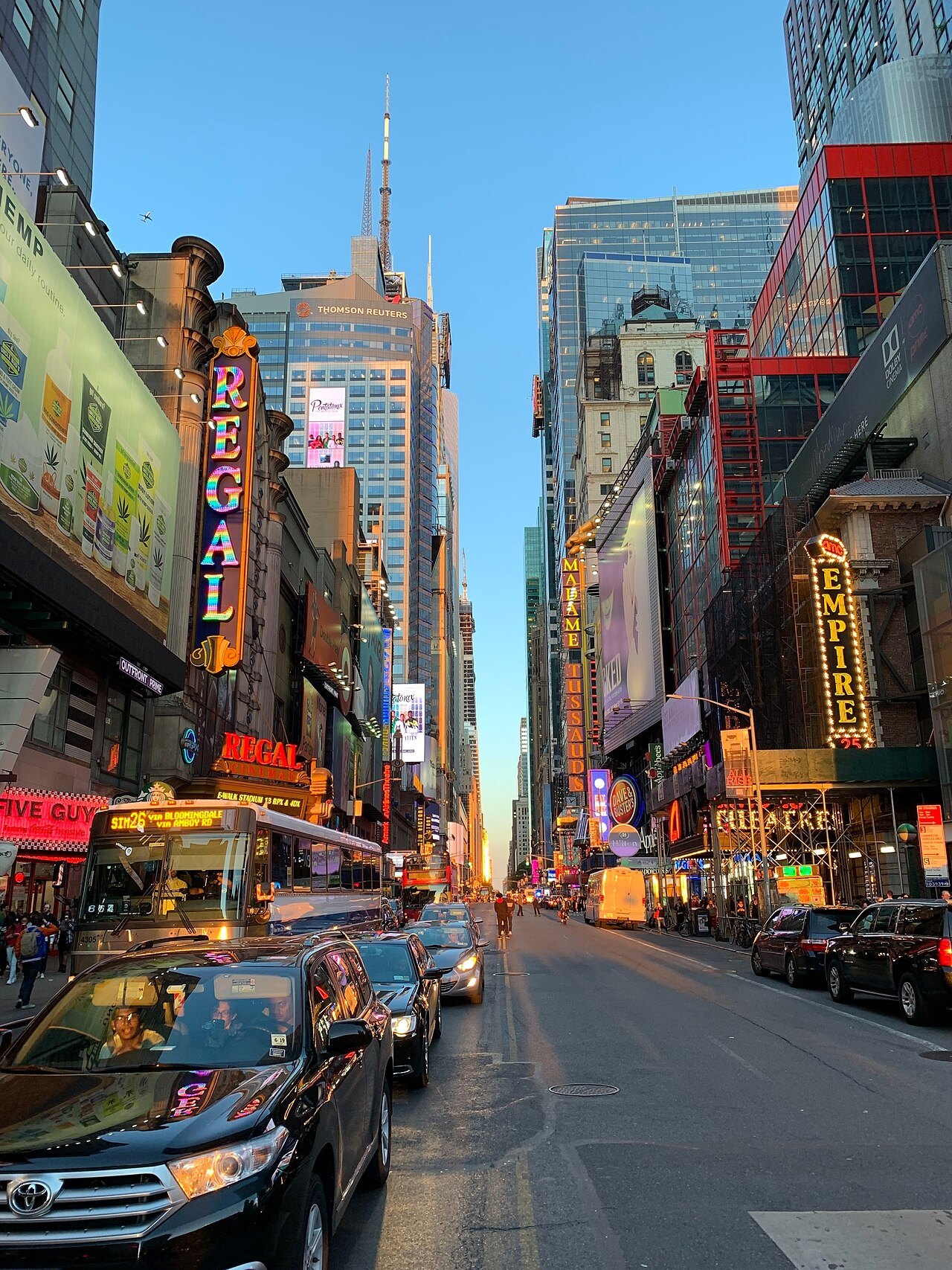
Manhattanhenge is the name for the few evenings each year when the setting sun lines up exactly with Manhattan's east–west streets. For a few minutes the sun sits at the far end of every cross street at once, framed between the walls of the buildings, and the whole length of the street, pavement and windows and traffic, glows orange. It happens twice a year at sunset, around the end of May and the middle of July, and twice at sunrise, in early December and early January.
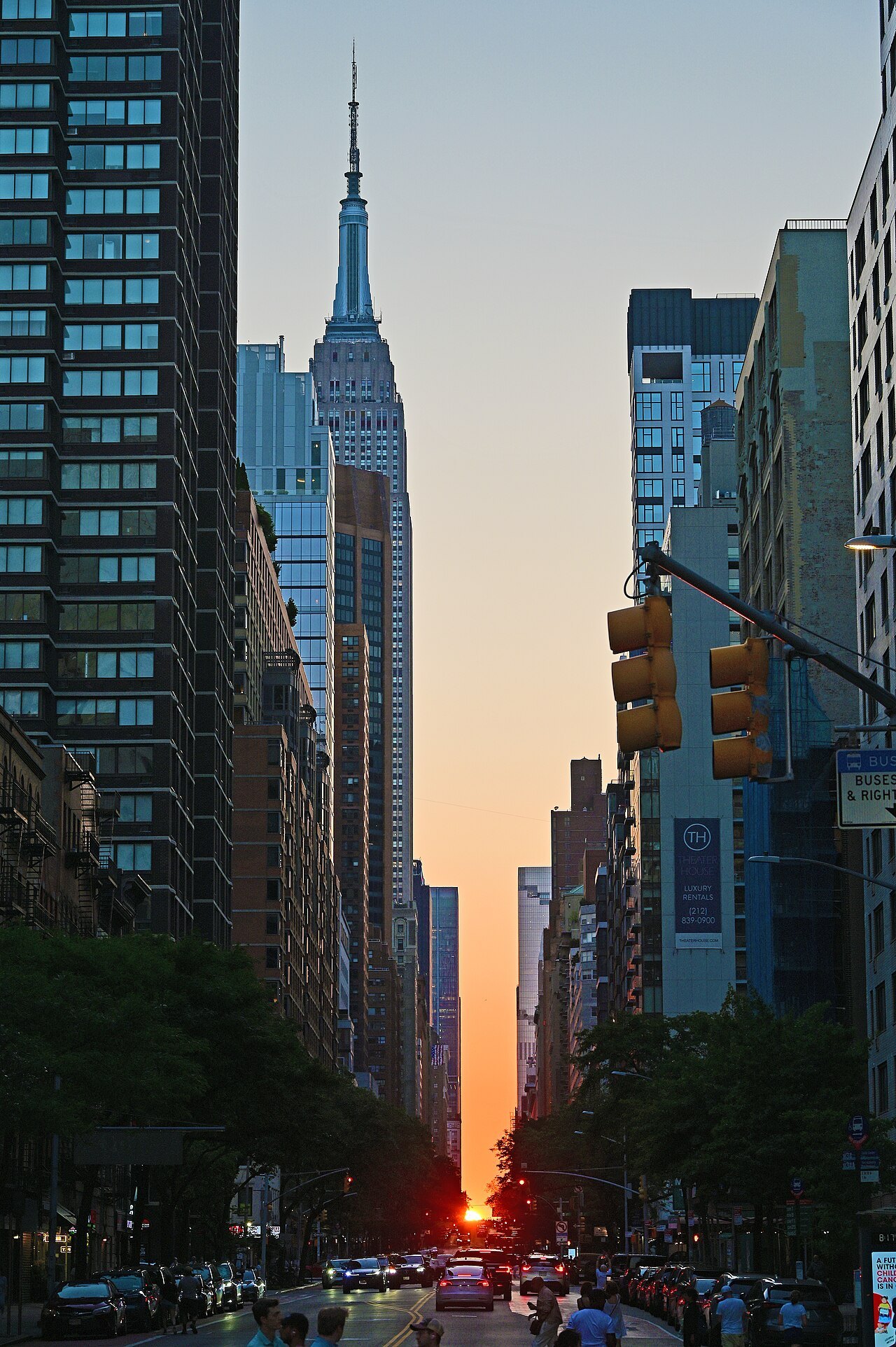
To see it, stand in the middle of a long, wide cross street with a clear view west to the Hudson, such as 14th, 23rd, 34th, 42nd or 57th Street, and look toward New Jersey as the sun goes down. You will not be alone.
Why it happens
The reason is the street plan. In 1811 the state commissioners laid out the grid of avenues and numbered streets that covers most of Manhattan above Houston Street, and rather than set it on true north they tilted it to follow the line of the island. The whole grid is rotated 29 degrees clockwise from true east and west, so the cross streets do not point at the western horizon where the sun sets on the equinoxes, as they would in a city laid out on the compass.
Instead, the sun lines up with them when it sets 29 degrees north of due west, at an azimuth of 299 degrees. The sun's setting point moves north along the horizon through the spring, reaches its farthest point at the summer solstice around June 21, and moves back south through the summer. It passes the line of the streets twice, once on the way north in late May and once on the way back in mid-July, on dates evenly spaced around the solstice. In winter the same thing happens at sunrise, on dates spaced around the winter solstice, near December 5 and January 8. The grid explains the plan itself.
The name
The astrophysicist Neil deGrasse Tyson, of the American Museum of Natural History, a native New Yorker, described the phenomenon in 1997 in the magazine Natural History and says he coined the name. It is a play on Stonehenge, the prehistoric monument in England built so that the rising sun on the summer solstice lines up with one of its stones. Tyson has said the idea came from a childhood visit to Stonehenge at fifteen, on an expedition led by the astronomer Gerald Hawkins, who first argued that Stonehenge was built to track the sun and stars.
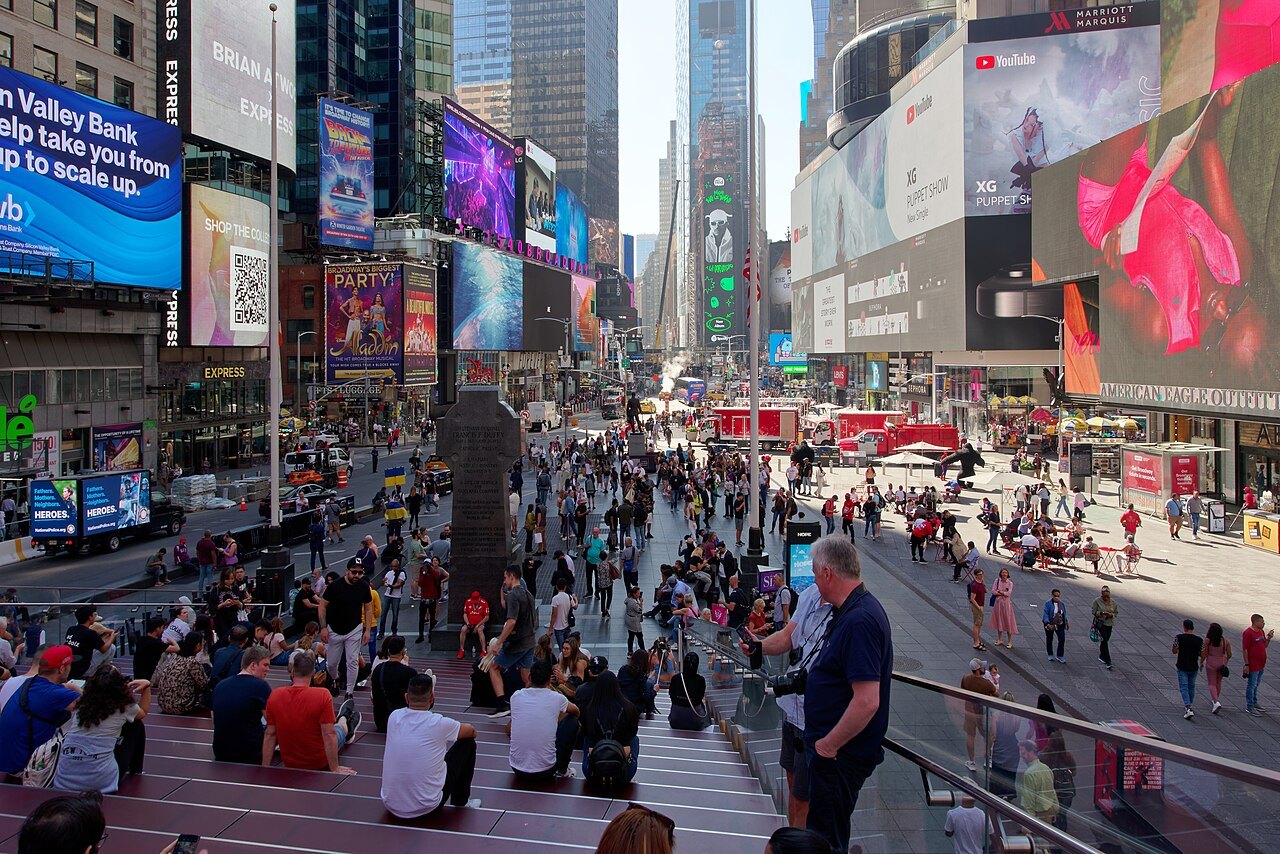
The event has drawn bigger crowds every year since, and on a clear evening the wide streets fill with people standing in the roadway with their cameras raised.
Half sun and full sun
Each sunset alignment comes in two versions, and the published dates usually give both. On the half sun days the sun's disk sits on the horizon exactly at the end of the street, partly hidden, as it sets. On the full sun days, which are the ones most people mean by Manhattanhenge, the whole disk of the sun hangs just above the horizon between the profiles of the buildings.
The full sun days come a couple of days after the first alignment in May and a couple of days before the second in July, because the official moment of sunset is when the last of the sun disappears. The exact dates shift slightly from year to year with the date of the solstice, so look them up for the year of your visit rather than relying on the dates from an earlier year. If you can, keep both evenings of the pair free.
Where to watch
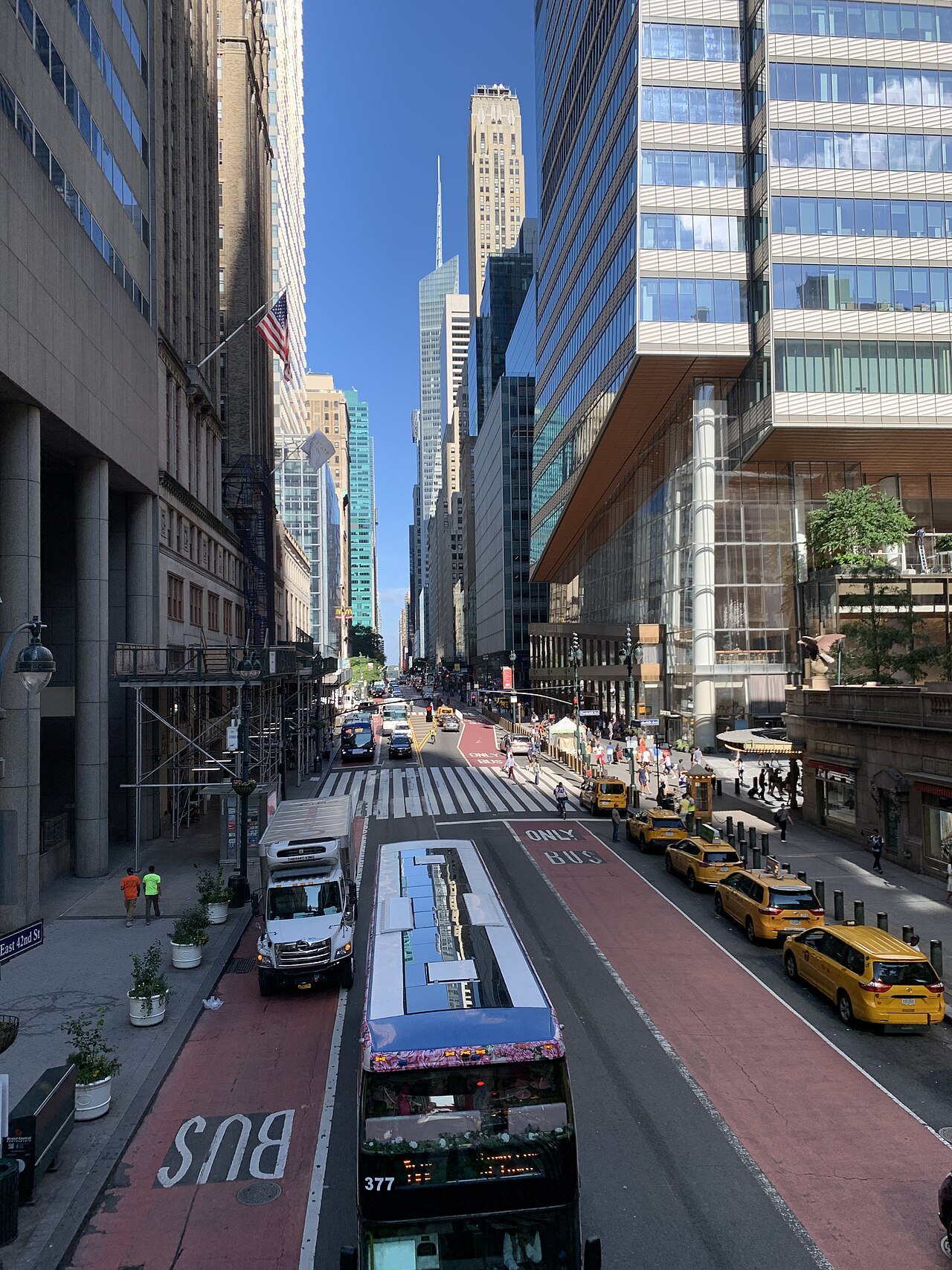
The best streets are the long, wide crosstown streets with an open view west all the way to the Hudson and New Jersey. Many numbered streets line up, but the 1811 plan made fifteen of them a hundred feet wide, and those give the broadest view: 14th, 23rd, 34th, 42nd and 57th Streets in particular. On 34th Street the Empire State Building stands beside the view, and on 42nd Street the sun sets at the far end of the same street as Grand Central and the Chrysler Building.
Stand well to the east, so that you look down a long canyon of buildings, and as close to the middle of the street as is safe. Traffic does not stop for the sunset: many people watch from the sidewalk corners or the traffic islands, and anyone stepping into the roadway for a picture needs to watch the lights and the cars.
Making the most of it
Arrive early, because the best places fill up and the light is beautiful for some time before the sun reaches the horizon. Check the forecast: a cloud bank over New Jersey will hide the sun completely, and the evening turns into an ordinary sunset. If one date is cloudy, the other alignment of the pair, half sun or full sun, falls within a day or two.
The winter sunrise alignments are quieter. Few people are out on a December or January morning, and the low sun rising at the eastern end of the cross streets over the East River lights up the western facades instead. When to come puts the dates on its calendar.
Not only Manhattan
Any city with a regular grid and a clear horizon has its own version, on its own dates. In a city whose streets run exactly north and south, east and west, the sun lines up at the equinoxes in March and September; Chicago, laid out on the compass, gets its sunsets down the street canyons near the spring and autumn equinoxes, and Toronto's east–west streets line up with the setting sun in February and October. Baltimore, Montreal and even Cambridge, in Massachusetts, where the setting sun shines down a long corridor at the Massachusetts Institute of Technology, have their own versions.
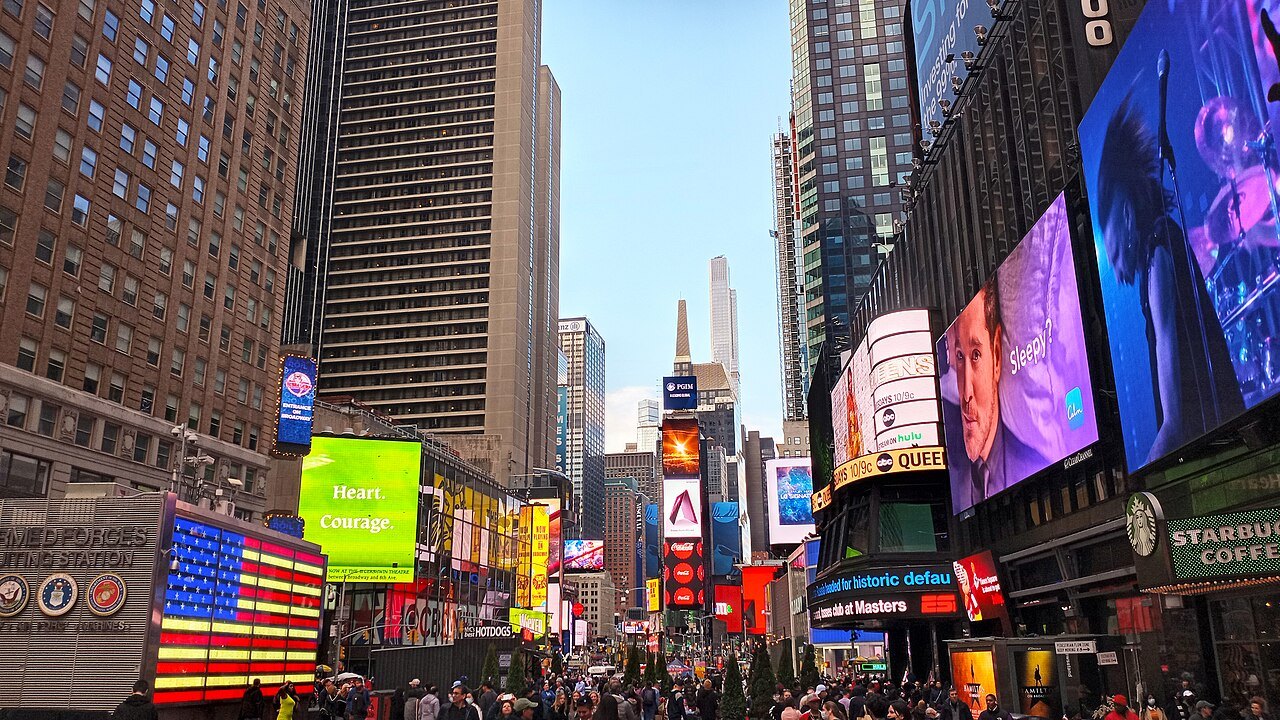
Manhattan's is the most famous, because of the height of its buildings and the length of its streets, which turn each alignment into a narrow corridor of light running from one river almost to the other.
Read next03
More from the journal
- The Brooklyn BridgeCan you walk across the Brooklyn Bridge?Yes, on a raised promenade between the roadways that is now for people on foot alone. Which way to walk, where to start and finish, how long it takes, when it is least crowded, and what to do in Brooklyn at the far end.Read the piece →
- Getting AroundHow does the New York subway work for visitors?The subway runs all night, takes a tap of your bank card or phone, and reaches nearly everything on this site. How the lines are named, which platform to choose, the difference between local and express, how the fare cap works, and what changes at night and on weekends.Read the piece →
- Getting HereHow do you get from JFK Airport to Manhattan?There is no direct train from JFK to Manhattan, but there are three good ways in: AirTrain to Jamaica and the Long Island Rail Road, AirTrain to the subway, or a taxi at a flat rate. How each one works, what it involves with luggage, and how to choose.Read the piece →